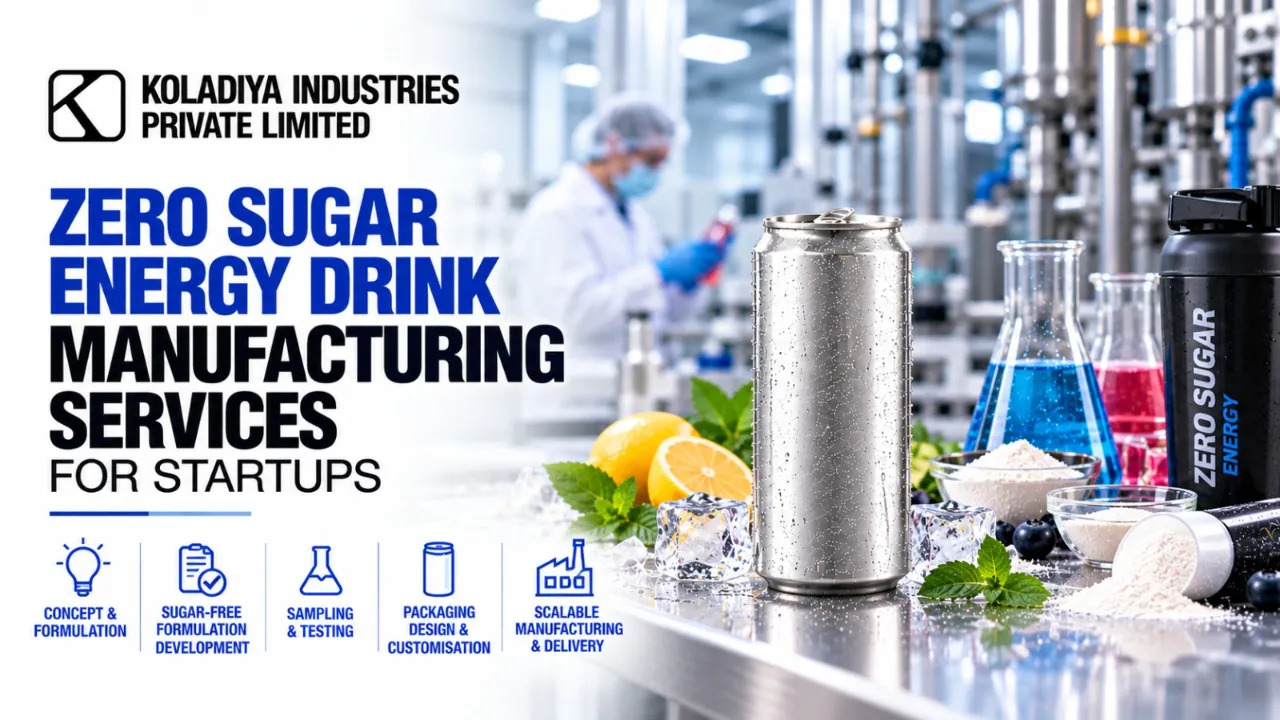
Launching a zero-sugar energy drink brand gives startups an opportunity to enter the growing functional beverage market with a product that meets changing consumer preferences. Many consumers look for convenient energy drinks that offer appealing flavors without added sugar. Entrepreneurs can turn this demand into a business opportunity by developing a distinctive formula, selecting suitable packaging, and partnering with a reliable beverage manufacturer. However, launching an energy drink requires more than a good idea. Startups must manage product development, ingredient selection, production costs, quality control, regulatory requirements, packaging, and distribution. The right manufacturing partner can simplify these steps and help a new brand prepare for market entry.
Koladiya Industries can be considered by startups exploring beverage manufacturing solutions for their business plans. A structured approach to product development and manufacturing can help entrepreneurs build a clear roadmap for their zero-sugar energy drink brand.
What Is Zero Sugar Energy Drink Manufacturing?
Zero sugar energy drink manufacturing involves developing, producing, testing, and packaging energy beverages without sugar as a sweetening ingredient. These drinks may use approved high-intensity sweeteners or other suitable ingredients to achieve the desired taste profile. Manufacturers combine the selected ingredients, flavor systems, acidity regulators, and other formulation components to create a consistent beverage. They also evaluate production methods, packaging compatibility, shelf life, and applicable food safety requirements.
For startups, this process offers a way to introduce an energy drink under their own brand without necessarily building a production facility. Working with a suitable manufacturing partner can reduce the need for significant upfront investment in equipment, processing infrastructure, and specialized personnel.
Why Startups Should Consider Zero Sugar Energy Drinks
Consumer interest in reduced-sugar beverages creates opportunities for new brands. Startups can target gym enthusiasts, working professionals, students, gamers, and other adult consumers who seek convenient beverage options.
A zero-sugar energy drink can help a new brand establish a clear market position. Entrepreneurs can differentiate their products through flavor, branding, packaging, serving size, and carefully selected ingredients.
Zero Sugar Energy Drink Manufacturing for Brand Differentiation
A successful energy drink should offer more than a zero-sugar claim. Customers also expect an enjoyable taste, attractive packaging, consistent quality, and a clear product identity.
Startups can explore different product concepts, such as citrus energy drinks, berry blends, tropical flavors, or classic energy drink profiles. They can also build a brand around convenience, lifestyle, or a specific consumer segment.
The manufacturing process should support these goals while keeping formulation, ingredient costs, and production requirements commercially practical.
Opportunities for Private Label Beverage Brands
Private label and contract manufacturing models allow entrepreneurs to develop products under their own brand name. Instead of establishing a complete manufacturing operation, a startup can work with an external partner to explore formulation, production, and packaging options.
The exact services depend on the manufacturer’s facilities, equipment, capabilities, and commercial terms. Startups should confirm these details before committing to a production agreement.
How Zero Sugar Energy Drink Manufacturing Works
A structured manufacturing process helps startups move from an initial concept to a product ready for commercial evaluation.
1. Product Concept and Market Research
The first step involves identifying the intended customer and defining the product’s key selling points. Entrepreneurs should research competing products, flavor preferences, price expectations, package sizes, and retail channels.
A startup should answer several important questions:
- Who will buy the energy drink?
- What makes the product different from existing options?
- Which flavors suit the target audience?
- What price range fits the intended market?
- Will the brand sell through retail stores, gyms, distributors, or online channels?
Clear answers help guide formulation and packaging decisions.
2. Ingredient Selection and Formula Development
Ingredient selection plays a major role in the taste, functionality, and cost of a zero-sugar energy drink. Depending on the product concept, a formula may include caffeine, permitted sweeteners, flavoring substances, acidity regulators, and selected vitamins or other functional ingredients.
Every ingredient must meet applicable food safety requirements. The manufacturer and brand owner should also assess ingredient compatibility, recommended usage levels, labeling requirements, and the intended consumer group.
Caffeine content deserves particular attention because it influences product positioning and safety considerations. Startups should define their preferred caffeine level early in development and confirm that the final formula complies with the rules that apply in the target market.
3. Taste Testing and Sample Approval
Sugar-free formulations can present taste challenges. Some sweeteners create lingering sweetness or aftertaste, while certain flavor combinations require careful balancing.
Sample development allows the startup to evaluate sweetness, aroma, carbonation, acidity, and the overall drinking experience. Consumer feedback can help identify improvements before larger production runs begin.
The startup should approve a final formula and document the specifications. This process helps the manufacturer maintain consistency across production batches.
4. Zero Sugar Energy Drink Manufacturing and Production
After formula approval, the manufacturing partner assesses the production process, ingredient sourcing, processing requirements, filling equipment, and quality controls.
Depending on the formulation and manufacturing setup, the process may involve water treatment, ingredient blending, carbonation, processing, filling, sealing, coding, and packaging. The manufacturer must choose a suitable process based on the product’s composition and shelf-life requirements.
Startups should discuss production capacity, batch sizes, equipment compatibility, scheduling, and quality testing before confirming an order. These details influence both the launch timeline and the overall manufacturing cost.
5. Packaging and Final Quality Checks
Packaging protects the beverage and communicates the brand’s identity. Common options include cans and suitable beverage bottles, depending on the formulation, production line, and distribution requirements.
The package should support product stability, transport, storage, and the intended retail environment. Artwork should present the brand name, ingredients, nutrition information, applicable warnings, and other mandatory declarations.
Quality checks should cover relevant product specifications, packaging integrity, batch identification, and shelf-life validation. Startups should request clear documentation of the manufacturer’s quality procedures and the tests relevant to their product.
Key Costs in Zero Sugar Energy Drink Manufacturing
Manufacturing costs vary according to the formula, ingredients, packaging, production volume, and supplier terms. Startups should develop a realistic budget before launching their first batch.
Major cost factors include:
Ingredient costs: Caffeine, sweeteners, flavor systems, functional ingredients, and other formula components influence the cost per unit.
Research and development: Product sampling, formula adjustments, laboratory evaluation, and shelf-life studies may add development expenses.
Packaging: Can or bottle selection, closures, labels, printed artwork, cartons, and shipping materials contribute to the total cost.
Manufacturing volume: Production quantity, setup requirements, changeovers, and equipment availability affect the cost per can or bottle.
Testing and compliance: Product testing, label review, and required documentation create additional expenses.
Logistics and distribution: Freight, warehousing, handling, distributor margins, and retail placement affect the final business budget.
Startups should request a detailed quotation that separates one-time costs from recurring production expenses. This approach makes it easier to compare manufacturing proposals and estimate product margins.
How to Choose the Right Zero Sugar Energy Drink Manufacturing Partner
The right manufacturing partner should understand the startup’s product requirements and commercial limitations. Entrepreneurs should assess several factors before signing an agreement.
Evaluate Experience and Production Capabilities
Ask about the manufacturer’s beverage categories, equipment, production processes, packaging formats, and quality management procedures. Confirm that the facility can handle the proposed formulation and production quantity.
Startups should also understand the manufacturer’s minimum order quantity (MOQ), sample process, production schedule, payment terms, and responsibilities for sourcing ingredients.
Review Quality and Regulatory Support
Energy drinks require careful attention to ingredient safety, labeling, product specifications, and shelf-life validation. In India, businesses must consider applicable Food Safety and Standards Authority of India (FSSAI) requirements and other relevant regulations.
Ask who manages product documentation, label review, testing coordination, and required manufacturing records. Confirm that the responsible parties understand their obligations before production begins.
Compare Commercial Terms
A low quoted price does not always represent the best overall value. Entrepreneurs should compare the formula ownership terms, packaging costs, MOQ, quality procedures, lead times, payment conditions, and arrangements for future orders.
Clear communication also matters. A reliable partner should explain technical requirements in practical terms and provide clear information about the services included in the quotation.
Zero Sugar Energy Drink Manufacturing with Koladiya Industries
For startups preparing to launch a beverage brand, Koladiya Industries can be part of the evaluation process for manufacturing requirements and business planning. Entrepreneurs should discuss their proposed formula, target market, preferred packaging, expected order volume, and launch objectives with the company.
A clear project brief helps both sides assess the practical requirements of the proposed drink. Startups can prepare the following information before making an enquiry:
- Proposed energy drink concept and target audience.
- Preferred flavors and sweetness profile.
- Intended caffeine content and other functional ingredients.
- Packaging type and proposed container size.
- Expected initial order quantity.
- Target selling price and launch market.
- Requirements for testing, labeling, and product documentation.
Ask Koladiya Industries to confirm the specific services, manufacturing capabilities, MOQ, estimated costs, and production timelines available for the proposed product. These details will help you decide whether the partnership suits your launch plan.
Common Mistakes Startups Should Avoid
New brands can face avoidable problems when they rush into production without a complete plan.
Ignoring taste quality: A zero-sugar formula must still deliver an enjoyable drinking experience. Test samples with the intended customer group before approving the final product.
Underestimating costs: Ingredient prices represent only one part of the budget. Include packaging, testing, logistics, marketing, distribution, and working capital in your calculations.
Choosing an unsuitable MOQ: Large orders can tie up cash in inventory, while very small batches may carry a higher unit cost. Balance production quantity with realistic demand forecasts.
Overlooking regulatory requirements: Check ingredient permissions, caffeine-related requirements, nutrition declarations, claims, and applicable labeling rules before printing packaging or selling the product.
Neglecting brand differentiation: Clear positioning, recognizable visual identity, flavor selection, and consistent product quality help a startup stand out in a competitive category.
Conclusion
Zero sugar energy drink manufacturing gives startups a practical route to develop a beverage brand around changing consumer preferences. Success depends on careful formula development, appealing flavors, suitable packaging, consistent quality, regulatory compliance, and realistic financial planning.
A manufacturing partnership can simplify production planning and help entrepreneurs focus on brand development, sales, and distribution. Startups should compare service capabilities, MOQ, pricing, testing procedures, and commercial terms before selecting a partner.
Koladiya Industries can be approached to discuss your beverage manufacturing requirements and explore the options available for your business concept. A clearly defined product brief and realistic launch budget will help you take the next step with greater confidence.
Ready to Launch Your Zero Sugar Energy Drink Brand?
Are you planning to launch a zero-sugar energy drink under your own brand? Contact Koladiya Industries to discuss your product concept, preferred flavors, packaging requirements, estimated order quantity, and manufacturing needs. Start planning a beverage product that aligns with your target customers and long-term business goals.
FAQ’s
How Can Startups Launch a Zero Sugar Energy Drink Brand?
Startups can begin by researching their target audience, selecting suitable flavors, developing a product formula, and choosing a manufacturing partner. They should also plan packaging, pricing, regulatory compliance, and distribution before launching.
How Much Does Zero Sugar Energy Drink Manufacturing Cost in India?
The cost depends on ingredients, formulation, packaging, order quantity, testing, and production requirements. Startups should request a customized quotation based on their product specifications and expected manufacturing volume.
What Is the MOQ for Zero Sugar Energy Drink Manufacturing?
The minimum order quantity varies by manufacturer, production equipment, packaging format, and formulation requirements. Startups should confirm the MOQ with Koladiya Industries before finalizing their production budget.
Can Startups Customize Their Zero Sugar Energy Drink Formula?
Yes, startups can explore custom formulations based on flavor, sweetness, caffeine content, and other permitted ingredients. The final formula must meet applicable food safety requirements and undergo appropriate testing.
What Packaging Options Are Available for Zero Sugar Energy Drinks?
Common options include aluminum cans and suitable beverage bottles. The right packaging depends on the product formula, shelf-life requirements, production capabilities, distribution plans, and brand identity.
Why Should Startups Choose a Zero Sugar Energy Drink Manufacturing Partner?
A suitable manufacturing partner can help startups coordinate formulation, production, packaging, and quality control without immediately investing in their own manufacturing facility. Businesses should compare manufacturing capabilities, costs, MOQ, quality procedures, and regulatory support before choosing a partner.