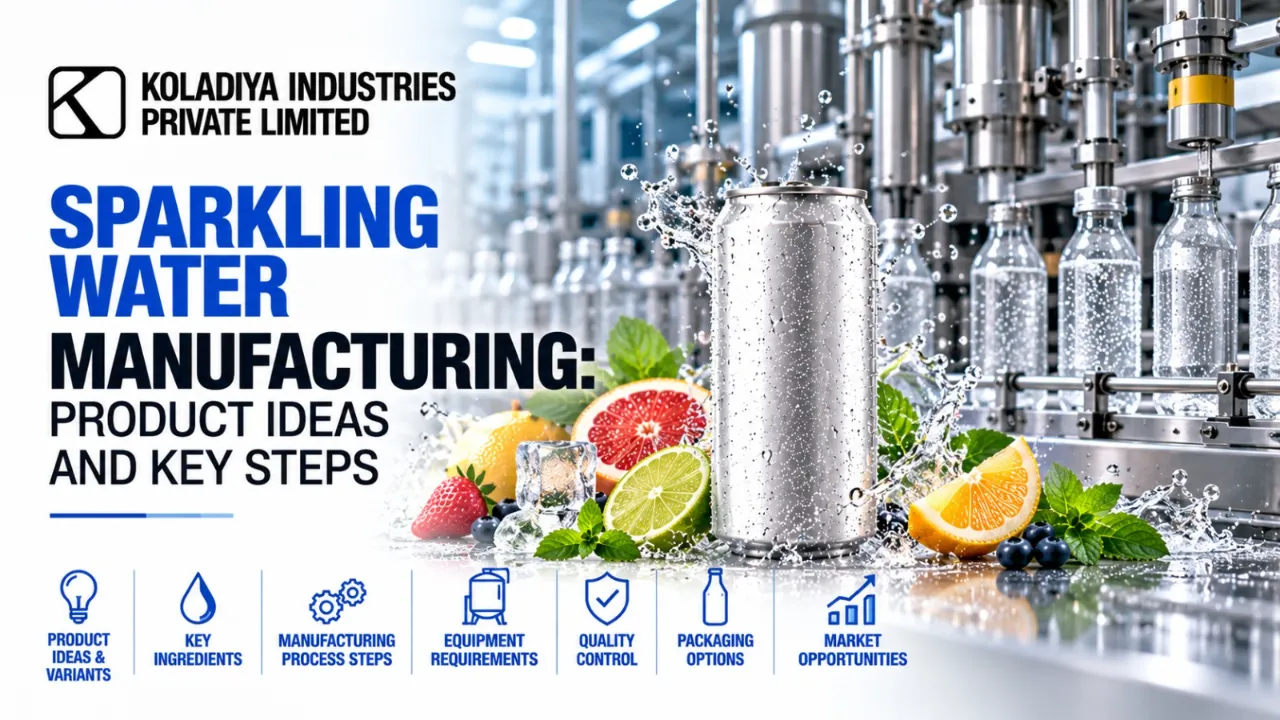
Sparkling water has become an attractive product category for beverage brands seeking refreshing alternatives to traditional soft drinks. As consumer preferences shift towards convenient drinks, premium flavours, and low-sugar alternatives, sparkling water offers promising opportunities for beverage brands looking to enter the market. However, launching a successful product requires more than adding carbonation to water. Brands must develop the right concept, select suitable ingredients, maintain consistent quality, choose appropriate packaging, and plan commercial production carefully. Sparkling Water Manufacturing gives startups and established beverage companies an opportunity to develop products for different consumer preferences, including classic sparkling water, fruit-flavoured varieties, premium mineral-inspired beverages, and functional-style refreshments.
Moreover, working with an experienced beverage manufacturing partner can help brands understand product development, production requirements, packaging options, and minimum order quantities before investing in a full-scale launch. We explain key product ideas, the manufacturing process, quality considerations, packaging choices, and the steps required to bring a sparkling water product to market.
What Is Sparkling Water Manufacturing?
Sparkling water manufacturing involves preparing suitable water, introducing carbon dioxide to create carbonation, filling the beverage into containers, and sealing the finished product under controlled conditions. Manufacturers also manage water quality, carbonation levels, packaging compatibility, hygiene, and product consistency throughout production.
Despite its simple concept, commercial sparkling water manufacturing involves several important steps to ensure consistent quality, carbonation, and product safety. For example, a lightly carbonated beverage may deliver a different drinking experience from a highly carbonated product. Similarly, flavoured sparkling water requires additional formulation and stability considerations.
Therefore, brands should define their product specifications before selecting a production process or committing to a manufacturing quantity.
Why Is Sparkling Water Manufacturing an Opportunity for Beverage Brands?
Sparkling water offers brands multiple positioning opportunities, from everyday refreshing drinks to premium flavoured beverages with modern packaging and convenient formats for on-the-go consumers.
Furthermore, brands can develop distinctive products through flavour selection, carbonation levels, packaging design, and brand storytelling. These decisions help a product establish a recognizable identity in a competitive beverage category.
However, commercial success depends on more than market interest. Brands should also evaluate production costs, distribution requirements, target customers, pricing, and expected demand before launching.
Best Product Ideas for Sparkling Water Manufacturing
Before choosing a manufacturing process, decide what makes your product different. A clear product concept helps guide formulation, packaging, pricing, and marketing decisions.
1. Classic Sparkling Water
Classic sparkling water offers a straightforward product concept built around water and carbon dioxide. It suits brands that want a simple, refreshing beverage without added sweetness or elaborate flavour combinations.
Additionally, minimalist branding and practical packaging can help position this product for everyday consumption, restaurants, hotels, offices, and retail outlets.
When developing classic sparkling water, focus on water quality, a consistent carbonation level, a clean taste, and reliable packaging performance.
2. Fruit-Flavoured Sparkling Water
Fruit-flavoured sparkling water provides opportunities to create a broader product range. Popular concepts may include lemon, lime, orange, grapefruit, berry, peach, and tropical fruit profiles.
However, each flavour requires careful evaluation. Flavour ingredients can affect taste, aroma, clarity, and overall product stability. Consequently, brands should test different flavour intensities and carbonation levels before finalising a recipe.
A small initial range can also help businesses understand customer preferences before expanding into additional variants.
3. Premium Sparkling Water
Premium sparkling water focuses on product presentation, taste experience, and brand positioning. Businesses may explore elegant bottle designs, sophisticated labels, distinctive carbonation profiles, and premium serving occasions.
For example, a brand may develop a sparkling water concept for restaurants, hotels, cafés, or modern retail channels.
Nevertheless, premium positioning requires consistency across the entire product experience. Packaging quality, label design, product specifications, and dependable supply must all support the intended price point.
4. Lightly Flavoured, No-Added-Sugar Sparkling Water
Consumers seeking less-sweet beverage options may appreciate sparkling water with subtle fruit flavours and no added sugar. Brands can explore this concept using suitable flavour systems that deliver a refreshing taste without relying on conventional sugary formulations.
Even so, product developers must review the full ingredient composition and applicable labelling rules before making claims such as “no added sugar” or “sugar-free.” These terms have specific requirements and should accurately reflect the finished product.
5. Botanical-Inspired Sparkling Water
Botanical-inspired products offer another potential direction for distinctive beverage concepts. Possible flavour profiles include mint, cucumber, ginger, basil, or selected floral notes.
In addition, botanical flavours can support a sophisticated brand identity. However, some extracts and flavour ingredients may affect clarity, taste stability, or processing requirements. Therefore, formulation trials should confirm that the ingredients suit the chosen product and manufacturing method.
Key Steps in Sparkling Water Manufacturing
A reliable production process helps brands achieve consistent taste, carbonation, appearance, and packaging quality. The exact process depends on the recipe, equipment, container format, and required shelf life.
Step 1: Define the Product Concept
Start by identifying your target audience, preferred flavour profile, price range, serving size, and sales channel.
For instance, a product intended for premium restaurants may require a different presentation from a sparkling water brand designed for supermarkets or online sales.
Next, prepare a product brief that outlines the intended taste, carbonation level, ingredient preferences, packaging format, and positioning. This document gives the formulation and manufacturing teams a clear starting point.
Step 2: Select and Treat the Water
Water quality plays a central role in sparkling water production because its mineral composition and taste can affect the final beverage.
Depending on the source water and product specifications, manufacturers may use suitable filtration and water treatment processes to achieve the required quality. They should also monitor relevant parameters throughout production.
Moreover, the treatment process should align with the product’s intended taste profile. Consistent water quality helps minimise unwanted flavour variations between batches.
Step 3: Develop the Formulation
Classic sparkling water may require a relatively simple formulation, whereas flavoured varieties need additional ingredient selection and testing.
During development, evaluate flavour intensity, acidity where applicable, sweetness if used, appearance, and compatibility with carbonation. Small formulation trials can reveal whether a recipe delivers the intended drinking experience.
Furthermore, product developers should assess the ingredients’ impact on stability and packaging. Final specifications should clearly document the approved formulation and critical quality parameters.
Step 4: Establish the Carbonation Level
Carbonation creates the bubbles and distinctive mouthfeel associated with sparkling water. The required level depends on the product concept and intended consumer experience.
Manufacturers must control carbon dioxide addition and monitor relevant process parameters to maintain consistency. Water temperature, equipment performance, and filling conditions can influence carbonation results.
Consequently, brands should assess carbonation during product trials rather than choosing a level based on assumptions alone.
Step 5: Choose the Packaging Format
Packaging protects the beverage, supports distribution, and communicates brand identity. Common options include aluminium cans and suitable beverage bottles.
When selecting a format, consider carbonation retention, container compatibility, closure performance, transport conditions, serving size, and retail presentation.
In addition, evaluate packaging availability, printing options, minimum order requirements, and total cost. The most attractive design may not always offer the best commercial fit, particularly for a startup with limited storage or working capital.
Step 6: Fill, Seal, and Inspect the Product
Commercial production requires suitable filling and sealing processes to maintain product quality and carbonation. Manufacturers should follow appropriate hygiene controls and use equipment configured for the selected beverage and packaging.
During production, teams should check key parameters, including fill volume, closure integrity, appearance, and carbonation consistency, as applicable. They should also maintain batch records and investigate deviations before releasing finished products.
These controls help brands establish repeatable production standards and reduce avoidable quality issues.
Step 7: Conduct Quality and Shelf-Life Testing
Before a full launch, evaluate whether the product maintains its expected characteristics throughout its intended shelf life. Testing requirements depend on the formulation, packaging, processing method, and storage conditions.
Relevant checks may include taste, appearance, carbonation retention, package integrity, and microbiological or chemical parameters where appropriate.
Additionally, establish suitable storage and distribution conditions. A product that performs well immediately after manufacturing must also maintain its required quality during transportation and retail storage.
Important Factors to Consider Before Starting Sparkling Water Manufacturing
A promising concept still needs a commercially realistic production plan. Therefore, consider the following factors before moving forward.
1. Minimum Order Quantity and Production Costs
Manufacturing costs depend on factors such as formulation complexity, production volume, packaging choice, ingredient requirements, processing needs, and quality testing.
Consequently, there is no single cost or minimum order quantity that applies to every sparkling water product. Request a project-specific quotation based on the proposed formula, container, volume, and production requirements.
2. Regulatory and Labelling Requirements
In India, beverage businesses must evaluate applicable FSSAI requirements and other relevant rules for manufacturing, product standards, packaging, labelling, and claims.
The requirements may vary according to the product’s composition and classification. Therefore, review the proposed formulation and label with qualified regulatory professionals before commercial production.
3. Brand Identity and Market Positioning
A strong brand needs a clear reason for customers to choose its product. This advantage could come from flavour, packaging, convenience, premium presentation, or a well-defined target market.
At the same time, keep the first product range manageable. A focused launch can simplify production planning, inventory management, and customer feedback collection.
4. Distribution and Storage
Sparkling water must retain its intended quality throughout the supply chain. Accordingly, consider warehouse conditions, transport handling, retailer requirements, shelf placement, and the durability of the chosen packaging.
Early distribution planning also helps brands estimate the working capital and inventory they may need.
How Koladiya Industries Can Support Your Beverage Manufacturing Journey
Developing a sparkling water product involves several connected decisions, from the initial concept and formulation to packaging selection and commercial production planning.
Koladiya Industries can be approached by beverage entrepreneurs and established brands exploring beverage manufacturing solutions. By discussing your product concept, intended market, packaging preferences, and expected production volume with the team, you can begin evaluating the requirements for your proposed beverage.
Before starting a project, prepare a clear brief covering your preferred flavours, carbonation level, container type, target price, and launch timeline. This information can support more productive discussions about manufacturing feasibility, production requirements, and commercial planning.
Ultimately, the right manufacturing approach should align with your product specifications, quality expectations, and business goals.
Conclusion: Plan Your Sparkling Water Manufacturing Project Carefully
Sparkling water offers several product development opportunities, including classic sparkling water, fruit-flavoured refreshments, premium concepts, lightly flavoured options, and botanical-inspired beverages.
However, a successful launch requires a structured process. Start with a clear product concept, choose suitable water and ingredients, establish the desired carbonation level, select compatible packaging, and implement appropriate quality and shelf-life testing.
Moreover, evaluate manufacturing costs, minimum order quantities, regulatory requirements, and distribution needs before investing in large-scale production. These steps can help you make informed decisions and build a product with a clear market position.
With a well-defined strategy and a reliable manufacturing partner, you can turn your sparkling water concept into a market-ready beverage brand.
Ready to explore your sparkling water product idea? Contact Koladiya Industries to discuss your beverage manufacturing requirements, preferred packaging, and next steps towards developing your brand.
FAQ’s
What are the best sparkling water product ideas for beverage startups?
Beverage startups can explore classic sparkling water, fruit-flavoured sparkling water, premium sparkling water, botanical-inspired beverages, and lightly flavoured options without added sugar. The best concept depends on target customers, pricing, flavour preferences, and market positioning.
How does the sparkling water manufacturing process work?
The process generally includes product planning, water treatment, formulation where required, carbonation, filling, sealing, quality testing, and packaging. The exact steps depend on the product recipe, equipment, packaging format, and intended shelf life.
How much does sparkling water manufacturing cost in India?
Sparkling water manufacturing costs vary according to production volume, packaging type, ingredient requirements, carbonation specifications, testing, and labelling. Brands should request a customised quotation after defining their product specifications and expected order quantity.
What packaging options are available for sparkling water?
Aluminium cans and suitable beverage bottles are common options for sparkling water. Brands should assess carbonation retention, container compatibility, closure integrity, transport conditions, packaging costs, and shelf presentation before making a selection.
What quality checks are important in sparkling water manufacturing?
Important quality checks may include water quality, carbonation level, taste, appearance, fill volume, closure integrity, package performance, and shelf-life stability. Manufacturers should also follow appropriate hygiene procedures and applicable food safety requirements.
How can Koladiya Industries support a sparkling water brand?
Businesses can contact Koladiya Industries to discuss their beverage manufacturing requirements and explore suitable next steps for their product concept. Before making enquiries, prepare details about your preferred flavour, carbonation level, packaging format, target market, and estimated production volume.