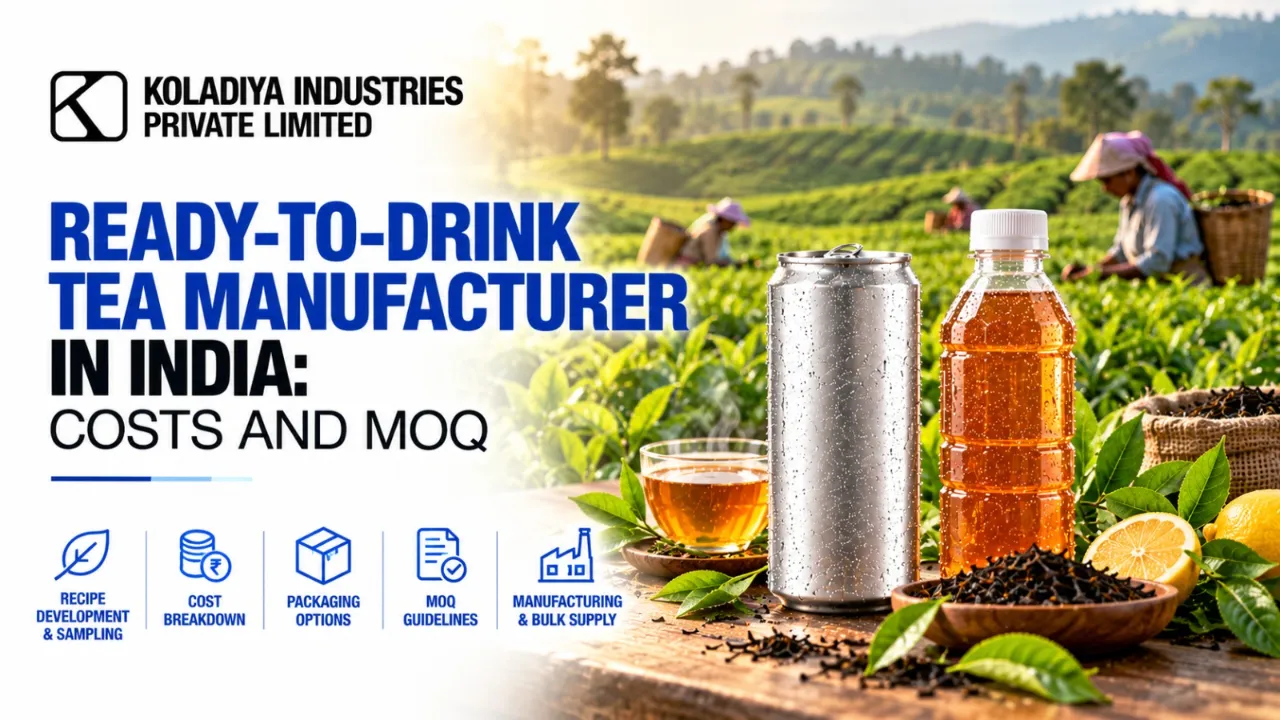
The demand for convenient, refreshing beverages continues to create opportunities for brands across India. Ready-to-drink (RTD) tea offers a practical solution for consumers who want the taste of tea without brewing it at home. From traditional iced tea to lemon tea and flavored green tea, businesses can develop different products to suit changing consumer preferences. Choosing the right Ready-to-Drink Tea Manufacturer is an important step when launching a new beverage brand. The right manufacturing partner can help businesses evaluate product formulations, packaging options, production quantities, and overall costs. For startups, retailers, distributors, and established beverage companies, two questions often matter most: How much does RTD tea manufacturing cost, and what is the minimum order quantity (MOQ)?
In this guide, Koladiya Industries explores the key factors influencing RTD tea manufacturing costs, minimum order quantities (MOQ), packaging options, and production requirements to help businesses make informed decisions when choosing a manufacturing partner.
What Is Ready-to-Drink Tea Manufacturing?
Ready-to-drink tea manufacturing involves producing packaged tea beverages that consumers can drink directly without brewing or additional preparation. Manufacturers prepare the tea base, develop the desired flavor, apply the appropriate processing method, and package the finished beverage. Businesses can choose from several product varieties, depending on their target audience and market positioning.
Common RTD tea varieties include:
- Lemon iced tea: A refreshing option with a balanced tea and citrus flavor.
- Peach iced tea: A fruit-flavored beverage for consumers who prefer a sweeter taste.
- Green tea drinks: A tea-based option with a lighter flavor profile.
- Classic iced tea: A familiar tea beverage that works for everyday consumption.
- Herbal-inspired tea beverages: Products featuring selected botanical ingredients where suitable for the intended formulation.
- Low-sugar tea beverages: Options developed for brands targeting consumers who prefer less sweetness.
Each formulation requires a clear product brief, ingredient selection, taste evaluation, and suitable packaging. A reliable manufacturing partner helps businesses assess these requirements before production begins.
How a Ready-to-Drink Tea Manufacturer Calculates Costs
The cost of manufacturing RTD tea depends on the product formulation, packaging format, production volume, processing requirements, and ingredient quality. No single price applies to every beverage project. Businesses should request a product-specific quotation instead of relying on a general manufacturing estimate.
Ready-to-Drink Tea Manufacturer: Raw Material Costs
Raw materials form a significant part of the production budget. The final cost depends on the ingredients used in the beverage.
A typical ready-to-drink tea formulation includes tea extract or brewed tea, purified water, sweeteners, flavoring ingredients, and other components tailored to the product’s taste and quality requirements.
Premium tea varieties, specialized flavors, and imported ingredients can increase the total cost. A simple lemon iced tea formulation may have a different ingredient cost from a fruit-based beverage with a more complex recipe.
Businesses should confirm ingredient specifications, supplier requirements, and formulation ownership before approving the final quotation.
Packaging and Labeling Expenses
Packaging influences both production costs and brand presentation. RTD tea products may use PET bottles, glass bottles, cans, or other suitable food-grade packaging formats. Each format has different material costs, filling requirements, transportation considerations, and storage needs.
Packaging expenses can include:
- Bottles, cans, caps, or closures.
- Printed labels or shrink sleeves.
- Cartons and secondary packaging.
- Custom packaging design and printing.
- Packaging setup or tooling charges, where applicable.
Standard packaging may suit businesses that want to launch quickly with a limited budget. Custom packaging can help establish a distinctive brand identity, though it may require additional investment and higher order quantities.
Processing and Production Costs
The manufacturing process can include tea preparation, blending, filtration, formulation adjustment, filling, sealing, quality checks, and secondary packaging.
The required processing method depends on the beverage recipe, packaging format, expected shelf life, and food safety requirements. Certain products may need specialized thermal processing or another validated preservation method.
Production costs also depend on batch size, line efficiency, labor, utilities, and equipment setup. A larger production run may reduce the processing cost per unit, but it also requires more working capital and storage capacity.
Quality Testing and Logistics
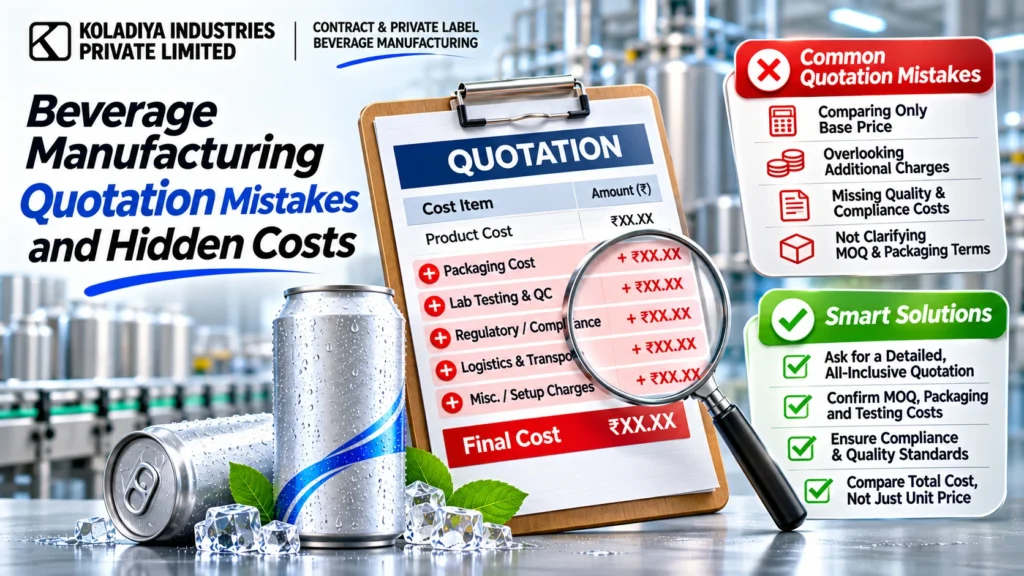
Businesses should also include product testing, packaging compatibility checks, storage, transportation, and any applicable regulatory requirements in their budgets.
Testing requirements depend on the product, processing method, and intended shelf life. Brands should confirm which tests the manufacturer includes in the quotation and which expenses require separate payment.
Transportation costs vary with delivery distance, shipment weight, order size, and destination. Retail distribution may also require strong cartons and packaging that can withstand handling.
What Is the MOQ for a Ready-to-Drink Tea Manufacturer?
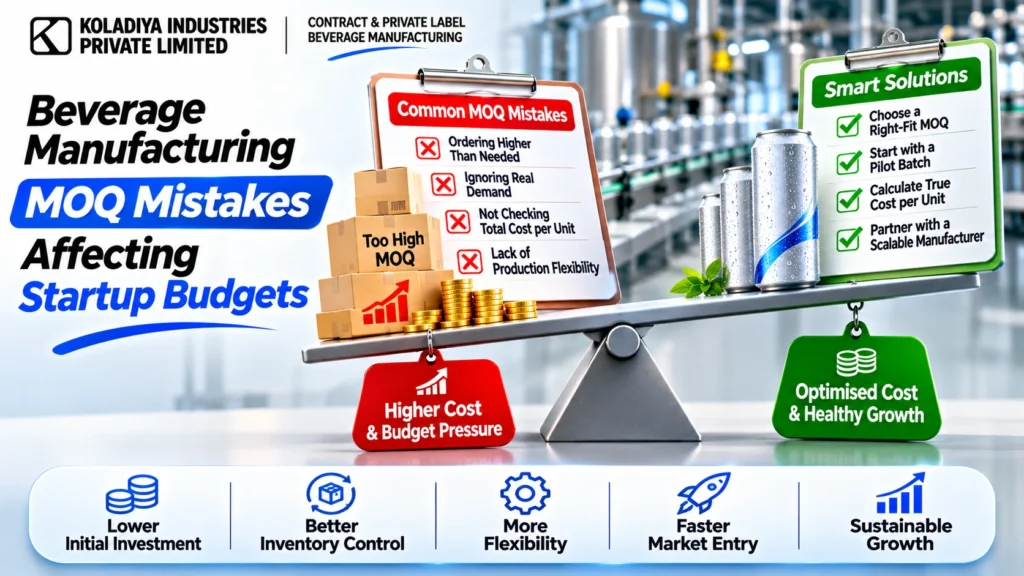
MOQ stands for minimum order quantity. It represents the smallest production quantity a manufacturer accepts for a particular product or order.
The MOQ for RTD tea varies between manufacturers. It can also change according to packaging type, bottle or can size, ingredient requirements, production equipment, and customization needs.
A manufacturer may offer different order quantities for standard formulations and fully customized products. Custom labels, specialized packaging, and unique formulations can require higher minimum quantities.
Factors That Affect Ready-to-Drink Tea Manufacturer MOQ
1. Packaging format
Stock bottles and standard closures may offer greater flexibility than custom bottles or printed cans. Specialized packaging can require minimum purchase quantities from packaging suppliers.
2. Product formulation
A standard formulation may be easier to produce in smaller batches than a new recipe that requires ingredient sourcing, testing, and production setup.
3. Batch size and equipment
Production lines operate most efficiently within certain volume ranges. Small orders may still require the same basic setup and cleaning procedures as larger runs.
4. Label and design customization
Custom labels, colors, printed packaging, and brand-specific artwork can affect minimum order requirements.
5. Shelf-life validation and testing
New products may require additional development work and testing before commercial production. These activities can add setup costs even when the first production quantity remains relatively small.
Businesses should ask for the MOQ per product, flavor, and packaging format. They should also confirm whether the manufacturer permits multiple flavors within a single order.
How to Reduce Ready-to-Drink Tea Manufacturing Costs
A thoughtful launch strategy helps businesses control initial spending without compromising product quality.
Start With a Focused Product Range
Launching several flavors at once can increase ingredient, packaging, testing, and inventory expenses. Start with one or two promising flavors, evaluate customer demand, and expand the range after gathering market feedback.
Choose Practical Packaging
Standard packaging can reduce customization expenses during the initial launch. Select a format that protects the beverage, suits the target market, and supports distribution requirements.
Plan Production Quantities Carefully
Order quantities should match realistic sales forecasts. Excess inventory can tie up cash and increase storage expenses, while very small orders may increase unit costs.
Discuss production schedules and repeat-order options with the manufacturer before confirming the first batch.
Finalize the Recipe Before Production
Frequent formulation changes can lead to additional ingredient expenses, testing, and production adjustments. Approve the flavor profile, sweetness level, ingredient specifications, and packaging design before placing a commercial order.
Compare Complete Quotations
Do not compare manufacturers on unit price alone. Review the complete quotation, including development charges, packaging costs, testing, taxes, shipping, and any additional setup fees.
A transparent cost breakdown makes it easier to compare proposals and understand the total investment required.
How to Choose the Right Ready-to-Drink Tea Manufacturer
The right manufacturing partner should understand your product requirements, target market, budget, and planned sales volume.
Before making a decision, evaluate the following factors:
- Product development: Can the manufacturer discuss formulation requirements, flavor consistency, and product customization?
- Food safety: Does the manufacturer maintain suitable hygiene controls, traceability, and applicable food safety documentation?
- Packaging support: Can the team accommodate your preferred packaging format and labeling requirements?
- Quality control: What checks does the manufacturer perform on ingredients, finished beverages, and packaging?
- Production capacity: Can the manufacturer support your initial order and potential future growth?
- Commercial transparency: Does the quotation explain MOQ, unit costs, payment terms, lead times, and additional charges?
- Shelf-life requirements: Can the manufacturer explain the processing and testing needed to support the intended shelf life?
Businesses in India should also confirm the relevant FSSAI licensing, labeling, and other regulatory requirements for their particular product and business arrangement.
A clear discussion at the beginning helps prevent unexpected costs and production delays.
Ready-to-Drink Tea Manufacturer: Working With Koladiya Industries
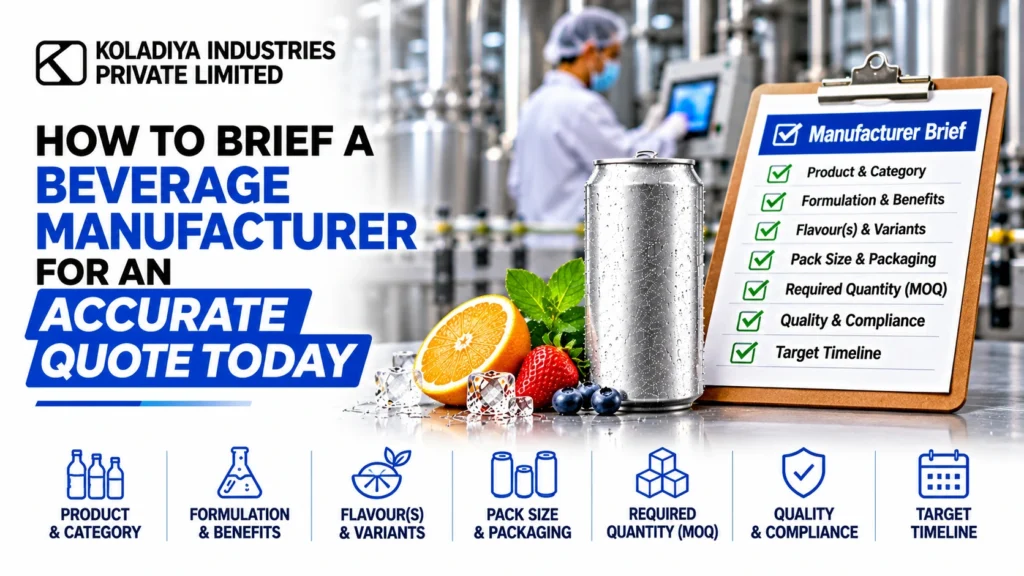
Koladiya Industries can be approached to discuss your ready-to-drink tea manufacturing requirements, planned order quantities, packaging preferences, and budget expectations. Whether you are preparing to launch a new beverage brand or expanding an existing product portfolio, start with a clear project brief. Include your preferred tea variety, flavor profile, pack size, estimated monthly demand, target market, and expected launch timeline.
These details help establish the scope of your project and support a more relevant discussion about manufacturing feasibility, MOQ, and pricing. Before finalizing an order, request a detailed quotation that separates product development, ingredients, packaging, processing, quality testing, and logistics wherever applicable. Confirm the manufacturing arrangements, quality responsibilities, and commercial terms in writing. The goal is to find a manufacturing solution that matches your product vision, budget, and long-term business plans.
Conclusion: Find the Right Ready-to-Drink Tea Manufacturer for Your Brand
India’s ready-to-drink tea market offers opportunities for businesses that combine appealing flavors, suitable packaging, consistent quality, and careful cost planning.
Choosing the right Ready-to-Drink Tea Manufacturer requires more than comparing prices. Evaluate the MOQ, ingredient specifications, production capabilities, quality controls, packaging expenses, and complete commercial terms before making a commitment.
Koladiya Industries is a starting point for discussing your RTD tea project and evaluating the manufacturing requirements for your brand. Prepare your product specifications, estimated order quantity, and packaging preferences to make the discussion more productive.
Partner With Koladiya Industries for Your Ready-to-Drink Tea Project
Planning to launch or expand your ready-to-drink tea brand? Contact Koladiya Industries to discuss your product requirements, manufacturing options, MOQ, and customized pricing. Take the next step toward developing a beverage offering that fits your brand vision and business goals.
FAQ’s
What is the minimum order quantity (MOQ) for ready-to-drink tea manufacturing?
The MOQ varies by manufacturer, packaging format, and product formulation. Standard packaging may offer more flexibility, while customized bottles, labels, and flavors may require larger order quantities.
How do I choose the right Ready-to-Drink Tea Manufacturer in India?
Choose a manufacturer based on production capabilities, quality control, packaging options, food safety compliance, pricing transparency, and MOQ. Review the manufacturing terms before placing your first order.
Can I launch my own private-label ready-to-drink tea brand?
Yes, businesses can explore private-label or contract manufacturing to develop products under their own brand name. Discuss flavor preferences, packaging design, order quantities, and labeling requirements with the manufacturer.
What factors affect ready-to-drink tea production costs?
Key cost factors include tea ingredients, sweeteners, flavoring components, packaging materials, processing requirements, labor, quality testing, and transportation. Larger production volumes may reduce the per-unit cost, depending on the manufacturing arrangement.
Which packaging options are available for ready-to-drink tea?
Common packaging options include PET bottles, glass bottles, and cans. The suitable format depends on the beverage formulation, processing method, shelf-life requirements, target audience, and distribution needs.
How can I get a ready-to-drink tea manufacturing quotation from Koladiya Industries?
To discuss your requirements with Koladiya Industries, prepare details such as your preferred tea flavor, pack size, packaging type, expected order quantity, and customization needs. These details can help establish the project scope and support a relevant manufacturing quotation.