Launching a protein water brand can be an exciting opportunity for startups, fitness companies, nutrition brands, beverage entrepreneurs, and distributors. As consumers increasingly look for convenient functional beverages, protein water offers a refreshing alternative to traditional protein shakes and heavy nutritional drinks. However, bringing a canned protein water product to market involves much more than simply developing a recipe. You also need to consider formulation, protein stability, flavour, packaging, shelf life, quality control, production capacity, minimum order quantities, and overall manufacturing costs. For this reason, choosing the right protein water in can contract manufacturer can have a direct impact on the success of your beverage brand.
Instead of investing in your own manufacturing plant, you can work with an experienced contract manufacturer that already has the production infrastructure, technical knowledge, quality systems, and packaging capabilities required to manufacture your product. This startup guide explains what you should look for in a protein water manufacturer, how the production process works, what affects your costs, and how to choose a partner that can support your brand from the first batch through long-term commercial growth.
Why Protein Water in Cans Is an Attractive Business Opportunity
First of all, packaging plays an important role in the success of a ready-to-drink beverage. Protein water in cans combines functional nutrition with portability, convenience, and a modern appearance. Unlike traditional protein shakes, protein water is generally positioned as a lighter and more refreshing beverage. As a result, it can appeal to consumers who want protein without the heavier texture associated with conventional protein drinks.
Furthermore, cans are convenient for gyms, sports facilities, supermarkets, convenience stores, cafés, vending machines, events, and online beverage businesses. Because cans are easy to transport and display, they can also help startups create a consistent brand identity across different sales channels. Most importantly, working with a contract manufacturer allows you to enter the market without building your own beverage production facility. Consequently, you can invest more of your budget in branding, marketing, distribution, customer acquisition, and sales.
What Is a Protein Water Contract Manufacturer?
A protein water contract manufacturer produces your beverage according to an agreed formula, specification, and production plan. Depending on your requirements, the manufacturer may support only manufacturing or provide a complete product-development solution.
For example, a manufacturer may assist with:
- Protein water formulation
- Ingredient sourcing
- Flavour development
- Sweetener selection
- Product testing
- Stability evaluation
- Can compatibility
- Commercial production
- Can filling and seaming
- Quality control
- Secondary packaging
- Batch coding
- Dispatch and logistics coordination
Therefore, it is important to determine exactly what services a manufacturer provides before placing an order.
Contract Manufacturing
With contract manufacturing, you normally provide an existing formula or detailed product specification, and the manufacturer produces the beverage according to your requirements.
This option works particularly well when you already have a validated recipe and simply need reliable production capacity.
Private Label Manufacturing
With private label manufacturing, the manufacturer may provide an existing or semi-custom formulation that can be produced under your own brand.
As a result, startups can reduce product-development time and enter the market more quickly.
OEM or ODM Manufacturing
OEM/ODM manufacturing can be especially useful. In this model, the manufacturer can work with you to develop the product around your desired protein content, flavour, ingredients, target market, packaging, and price range.
Consequently, this approach is often suitable for brands launching their first functional beverage.
What Makes Protein Water Formulation Different?
At first glance, protein water may appear to be a simple product. In reality, however, formulation can be technically challenging.
Protein ingredients can influence taste, texture, clarity, stability, and processing performance. Therefore, your manufacturer needs to understand how the selected protein behaves throughout the production and storage process.
Protein Content
To begin with, determine how much protein you want in each can. Your target depends on your intended consumer and product positioning.
For instance, a sports nutrition brand may prefer a higher-protein formulation, whereas a lifestyle beverage brand may focus on moderate protein combined with hydration and a lighter drinking experience.
Flavour
Next, flavour development becomes critical. Protein can sometimes create unwanted taste characteristics, so the formulation must be carefully balanced.
Popular flavour directions can include fruit-based and refreshing profiles because they can complement the positioning of protein water as a lighter beverage.
Sweetness
In addition, your sweetener system can affect taste, calories, ingredient cost, and consumer positioning.
Whether you prefer a conventional, reduced-sugar, or low-calorie product, the final formula should be developed around your target market rather than simply selecting ingredients based on price.
Stability
Most importantly, the product needs to remain stable during its intended shelf life.
The manufacturer should evaluate factors such as separation, sedimentation, flavour changes, appearance, and overall product performance. By addressing these issues during development, you can reduce the risk of problems after commercial production.
Why Can Compatibility Matters
Once you have a suitable formulation, the next consideration is packaging compatibility.
A protein water formula must be evaluated together with its intended can and production process. Otherwise, problems can appear during filling, processing, storage, or distribution.
For example, the manufacturer may need to assess:
- Can material compatibility
- Liner and closure compatibility
- Filling conditions
- Seaming performance
- Processing requirements
- Product stability
- Storage behaviour
- Shelf-life performance
Therefore, you should always choose a manufacturer with relevant experience in canned functional beverages rather than selecting a supplier based only on the lowest manufacturing quotation.
In the long run, technical reliability can be far more valuable than saving a small amount on the initial production cost.
How to Choose the Right Protein Water Can Manufacturer
Choosing a manufacturer is one of the most important decisions you will make during the launch process. Because of that, price should not be your only selection criteria.
Instead, evaluate the manufacturer across several areas.
Manufacturing Experience
First, confirm whether the manufacturer has experience producing functional beverages and canned drinks.
The more relevant its manufacturing experience, the easier it may be to identify potential formulation, processing, and packaging challenges before they become expensive problems.
Product Development Support
Next, find out whether the manufacturer can help with formulation and product development.
This is particularly valuable when you have a product idea but need support converting it into a commercially manufacturable beverage.
Quality and Food Safety
Furthermore, ask about quality-control procedures, testing, food-safety systems, batch traceability, and manufacturing standards.
A reliable production partner should have documented processes for maintaining consistent quality from one batch to another.
Production Capacity
You should also consider future growth.
Although your first production run may be relatively small, your manufacturer should ideally have the capacity to support increasing demand later.
In other words, do not choose a supplier only because it can handle your first order. Choose a potential long-term partner that can grow with your business.
Packaging Capabilities
Finally, check the available can sizes, packaging formats, decoration options, cartons, trays, and palletisation systems.
These details can influence both your branding and your logistics costs.
Understanding MOQ for Startup Protein Water Brands
Minimum order quantity, commonly referred to as MOQ, is another major consideration for startups.
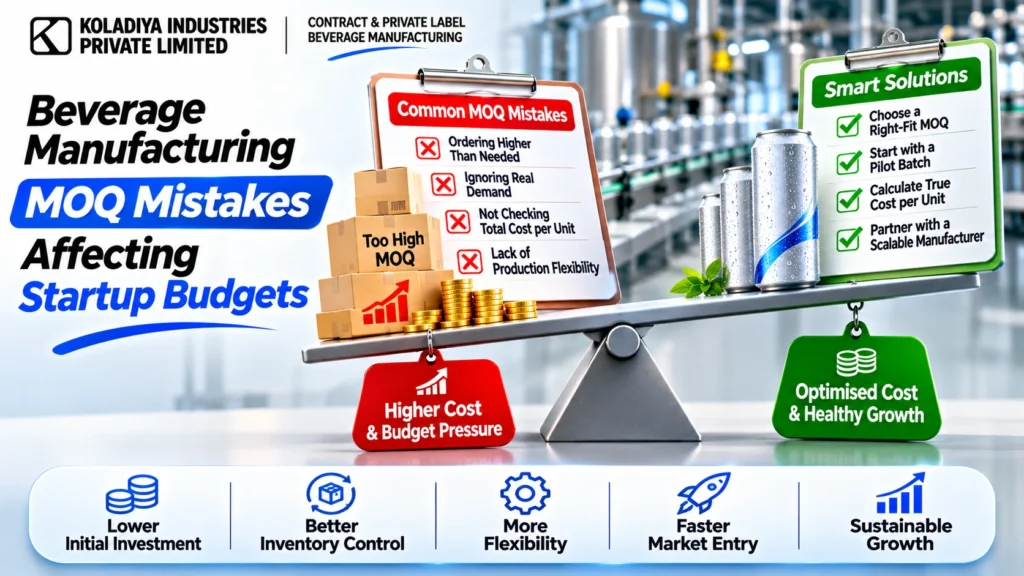
Generally, a very large MOQ can create significant financial pressure because you need to purchase a substantial amount of inventory before validating the market.
On the other hand, a very small production run may not always provide the best manufacturing economics.
Therefore, the ideal solution is often a manufacturer that offers a practical pilot batch followed by scalable commercial production.
A pilot run allows you to test:
- Customer response
- Flavour acceptance
- Retailer interest
- Packaging performance
- Pricing
- Distribution
- Repeat purchase potential
Once the product proves itself, you can move toward larger production volumes.
What Determines Protein Water Manufacturing Cost?
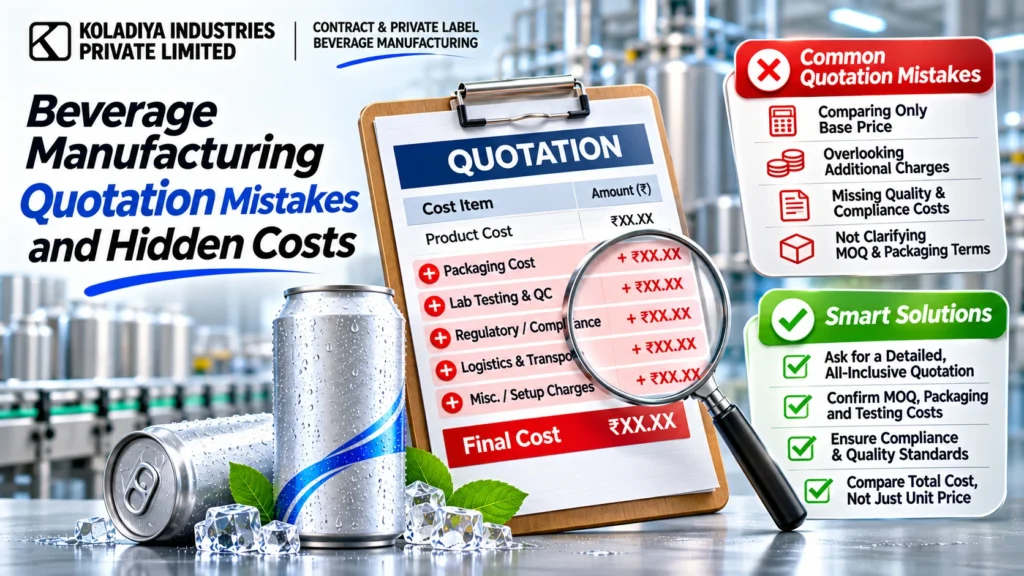
The cost of manufacturing canned protein water varies from project to project. For that reason, a manufacturer cannot provide a meaningful final quotation without understanding your product specifications.
Several factors influence the overall cost.
Protein Ingredients
Protein is often one of the key raw-material costs. Therefore, the selected protein type, concentration, quality, and supplier can have a meaningful impact on your final manufacturing price.
Flavours and Functional Ingredients
Similarly, premium flavours, vitamins, minerals, electrolytes, amino acids, sweeteners, or other functional ingredients may increase the formula cost.
Can and Packaging
The type and size of the can, decoration method, secondary packaging, cartons, labels, trays, and other packaging requirements all affect the final cost.
Production Volume
Moreover, production volume has a major impact on unit economics. Larger runs can often provide better manufacturing efficiency than small batches.
Testing and Development
If you require a completely custom formula, additional costs may arise for sample development, testing, stability work, and production trials.
Transportation
Finally, transportation, warehousing, destination, and distribution requirements should be included when calculating your actual landed cost.
For this reason, startups should compare the complete manufacturing proposal, rather than simply choosing the lowest per-can price.
What Should You Include in Your Manufacturing Enquiry?
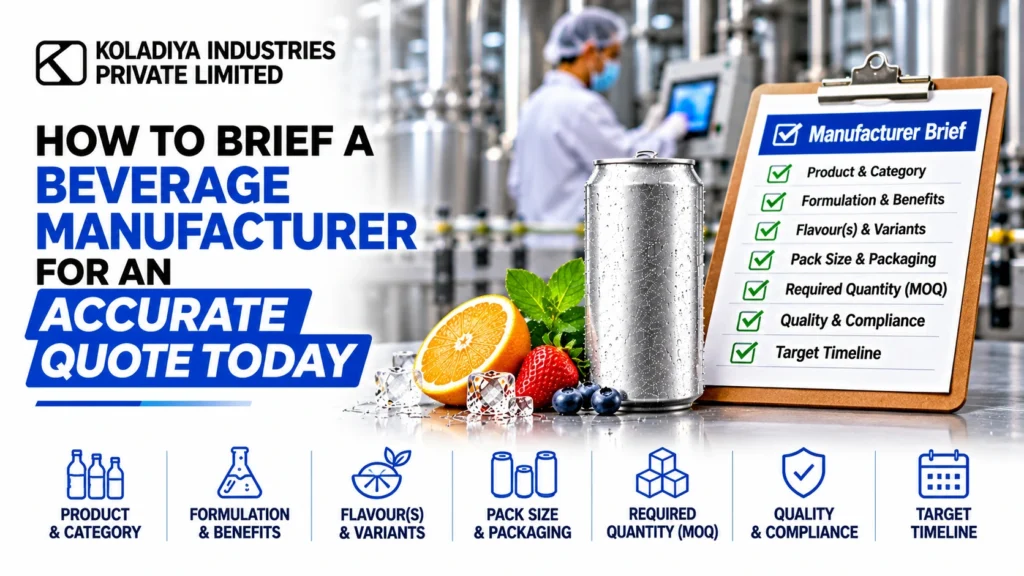
To receive a more accurate quotation and faster response, prepare a basic product brief before approaching manufacturers.
Ideally, provide:
- Brand name
- Product concept
- Desired protein content
- Protein source preference
- Flavour preference
- Sweetener preference
- Functional ingredients
- Can size
- Expected shelf life
- Initial order quantity
- Estimated monthly requirement
- Target market
- Domestic or export requirement
- Existing formulation, if available
- Packaging expectations
- Target cost range
However, you do not need to have every detail finalized.
A capable manufacturer can help identify missing specifications and guide you through the development process.
Protein Water Manufacturing Process: From Idea to Market
After selecting your manufacturing partner, the project normally moves through several stages.
Step 1: Product Brief
First, you submit your concept and core product requirements.
Step 2: Technical Evaluation
Next, the manufacturer reviews the formula requirements, ingredients, packaging, and production feasibility.
Step 3: Product Development
If necessary, the manufacturer develops samples and adjusts the formulation to achieve the required flavour, protein level, appearance, stability, and cost.
Step 4: Testing and Validation
The product is then evaluated according to applicable quality and stability requirements.
Step 5: Packaging Approval
Once the formula is approved, the can specifications and packaging details are finalized.
Step 6: Pilot Production
A pilot batch provides an important opportunity to validate the product under actual manufacturing conditions.
Step 7: Commercial Production
After all specifications are approved, the manufacturer proceeds with larger-scale production.
Step 8: Packing and Delivery
Finally, the finished cans are packed, prepared for shipment, and delivered according to the agreed supply plan.
Because these stages are connected, having one manufacturing partner manage multiple steps can simplify communication and reduce coordination problems.
Why Contract Manufacturing Makes Sense for Startups
Building an in-house beverage production facility requires significant capital investment. You would need manufacturing equipment, filling systems, storage space, quality laboratories, technical staff, utilities, maintenance, compliance systems, and ongoing operational management. By contrast, contract manufacturing gives you access to an established production ecosystem.
Consequently, you can concentrate on the commercial side of your business, including:
- Brand development
- Marketing
- Sales
- Distribution
- Retail partnerships
- Customer acquisition
- Social media
- Market expansion
At the same time, your manufacturing partner manages the production side.
This approach can make it easier to test the market before committing to major infrastructure investments.
Why Koladiya Industries Can Be Considered for Canned Protein Water
For startups searching for a beverage manufacturing partner, Koladiya Industries is an option to evaluate for canned beverage production and private label requirements.
The company offers beverage manufacturing and product-development services designed to support brands from product concept through production. Its capabilities can be particularly relevant for businesses that need assistance with formulation, packaging, and scalable canned beverage manufacturing.
However, the right manufacturer should always be selected based on your specific project requirements.
Before placing an order, review the proposed formula, MOQ, packaging, production timeline, testing requirements, quality systems, commercial pricing, and future scalability.
How to Turn Your Protein Water Idea Into a Commercial Product
The strongest way to approach a manufacturer is with a clear business objective.
Rather than asking only, “What is your protein water manufacturing price?” explain what you are trying to build.
For example, tell the manufacturer your target consumers, desired protein level, flavour direction, can size, estimated quantity, target market, and expected launch timeline.
As a result, the manufacturer can provide a much more relevant recommendation and quotation.
Moreover, discussing your expected future volumes can help the manufacturer understand whether you are looking for a one-time production order or a long-term manufacturing relationship.
Conclusion: Choose a Manufacturer That Can Grow With Your Brand
Launching a canned protein water product requires careful planning. From formulation and protein stability to packaging, quality control, MOQ, manufacturing costs, and scalability, every stage can affect the final success of your product. For that reason, choosing the right protein water in can contract manufacturer is not simply a sourcing decision. It is a strategic business decision.
A strong manufacturing partner should provide more than production capacity. Ideally, it should offer technical guidance, formulation support, quality management, flexible production options, dependable packaging solutions, and the ability to scale as demand increases.
Ultimately, your goal should be to move efficiently from product idea → formulation → sample → pilot batch → commercial production → market expansion.
If you are planning to launch your own protein water in cans, the next step is to prepare your product requirements and request a detailed manufacturing discussion.
Ready to develop your protein water brand? Contact Koladiya Industries with your desired protein level, flavour, can size, packaging requirements, and expected quantity to discuss your product development and contract manufacturing requirements. With the right formulation and the right manufacturing partner, your protein water concept can move from an idea into a market-ready beverage brand.
FAQ’s
Why choose canned protein water for a beverage brand?
Canned protein water offers convenient, portable nutrition and can help brands target fitness, wellness, sports, and active-lifestyle consumers.
Can I develop a custom protein water formula?
Yes. Manufacturers can support customized formulations based on protein content, flavor, sweetness, functional ingredients, and targeted nutritional requirements.
What can sizes are available for protein water?
Common options include compact and standard beverage can sizes. The right size depends on serving requirements, positioning, and target market.
What is the minimum order quantity for canned protein water?
MOQ varies by manufacturer, formulation, packaging requirements, and production scale. Discussing your expected volume early can help identify the most suitable production option.
Can a contract manufacturer provide private-label protein water?
Yes. Private-label manufacturing allows brands to launch protein water under their own brand name, including customized formulas, can designs, labels, and packaging.
How do I choose the right protein water in can contract manufacturer?
Look for a manufacturer with beverage formulation expertise, suitable canning capabilities, strong quality-control systems, flexible customization, and experience supporting new and established beverage brands.