The Indian beverage industry offers exciting opportunities for startups, retailers, distributors, and established businesses that want to launch their own drink brands. From energy drinks and flavored water to functional beverages and non-alcoholic drinks, consumer demand continues to create opportunities for new products. However, starting a beverage business requires more than an attractive brand name and creative packaging. Businesses must also manage product development, sourcing, manufacturing, quality control, and packaging. Private labeling beverage manufacturing services in India provide a practical way to enter this competitive market without building an entire production facility. Instead of investing heavily in manufacturing equipment, businesses can partner with a beverage manufacturer that produces drinks according to their product requirements.
This approach allows brands to focus on marketing, distribution, customer relationships, and business growth. Moreover, the right manufacturing partner can help streamline product development and turn a beverage concept into a market-ready product.
What Is Private Labeling Beverage Manufacturing?
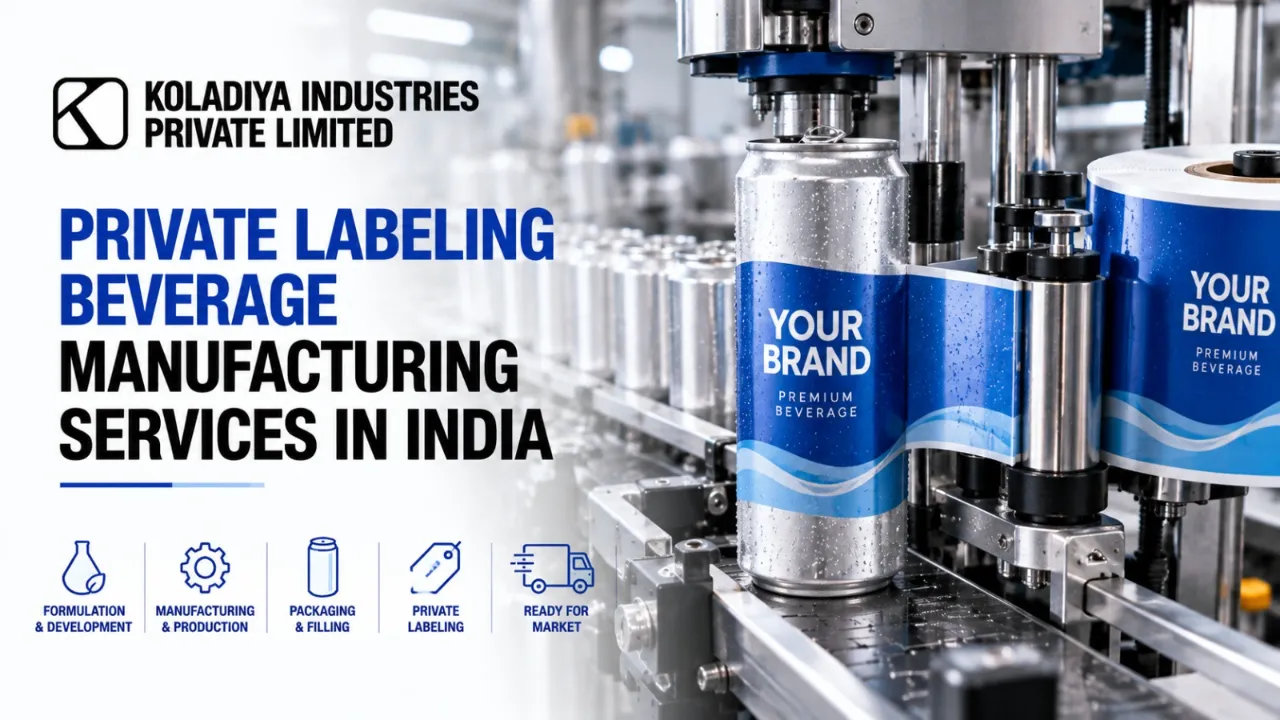
Private label beverage manufacturing is a business arrangement in which a manufacturer produces beverages that another company sells under its own brand name. The brand owner manages activities such as brand positioning, marketing, and sales, while the manufacturing partner handles agreed production responsibilities.
For example, an entrepreneur may want to launch a flavored water brand but lack the equipment and technical knowledge required to manufacture it. By partnering with a suitable beverage manufacturer, the entrepreneur can explore product formulation, packaging options, and production requirements without establishing a dedicated factory.
Furthermore, private labeling gives businesses opportunities to develop products for specific customer groups. A brand might target fitness enthusiasts, young adults, working professionals, or consumers looking for refreshing everyday beverages.
Depending on the manufacturer’s capabilities, businesses can explore different beverage categories, recipes, packaging formats, and production volumes.
Why Choose Private Labeling Beverage Manufacturing Services in India?
India offers opportunities for beverage brands across retail stores, supermarkets, hospitality businesses, online marketplaces, and distribution networks. Private label manufacturing helps businesses explore these opportunities with a more focused investment strategy.
1. Reduce Initial Infrastructure Investment
Building a beverage manufacturing facility requires significant spending on machinery, production space, utilities, staffing, and quality-control systems. In addition, businesses must manage maintenance and production operations.
Private label manufacturing can reduce the need for these investments. Instead, companies can work with an established manufacturing partner and allocate more resources to branding, sales, and distribution.
However, the overall investment still depends on the beverage category, minimum order quantity, packaging materials, formulation requirements, and other production expenses.
2. Build Your Own Beverage Brand
Private labeling allows businesses to establish a distinctive identity in the beverage market. Companies can develop their brand name, visual identity, packaging design, and marketing strategy around their target audience.
For instance, a startup could introduce a refreshing fruit-flavored drink, while a fitness-focused business could explore a suitable functional beverage concept.
As a result, businesses can build brand recognition and create opportunities for repeat purchases without operating their own manufacturing facility.
3. Explore Product Customization
Modern consumers have varied tastes and preferences. Consequently, beverage businesses often need products that offer something different from established competitors.
Depending on production capabilities, private label manufacturers may support discussions around flavor profiles, sweetness levels, ingredient selection, beverage composition, and packaging formats.
Before production begins, businesses should discuss their product goals with the manufacturer and establish clear specifications. This process helps both parties understand the expected product characteristics and production requirements.
4. Focus on Sales and Market Expansion
Manufacturing requires technical expertise, operational planning, and consistent coordination. When a qualified manufacturing partner manages the agreed production activities, brand owners can devote more attention to customer acquisition and distribution.
For example, a company can develop relationships with retailers, identify suitable distributors, run digital marketing campaigns, and collect customer feedback. Over time, these activities can help the business understand demand and plan future product launches.
Types of Beverages You Can Develop Under Your Own Brand
Private label beverage manufacturing may cover several categories, depending on the manufacturer’s facilities, expertise, and product capabilities.
Energy drinks: Businesses can explore energy drink concepts for customers seeking convenient beverage options. Product development should consider the intended audience, ingredient requirements, formulation, labeling, and applicable regulations.
Flavored water: Flavored water offers opportunities for brands that want to develop refreshing drinks with distinctive taste profiles. Businesses can discuss flavor selection, packaging, and the desired product positioning with their manufacturing partner.
Protein water: Brands targeting sports nutrition and active lifestyles may explore protein water concepts. However, formulation, ingredient compatibility, stability, and appropriate product claims require careful evaluation.
Hydration drinks: Hydration-focused beverages may appeal to customers with active routines. Manufacturers and brand owners should define the intended product purpose, ingredient composition, and applicable labeling requirements before finalizing a formula.
Non-alcoholic beverages: Businesses can explore different non-alcoholic beverage concepts based on their target audience and market positioning. Product feasibility depends on the manufacturer’s capabilities and the specific formulation.
The best category depends on customer demand, market competition, pricing, production feasibility, and the brand’s long-term objectives.
How the Private Labeling Beverage Manufacturing Process Works
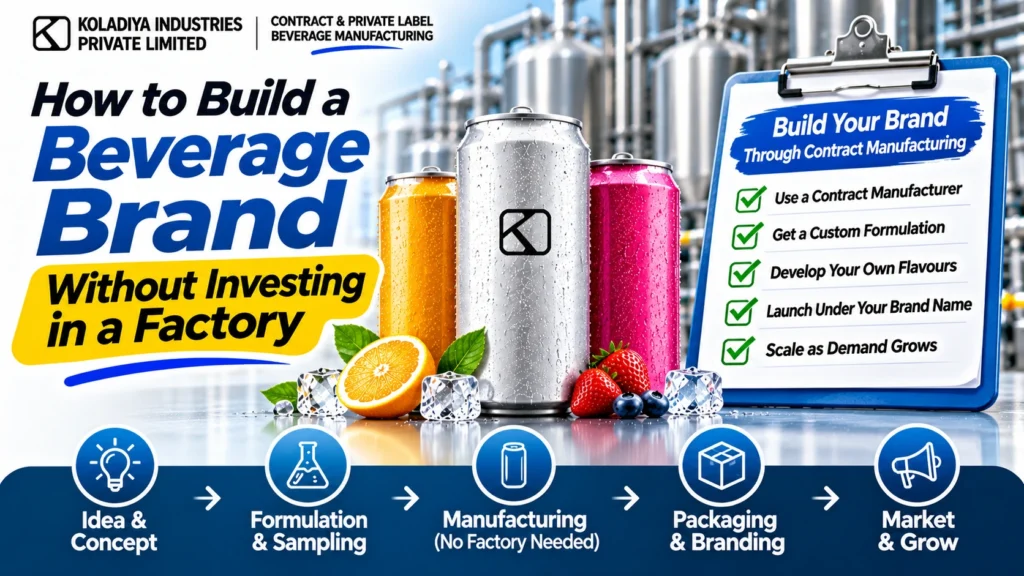
A structured manufacturing process helps businesses move from an initial idea to commercial production. Although individual manufacturers follow different procedures, most projects involve several important stages.
Step 1: Define Your Beverage Concept
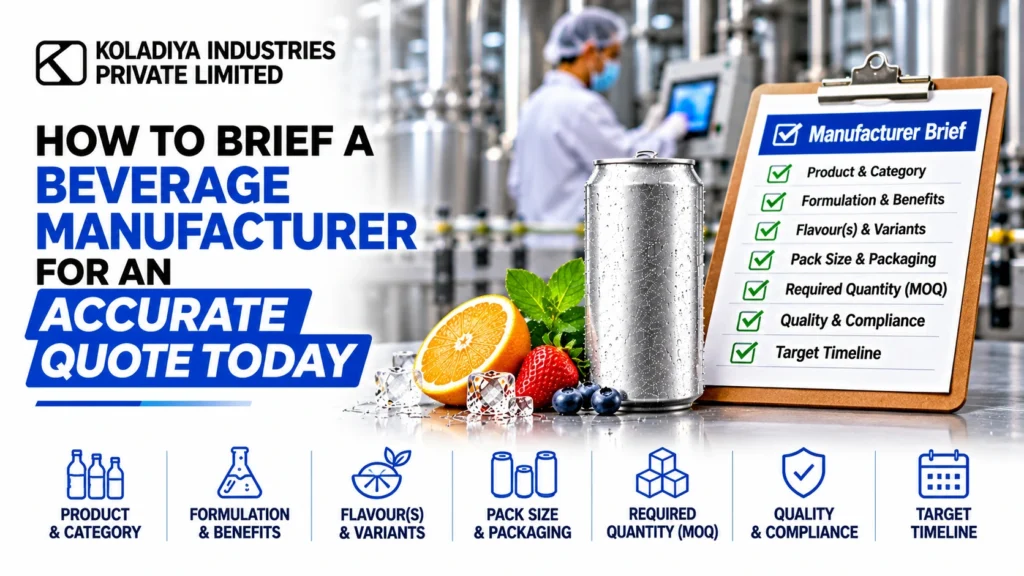
Start by identifying the beverage you want to launch. Consider your target customers, preferred flavor profile, price range, distribution strategy, and brand positioning.
You should also research competing products and identify what makes your concept different. These insights can help you communicate a clearer brief to your manufacturing partner.
Step 2: Discuss Formulation and Product Development
Once you define the concept, discuss formulation requirements with the manufacturer. These discussions may cover ingredients, flavor development, sweetness, functional components, product stability, and other technical considerations.
Next, evaluate available development options and determine whether the proposed formulation suits your business objectives.
Where appropriate, request product samples and assess taste, appearance, and other relevant characteristics before approving the final specifications.
Step 3: Finalize Packaging and Branding
Packaging influences product protection, convenience, shelf appeal, and brand recognition. Depending on manufacturing capabilities, businesses may explore cans, bottles, or other suitable formats.
At this stage, finalize the packaging size, artwork, label information, and branding requirements. In addition, confirm that the chosen packaging suits the beverage formulation and intended distribution conditions.
Step 4: Confirm Commercial and Production Requirements
Before manufacturing begins, discuss minimum order quantities, pricing, lead times, payment terms, raw material availability, and production scheduling.
These details help you calculate the investment required for the initial launch. They also allow you to plan inventory, transportation, distributor requirements, and future orders more effectively.
Step 5: Review Quality and Regulatory Requirements
Beverage businesses must address product safety, quality consistency, and applicable food regulations. Therefore, review the manufacturer’s quality procedures, testing arrangements, documentation, and relevant licenses or certifications.
For products sold in India, confirm applicable FSSAI requirements and labeling rules, along with any category-specific obligations. Requirements may vary according to the ingredients, product type, claims, and intended market.
Step 6: Begin Production and Plan Distribution
After the business approves the formulation, packaging, specifications, and commercial terms, the manufacturer can schedule production according to the agreed plan.
Meanwhile, the brand owner should prepare distribution, marketing, inventory management, and sales activities. Coordinating these tasks can help the business introduce its beverage more efficiently and respond to early customer feedback.
How to Choose the Right Private Label Beverage Manufacturer in India
Selecting a manufacturing partner requires careful evaluation. A low quotation alone does not guarantee a suitable business relationship.
First, assess the manufacturer’s experience with your intended beverage category. Different products may require different equipment, ingredients, processing methods, and quality-control procedures.
Second, confirm production capacity and minimum order quantities. Startups often need manageable initial volumes, while established brands may require larger and more frequent production runs.
Third, ask about customization. Find out whether the manufacturer can support your preferred formulation, packaging format, and product specifications.
Fourth, review quality management practices and regulatory documentation. A reliable partner should explain its processes clearly and provide appropriate documentation relevant to your project.
Finally, evaluate communication, pricing transparency, production timelines, and future scalability. A manufacturer that understands your commercial objectives can help you plan beyond the first order.
What Affects the Cost of Private Label Beverage Manufacturing?
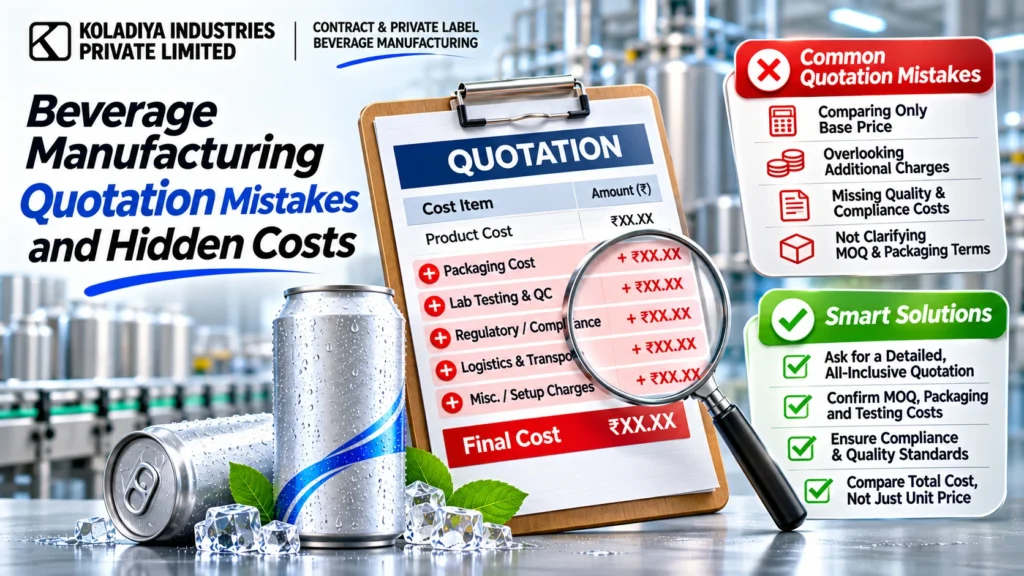
The cost of launching a private label beverage depends on several factors. These include the beverage category, ingredient selection, formulation complexity, production volume, packaging material, label design, testing requirements, and logistics.
Minimum order quantities can significantly influence the initial budget. Smaller orders may involve higher per-unit costs, while larger orders may improve production economics but require more working capital and storage.
Customization can also affect cost. Specialized ingredients, unique packaging, additional product testing, or complex formulations may increase development expenses.
Therefore, request a detailed quotation that separates relevant setup, production, packaging, testing, and other applicable charges. This approach makes it easier to compare manufacturers and estimate your total launch investment.
Common Mistakes to Avoid
New beverage brands sometimes prioritize packaging and advertising before confirming product feasibility. Instead, validate the product concept, target price, and manufacturing requirements early.
Another common mistake involves choosing a manufacturer based only on the lowest quoted price. Always consider quality controls, technical capabilities, reliability, and communication.
Additionally, avoid placing large orders without evaluating the product and understanding likely market demand. Where feasible, plan a controlled launch that supports customer feedback and realistic inventory management.
Finally, do not overlook labeling, shelf-life validation, regulatory compliance, and distribution costs. Careful planning across these areas can reduce unnecessary delays and help protect your brand’s reputation.
Conclusion
Private labeling beverage manufacturing services in India offer a practical route for businesses that want to launch their own beverage brands without establishing a dedicated production facility. With the right manufacturing partner, companies can explore product development, packaging customization, and commercial production while focusing on marketing and distribution.
However, success requires more than finding a manufacturer. Businesses should evaluate consumer demand, define clear product specifications, understand production costs, and confirm applicable quality and regulatory requirements.
For startups and established companies alike, a well-planned manufacturing partnership can create a foundation for product launches and long-term brand development.
Planning to launch your own beverage brand?
Koladiya Industries can be a starting point for businesses exploring beverage manufacturing opportunities. Discuss your beverage concept, target market, packaging preferences, and production requirements to identify suitable next steps for your brand.
FAQ’s:
How do I find private label beverage manufacturers in India?
Evaluate manufacturers based on beverage category experience, production capacity, customization options, quality-control procedures, regulatory compliance, minimum order quantities, and pricing.
Which beverages can I launch through private label manufacturing?
Depending on the manufacturer's capabilities, you can explore energy drinks, flavored water, hydration drinks, protein water, soft drinks, and other non-alcoholic beverages.
What is the minimum order quantity for private label beverage manufacturing?
The minimum order quantity varies by manufacturer, beverage type, packaging format, and formulation requirements. Discuss your initial production needs with the manufacturer before finalizing your budget.
Can I customize the flavor and packaging of my private label beverage?
Yes, many manufacturers offer customization options based on their capabilities. You can discuss flavor profiles, ingredients, packaging formats, container sizes, and label designs before confirming product specifications.
How much does private label beverage manufacturing cost in India?
The cost depends on formulation, ingredients, production volume, packaging, testing, labeling, and logistics. Request a detailed quotation to estimate your total investment and compare manufacturing options.
How can Koladiya Industries help businesses launch their own beverage brands?
Koladiya Industries can be a starting point for businesses exploring beverage manufacturing opportunities. Share your beverage concept, target market, packaging preferences, and production requirements to discuss suitable manufacturing options.