The demand for non-alcoholic beverages continues to create new opportunities for beverage brands in India. Today, consumers look for refreshing drinks that suit different lifestyles, social occasions, and personal preferences. As a result, non-alcoholic beer has become an interesting product category for startups, emerging beverage companies, and established brands that want to diversify their portfolios.
However, launching a successful product requires more than an attractive brand name and appealing packaging. Businesses must develop the right flavour, maintain consistent quality, select suitable packaging, and establish a reliable production process. Therefore, partnering with an experienced non alcoholic beer manufacturer in India can help growing brands turn their product concepts into market-ready beverages.
Partnering with a contract manufacturer helps businesses enter the non-alcoholic beer market without the high initial investment required to establish their own production facility. With the right manufacturing partner, brands can focus on product development, marketing, distribution, and customer relationships while their partner manages the agreed manufacturing activities.
What Is Non-Alcoholic Beer?
Non-alcoholic beer offers a beer-inspired drinking experience with little or no alcohol, depending on the formulation and applicable product classification. These beverages typically use a blend of malt, hops, water, yeast, and carefully selected ingredients to create a refreshing beer-like flavour. The production process aims to create a balanced flavour, appealing aroma, and refreshing finish. Moreover, manufacturers must consider the product’s alcohol content, stability, packaging requirements, and intended shelf life from the beginning.
Non-alcoholic beer can appeal to consumers who want an alternative to traditional alcoholic beer during social gatherings, meals, celebrations, and casual occasions. Nevertheless, brands must communicate their product characteristics accurately and ensure that alcohol-related claims comply with applicable Indian regulations. For businesses, this category presents an opportunity to build a distinctive beverage offering. However, success depends on understanding the target audience and delivering a consistent product experience.
Why Growing Brands Choose Contract Manufacturing
Building a dedicated beverage manufacturing facility requires substantial investment in equipment, infrastructure, utilities, quality systems, and trained personnel. In addition, businesses must manage production planning, packaging operations, maintenance, and regulatory responsibilities. For a growing brand, contract manufacturing can provide a more flexible alternative.
1. Lower Initial Investment
A manufacturing partnership can reduce the need for a brand to purchase and maintain its own production equipment. Consequently, businesses may allocate more resources to branding, product research, market testing, and distribution.
The actual investment depends on the manufacturer’s capabilities, production volumes, formulation requirements, packaging choices, and commercial terms.
2. Access to Manufacturing Expertise
An experienced manufacturing partner can help brands evaluate formulation options, production requirements, quality procedures, and packaging compatibility. This support becomes particularly valuable for startups that lack an in-house technical team.
Furthermore, collaboration between the brand and manufacturer can help identify potential production challenges before commercial manufacturing begins.
3. Flexible Production Planning
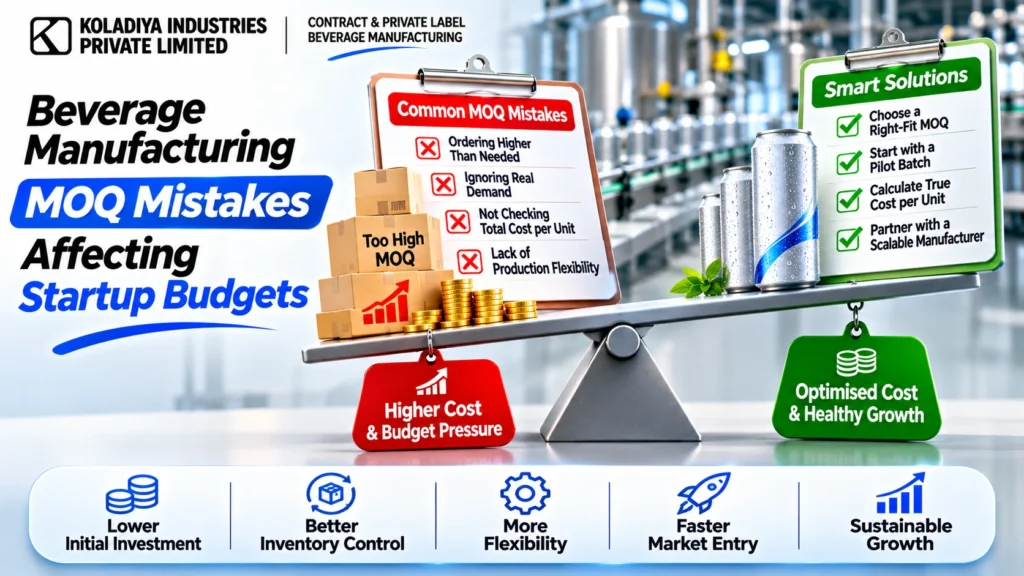
Growing businesses often need to test market demand before committing to large production volumes. Therefore, brands should discuss minimum order quantities, pilot batches, production schedules, and capacity availability with potential manufacturers.
A flexible manufacturing arrangement can help businesses plan launches more carefully and adjust production as demand develops.
4. Greater Focus on Business Growth
When a qualified partner manages the agreed production activities, brand owners can concentrate on market positioning, customer acquisition, retail relationships, and promotional campaigns.
As a result, contract manufacturing can support a more focused approach to business development.
Key Services to Look for in a Non-Alcoholic Beer Manufacturer
Not every beverage manufacturer offers the same capabilities. Therefore, businesses should assess each potential partner according to their product requirements and long-term goals.
Product Formulation and Development
Flavour plays a central role in the success of non-alcoholic beer. Consumers may expect a balanced combination of malt character, hop aroma, bitterness, and refreshment.
A suitable manufacturing partner should discuss ingredient selection, formulation trials, sensory evaluation, and product consistency. In addition, the development process should account for the intended alcohol content, ingredient specifications, and regulatory requirements.
Brands should define their desired flavour profile early. For example, some products may emphasise crispness and light bitterness, while others may aim for richer malt notes or distinctive aromatic characteristics.
Commercial Production
After the brand approves the formulation, the manufacturer must establish a process that can reproduce the desired product consistently at commercial scale.
Production planning includes ingredient procurement, batch preparation, process controls, equipment suitability, and operational scheduling. Therefore, businesses should evaluate the manufacturer’s actual experience with their intended beverage category rather than relying on general manufacturing claims alone.
Quality Assurance and Testing
Quality management protects both the product and the brand’s reputation. A dependable manufacturing partner should explain how it controls ingredients, production conditions, finished-product specifications, and batch records.
Depending on the process and formulation, the quality plan may include microbiological checks, relevant chemical testing, sensory evaluation, packaging integrity checks, and alcohol-content verification.
In addition, manufacturers and brand owners should establish clear acceptance criteria before commercial production. This approach helps both parties identify issues and maintain consistent product standards.
Packaging and Labelling Support
Packaging influences convenience, product protection, shelf presentation, and brand recognition. Depending on available manufacturing capabilities, brands may explore cans or bottles that suit their target market.
Before selecting a format, businesses should evaluate packaging compatibility, filling requirements, storage conditions, transportation needs, and expected shelf life.
Likewise, the label should accurately communicate the product’s identity, ingredients, quantity, alcohol-related information where required, and other applicable declarations. Brands must verify all labelling and compliance requirements before launching the product in India.
Understanding the Non-Alcoholic Beer Manufacturing Process
The production method depends on the formulation, desired alcohol content, processing equipment, and required product characteristics. However, manufacturers generally follow several important stages.
Step 1: Ingredient Selection
The process begins with suitable ingredients that support the desired flavour, aroma, and product profile. Consistent ingredient specifications help reduce unwanted variations between batches.
Step 2: Brewing or Beverage Preparation
The manufacturer prepares the beverage according to the approved formulation and process. Depending on the chosen method, production may involve brewing a beer base or using another suitable approach to achieve the intended product characteristics.
Step 3: Alcohol Management
The production process must achieve the alcohol content required for the product’s intended classification and market positioning. Manufacturers may use suitable process controls or alcohol-reduction techniques, depending on their equipment and formulation.
Brands should confirm the manufacturer’s capabilities and verify the final alcohol content through appropriate testing. They should also ensure that product claims match the applicable regulatory requirements.
Step 4: Stabilisation and Quality Checks
The manufacturer evaluates the beverage’s stability and selects suitable controls to protect product quality. These measures may address microbial stability, oxidation, flavour changes, and storage performance.
The precise requirements depend on the production method and formulation. Therefore, the manufacturer should determine an appropriate quality plan through technical evaluation and testing.
Step 5: Filling and Packaging
After the necessary production and quality checks, the manufacturer fills the beverage into the selected packaging format using suitable equipment and procedures.
At this stage, the team should check packaging integrity, closure quality, coding, and label accuracy. Proper handling and storage also help protect the finished product during distribution.
How to Choose the Right Manufacturing Partner
Selecting the right partner requires careful evaluation. Price matters, but it should not become the only deciding factor.
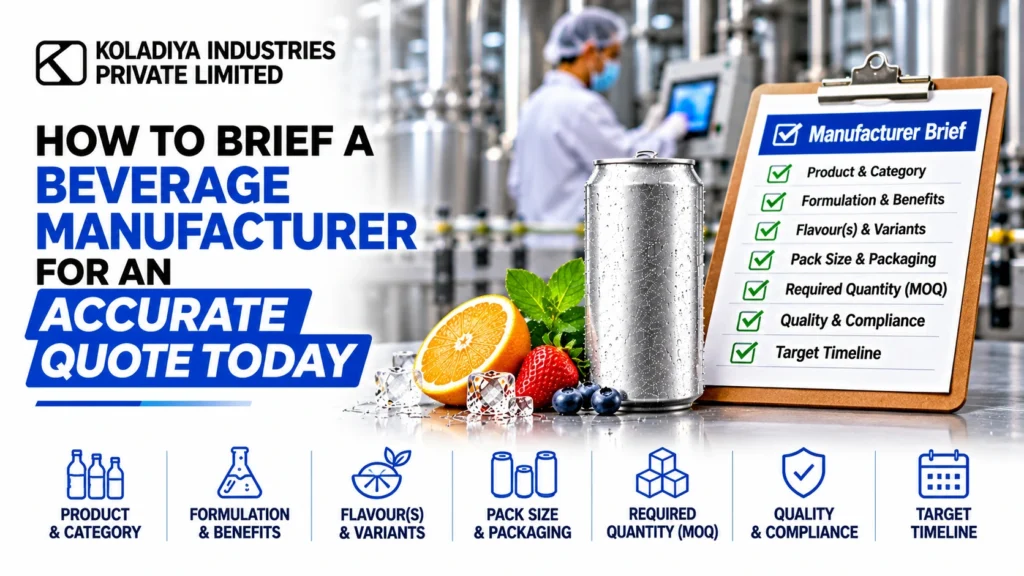
First, review the manufacturer’s experience with comparable beverage products and the specific processing requirements of non-alcoholic beer. Ask about production capacity, available packaging formats, minimum order quantities, and plans for handling future growth.
Next, examine the manufacturer’s quality systems, traceability procedures, testing capabilities, and compliance processes. Request relevant documentation and clarify who holds responsibility for each stage of production and product release.
You should also evaluate communication and transparency. A reliable partner should explain technical limitations, provide clear commercial terms, and establish realistic production timelines.
Finally, discuss confidentiality, ownership of the formulation, responsibility for sourcing ingredients, rejected-batch procedures, and arrangements for resolving quality concerns. A written agreement can help both parties understand their responsibilities.
By evaluating these factors together, growing brands can make a more informed decision and build a stronger manufacturing relationship.
Important Business Considerations Before Launch
Before launching a non-alcoholic beer brand, businesses should define their target audience, price positioning, sales channels, and product differentiation.
For example, a premium brand may prioritise distinctive flavours and sophisticated packaging. Meanwhile, a brand targeting everyday consumption may focus on accessibility, consistent taste, and competitive pricing.
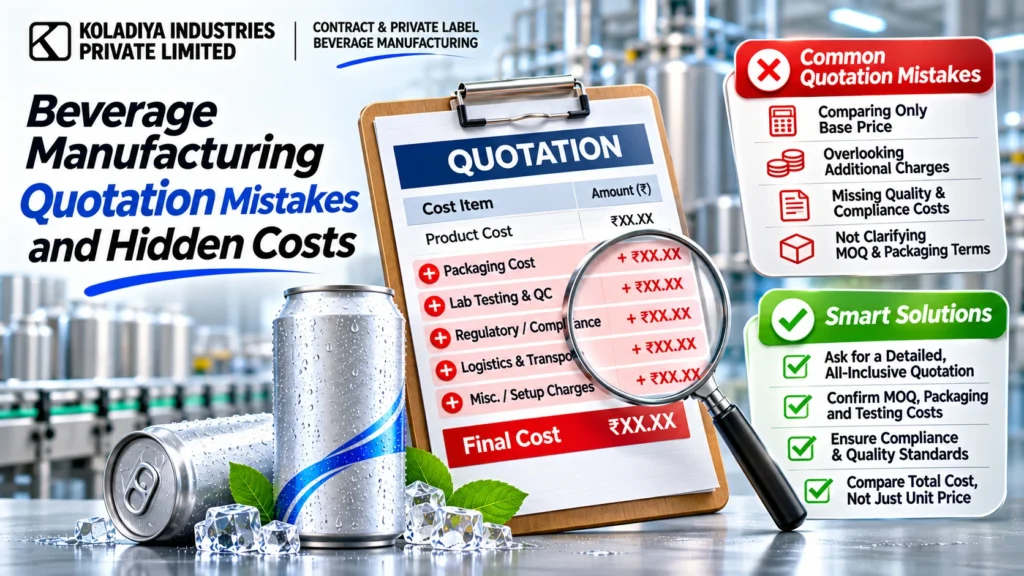
In addition, businesses should calculate the complete cost per unit. This calculation should account for ingredients, manufacturing, packaging, testing, transportation, taxes, distribution margins, marketing, and other applicable expenses.
Regulatory planning also deserves early attention. Alcohol classifications, product standards, labelling, licensing, and distribution requirements may depend on the product and the jurisdictions where a business operates. Therefore, brands should obtain qualified regulatory guidance before finalising the formulation or entering a new market.
Market testing can provide valuable insights as well. Small-scale consumer feedback, retailer discussions, and pricing research can help brands refine their product before committing to larger production volumes.
How Contract Manufacturing Supports Long-Term Growth
A successful manufacturing partnership should support more than a single product launch. As sales increase, brands may need higher production volumes, updated packaging, new flavours, or broader distribution.
Therefore, businesses should choose a partner that can explain how it plans capacity, manages supply requirements, and maintains consistency as production expands.
Regular performance reviews can help both parties assess product quality, delivery reliability, customer feedback, and production costs. Moreover, accurate forecasts and timely communication can improve ingredient planning and production scheduling.
When a brand and its manufacturing partner work towards shared objectives, they can respond more effectively to changing market requirements. This collaboration creates a stronger foundation for sustainable growth.
Conclusion
Choosing the right non alcoholic beer manufacturer in India can help growing beverage brands manage production requirements, maintain product quality, and enter the market with a clearer business strategy. Contract manufacturing provides a practical route for businesses that want to develop their products without immediately building their own manufacturing infrastructure.
However, brands should assess formulation expertise, production capabilities, quality controls, packaging options, regulatory responsibilities, and commercial transparency before selecting a partner. Furthermore, careful market research, accurate costing, and realistic production planning can improve the chances of a successful launch.
Ultimately, a strong manufacturing partnership combines technical capability with clear communication and shared business goals. By choosing the right partner and prioritising quality from the beginning, growing brands can establish a differentiated non-alcoholic beer offering and create opportunities for long-term expansion in India’s evolving beverage market.
FAQ’s
What is non-alcoholic beer contract manufacturing?
Contract manufacturing allows beverage brands to partner with a manufacturer for product development, production, and packaging without building their own facility.
Can startups work with a non alcoholic beer manufacturer?
Yes, startups can collaborate with manufacturers to develop products and enter the market, subject to minimum order quantities and commercial terms.
What services does a non alcoholic beer manufacturer provide?
Services may include formulation, ingredient sourcing, production, quality testing, filling, packaging, and product development support.
What packaging options are available for non-alcoholic beer?
Depending on the manufacturer's facilities, brands can choose cans or bottles based on product requirements, budget, and brand positioning.
How much does non-alcoholic beer manufacturing cost in India?
Costs depend on ingredients, formulation, order quantity, packaging, testing, and transportation. Request a customised quotation for an accurate estimate.
How can growing brands scale non-alcoholic beer production?
Brands can scale by forecasting demand, selecting a manufacturer with suitable capacity, maintaining consistent quality, and planning packaging and distribution effectively.