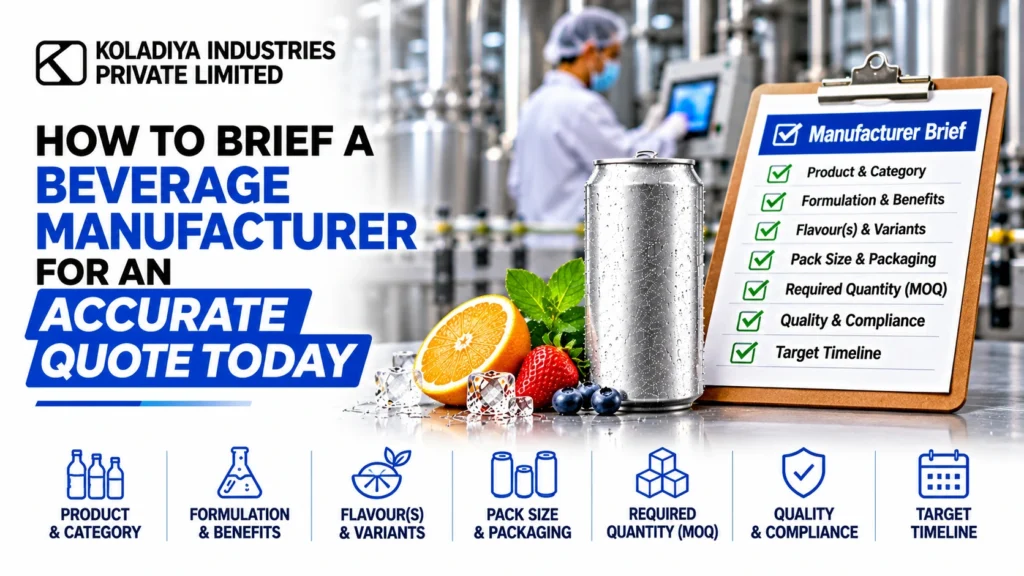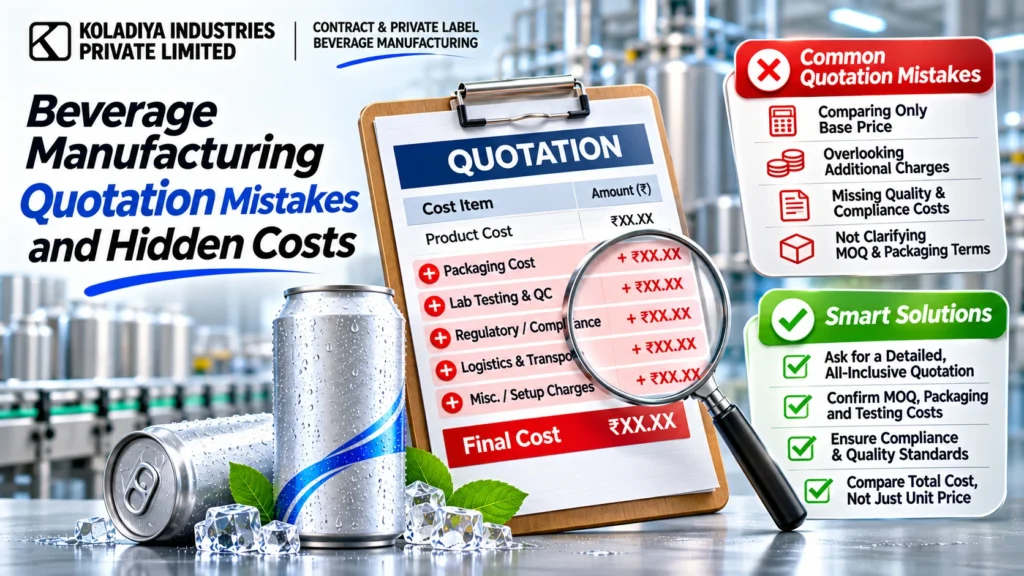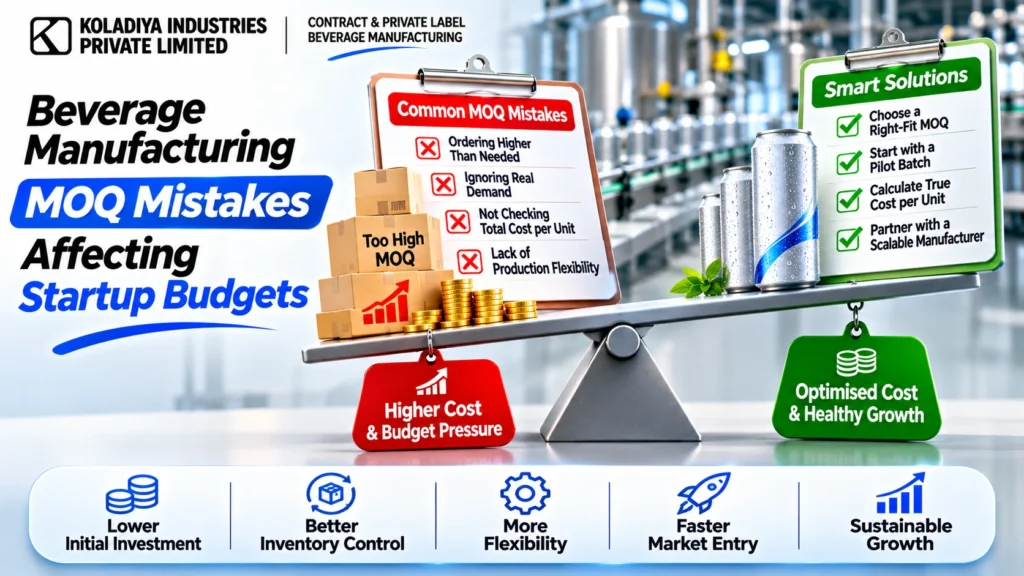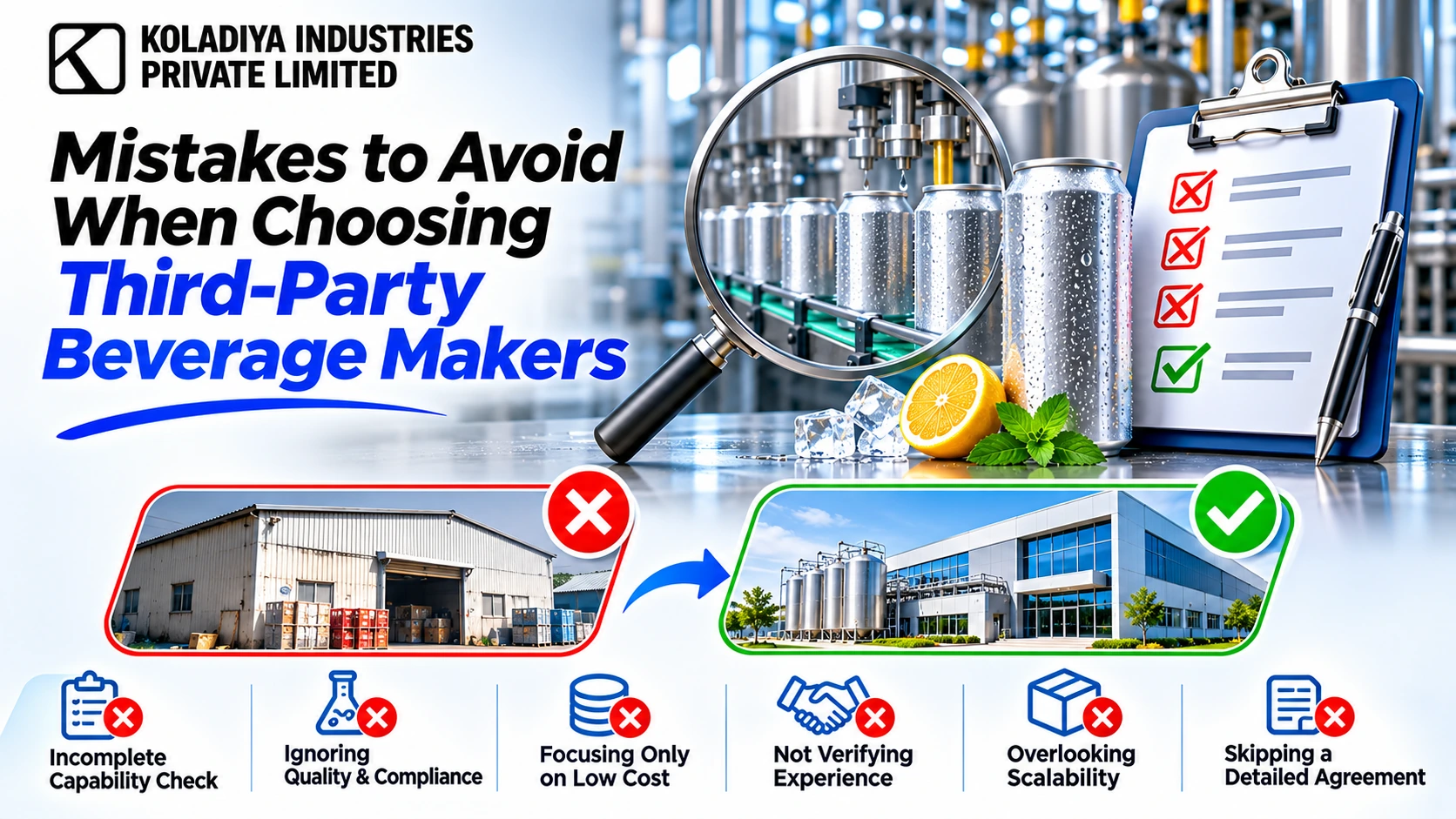
Choosing the right third-party beverage manufacturer represents a critical decision for startups, entrepreneurs, and established beverage brands. A reliable manufacturing partner helps businesses transform product concepts into market-ready beverages while maintaining product quality, controlling production costs, and supporting long-term growth. However, selecting the wrong partner can create serious challenges, including formulation problems, production delays, packaging defects, inconsistent taste, and unexpected expenses. Today, the beverage industry offers significant opportunities across energy drinks, carbonated soft drinks, sparkling water, functional beverages, fruit-based drinks, and ready-to-drink products. Consequently, brands must evaluate their manufacturing partners carefully before starting commercial production.
Moreover, businesses should look beyond manufacturing prices. They must also examine formulation expertise, ingredient sourcing, quality control, packaging capabilities, production capacity, and communication practices. We explore the most common mistakes to avoid when choosing third-party beverage makers and explain how businesses can select a reliable manufacturing partner for successful beverage development.
Why Choosing the Right Third-Party Beverage Manufacturer Matters
A third-party beverage manufacturer plays an important role in converting a business idea into a commercial product. From initial formulation to final packaging, the manufacturer supports several stages of beverage production. An entrepreneur planning to launch an energy drink needs more than a production facility. The business also requires suitable ingredients, flavour development, sweetness management, carbonation control, packaging selection, and shelf-life evaluation.
Similarly, brands developing sparkling water, tonic water, or carbonated soft drinks need manufacturing expertise that matches their product requirements.
Therefore, choosing the right partner helps businesses:
- Maintain consistent beverage quality and taste.
- Develop suitable product formulations.
- Manage production budgets effectively.
- Select appropriate packaging formats.
- Reduce manufacturing and launch delays.
- Scale production according to market demand.
- Build a reliable supply chain.
Nevertheless, several businesses overlook these factors during the manufacturer selection process.
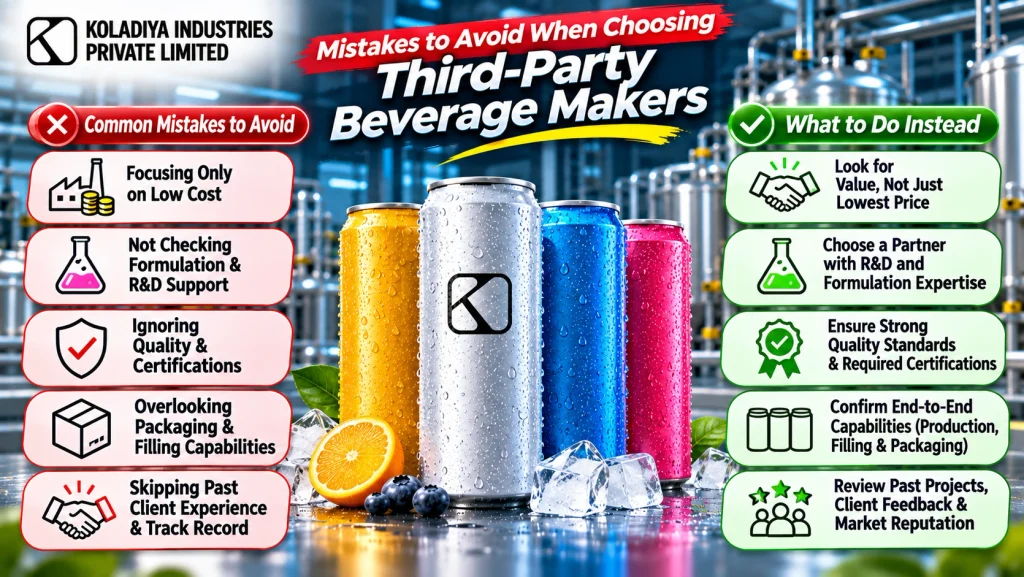
10 Common Third-Party Beverage Mistakes to Avoid
1. Choosing a Third-Party Beverage Manufacturer Based Only on Price
One of the most common mistakes involves selecting a manufacturer simply because it offers the lowest production quotation.
Although cost efficiency matters, an unusually low quotation may not include important services such as formulation development, ingredient procurement, quality testing, packaging materials, or product trials.
Furthermore, cheaper manufacturing options may create additional expenses through inconsistent production, product wastage, or unexpected revisions.
How to avoid it:
Compare quotations from multiple manufacturers and examine their cost breakdowns. Evaluate ingredient quality, formulation support, packaging options, production charges, and additional services before making a decision.
Ultimately, select a manufacturing partner that offers a suitable balance between cost, quality, and production capabilities.
2. Ignoring Third-Party Beverage Formulation and R&D Capabilities
Product formulation directly influences beverage taste, texture, appearance, stability, and consumer acceptance. However, many businesses select manufacturers without checking their research and development capabilities.
For example, an energy drink requires careful consideration of caffeine levels, sweeteners, flavouring agents, acidity regulators, functional ingredients, and carbonation.
Similarly, sugar-free energy drinks require suitable sweetener combinations to achieve the desired sweetness without creating an unpleasant aftertaste.
How to avoid it:
Evaluate the manufacturer’s formulation expertise and R&D support. Ask whether the team can assist with customized recipes, flavour development, ingredient compatibility, prototype preparation, and formulation improvements.
Additionally, request sample development before approving commercial production. This approach helps businesses assess product performance and make necessary adjustments.
3. Overlooking Third-Party Beverage Quality Control Processes
Product quality directly affects customer satisfaction and brand reputation. Unfortunately, some businesses focus heavily on production costs while overlooking the manufacturer’s quality control procedures.
Inconsistent ingredient measurements, incorrect carbonation levels, inadequate hygiene practices, and poor production monitoring can affect the final beverage.
For instance, energy drinks require consistent monitoring of sweetness, acidity, carbonation, ingredient concentrations, and other relevant product specifications.
How to avoid it:
Before selecting a manufacturer, understand its quality management procedures. Ask about raw material inspections, production monitoring, finished-product testing, hygiene practices, and batch documentation.
Furthermore, check how the manufacturer handles product deviations and corrective actions.
4. Selecting a Manufacturer Without Checking Production Capacity
Production capacity plays a significant role in meeting business requirements. Some manufacturers can handle small-scale product development but may struggle when brands increase their commercial orders.
Consequently, businesses may experience production delays, scheduling difficulties, or supply shortages during periods of growing demand.
For example, an energy drink startup may initially require a small production run. However, successful market entry could increase demand for higher volumes.
How to avoid it:
Discuss your immediate and future production requirements before signing an agreement. Evaluate the manufacturer’s equipment, production lines, available scheduling, minimum order quantities (MOQs), and ability to accommodate growing demand.
Above all, ensure that the partner can support your expected production roadmap.
5. Ignoring Third-Party Beverage Packaging Expertise
Packaging protects beverages, communicates brand identity, and influences purchasing decisions. Nevertheless, some businesses finalise a manufacturer without examining its packaging capabilities.
Different beverages require different packaging considerations. For example, carbonated soft drinks and energy drinks need packaging that suits their carbonation levels, product characteristics, and distribution conditions.
Aluminium cans, particularly 250 ml slim cans, offer an attractive format for premium energy drink brands. However, manufacturers must consider filling compatibility, can seaming, material suitability, and packaging quality.
How to avoid it:
Discuss available packaging formats, including aluminium cans, bottle options, and other suitable containers. Evaluate filling capabilities, sealing quality, labelling requirements, and packaging inspection procedures.
Additionally, confirm whether the manufacturer can accommodate your preferred packaging dimensions and branding requirements.
6. Not Checking Ingredient Sourcing and Compatibility
Ingredient selection affects flavour, colour, stability, nutritional characteristics, and overall product performance. Unfortunately, some businesses fail to examine how manufacturers source and evaluate their ingredients.
For example, energy drink formulations may include caffeine, taurine, vitamins, botanical extracts, sweeteners, preservatives, and flavouring agents, depending on the product concept.
However, certain ingredients may interact negatively with one another. Such interactions can create sedimentation, colour changes, flavour deterioration, or stability problems.
How to avoid it:
Ask about ingredient sourcing, supplier evaluation, traceability, storage conditions, and compatibility testing. Furthermore, discuss ingredient specifications and suitable alternatives before finalising the formulation.
A systematic ingredient evaluation process helps businesses reduce formulation risks.
7. Overlooking Third-Party Beverage Shelf-Life Testing
Shelf life determines how long a beverage maintains its intended quality under specified storage conditions. However, some businesses move directly from formulation approval to commercial manufacturing without sufficient stability evaluation.
This decision can create significant challenges during transportation, storage, and retail distribution.
For example, energy drinks may experience flavour changes, colour variations, carbonation loss, or other stability issues depending on their formulation, packaging, and storage conditions.
How to avoid it:
Discuss an appropriate shelf-life evaluation plan before commercial production. Depending on the product, this may include monitoring appearance, taste, aroma, pH, microbiological quality, carbonation, and packaging integrity.
Moreover, establish suitable storage conditions and product specifications with your manufacturing partner.
8. Failing to Understand Minimum Order Quantities and Production Costs
Minimum order quantities directly influence investment requirements, inventory planning, and product launch strategies.
Some manufacturers require larger production commitments, which may create difficulties for startups and emerging beverage brands.
In addition, businesses sometimes overlook expenses associated with packaging materials, ingredient procurement, product development, artwork, and testing.
How to avoid it:
Confirm the manufacturer’s MOQ, production costs, payment terms, packaging expenses, and additional charges before proceeding.
Furthermore, discuss whether the manufacturer offers suitable production options for pilot batches, initial market testing, and future commercial orders.
A transparent cost structure helps businesses manage their budgets more effectively.
9. Ignoring Communication and Project Management
Effective communication ensures smooth coordination throughout beverage development and manufacturing. However, poor communication can lead to misunderstandings, incorrect specifications, approval delays, and production complications.
For example, an energy drink brand may need several flavour revisions before approving its final formulation. Without clear communication, these changes can delay the product development process.
How to avoid it:
Choose a manufacturer that maintains clear communication throughout the project. Discuss project timelines, sample approvals, formulation changes, production schedules, and delivery expectations.
Additionally, establish clear responsibilities for both parties before manufacturing begins.
10. Not Reviewing the Manufacturing Agreement
A manufacturing agreement defines the responsibilities, expectations, and commercial terms between a beverage brand and its production partner. Nevertheless, some businesses begin manufacturing without reviewing important contractual details.
This oversight may create disagreements about product specifications, payment schedules, packaging responsibilities, rejected batches, confidentiality, or delivery commitments.
How to avoid it:
Review all contractual terms carefully before signing. Pay particular attention to pricing, MOQs, quality specifications, production timelines, intellectual property, confidentiality, payment conditions, and responsibilities for defective products.
Where necessary, seek professional legal advice to ensure that the agreement protects your business interests.
How to Evaluate a Third-Party Beverage Manufacturing Partner
Avoiding common mistakes requires a structured manufacturer evaluation process. Instead of making decisions based on promotional claims, examine the manufacturer’s practical capabilities.
Consider these important evaluation factors:
| Evaluation Factor | What to Check |
|---|---|
| Formulation and R&D | Custom recipes, flavour development, and product trials |
| Manufacturing Capacity | Equipment, production volumes, and scalability |
| Quality Control | Raw material inspections and finished-product testing |
| Ingredient Sourcing | Supplier reliability and ingredient traceability |
| Packaging Expertise | Aluminium cans, filling, and sealing capabilities |
| Shelf-Life Evaluation | Product stability and storage requirements |
| Commercial Terms | MOQ, pricing, payment terms, and additional costs |
| Project Management | Communication, approvals, and production schedules |
Consequently, a detailed evaluation helps businesses identify manufacturing partners that align with their product requirements and commercial objectives.
Third-Party Beverage Manufacturing Opportunities in the Energy Drink Industry
The energy drink market offers opportunities for businesses looking to develop differentiated beverage products. However, entering this category requires careful planning and manufacturing expertise.
Brands can explore several product concepts, including:
- Classic Energy Drinks: Formulations featuring caffeine, characteristic energy drink flavours, and carbonation.
- Zero Sugar Energy Drinks: Products that use suitable alternative sweeteners to achieve a desirable taste profile.
- Vitamin-Enhanced Energy Drinks: Formulations that combine caffeine with selected vitamins.
- Fruit-Flavoured Energy Drinks: Beverages featuring customized fruit-inspired flavour profiles.
- Functional Energy Drinks: Product concepts that combine selected functional ingredients according to the intended positioning.
Nevertheless, every formulation requires appropriate ingredient selection, compatibility evaluation, flavour development, and quality testing.
Additionally, manufacturers should consider carbonation levels, sweetness balance, acidity, packaging compatibility, and applicable regulatory requirements.
Therefore, working with a beverage manufacturer that understands formulation and commercial production can help brands develop products that meet their target market expectations.
How Koladiya Industries Supports Third-Party Beverage Manufacturing
Koladiya Industries Private Limited supports beverage brands looking for private-label and third-party beverage manufacturing solutions. The company focuses on helping businesses move from product development concepts towards commercial beverage production.
Through its beverage formulation and R&D capabilities, Koladiya Industries supports customized formulations and flavour development based on individual product requirements.
Its beverage manufacturing focus includes:
1. Beverage Formulation and R&D: Support for customized beverage formulations, flavour development, and product concept development.
2. Energy Drink Manufacturing: Development-focused manufacturing support for businesses planning classic, flavoured, and zero-sugar energy drink concepts.
3. Private-Label Manufacturing: Manufacturing support for businesses interested in launching beverage products under their own brand names.
4. Multiple Beverage Categories: Capabilities covering energy drinks, carbonated soft drinks, sparkling water, and tonic water.
5. Aluminium Can Packaging: Packaging expertise focused on 250 ml aluminium slim cans for suitable beverage applications.
6. Product Development to Commercial Production: End-to-end support across relevant development and manufacturing stages, helping brands coordinate their product requirements.
By combining formulation expertise, packaging knowledge, and manufacturing support, Koladiya Industries aims to help beverage businesses develop and launch products that align with their commercial goals.
Final Checklist Before Choosing a Third-Party Beverage Manufacturer
Before finalising your manufacturing partner, review these essential points:
- Evaluate formulation and R&D capabilities.
- Compare pricing and manufacturing quotations.
- Review quality control and testing procedures.
- Understand MOQ and production capacity.
- Check ingredient sourcing and compatibility.
- Evaluate packaging and filling capabilities.
- Discuss shelf-life testing requirements.
- Confirm production timelines and communication.
- Review payment terms and manufacturing agreements.
- Discuss future production scalability.
Ultimately, taking these precautions can help businesses minimise manufacturing risks and build a stronger foundation for long-term beverage brand development.
Conclusion
Choosing the right third-party beverage manufacturer requires more than comparing production prices. Businesses must evaluate formulation expertise, R&D capabilities, quality control, ingredient sourcing, packaging solutions, production capacity, and commercial terms before making a commitment. Furthermore, energy drink brands must pay particular attention to caffeine specifications, sweetener selection, flavour balance, carbonation, ingredient compatibility, and shelf-life evaluation. By avoiding these common mistakes, beverage startups and established businesses can make more informed manufacturing decisions, improve product consistency, and prepare for commercial growth.
Koladiya Industries Private Limited supports businesses exploring energy drink, carbonated soft drink, sparkling water, and tonic water manufacturing through formulation, R&D, private-label, and beverage manufacturing capabilities. Looking for a Reliable Third-Party Beverage Manufacturing Partner? Partner with Koladiya Industries to explore customized beverage formulation, flavour development, private-label manufacturing, and commercial production solutions.
Contact Koladiya Industries today to discuss your beverage concept, manufacturing requirements, and product development goals. Turn your beverage idea into a market-ready product with the right manufacturing support.