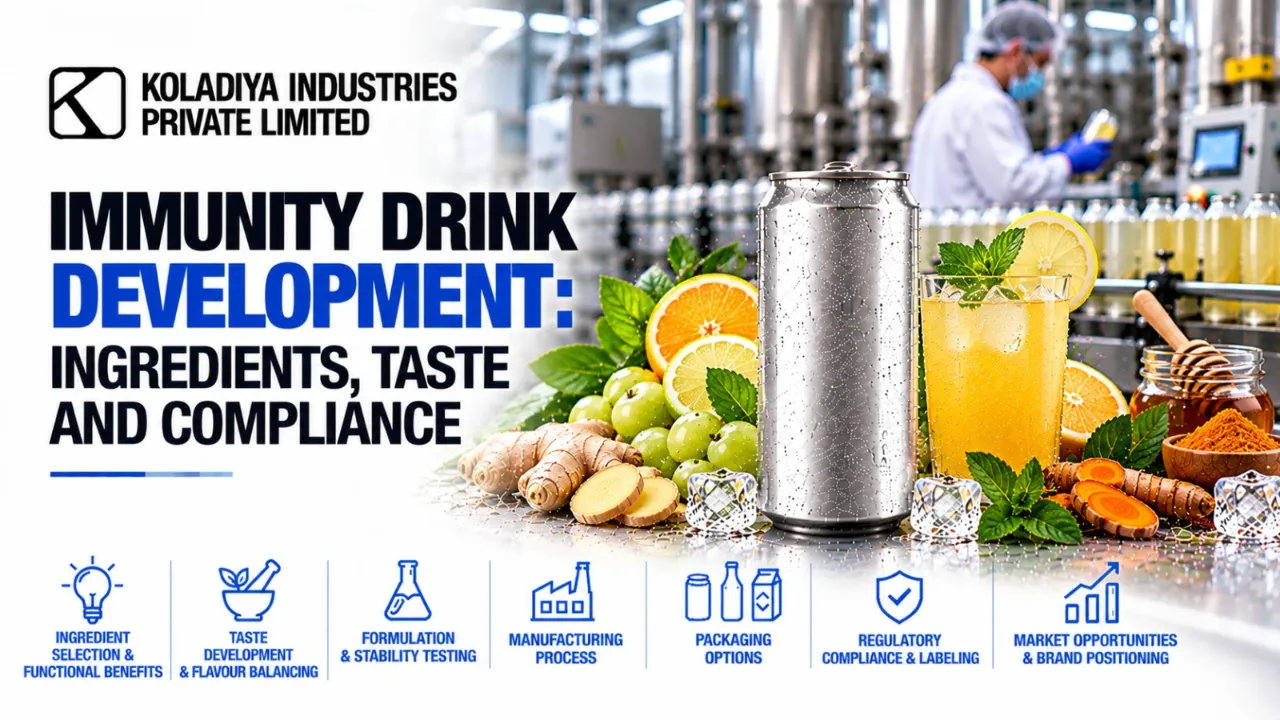
Consumers increasingly look for convenient beverages that fit into their everyday wellness routines. As a result, beverage brands are exploring formulations that combine vitamins, minerals, fruit ingredients, and carefully selected botanical extracts. However, a successful product requires more than an attractive label or a promising ingredient list. Brands must balance formulation, flavour, product stability, manufacturing requirements, and regulatory compliance. Immunity Drink Development gives beverage entrepreneurs a structured approach to turning a product concept into a market-ready beverage. From selecting suitable ingredients to refining taste and preparing for commercial production, every decision influences the final product.
For startups and established beverage businesses, Koladiya Industries can be a manufacturing partner to discuss the practical requirements of developing and producing a beverage concept.
What Is Immunity Drink Development?
Immunity Drink Development involves planning, formulating, testing, and preparing a beverage intended for a wellness-focused market. Depending on the concept, the product may contain selected vitamins, minerals, fruit juices, or botanical ingredients.
Nevertheless, brands should distinguish between a beverage that contains certain nutrients and one that makes a specific health claim. Ingredient inclusion alone does not establish that a drink can prevent illness or improve immune function.
Therefore, product developers should begin with a clear target audience, an appropriate product category, and a realistic set of product claims.
Why Immunity Drink Development Matters for Beverage Brands
A structured development process helps brands establish a consistent flavour profile, choose suitable ingredients, manage production costs, and assess shelf stability. Moreover, it allows founders to evaluate the product before committing to large manufacturing volumes.
For example, a brand might explore a citrus-based vitamin beverage, a fruit drink featuring selected botanicals, or a low-sugar wellness beverage. Each concept requires different formulation and processing decisions.
Immunity Drink Development: Choosing the Right Ingredients
Ingredient selection forms the foundation of product development. Although several ingredients attract attention in the wellness category, brands should select them according to the product concept, permitted use, formulation compatibility, and intended claims.
Vitamins and Minerals for Immunity Drink Development
Vitamin C, vitamin D, and zinc often feature in discussions about normal immune function. However, each ingredient has different formulation requirements, and brands must verify whether the proposed ingredient and quantity suit their product category.
For instance, vitamin C can support a citrus-oriented concept, while zinc may require careful flavour management because certain forms can create metallic notes. Similarly, vitamin D presents formulation challenges because its suitability depends on the selected form, delivery system, and beverage composition.
Consequently, developers should assess ingredient specifications, dosage, solubility, stability, and applicable regulatory conditions before finalising a recipe.
Fruit Ingredients and Botanical Extracts
Fruit ingredients can contribute flavour, colour, acidity, and product identity. Amla, citrus, berries, and other fruit ingredients may suit different beverage concepts.
Meanwhile, ginger, turmeric, and tulsi can support selected botanical beverage concepts. Nevertheless, brands should not assume that every botanical extract suits every beverage category or that traditional use automatically proves a health benefit.
The development team should carefully assess ingredient quality, regulatory approval, extract specifications, flavour impact, and compatibility with the overall beverage formulation.
Sweeteners, Acidity and Supporting Ingredients
Sweeteners influence mouthfeel and overall flavour balance. Depending on the target audience, developers may explore sugar, fruit-derived sweetness, or permitted low-calorie sweeteners.
Additionally, acidity regulators, stabilisers, and other permitted additives may help achieve the desired product characteristics. However, developers must select these ingredients according to the applicable food category and technical requirements.
Immunity Drink Development: Creating a Balanced Flavour Profile
Even with carefully selected ingredients, a beverage needs a pleasant and balanced flavour profile to appeal to consumers and support market success. Therefore, flavour development deserves the same attention as ingredient selection.
Balance Sweetness, Acidity and Bitterness
Vitamins, minerals, and botanical ingredients can introduce sour, bitter, earthy, or metallic notes. To address these challenges, developers should assess the complete flavour profile rather than focusing on a single ingredient.
For example, citrus flavours can complement certain acidic beverages, whereas fruit blends may help balance selected botanical notes. Ginger can add a distinctive flavour, although excessive intensity may overwhelm the rest of the formulation.
Ultimately, the goal is to create a beverage that delivers a consistent and appealing taste without relying on excessive sweetness or masking every ingredient characteristic.
Conduct Structured Sensory Testing
During Immunity Drink Development, sensory testing helps teams evaluate sweetness, aroma, acidity, aftertaste, colour, and mouthfeel.
Furthermore, brands should collect feedback from representative target consumers. Small formulation changes can make a meaningful difference to acceptance; therefore, developers should document each trial and compare results against clear sensory criteria.
Before scaling up, the team should select a preferred formulation and verify that the product performs consistently under the intended manufacturing conditions.
Immunity Drink Development: Formulation and Product Stability
A successful laboratory sample does not automatically translate into a stable commercial beverage. In fact, ingredient interactions and processing conditions can change the product over time.
Build a Formulation That Supports Consistency
Developers should establish ingredient specifications, target quantities, mixing procedures, and critical product parameters. Depending on the formulation, these parameters may include pH, soluble solids, viscosity, and the concentration of selected nutrients.
Moreover, the team should check whether ingredients dissolve properly, whether botanical components settle, and whether the beverage maintains its intended appearance.
Heat, oxygen, light, and storage conditions can also affect selected nutrients and flavour compounds. Consequently, the processing method must suit the product rather than follow a one-size-fits-all approach.
Conduct Shelf-Life and Microbiological Testing
Shelf-life testing helps establish how a beverage changes during storage. The testing programme should reflect its ingredients, processing method, packaging, and intended storage conditions.
Where appropriate, the programme may evaluate microbial safety, pH, sensory quality, nutrient retention, colour, and physical stability. Additionally, developers should verify that the chosen preservation and processing approach delivers the required safety outcome.
Brands should establish a defensible shelf life through suitable testing rather than relying solely on the appearance or taste of a freshly prepared sample.
Immunity Drink Development: Packaging and Manufacturing
Packaging affects product protection, convenience, logistics, and overall brand positioning. Therefore, brands should evaluate packaging alongside formulation instead of leaving the decision until the final production stage.
Select a Suitable Beverage Packaging Format
PET bottles may suit portable, everyday beverage concepts, while aluminium cans can work well for selected ready-to-drink products. Glass bottles may support premium positioning, although weight, handling, and breakage require consideration.
Nevertheless, the best format depends on the beverage’s acidity, processing requirements, light and oxygen sensitivity, distribution conditions, and target price.
Developers should also confirm compatibility between the formulation, closure, container, and manufacturing process.
Plan Commercial Production Early
Before choosing a production partner, brands should define their expected batch size, packaging format, target manufacturing cost, and launch timeline.
Koladiya Industries can discuss beverage manufacturing requirements with brands exploring a new product concept. Furthermore, early communication about formulation specifications, packaging preferences, and projected volumes can help both parties assess production feasibility.
Pilot trials, where available, can help identify issues before commercial-scale manufacturing begins.
Immunity Drink Development: Regulatory Compliance in India
Regulatory compliance deserves attention from the beginning of product development. In India, the appropriate product classification, permitted ingredients, labelling requirements, and advertising claims depend on the beverage and its intended presentation.
Review Product Classification and Ingredient Permissions
Brands should determine whether their product falls under an applicable standard beverage category, proprietary food provisions, or a regulated category such as health supplements, nutraceuticals, or functional foods.
These categories do not automatically share identical requirements. Therefore, developers should review the applicable Food Safety and Standards Authority of India (FSSAI) regulations before finalising the formulation.
Ingredient permissions, usage limits, specifications, processing requirements, and labelling obligations also require verification.
Keep Health Claims Accurate and Substantiated
Marketing language can influence how consumers understand a beverage. Consequently, brands should avoid unsupported promises such as preventing infections, curing illness, or guaranteeing stronger immunity.
A statement about a nutrient’s contribution to normal body functions may require specific conditions and substantiation. Likewise, words such as “immunity” in a product name or promotional message deserve careful regulatory review.
Before launch, brands should check the proposed product name, front-of-pack messaging, ingredient declarations, nutrition information, and advertising claims against applicable requirements. Qualified regulatory guidance can help identify issues before packaging production or promotional campaigns begin.
How Koladiya Industries Can Support Immunity Drink Development
Beverage founders benefit from a clear development brief and a realistic plan for commercial production. Koladiya Industries can discuss manufacturing needs with businesses exploring new beverage concepts, including the practical considerations involved in formulation readiness, packaging selection, production volumes, and product consistency.
However, the exact scope depends on the proposed beverage, available capabilities, ingredient requirements, and agreed manufacturing arrangements.
Before proceeding, brands should prepare a concise brief covering the target audience, preferred ingredients, flavour direction, packaging format, expected volume, target price, and intended claims. This information creates a useful starting point for evaluating product feasibility.
Conclusion: Turn Your Immunity Drink Concept into a Market-Ready Product
Successful Immunity Drink Development requires a coordinated approach to ingredient selection, flavour design, formulation, stability testing, packaging, and regulatory compliance. Although a compelling wellness concept can help a brand stand out, long-term success also depends on product quality, consistency, and responsible marketing.
Therefore, beverage entrepreneurs should validate their formulations, review applicable regulations, and assess manufacturing feasibility before moving to commercial production.
Planning a new immunity beverage for your brand? Contact Koladiya Industries to discuss your beverage manufacturing requirements and explore the practical next steps for developing your product concept.
FAQ’s:
Which ingredients can brands use in an immunity drink?
Depending on the product category and applicable rules, brands may explore selected vitamins, minerals, fruits, and botanical ingredients. The final selection should reflect permitted use, formulation compatibility, stability, and substantiated claims.
How can brands improve the taste of an immunity beverage?
Developers can adjust sweetness, acidity, flavour combinations, and ingredient levels through controlled trials. In addition, sensory testing can identify bitterness, metallic notes, or an unpleasant aftertaste before finalising the recipe.
Does an immunity drink need shelf-life testing?
Yes. Brands should establish product stability and safety through appropriate testing that reflects the formulation, processing method, packaging, and intended storage conditions.
What packaging works best for an immunity beverage?
PET bottles, aluminium cans, and glass bottles may suit different concepts. The selection depends on product compatibility, processing requirements, storage conditions, distribution needs, and cost considerations.
Can an immunity drink claim to prevent illness?
Brands should not make unsupported claims that a food or beverage prevents, treats, or cures disease. All health-related marketing claims must meet applicable regulatory requirements and have suitable substantiation.
How can Koladiya Industries help with a new immunity beverage concept?
Businesses can approach Koladiya Industries to discuss their beverage concept and manufacturing requirements. A clear brief covering ingredients, flavour, packaging, target volumes, and intended market positioning can help establish the next steps.