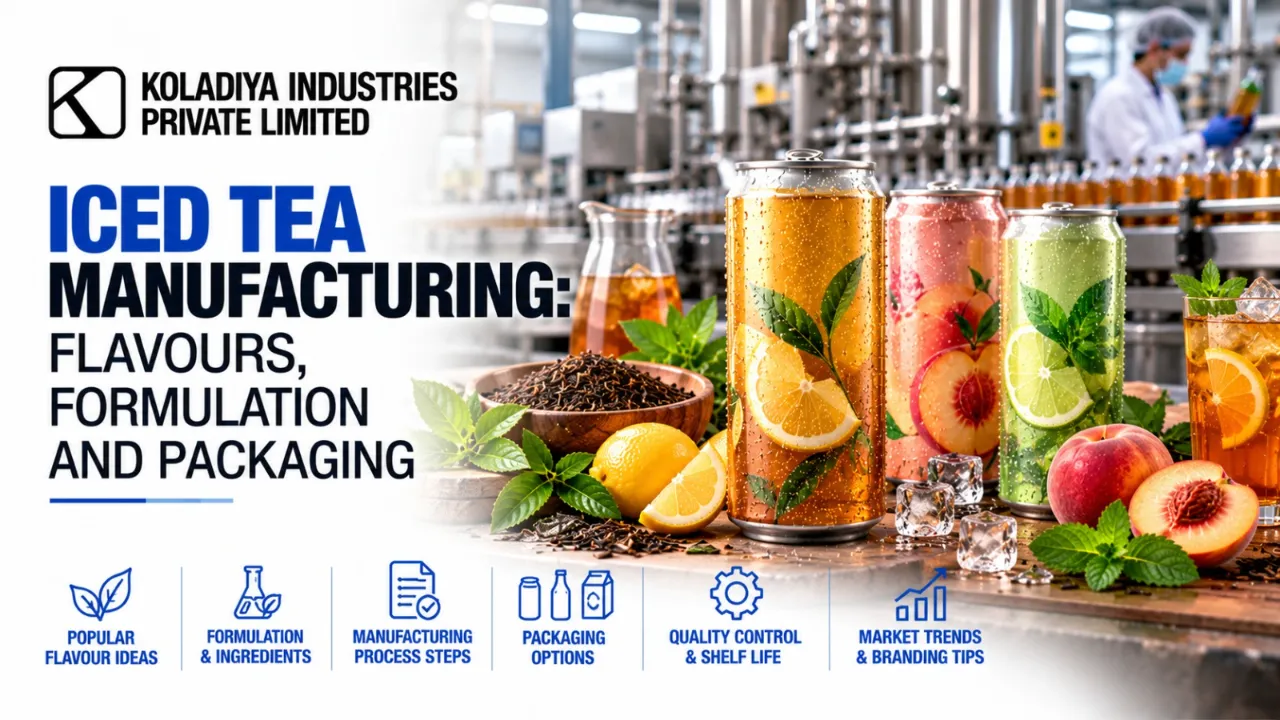
Iced tea has become an attractive beverage option for consumers who enjoy refreshing flavours and convenient ready-to-drink products. From classic lemon iced tea to peach, green tea, and zero-sugar varieties, brands can develop a wide range of products to suit different consumer preferences. Consequently, iced tea offers opportunities for beverage startups, established drink manufacturers, and businesses looking to expand their product portfolios. However, launching a successful iced tea brand requires more than selecting a flavour and choosing a bottle. Brands must understand ingredient selection, formulation, production methods, quality control, shelf-life requirements, and packaging options. Furthermore, they must balance taste, product stability, manufacturing costs, and market demand.
This guide explains the essential stages of Iced Tea Manufacturing, helping businesses understand how to develop a refreshing beverage and prepare it for commercial production. With the right planning and manufacturing partner, beverage brands can turn an initial concept into a market-ready product.
What Is Iced Tea Manufacturing?
Iced tea manufacturing involves developing, formulating, processing, and packaging tea-based beverages for commercial distribution. Manufacturers combine tea extracts or brewed tea with water, sweeteners, flavours, and other suitable ingredients to achieve the desired taste and product characteristics.
Depending on the target market, brands can create traditional sweetened iced tea, unsweetened tea, fruit-flavoured tea, green tea beverages, or functional-style tea drinks. Each option requires a formulation that matches consumer expectations while meeting relevant food safety and regulatory requirements.
Moreover, manufacturers must consider the intended distribution model. A beverage designed for immediate consumption may require different processing, packaging, and storage considerations from a product intended for wider retail distribution.
Therefore, brands should define their product concept, target audience, preferred packaging, and expected production volume before beginning commercial manufacturing.
Iced Tea Manufacturing: Choosing the Right Flavours
Flavour selection plays a major role in consumer acceptance. Although traditional tea provides the foundation, carefully selected flavour combinations help brands create a distinctive identity.
1. Lemon Iced Tea
Lemon iced tea combines tea’s characteristic taste with a refreshing citrus profile. Its familiar flavour makes it a practical starting point for brands entering the ready-to-drink tea category.
During formulation, manufacturers must balance citrus intensity, sweetness, and tea bitterness. Too much acidity or an unsuitable flavour balance can affect the overall drinking experience. Consequently, product testing helps establish a consistent and appealing profile.
2. Peach Iced Tea
Peach iced tea offers a fruity, mildly sweet flavour that complements the natural characteristics of tea. Brands can position it as a refreshing alternative to conventional carbonated beverages.
Furthermore, formulation teams must select an appropriate peach flavour and adjust sweetness to achieve the desired taste. The final formulation should also maintain flavour consistency throughout the product’s intended shelf life.
3. Green Tea
Green tea beverages appeal to consumers who prefer a lighter tea profile. Brands can develop plain green tea, lemon green tea, or selected fruit combinations, depending on their positioning.
However, green tea can develop pronounced bitterness or astringency when manufacturers choose unsuitable brewing or extraction conditions. Careful ingredient selection and formulation trials help create a smoother beverage.
4. Berry and Mixed-Fruit Iced Tea
Berry, apple, and other fruit-inspired profiles provide additional opportunities for product differentiation. Moreover, brands can experiment with combinations such as berry green tea or lemon-mint tea to develop a distinctive range.
Nevertheless, fruit flavours can interact with tea compounds, sweeteners, and acidity regulators. Manufacturers should therefore evaluate the complete formulation rather than assessing each ingredient independently.
5. Low-Sugar and Zero-Sugar Iced Tea
Health-conscious purchasing preferences have encouraged brands to explore beverages with reduced or no added sugar. These products can appeal to consumers seeking alternatives to heavily sweetened drinks.
However, removing sugar changes more than sweetness. It can also affect body, flavour release, and the perception of bitterness. Consequently, brands should evaluate suitable sweetening systems and confirm that the finished product meets applicable labelling requirements.
Iced Tea Manufacturing: Building an Effective Formulation
A well-developed formulation establishes the beverage’s taste, consistency, appearance, and stability. Therefore, brands should evaluate every ingredient in relation to the complete product rather than focusing on flavour alone.
1. Select the Tea Base
Manufacturers can explore black tea, green tea, or suitable tea extracts according to the product concept. Black tea often provides a stronger, more familiar tea profile, while green tea delivers a lighter character.
The choice depends on the intended flavour, extraction requirements, ingredient availability, and production process. In addition, the tea base should perform consistently across production batches.
2. Balance Sweetness and Acidity
Sweeteners help balance tea bitterness and enhance fruit flavours. Brands can consider sugar, approved alternative sweeteners, or suitable combinations based on the target market.
Acidity regulators can help establish the required taste profile and formulation characteristics. However, the manufacturer must select appropriate ingredients, quantities, and processing conditions for the specific beverage.
3. Evaluate Water Quality
Water represents a major part of most iced tea formulations. Its quality can influence flavour, clarity, and production consistency.
Therefore, manufacturers should evaluate the water used in production and apply suitable treatment methods according to the required specifications. Consistent water quality also helps reduce unwanted variations between batches.
4. Assess Ingredient Compatibility
Tea extracts, flavours, sweeteners, acids, and other ingredients may interact during processing and storage. For example, certain formulations may develop haze, sediment, colour changes, or flavour deterioration.
Consequently, formulation trials should examine the beverage under relevant storage conditions. This process helps brands identify potential stability issues before committing to larger production volumes.
5. Conduct Pilot Testing
Pilot batches give brands an opportunity to assess flavour, sweetness, appearance, mouthfeel, and overall product acceptance before scaling up.
Moreover, pilot testing helps identify formulation adjustments that may improve commercial consistency. Brands should document the approved recipe and establish appropriate specifications for production.
Iced Tea Manufacturing: The Commercial Production Process
Once the formulation meets the product requirements, the manufacturer can plan the commercial production process. The exact steps depend on the recipe, processing technology, packaging format, and shelf-life target.
Step 1: Raw Material Inspection
The production team checks incoming tea ingredients, flavours, sweeteners, packaging materials, and other components against suitable quality specifications. This step helps identify material inconsistencies before production begins.
Step 2: Tea Extraction or Preparation
The team prepares the tea base through a suitable brewing or extraction process. Temperature, extraction time, ingredient quality, and processing conditions influence the resulting flavour and colour.
Therefore, manufacturers should establish process parameters that deliver a consistent tea profile.
Step 3: Blending and Formulation
The team combines the tea base with the required water, sweeteners, flavours, acidity regulators, and other approved ingredients. It then checks relevant product characteristics to confirm that the mixture matches the agreed formulation.
Step 4: Filtration and Product Preparation
Depending on the formulation, suitable filtration or clarification may help achieve the desired appearance and consistency. Not every iced tea requires the same treatment, so the manufacturer should choose the method according to product requirements.
Step 5: Processing and Filling
The manufacturer selects an appropriate processing and filling method based on the beverage’s formulation, microbiological requirements, packaging compatibility, and shelf-life goals.
For example, certain products may require thermal processing or another validated preservation approach. The manufacturer must verify that the selected process provides the required food safety controls without compromising product quality.
Step 6: Packaging and Quality Checks
After filling and sealing, the production team checks relevant packaging and product parameters. These may include seal integrity, fill volume, appearance, coding, and other specifications.
Finally, the manufacturer reviews the batch against defined quality requirements before preparing it for distribution.
Iced Tea Manufacturing: Packaging Options for Beverage Brands
Packaging protects the beverage, supports distribution, and communicates the brand’s identity. Therefore, businesses should select a format that aligns with product requirements, customer preferences, and commercial objectives.
1. PET Bottles
PET bottles offer convenience and visibility because consumers can see the beverage. They also suit many on-the-go retail applications.
However, brands must verify packaging compatibility, oxygen and light protection requirements, sealing performance, and suitability for the selected processing method.
2. Aluminium Cans
Aluminium cans provide a compact format that works well for single-serve beverages. Their printed surfaces also give brands space to communicate product benefits and visual identity.
Nevertheless, the beverage formulation, can lining, filling process, and storage requirements must work together. Brands should evaluate these factors before finalising the pack format.
3. Glass Bottles
Glass bottles can support a premium brand presentation and suit selected retail, hospitality, and food-service channels.
However, businesses should consider transport weight, handling requirements, distribution costs, and compatibility with the chosen processing method.
4. Choosing the Right Packaging Format
The best packaging option depends on several factors, including:
- Target customers and retail channels.
- Planned production volumes and budget.
- Required shelf life and storage conditions.
- Beverage acidity and ingredient compatibility.
- Filling and processing requirements.
- Branding, labelling, and distribution needs.
Furthermore, brands should confirm that their packaging and labelling comply with applicable regulations before commercial launch.
Iced Tea Manufacturing: Quality Control and Shelf-Life Testing
Quality control helps manufacturers deliver a consistent product and identify potential problems before distribution. It should cover raw materials, production conditions, finished beverages, and packaging.
Depending on the product, quality checks may include taste, colour, appearance, acidity, soluble solids, fill volume, and packaging integrity. Manufacturers should also apply appropriate microbiological testing and process validation.
Shelf-life testing plays an equally important role. During the study, teams evaluate how the beverage changes under defined storage conditions. They may monitor flavour, colour, clarity, packaging performance, and microbiological quality at suitable intervals.
Brands should not rely on appearance or taste alone to establish a safe shelf life. A suitable validation programme should support the proposed storage conditions, expiry period, and handling instructions.
As a result, systematic quality control helps businesses reduce avoidable production issues and protect customer confidence.
How Koladiya Industries Can Support Your Iced Tea Brand
Developing an iced tea product requires coordination between product planning, formulation, processing, packaging, and quality requirements. For startups and established businesses, the right manufacturing discussions can help clarify these needs before commercial production begins.
Koladiya Industries is a relevant manufacturing partner for beverage brands exploring contract manufacturing opportunities. Businesses can discuss their product concept, preferred flavour profile, target packaging, expected volumes, and commercial requirements to determine an appropriate project approach.
Before moving forward, brands should clarify minimum order quantities, formulation responsibilities, ingredient sourcing, processing capabilities, quality checks, packaging availability, lead times, and pricing. These details help establish realistic expectations and support better production planning.
Furthermore, a clear product brief allows both parties to evaluate the project’s requirements and identify the next steps towards manufacturing.
Conclusion: Start Your Iced Tea Manufacturing Journey
Iced tea manufacturing offers beverage brands multiple opportunities to develop refreshing products for different consumer preferences. From lemon and peach flavours to green tea and zero-sugar formulations, the right combination of ingredients, processing, and packaging can help create a competitive product.
However, success depends on careful formulation, suitable production methods, validated shelf-life requirements, and consistent quality control. Therefore, businesses should finalise their product specifications and evaluate manufacturing requirements before launching at scale.
Ready to develop your own iced tea beverage? Contact Koladiya Industries to discuss your iced tea concept, flavour preferences, packaging requirements, and commercial manufacturing goals. Start planning your next beverage product with a clear strategy for formulation and production.
FAQ’s
Which flavours are popular for iced tea manufacturing?
Popular iced tea flavours include lemon, peach, green tea, mango, berry, and mixed fruit. Brands can also explore mint-infused and zero-sugar options to meet different consumer preferences.
How do I start an iced tea brand in India?
To start an iced tea brand in India, define your target audience, select your flavour profile, develop the formulation, choose suitable packaging, and identify a beverage manufacturing partner. You should also plan product testing, regulatory compliance, pricing, and distribution.
Can I manufacture private-label or custom-flavoured iced tea?
Yes, beverage brands can explore private-label or contract manufacturing options, depending on the manufacturer's capabilities. Custom flavour development, sweetness levels, packaging formats, and product specifications should be discussed before production begins.
What packaging options are available for iced tea beverages?
Common iced tea packaging options include PET bottles, aluminium cans, and glass bottles. The right choice depends on your target market, budget, distribution requirements, product formulation, and processing method.
How can manufacturers improve the shelf life of iced tea?
Manufacturers can support shelf-life goals through suitable ingredient selection, hygienic production, validated processing, appropriate packaging, and controlled storage conditions. Product-specific shelf-life testing helps establish a suitable expiry period.
How can Koladiya Industries help with iced tea manufacturing?
Koladiya Industries is a potential manufacturing partner for businesses exploring beverage production. Brands can discuss their iced tea concept, flavour preferences, formulation needs, packaging options, production volumes, and commercial requirements to assess the next steps.
Looking for an iced tea manufacturing partner? Contact Koladiya Industries to discuss your beverage concept and explore suitable manufacturing solutions for your brand.