Beverage manufacturing requires accurate production documentation to maintain product quality, ingredient consistency, traceability, and operational efficiency. Whether a company manufactures energy drinks, carbonated soft drinks, sparkling water, functional beverages, or ready-to-drink products, every production batch needs clear and reliable records. This is where Beverage Batch Records play an essential role. They help manufacturers document each stage of production, from raw material selection and ingredient weighing to blending, processing, filling, packaging, and final quality inspection. Moreover, accurate batch documentation helps beverage businesses identify production errors, investigate quality issues, manage inventory, and maintain consistent product specifications across multiple manufacturing runs.
For startups and established beverage brands, preparing a structured batch record also improves communication between production, quality control, warehouse, and packaging teams. Consequently, manufacturers can maintain better control over their operations while preparing for commercial production.
What Are Beverage Batch Records?
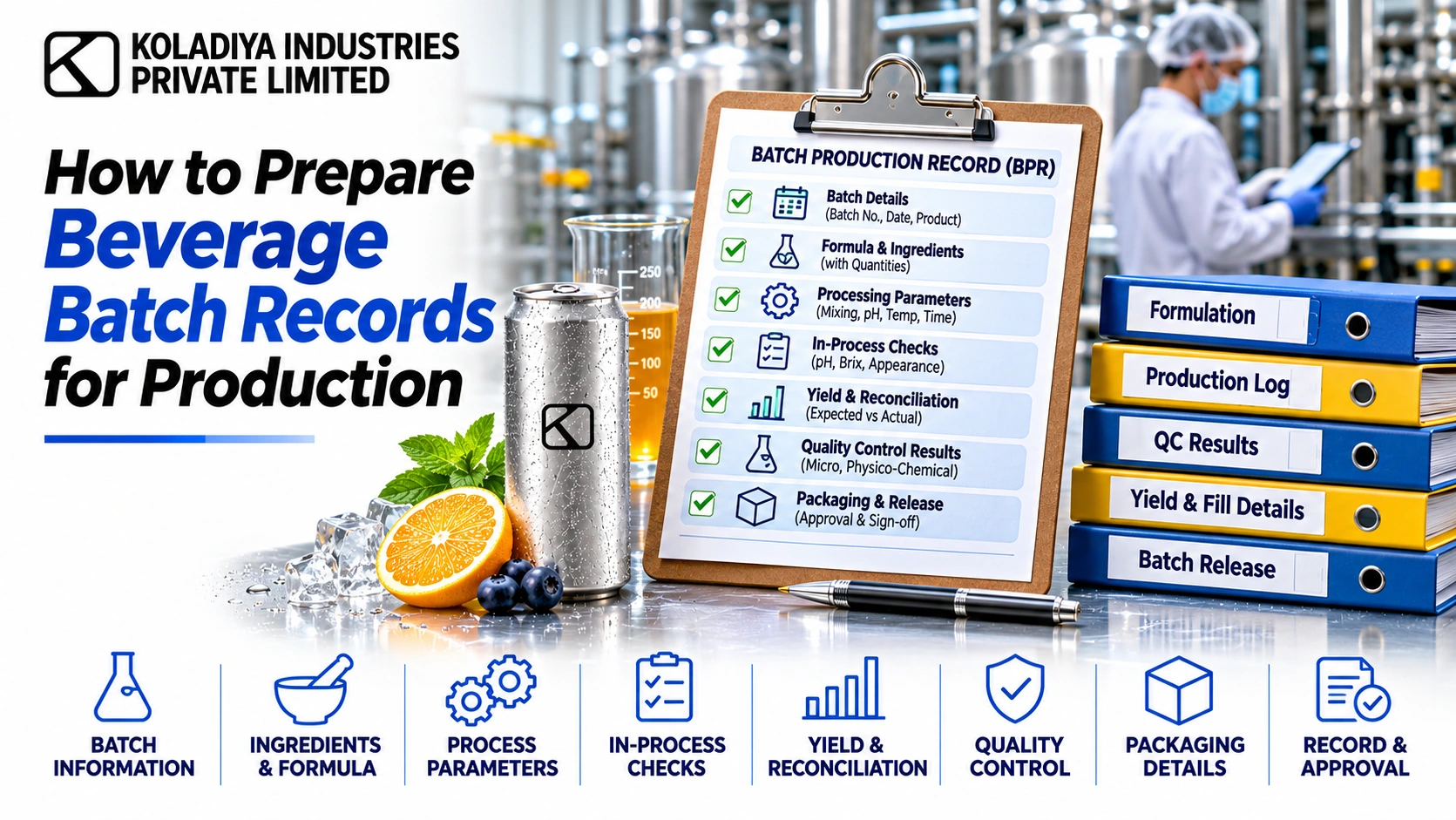
Beverage Batch Records are detailed production documents that capture the activities, materials, equipment, process parameters, and quality checks associated with a specific manufacturing batch. Each record connects a finished beverage product with its production history. It typically includes the product name, batch number, formula version, production date, ingredient quantities, processing conditions, packaging details, and quality inspection results.
For example, when a manufacturer produces 10,000 cans of an energy drink, the batch record documents the ingredients used, blending sequence, carbonation settings, filling activities, and final inspection results. Furthermore, manufacturers can compare records from different production runs to identify variations and improve consistency.
Why Are Beverage Batch Records Important for Commercial Production?
A well-organized batch record supports several important manufacturing activities.
1. Maintain Product Consistency
Consumers expect every bottle or can to deliver the same taste, appearance, aroma, sweetness, and carbonation level. However, ingredient variations or incorrect processing conditions can affect the final product.
Accurate batch records help production teams follow approved formulas and manufacturing instructions. As a result, manufacturers can reduce variations between production batches.
2. Improve Ingredient Traceability
Ingredient traceability allows manufacturers to identify the raw materials used in a particular production batch.
For instance, a beverage batch record can capture supplier details, material names, lot numbers, quantities, and receiving information. Therefore, manufacturers can investigate ingredient-related concerns more efficiently.
3. Strengthen Quality Control
Quality control teams need reliable production information to evaluate beverage quality.
Batch documentation connects manufacturing activities with important quality measurements, including pH, Brix, acidity, carbonation, appearance, and filling accuracy. Consequently, teams can identify unusual results and take corrective action.
4. Reduce Production Errors
Missing ingredients, incorrect measurements, equipment problems, and process variations can increase manufacturing costs.
However, structured batch documentation gives operators clear instructions and helps supervisors verify important production activities.
How to Prepare Beverage Batch Records for Production
Preparing accurate batch records requires a systematic approach. Manufacturers should create a document that production operators can understand, complete, and review without unnecessary complexity.
1. Add Product and Batch Identification Details
Start with basic information that identifies the product and manufacturing run.
Include:
- Product or brand name
- Product category
- Unique batch or lot number
- Manufacturing date
- Planned production quantity
- Formula or recipe version
- Production line or facility identification
- Operator and supervisor details
A unique batch number helps teams connect production documentation with finished goods, packaging materials, and quality inspection reports.
For example, an energy drink manufacturer should maintain separate batch identification for different flavours and formulations, even when both products share the same production line.
2. Include the Approved Beverage Formula
The ingredient formula forms the foundation of every batch record.
Document each ingredient, its approved quantity, measurement unit, and relevant specification. Additionally, mention the formula revision number to prevent operators from following outdated instructions.
Common beverage ingredients include:
- Treated water
- Sugar or alternative sweeteners
- Natural or artificial flavours
- Acidity regulators
- Preservatives, where applicable
- Colours
- Functional ingredients
- Vitamins and minerals
- Carbonation ingredients or process requirements
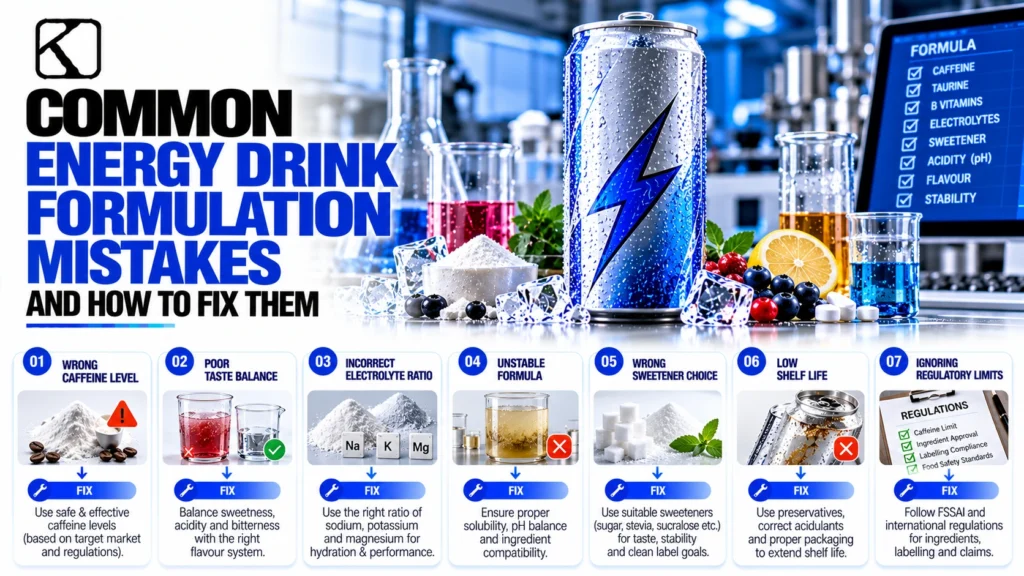
For energy drinks, the formula may also include caffeine, taurine, B vitamins, and other selected functional ingredients, depending on the product formulation and applicable requirements.
Furthermore, clearly define weighing and measuring instructions to reduce ingredient calculation errors.
3. Record Raw Material and Ingredient Details
Ingredient identification plays an important role in production traceability.
The batch record should capture the name of every raw material, supplier or internal material code, lot number, actual quantity used, and relevant verification details.
Production teams should check ingredient identity and confirm that materials meet the approved specifications before use.
For example, an energy drink manufacturer should carefully document caffeine and flavour ingredient details because incorrect quantities can affect the product’s specifications and sensory characteristics.
Similarly, manufacturers should track sweeteners, acids, and preservatives to maintain formulation consistency.
4. Document the Manufacturing Process
A batch record should clearly explain each manufacturing stage in the correct sequence.
Depending on the beverage category, the process may include:
- Water treatment and preparation.
- Ingredient weighing and verification.
- Syrup preparation or ingredient dissolution.
- Blending and mixing.
- Product filtration, where required.
- Processing or thermal treatment, where applicable.
- Cooling and carbonation, where required.
- Transfer to the filling line.
- Filling, sealing, and packaging.
- Final quality inspection.
For every relevant stage, record the actual process parameters, equipment identification, start and finish times, and operator verification.
Moreover, manufacturers should define acceptable operating ranges in the approved production instructions rather than relying on assumptions.
5. Include Beverage Quality Control Checkpoints
Quality control checkpoints help manufacturers verify that the product meets its approved specifications.
Depending on the formulation and product category, important checks may include:
- pH measurement
- Brix measurement
- Acidity testing
- Taste and flavour evaluation
- Colour and appearance
- Carbonation level
- Microbiological testing, where applicable
- Fill volume or net content
- Container and closure integrity
For energy drinks, manufacturers should pay particular attention to caffeine concentration, sweetness, acidity, flavour balance, and carbonation consistency.
Additionally, quality teams should record actual results, acceptance criteria, inspection dates, and the responsible personnel.
If a result falls outside the approved specification, the team should document the deviation and follow the established investigation and disposition procedure.
Beverage Batch Records for Energy Drink Manufacturing
Energy drink manufacturing involves several formulation and processing considerations. Therefore, manufacturers should prepare batch records that capture the specific requirements of energy drink production.
Track Energy Drink Ingredients and Formulation
Energy drinks may contain caffeine, taurine, B vitamins, sweeteners, acidity regulators, and flavouring ingredients.
The batch record should clearly identify the quantity and lot number of each ingredient. Furthermore, operators should independently verify critical ingredient measurements according to the approved manufacturing procedure.
This approach helps manufacturers maintain formulation accuracy and control variations between production runs.
Monitor Energy Drink Mixing and Carbonation
Mixing conditions influence ingredient distribution, flavour balance, and product consistency.
For carbonated energy drinks, manufacturers should document relevant blending conditions, carbonation parameters, product temperature, and other approved process settings.
Similarly, the team should record any adjustments during production and explain the reason for each change.
Record Aluminium Can Filling and Seaming Details
Many energy drink brands use 250 ml aluminium slim cans because they provide a convenient packaging format and strong shelf presence.
For canned energy drink production, the batch record should include:
- Can size and packaging material identification
- Filling quantity and fill-level checks
- Filling line identification
- Seaming inspection results
- Seam-related corrective actions
- Packaging batch or lot details
- Finished product quantity
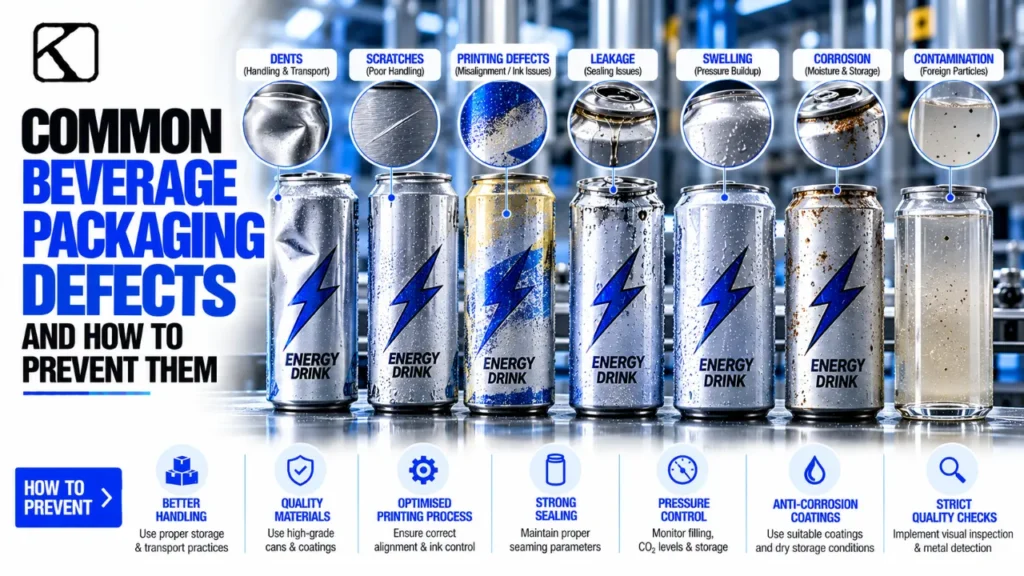
In addition, manufacturers should conduct appropriate seam inspections to help maintain package integrity and reduce leakage risks.
6. Maintain Equipment and Production Line Records
Equipment performance directly influences beverage manufacturing consistency.
Therefore, include equipment identification and relevant operational information in the batch record.
Depending on the production process, this may cover mixing tanks, filtration systems, processing equipment, carbonation units, filling machines, and can-seaming machines.
Record equipment cleaning and pre-operation checks according to the established procedures. Also, document maintenance concerns, equipment changes, and unusual operating conditions.
Consequently, production teams can investigate equipment-related problems and improve manufacturing reliability.
7. Document Packaging and Finished Product Details
Packaging documentation connects beverage production with finished goods inventory.
Record the packaging material specifications, packaging lot numbers, container size, label or artwork identification, and total packaged quantity.
For canned beverages, manufacturers should also document can condition, filling accuracy, seam inspection results, and coding information.
Additionally, record the number of accepted units, rejected units, damaged containers, and packaging losses.
This information allows production managers to evaluate packaging efficiency and identify recurring defects.
8. Record Production Yield and Material Reconciliation
Production yield helps manufacturers understand how efficiently they convert raw materials into finished beverages.
Compare the planned production quantity with the actual output. Also, document material consumption, production losses, rejected products, and remaining ingredients.
For example, if a manufacturer plans to produce 10,000 energy drink cans but completes only 9,750 acceptable cans, the team should investigate and document the difference.
Material reconciliation can reveal filling losses, spillage, incorrect measurements, and packaging defects.
9. Document Deviations and Corrective Actions
Manufacturing teams may encounter unexpected problems, including incorrect ingredient quantities, equipment interruptions, unusual product readings, or packaging defects.
A proper batch record should provide space to document:
- Description of the deviation
- Date and time of occurrence
- Affected production stage
- Immediate action taken
- Investigation findings
- Corrective and preventive measures
- Final product disposition
- Approval from authorized personnel
Importantly, operators should never hide or overwrite production errors. Instead, they should maintain transparent records and follow the company’s document correction and deviation procedures.
10. Review, Approve, and Store Beverage Batch Records
After production, the responsible teams should review the completed batch record for accuracy and completeness.
Production supervisors should verify manufacturing information, ingredient usage, process parameters, and production output. Meanwhile, quality personnel should review inspection results, deviations, and relevant release requirements.
Authorized personnel should approve the record according to the company’s quality management procedures.
Finally, store batch records securely in a controlled physical or digital documentation system. Maintain version control, access permissions, and retention practices according to applicable requirements.
Common Mistakes to Avoid When Preparing Beverage Batch Records
Even experienced manufacturers can make documentation mistakes that affect production control.
Here are some common issues to avoid:
1. Missing ingredient lot numbers: Incomplete material identification makes traceability difficult.
2. Incorrect ingredient measurements: Unverified quantities can affect flavour, sweetness, and product specifications.
3. Using outdated formulas: Production teams may follow incorrect instructions when manufacturers fail to control document revisions.
4. Missing quality inspection results: Incomplete testing information reduces visibility into product quality.
5. Ignoring production deviations: Undocumented errors make investigations and corrective actions more difficult.
6. Incomplete packaging details: Missing can, label, or closure information can complicate finished-product traceability.
7. Poor record storage: Disorganized documentation makes it difficult to retrieve information during audits or quality investigations.
To prevent these issues, manufacturers should establish standardized templates, train employees, and review documentation regularly.
How Koladiya Industries Supports Beverage Manufacturing
Preparing accurate batch records requires coordination between formulation, research and development, ingredient management, manufacturing, packaging, and quality control teams. Koladiya Industries Private Limited supports beverage businesses through beverage formulation and R&D, private-label manufacturing, and third-party beverage production.
Its beverage manufacturing capabilities cover categories such as energy drinks, carbonated soft drinks, sparkling water, and tonic water. For energy drink brands, a structured manufacturing approach helps connect product formulation with commercial production requirements. This includes ingredient planning, flavour development, production coordination, and aluminium can packaging considerations, including 250 ml slim cans. Furthermore, working with an experienced beverage manufacturing partner can help startups and established brands coordinate product development and production planning more effectively.
Conclusion
Beverage Batch Records form an essential part of organized commercial beverage manufacturing. They help businesses document ingredient usage, monitor production activities, maintain quality standards, track packaging details, and investigate manufacturing deviations. From energy drinks and carbonated beverages to functional drinks and sparkling water, every product requires accurate documentation that reflects its approved formulation and manufacturing process.
By establishing standardized batch record templates, maintaining ingredient traceability, recording quality checkpoints, and reviewing production results, manufacturers can strengthen operational control and improve batch-to-batch consistency. For beverage brands planning commercial production, reliable manufacturing documentation creates a stronger foundation for quality management and business growth.
Partner with Koladiya Industries for Beverage Manufacturing
Planning to launch an energy drink, carbonated soft drink, sparkling water, or another beverage product? Koladiya Industries Private Limited offers beverage formulation and R&D, private-label manufacturing, and third-party beverage manufacturing support to help businesses move from product concepts to commercial production.
Connect with Koladiya Industries to discuss your beverage formulation, manufacturing requirements, packaging options, and commercial production plans. Take the next step towards building your beverage brand with the right manufacturing partner.