The Indian beverage market offers opportunities for entrepreneurs who want to introduce innovative, convenient, and functional drinks. Protein water has the potential to appeal to fitness enthusiasts, working professionals, active consumers, and people seeking convenient ways to include protein in their daily routines. However, launching a successful product requires more than an attractive bottle and a promising idea. You need the right formulation, appealing flavours, suitable packaging, reliable manufacturing, quality testing, and a clear market strategy. If you plan to launch a Protein Water Brand in India, this guide explains the key steps, from product concept development to commercial production.
1. Research the Market Before Launching a Protein Water Brand in India
Before investing in product development, understand your target market and the products your potential customers already purchase.
Research existing protein drinks, flavoured water products, sports beverages, and other functional beverages. Study their packaging, flavour options, nutritional positioning, price points, and target audiences.
Look for opportunities to differentiate your product instead of simply copying established brands.
Protein Water Brand in India: Define Your Target Consumer
Your target consumer will influence almost every product decision. For example, you might focus on gym-goers who want a convenient protein drink, busy professionals who prefer ready-to-drink beverages, or consumers looking for refreshing alternatives to traditional protein shakes.
Choose one primary audience for your initial launch. Then, interview potential customers and gather feedback about their preferences, expected price, preferred pack size, and flavour choices.
This research will help you develop a product that addresses a clear consumer need.
2. Develop a Unique Protein Water Product Concept
Once you understand the market, define what makes your beverage different.
Your concept should explain why customers would choose your product over competing beverages. You might focus on refreshment, convenience, flavour, protein content, packaging, or a combination of these factors.
For instance, you could develop a lightly flavoured protein beverage in a convenient single-serve bottle for consumers with active lifestyles.
However, avoid adding too many features during your first launch. Start with a focused product concept that your team can develop, test, manufacture, and market effectively.
Also, decide whether you want to build a premium fitness-oriented brand or a more accessible everyday beverage brand. This decision will influence your ingredient choices, packaging, pricing, and distribution strategy.
3. Focus on Protein Water Formulation and Flavour Development
Formulation plays a central role in the success of a protein water product. Consumers expect a refreshing beverage, so the product must deliver an enjoyable drinking experience alongside its intended nutritional positioning.
Your formulation team should evaluate the appropriate protein source, protein concentration, sweetness, acidity, flavour system, and other ingredients.
Choose the Right Protein Source
Different protein ingredients behave differently in liquid beverages. Depending on the product concept, your development team may evaluate suitable protein sources based on solubility, taste, clarity, stability, and nutritional characteristics.
For example, some protein ingredients may create haze, sediment, or an undesirable mouthfeel. Therefore, ingredient selection must account for the complete beverage formula rather than protein content alone.
Develop Flavours That Match Your Audience
Flavour can strongly influence repeat purchases. Consider refreshing profiles such as citrus, lemon-lime, berry, or other fruit-inspired options.
Nevertheless, do not select flavours based only on trends. Test them with your intended customers and assess sweetness, aftertaste, aroma, and overall drinkability.
An experienced beverage development partner such as Koladiya Industries can help businesses discuss product requirements, formulation development, and the practical considerations involved in preparing a beverage for commercial production.
4. Test the Prototype Before Commercial Production
After developing the initial formulation, create samples for evaluation.
Prototype testing helps identify issues before you commit to a large manufacturing order. Assess the beverage’s appearance, taste, aroma, mouthfeel, and consistency.
Also, test how the protein ingredients perform with the beverage base, flavoring, acidity levels, and selected packaging to ensure product quality and stability.
Check Stability and Shelf Life
A protein water formulation must maintain acceptable quality throughout its intended shelf life. Ingredient interactions, storage conditions, processing methods, and packaging can all influence product stability.
Conduct appropriate shelf-life studies and microbiological testing. Your technical team should also assess relevant physical and chemical characteristics, including sedimentation, appearance, flavour changes, and any other parameters specific to the formulation.
Do not assign a commercial shelf life based solely on early samples or assumptions. Use appropriate testing data to support the final decision.
5. Choose a Reliable Protein Water Manufacturing Partner
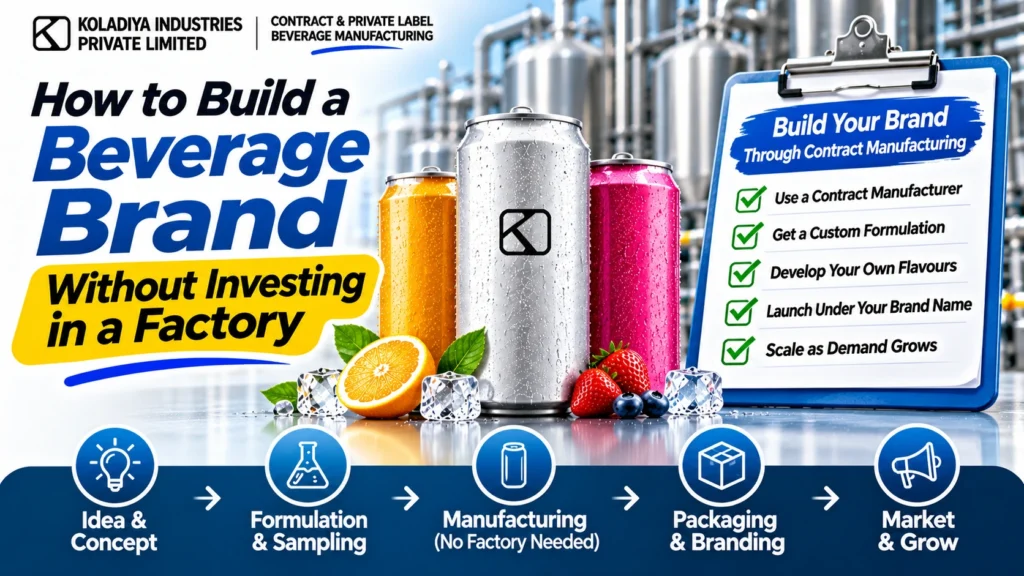
Building your own beverage manufacturing facility can require substantial investment in equipment, infrastructure, technical expertise, quality systems, and production operations.
For many startups, contract beverage manufacturing offers another route. Instead of building a complete facility, the brand can work with a suitable manufacturing partner to develop and produce its beverage.
When selecting a partner, assess its capabilities against your specific product requirements.
Ask about:
- Formulation and product development support.
- Experience handling the ingredients in your proposed beverage.
- Pilot batches and production trials.
- Manufacturing capacity and minimum order quantities.
- Quality control, testing, and traceability.
- Packaging options and production timelines.
- Commercial production planning and scale-up support.
Do not select a manufacturer based on price alone. A low initial quotation may not reflect the total cost of ingredients, testing, packaging, production, logistics, and potential reformulation.
Koladiya Industries Private Limited works with businesses seeking beverage development and contract manufacturing solutions. Startups planning a protein water launch can discuss their product concept, formulation requirements, packaging preferences, and expected production volumes to assess the appropriate manufacturing approach.
6. Select Packaging for Your Protein Water Brand in India
Packaging affects product protection, convenience, shelf presence, logistics, and manufacturing costs.
Start by deciding which format best suits your positioning and distribution plans. PET bottles and aluminium cans, for example, offer different advantages in terms of presentation, handling, material characteristics, and supply-chain requirements.
Your choice should also match the final formulation and processing method. Confirm that the proposed packaging works with the beverage’s stability requirements, production process, storage conditions, and expected distribution environment.
Build a Distinctive Brand Identity
Create a brand name, logo, colour palette, and label design that communicate your product’s positioning clearly.
Make the important product information easy to understand. Avoid overcrowded labels and unsupported claims about nutrition, fitness, or health benefits.
Also, consider how the product will appear in online listings, retail refrigerators, gyms, and other places where customers might discover it.
7. Understand Regulatory and Labelling Requirements in India
Before commercialising your product, identify the applicable food category and regulatory requirements for your specific formulation.
Food businesses must obtain the appropriate FSSAI registration or licence for their activities. Requirements can differ according to the nature and scale of the operation, so confirm the correct authorisation for your business and manufacturing arrangement.
Your product label must follow the applicable food safety, labelling, packaging, and declarations requirements. Depending on the product, these may cover ingredient information, nutrition declarations, allergen information, quantity, date marking, batch identification, and relevant business or licence details.
Protein-related nutrition claims also require careful review. Do not use claims such as “high protein,” “low sugar,” or specific health-benefit statements unless the product meets the applicable conditions.
Work with your manufacturing and regulatory teams to verify the product category, ingredient permissions, processing requirements, labels, and advertising claims before launch. Finalise artwork only after the appropriate compliance review.
8. Calculate the Cost of Launching Your Protein Water Brand in India
Your investment will depend on the formulation, ingredients, packaging, production volume, testing requirements, branding, and distribution strategy.
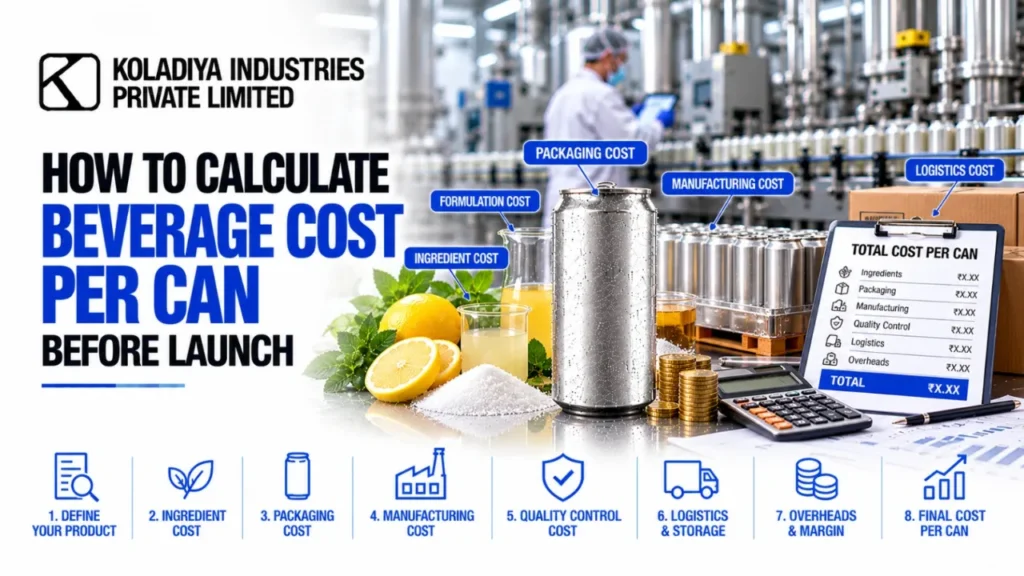
Build a detailed budget before placing a production order. Include product development, sampling, laboratory testing, packaging design, manufacturing, freight, marketing, warehousing, and retailer or distributor margins where applicable.
Request a quotation based on your actual product specifications and expected order quantity.
Also, calculate the estimated cost per bottle or can and compare it with your intended selling price. Include allowances for promotional offers, returns, damaged stock, and other operating expenses.
Avoid committing your entire budget to the first batch. Maintaining sufficient working capital will help you manage marketing, distribution, and replenishment after launch.
9. Plan Your Sales and Marketing Strategy
A quality product still needs a clear route to market. Choose your initial sales channels based on where your target consumers shop and how they discover new beverages.
You might explore direct online sales, fitness communities, gyms, specialist retailers, distributors, or relevant offline outlets.
Start with a focused launch rather than trying to reach every channel at once. Use customer feedback, sales data, repeat-purchase behaviour, and product reviews to understand what works.
Digital marketing can also support discovery. Publish educational content around protein beverages, product development, ingredient selection, and your brand’s unique value proposition.
For B2B buyers, maintain a professional website that clearly explains the product, its intended audience, and the reasons to choose it. For your own consumer brand, make product information, availability, and purchase options easy to find.
10. Scale Your Protein Water Brand in India Strategically
Once your initial product demonstrates market potential, plan your next production stage using actual demand rather than assumptions.
Review sales performance, customer feedback, production costs, inventory levels, and distribution coverage before increasing order quantities.
You may later introduce additional flavours, pack sizes, or related beverage products. However, each new variant adds complexity to formulation, testing, inventory, and manufacturing.
Work closely with your manufacturing partner to evaluate capacity, procurement timelines, quality requirements, and future production volumes.
A gradual, data-driven approach can help you manage business risk while building a consistent brand.
Conclusion: Launch Your Protein Water Brand in India With the Right Support
Launching a protein water product requires a coordinated approach to market research, formulation, flavour development, testing, packaging, regulatory compliance, manufacturing, and sales. The most effective starting point is a clearly defined consumer need and a product concept that your team can develop and validate before commercial production. For entrepreneurs planning a Protein Water Brand in India, Koladiya Industries Private Limited offers a starting point for discussing beverage development and contract manufacturing requirements. Share your concept, preferred ingredients, packaging ideas, and estimated volumes to explore the next steps towards bringing your beverage brand to market.