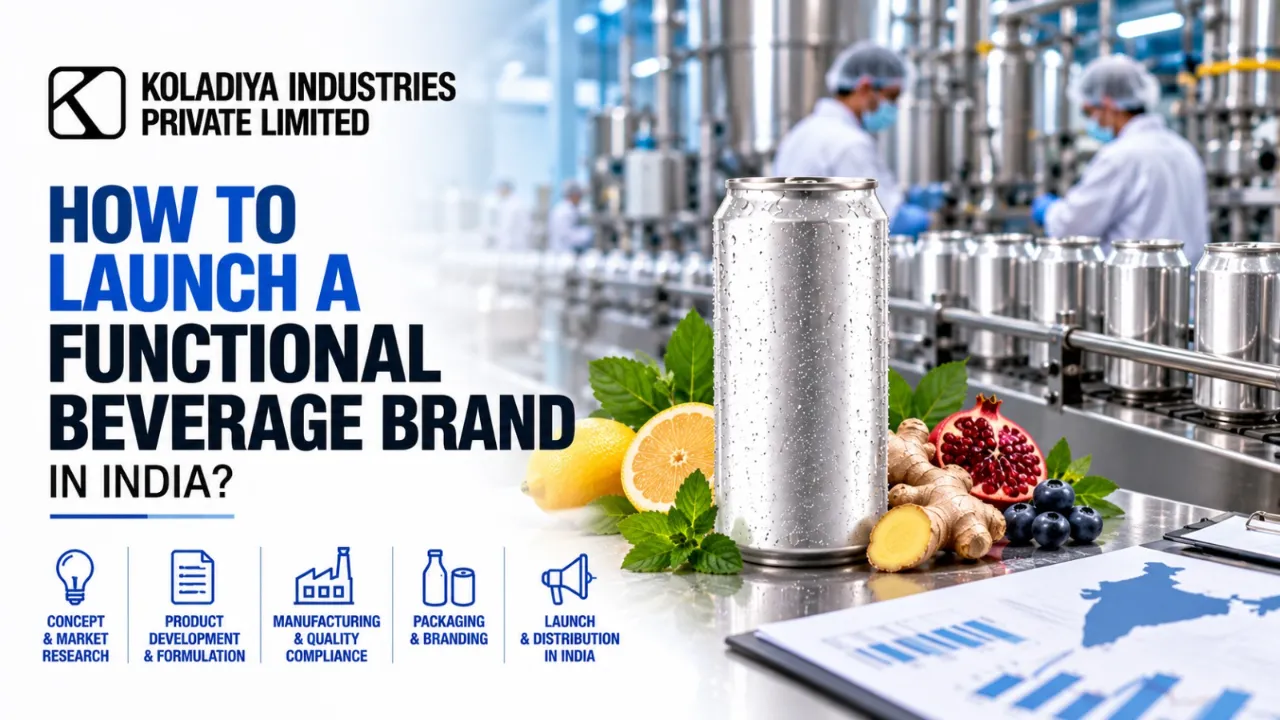
India’s growing beverage market presents promising opportunities for businesses to develop innovative drinks that meet evolving consumer preferences for refreshment, nutrition, and functionality. As consumers explore beverages that fit their lifestyles, categories such as vitamin drinks, electrolyte beverages, probiotic drinks, protein water, and plant-based functional beverages offer promising avenues for product development. However, launching a successful Functional Beverage Brand requires more than an attractive bottle and a unique flavour. Entrepreneurs must identify the right audience, develop a reliable formulation, understand food safety requirements, select suitable packaging, and build an effective distribution strategy.
This guide explains the essential steps to launch a functional beverage business in India, from concept development to commercial manufacturing. Moreover, it highlights how Koladiya Industries can support businesses looking to turn beverage concepts into market-ready products.
What Is a Functional Beverage Brand?
A Functional Beverage Brand focuses on drinks that provide refreshment alongside a defined nutritional or functional purpose. Depending on the formulation and applicable regulations, these beverages may contain ingredients such as electrolytes, vitamins, minerals, protein, dietary fibre, or other permitted functional ingredients.
Unlike conventional soft drinks, functional beverages target specific consumer needs or lifestyle preferences. For example, fitness enthusiasts may prefer hydration drinks, while busy professionals may explore convenient beverages with selected nutrients.
Popular functional beverage categories include:
- Electrolyte and hydration drinks: Formulations designed to support fluid and electrolyte replenishment.
- Vitamin-enriched beverages: Drinks formulated with permitted vitamins and minerals.
- Protein beverages: Options that provide protein in a convenient liquid format.
- Probiotic and prebiotic beverages: Products developed around suitable ingredients associated with gut health.
- Plant-based functional drinks: Beverages featuring ingredients such as botanical extracts or plant-derived proteins, where permitted.
- Low-sugar functional drinks: Products designed for consumers who prefer beverages with reduced sugar content.
Nevertheless, ingredient selection, product classification, and marketing claims must match the actual formulation and applicable Indian food regulations.
Step 1: Research the Market for Your Functional Beverage Brand
Before investing in formulation or manufacturing, understand the market you want to enter. Strong market research helps you identify customer expectations, evaluate competition, and develop a product with a clear commercial purpose.
Identify Your Target Audience
First, define the consumers who are most likely to purchase your beverage. Your audience could include fitness enthusiasts, working professionals, young adults, sports participants, or consumers seeking convenient nutritional options.
Next, study their purchasing behaviour. Consider their flavour preferences, preferred pack sizes, spending capacity, shopping habits, and reasons for choosing one beverage over another.
For instance, a hydration drink targeting gym users may require different branding, packaging, and distribution from a vitamin beverage targeting office professionals.
Analyse Competing Beverage Brands
Examine existing products in your chosen category. Compare their ingredients, positioning, packaging, price points, and retail presence.
Additionally, identify gaps in the market. Perhaps consumers want distinctive regional flavours, convenient single-serve packaging, or functional drinks with simpler ingredient profiles.
Use these insights to develop a clear point of difference. Your Functional Beverage Brand should offer a meaningful reason for customers to choose it over established alternatives.
Step 2: Develop a Unique Beverage Concept
Once you understand your audience, define the product you want to launch. A focused concept makes formulation, branding, pricing, and marketing decisions easier.
Start by answering three important questions: What consumer need will the beverage address? Which ingredients will support its intended purpose? Why should customers choose your product?
For example, you might develop a citrus-flavoured hydration beverage, a protein-based drink, or a vitamin-enriched fruit-flavoured beverage.
Choose Functional Ingredients Carefully
Ingredient selection influences taste, texture, stability, nutritional composition, production feasibility, and cost. Therefore, you should evaluate every ingredient against your product objectives.
Consider factors such as ingredient compatibility, recommended usage levels, solubility, flavour interactions, processing conditions, and shelf-life performance.
Furthermore, select ingredients that fit the applicable food category and regulatory requirements. Do not assume that every supplement ingredient or imported functional ingredient automatically qualifies for use in a beverage.
A qualified product development team can help assess ingredient suitability and refine the formulation before commercial production.
Step 3: Work on Beverage Formulation and Flavour Development
A well-developed formulation helps turn your beverage concept into a high-quality product with consistent taste, texture, and performance. Even a product with an appealing functional proposition may struggle if it has an unpleasant aftertaste, poor texture, or inconsistent flavour.
Balance Taste and Functionality
Functional ingredients sometimes introduce bitterness, acidity, sedimentation, or unwanted flavours. Your formulation should address these challenges without compromising the product’s intended characteristics.
Therefore, conduct repeated trials to evaluate sweetness, acidity, aroma, mouthfeel, colour, and overall consumer acceptance.
While finalising the formulation, evaluate suitable sweeteners, fruit ingredients, natural flavours, and other components to achieve the desired taste and product profile.
Conduct Product Testing
Before finalising the recipe, evaluate the beverage under relevant processing, storage, and packaging conditions.
Depending on the product, testing may include:
- Sensory and flavour evaluation.
- Microbiological and physicochemical analysis.
- Ingredient compatibility and stability testing.
- Packaging compatibility assessments.
- Shelf-life studies under defined storage conditions.
These evaluations help you establish appropriate quality specifications and identify potential issues before launch.
Step 4: Understand FSSAI Compliance and Labelling
Regulatory compliance forms a critical part of launching a Functional Beverage Brand in India. The applicable regulatory requirements depend on your beverage’s ingredients, product category, manufacturing methods, packaging, and promotional claims.
Start by identifying the correct regulatory category for your beverage. Depending on the formulation, different provisions may apply to conventional beverages, fortified products, health supplements, nutraceuticals, or functional foods.
Review Licensing and Product Requirements
Confirm the applicable food business licensing requirements for your business activities and manufacturing arrangement. Also, verify whether your chosen ingredients and product composition comply with the relevant standards and permissions.
If you work with a contract manufacturer, clearly define responsibilities for licensing, production documentation, testing, traceability, and quality assurance.
Prepare Accurate Labels and Marketing Claims
Your packaging should communicate the product name, ingredients, nutritional information, applicable declarations, batch details, date information, and other mandatory particulars as required by the relevant regulations.
In addition, keep all nutritional and functional claims truthful, clear, and adequately supported. Avoid promising disease prevention, treatment, or cures through ordinary beverage marketing.
Because food regulations and amendments can change, review the latest applicable requirements with a qualified regulatory professional before finalising the formulation, label, or advertising materials.
Step 5: Select the Right Beverage Manufacturing Partner
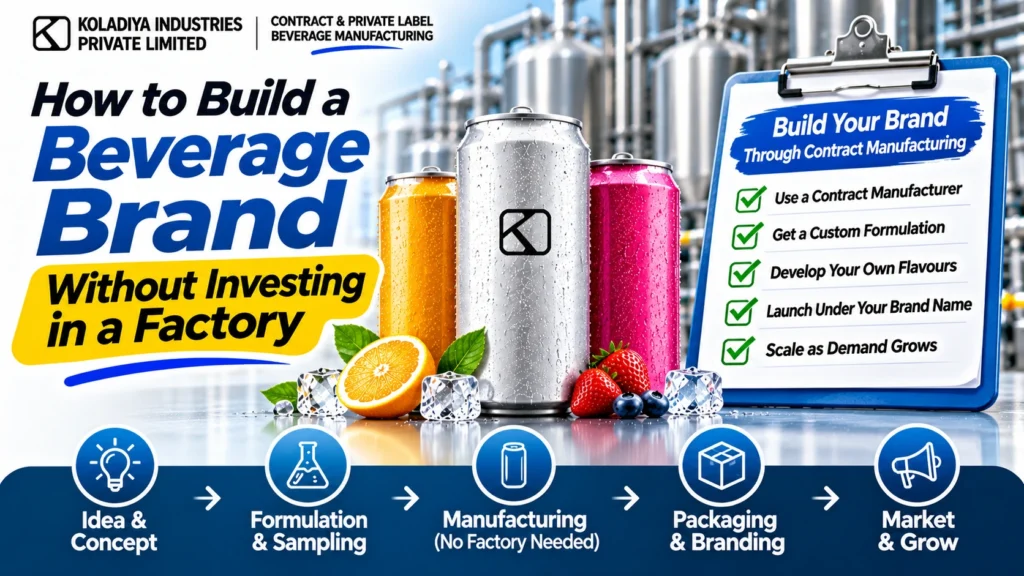
Choosing the right manufacturing process helps ensure consistent product quality, improve production efficiency, and support sustainable business growth. However, purchasing production equipment immediately may require substantial capital, technical expertise, and ongoing operational investment.
For this reason, many new beverage businesses explore third-party or contract manufacturing.
Evaluate Manufacturing Capabilities
When selecting a manufacturing partner, assess its experience with your beverage category, available processing capabilities, quality systems, packaging options, and production capacity.
You should also discuss minimum order quantities, ingredient sourcing, production timelines, testing arrangements, storage requirements, and batch consistency.
Furthermore, clarify ownership of the formulation, confidentiality arrangements, quality specifications, and responsibilities for regulatory documentation.
A suitable manufacturing partner should align with your product specifications, business goals, and production needs. A transparent working relationship can help you move from initial product trials to repeatable commercial production.
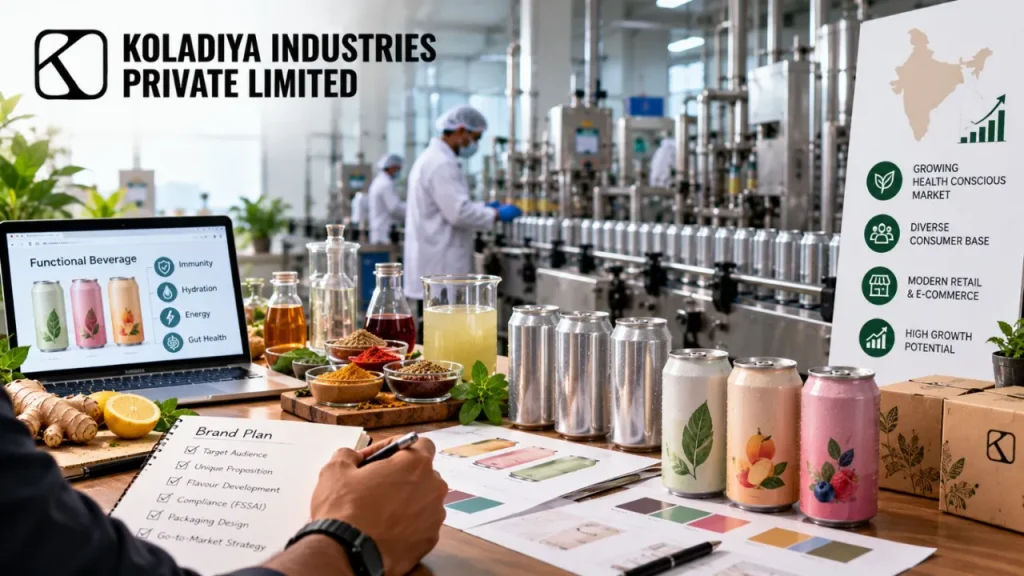
Step 6: Build a Strong Brand Identity and Packaging Strategy
Your brand identity helps customers recognise your product and understand its positioning. Therefore, create a name, visual identity, and messaging strategy that reflect your beverage’s audience and purpose.
A sports hydration beverage may benefit from energetic visuals, while a botanical beverage may require a more understated and ingredient-focused design.
Choose Practical and Attractive Packaging
Packaging affects product protection, convenience, shelf appeal, transportation, and cost. Depending on the formulation and processing requirements, you might consider cans, PET bottles, glass bottles, or other suitable food-contact packaging.
However, do not choose packaging based on appearance alone. Assess compatibility, barrier properties, closure integrity, processing suitability, storage conditions, and distribution requirements.
Before approving the final design, confirm that the label communicates the product accurately and meets applicable packaging and labelling requirements.
Step 7: Calculate Costs and Establish Your Pricing
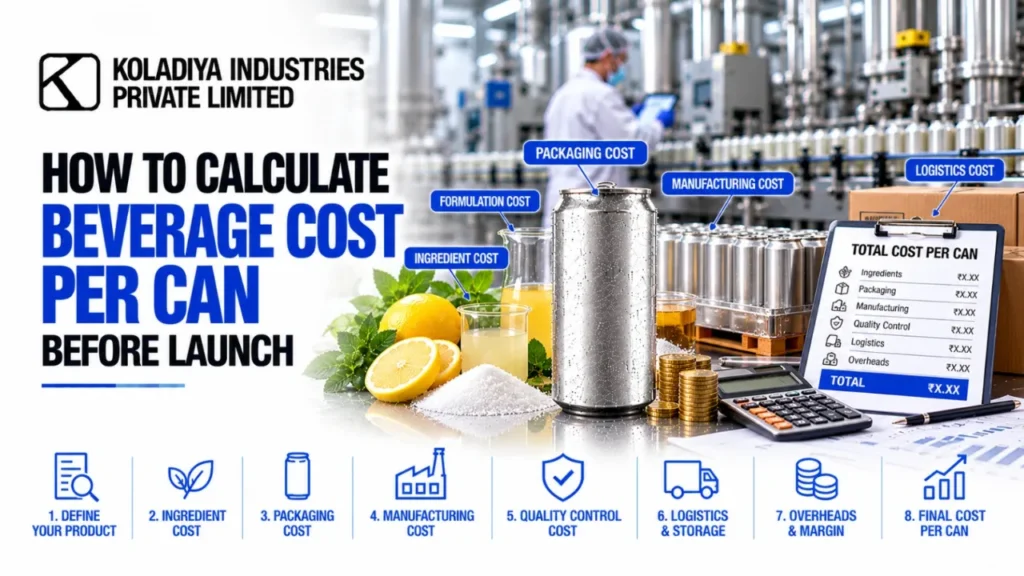
A commercially promising beverage needs a sustainable financial model. Therefore, estimate the complete cost of producing and selling each unit rather than focusing only on ingredient expenses.
Your cost calculations should consider:
- Ingredients and flavour systems.
- Packaging materials and labelling.
- Manufacturing and quality testing.
- Product development and regulatory support.
- Warehousing, logistics, and distribution.
- Marketing, promotions, and retailer margins.
Next, calculate your expected selling price and contribution margin. Consider the difference between direct-to-consumer sales, online marketplaces, distributors, and retail outlets.
Additionally, plan for working capital, promotional expenditure, potential product returns, and repeat production. Realistic forecasting helps you avoid launching at a price that cannot support sustainable growth.
Step 8: Launch Your Functional Beverage Brand Strategically
Rather than expanding everywhere immediately, introduce your product through a focused launch plan. A smaller initial launch helps you gather customer feedback, evaluate product acceptance, and refine your sales strategy.
Select the Right Sales Channels
Depending on your target audience, you could explore gyms, fitness studios, speciality food stores, cafes, selected retailers, online marketplaces, or direct-to-consumer channels.
Choose channels that align with customer buying habits and your distribution capabilities.
Use Content and Sampling to Build Awareness
Digital content can explain your product’s ingredients, flavour profile, intended positioning, and practical usage. Sampling initiatives can also encourage customers to experience the beverage before making a purchase.
Moreover, collect feedback on taste, packaging, price, and repeat-purchase intent. Use this information to improve the product and prioritise the channels that show genuine demand.
Track measurable indicators such as sales velocity, customer acquisition cost, repeat purchases, retailer performance, and gross margin. These metrics provide a stronger basis for expansion than social media attention alone.
Step 9: Scale Production and Maintain Quality
Once your beverage demonstrates consistent demand, prepare for higher production volumes. Before increasing output, confirm that your formulation, processing parameters, packaging specifications, and quality checks can deliver consistent results at scale.
Keep detailed production records, track ingredients throughout the supply chain, follow consistent quality standards, and conduct regular product testing. Additionally, address customer feedback quickly and resolve recurring quality concerns.
Meanwhile, assess supplier reliability, manage inventory efficiently, monitor production timelines, and strengthen distribution planning to ensure smooth business operations.
A disciplined approach to scaling helps your Functional Beverage Brand maintain product consistency while expanding into new markets.
How Koladiya Industries Can Support Your Beverage Business
Launching a beverage involves multiple connected activities, from concept development and formulation to manufacturing coordination and commercial planning. Working with an experienced beverage industry partner can help you navigate these stages more efficiently.
Koladiya Industries can be a starting point for businesses exploring beverage product development and manufacturing support. When discussing your project, define your product category, ingredient requirements, packaging preferences, expected order volume, and launch objectives.
These details help establish the technical and commercial requirements for your beverage concept. Additionally, discuss formulation feasibility, testing, production capabilities, minimum order quantities, timelines, and applicable compliance responsibilities before committing to a manufacturing plan.
Whether you are developing a hydration beverage, a vitamin drink, a protein-based product, or another functional beverage concept, a clear project brief can help you move towards a practical launch strategy.
Conclusion: Build Your Functional Beverage Brand for Long-Term Growth
Launching a Functional Beverage Brand in India requires a combination of market understanding, thoughtful formulation, regulatory compliance, suitable manufacturing, effective branding, and disciplined financial planning.
First, identify a clear customer need. Then, develop a beverage that balances taste, functionality, quality, and affordability. Afterward, validate the formulation, confirm regulatory requirements, choose suitable packaging, and introduce the product through relevant sales channels.
Most importantly, treat your launch as the beginning of a continuous improvement process. Customer feedback, consistent quality, and sound operational planning will help you strengthen your market position over time.
Start Your Functional Beverage Project with Koladiya Industries
Have an idea for a functional beverage but need support in taking it towards commercial production? Connect with Koladiya Industries to discuss your beverage concept, product development requirements, and manufacturing objectives.
Take the next step towards launching your Functional Beverage Brand in India with a clear product strategy and a manufacturing plan built around your business goals.
FAQ’s
What types of functional beverages can I launch in India?
You can explore hydration drinks, electrolyte beverages, vitamin-enriched drinks, protein beverages, probiotic drinks, plant-based functional beverages, and low-sugar drinks, subject to applicable ingredient and product regulations.
How much does it cost to start a Functional Beverage Brand?
The investment depends on formulation development, ingredients, packaging, testing, manufacturing quantities, branding, marketing, and distribution. Request detailed quotations to estimate your initial budget.
Do I need FSSAI approval to launch a functional beverage?
You must meet the applicable FSSAI licensing, product composition, labelling, and safety requirements. The exact requirements depend on your beverage category, ingredients, and business activities.
Can I use third-party manufacturing for my functional beverage?
Yes. Third-party manufacturing allows you to work with an external manufacturer rather than establish your own production facility. Evaluate manufacturing capabilities, minimum order quantities, quality controls, and regulatory responsibilities before selecting a partner.
How long does it take to develop and launch a functional beverage?
The timeline depends on formulation complexity, ingredient availability, testing requirements, packaging selection, regulatory review, and manufacturing schedules. A straightforward project may progress faster than one requiring extensive formulation trials or stability studies.
How can Koladiya Industries support my Functional Beverage Brand?
Koladiya Industries can be a starting point for discussing beverage development and manufacturing requirements. Share your product concept, preferred ingredients, packaging format, and expected production volume to assess suitable project options and next steps.