The ready-to-drink (RTD) beverage market offers exciting opportunities for entrepreneurs, startups, and established businesses looking to introduce innovative drinks to retail shelves. From energy drinks and protein beverages to flavoured water, iced tea, functional hydration drinks, and fruit-based refreshments, consumers increasingly seek convenient beverages that fit their lifestyles. However, launching a successful product requires more than an appealing flavour or attractive packaging. Brands must develop a reliable formulation, select suitable ingredients, maintain consistent quality, comply with applicable food safety regulations, and establish an efficient manufacturing and distribution strategy. For businesses planning to enter this competitive market, developing a Ready-to-Drink Beverage for retail involves combining product innovation, consumer research, manufacturing expertise, and commercial planning.
Koladiya Industries supports beverage brands through product development and manufacturing solutions that help businesses turn beverage concepts into market-ready products. With the right development process, brands can build a strong foundation for retail expansion and long-term growth.
What Is a Ready-to-Drink Beverage?
A Ready-to-Drink Beverage is a prepared drink that consumers can purchase and consume without additional mixing, preparation, or brewing. These products typically come in cans, bottles, cartons, or other convenient packaging formats.
Popular RTD beverage categories include:
- Energy drinks designed for active lifestyles.
- Functional beverages containing selected vitamins, minerals, or other functional ingredients.
- Protein drinks for consumers seeking convenient protein options.
- Flavoured water and hydration beverages.
- Ready-to-drink tea and coffee.
- Fruit-based drinks and refreshing beverages.
- Low-sugar and sugar-free beverage options.
Each category requires a different formulation, processing method, packaging solution, and quality control strategy. Therefore, brands should define their product concept before moving into commercial development.
Why Develop a Ready-to-Drink Beverage for Retail?
Retail-ready beverages allow brands to reach consumers through supermarkets, convenience stores, local retailers, gyms, cafés, and online marketplaces.
However, successful retail entry depends on understanding what customers want and how a product can compete with existing alternatives.
1. Meet Changing Consumer Preferences
Modern consumers often look for convenient drinks that offer enjoyable flavours, practical packaging, and clear product benefits. Some prefer low-sugar refreshments, while others seek energy, hydration, protein, or functional ingredients.
Consequently, brands should identify their target audience and develop a product that addresses a specific consumer need.
2. Build a Distinctive Beverage Brand
The beverage market contains numerous established brands. A clear product identity helps new businesses stand out.
For example, a brand might focus on tropical flavours, everyday hydration, convenient protein consumption, or a distinctive energy drink experience. A focused positioning strategy makes it easier to communicate the product’s value to retailers and customers.
3. Create Opportunities for Retail Expansion
A commercially viable RTD beverage can enter multiple sales channels, depending on its price, packaging, shelf life, distribution capacity, and target audience.
Nevertheless, brands should validate consumer demand and production economics before expanding into larger retail networks.
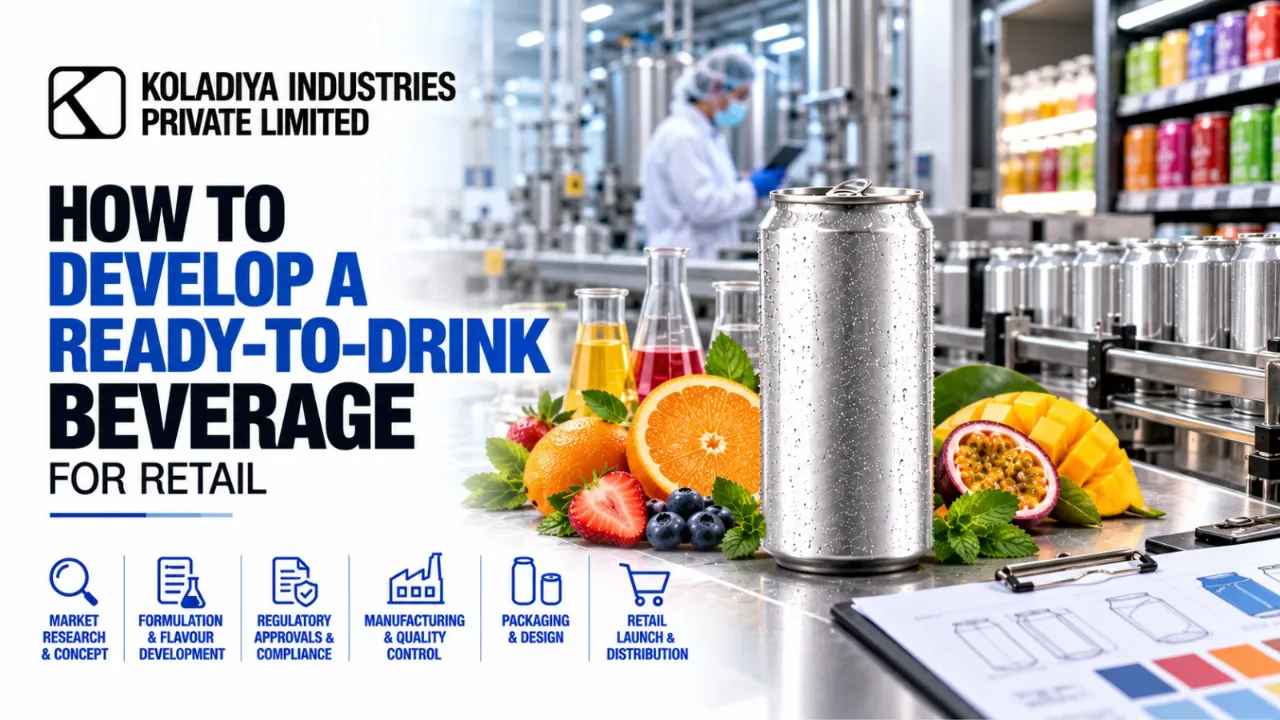
Step-by-Step Guide to Developing a Ready-to-Drink Beverage
Step 1: Define Your Beverage Concept
Start by deciding what type of Ready-to-Drink Beverage you want to launch. Consider the intended consumer, consumption occasion, flavour profile, price range, and primary product benefit.
Ask yourself:
- Who will purchase the beverage?
- What problem or preference will the product address?
- When and where will consumers drink it?
- What makes it different from competing products?
- Which retail channels will suit the product?
For instance, a startup targeting fitness enthusiasts might develop a protein beverage or functional hydration drink. In contrast, a brand targeting everyday refreshment might focus on fruit flavours or sparkling beverages.
A well-defined concept gives your development team a clear direction and reduces unnecessary formulation changes.
Step 2: Research the Market and Competitors
Before investing in product development, analyse the competitive landscape. Study similar beverages, their ingredients, packaging sizes, retail prices, flavour options, and brand positioning.
Additionally, examine customer reviews and retailer feedback to identify opportunities for improvement.
Look for gaps such as unusual flavour combinations, convenient packaging, suitable price points, or beverage formats that appeal to an underserved audience.
Use this research to develop a clear product proposition. However, avoid relying entirely on competitor imitation. A distinctive product identity gives your brand a stronger foundation for long-term growth.
Step 3: Develop the Beverage Formulation
Formulation is one of the most important stages of Ready-to-Drink Beverage development. It determines the product’s flavour, aroma, colour, mouthfeel, nutritional profile, stability, and overall consumer experience.
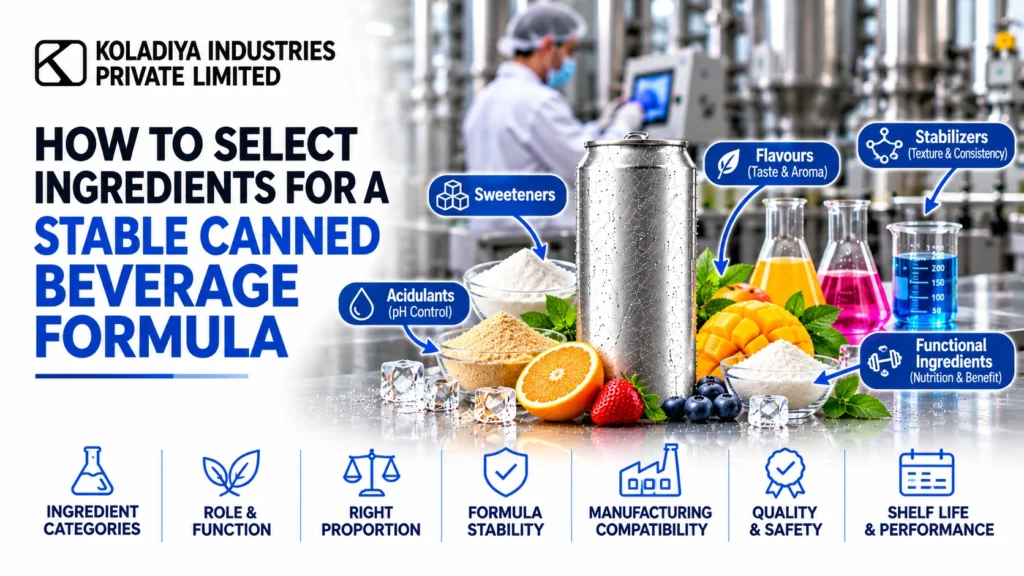
Depending on the type of beverage, manufacturers can combine water, fruit extracts, sweeteners, natural or artificial flavours, acidity regulators, stabilisers, vitamins, minerals, proteins, and other approved functional ingredients to achieve the desired taste, quality, and nutritional profile.
Each ingredient must serve a specific purpose. For example, sweeteners influence sweetness, acidity regulators help manage flavour and pH, and stabilisers may improve physical consistency.
Moreover, ingredients must work together throughout processing and storage. Certain vitamins may degrade over time, proteins may precipitate under unsuitable conditions, and some flavour systems may change during heat treatment.
Beverage developers should test different formulations, assess how ingredients interact, and fine-tune the recipe to achieve the desired taste, consistency, stability, and quality standards.
Koladiya Industries can support beverage businesses seeking development and manufacturing solutions for their product concepts.
Step 4: Conduct Taste Testing and Product Trials
A beverage may meet its technical specifications yet fail to appeal to consumers. For this reason, sensory testing plays an important role in product development.
Prepare several prototypes with controlled variations in sweetness, acidity, flavour intensity, aroma, and mouthfeel. Then, gather feedback from representative target consumers.
Evaluate the following characteristics:
- Flavour balance and overall taste.
- Sweetness and acidity.
- Aroma and aftertaste.
- Colour and visual appeal.
- Mouthfeel and drinkability.
- Packaging convenience.
Use the findings to refine the formulation. Furthermore, test the preferred prototype under realistic consumption conditions to understand how consumers respond to the product.
This approach allows brands to refine their beverage based on consumer feedback and build confidence in the product before moving into large-scale production.
Step 5: Select the Right Ingredients and Suppliers
Ingredient selection affects product quality, production costs, supply reliability, and regulatory compliance.
Choose suppliers who can provide appropriate specifications, consistent ingredient quality, and relevant documentation. Depending on the ingredient, this may include certificates of analysis, allergen information, food safety documentation, and traceability records.
Additionally, evaluate ingredient availability throughout the year. Seasonal fruit ingredients, specialised functional components, and imported materials may create supply challenges.
Where possible, establish suitable alternative sourcing options without compromising the beverage’s quality or formulation.
A dependable supply chain helps manufacturers maintain consistency across production batches and fulfil retail orders more reliably.
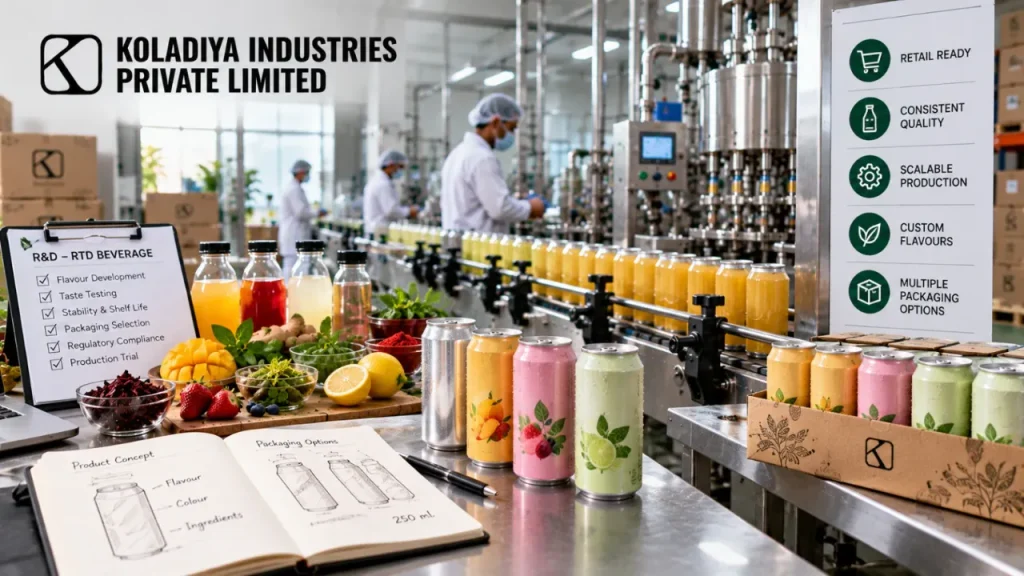
Step 6: Choose Suitable Packaging
Packaging influences product protection, convenience, shelf appeal, transportation, and manufacturing costs. Therefore, brands should select a format that matches their beverage and retail strategy.
Common options include:
Aluminium cans: Often suitable for energy drinks, sparkling beverages, and selected functional drinks.
PET bottles: Commonly used for flavoured water, hydration beverages, and various non-carbonated drinks.
Glass bottles: May suit premium beverages and specialised retail positioning, although weight and breakage require consideration.
Cartons: Can work for selected juice-based, dairy-based, and other beverage products, depending on processing and packaging compatibility.
When selecting packaging, evaluate product compatibility, oxygen and light protection, carbonation retention where relevant, closure integrity, labelling requirements, storage conditions, and transportation durability.
Furthermore, the packaging design should communicate the brand’s identity clearly. Readable product information, a distinctive visual system, and practical pack sizes can help attract attention on retail shelves.
Step 7: Validate Shelf Life and Product Safety
Shelf-life validation is essential before launching a Ready-to-Drink Beverage for retail. The product must maintain acceptable quality and meet applicable safety requirements throughout its declared shelf life when stored under specified conditions.
The appropriate validation programme depends on the formulation, processing method, packaging, and storage conditions.
Testing may include:
- Microbiological analysis.
- pH and acidity monitoring.
- Sensory evaluation over time.
- Colour, flavour, and aroma stability.
- Physical stability and sedimentation checks.
- Packaging integrity and closure performance.
- Relevant nutritional or chemical parameters.
For example, a beverage containing sensitive ingredients may require additional stability assessments. Similarly, acidic, dairy-based, and low-acid beverages may require different processing and safety controls.
Use a scientifically appropriate shelf-life study and, where necessary, specialist food safety expertise. Do not assign an extended shelf life solely on the basis of appearance or a short storage trial.
Step 8: Select the Right Manufacturing Process
Once the formulation and packaging approach are established, determine how to manufacture the beverage consistently at commercial scale.
The suitable process depends on the product category and its safety requirements. Possible approaches include hot filling, pasteurisation, aseptic processing, or other validated processing systems. Carbonated products may also require specialised carbonation and filling equipment.
Before production, assess:
- Batch size and production capacity.
- Water quality and ingredient handling.
- Mixing and blending requirements.
- Processing parameters.
- Filling and sealing accuracy.
- Hygiene and sanitation procedures.
- Quality control checkpoints.
- Batch documentation and traceability.
Pilot production helps identify potential problems before large-scale manufacturing begins. It also allows the development team to confirm that the formulation performs consistently under actual production conditions.
Working with an experienced beverage manufacturing partner can help brands understand their technical requirements and select a practical route to commercial production.
Step 9: Meet Regulatory and Labelling Requirements
In India, beverage brands must comply with applicable food safety laws and relevant requirements established by the Food Safety and Standards Authority of India (FSSAI).
Depending on the product, businesses may need to address licensing, product category classification, ingredient permissions, food additive limits, nutritional declarations, allergen declarations, and packaging and labelling rules.
The label should accurately represent the product and include all mandatory declarations applicable to its category. Brands must also substantiate nutrition and functional claims and avoid misleading statements.
For example, claims relating to energy, hydration, protein content, vitamins, or other benefits must comply with the applicable requirements. A marketing phrase does not automatically qualify as a permitted claim.
Because regulatory requirements can vary by product type and change over time, obtain an appropriate compliance review before commercial launch.
Step 10: Calculate Costs and Set a Retail Price
A commercially successful beverage must satisfy consumer expectations while supporting sustainable business margins.
Calculate the complete cost of production, including ingredients, packaging, manufacturing, quality testing, storage, transportation, and other relevant expenses.
Next, consider distribution margins, retailer margins, promotional discounts, marketing expenses, and applicable taxes when developing the pricing strategy.
For example, a premium functional beverage may support a different pricing structure from an everyday flavoured water product. However, a higher price must reflect genuine consumer value and a realistic market position.
Prepare financial estimates for different production volumes. This helps you understand how manufacturing scale, packaging choices, and ingredient sourcing affect the final cost per unit.
Step 11: Prepare for Retail Distribution
Retail launch requires more than producing a finished beverage. Brands must also establish reliable inventory management, distribution arrangements, and sales support.
Start by selecting suitable channels, such as local retailers, supermarkets, convenience stores, gyms, cafés, or online marketplaces.
Then, prepare the commercial materials retailers may need, including product specifications, pricing information, product images, case-pack details, shelf-life information, and applicable compliance documentation.
Additionally, plan how you will manage replenishment, returns, product storage, and retailer feedback.
A focused launch in selected locations can help you assess sales velocity and customer acceptance before expanding distribution. Use actual sales data to guide future production and inventory decisions.
Common Challenges in Ready-to-Drink Beverage Development
Developing a retail-ready beverage can involve several technical and commercial challenges.
Formulation Instability
Ingredient interactions may cause sedimentation, separation, flavour changes, or colour deterioration. Appropriate formulation trials and stability testing help identify these issues early.
Inconsistent Product Quality
Differences in ingredients, processing conditions, or filling operations can affect taste and appearance. Clear specifications, controlled manufacturing procedures, and routine quality checks help maintain consistency.
High Production Costs
Premium ingredients, complex packaging, and small production volumes can increase unit costs. Brands should compare alternative solutions while protecting essential product quality and safety requirements.
Limited Consumer Differentiation
A beverage may struggle to attract attention if it resembles many existing products. Clear positioning, meaningful product innovation, and consumer testing can help establish a stronger identity.
Distribution and Shelf-Life Issues
Inadequate storage, slow inventory movement, and unsuitable transportation conditions can affect product quality and profitability. Consequently, brands should align shelf life, packaging, distribution, and production planning from the beginning.
How Koladiya Industries Can Support Ready-to-Drink Beverage Development
Koladiya Industries can be a potential partner for businesses exploring beverage development and manufacturing solutions. A structured development approach helps brands move from an initial concept towards a product suitable for commercial evaluation and retail distribution.
Depending on the project scope and available capabilities, the development process may involve:
- Product concept planning: Defining the beverage category, target consumer, and product positioning.
- Formulation development: Working towards the required flavour profile and product specifications.
- Packaging selection: Evaluating suitable packaging formats for the beverage and target market.
- Manufacturing planning: Assessing production requirements and scale-up considerations.
- Quality and shelf-life planning: Identifying relevant testing and quality control requirements.
- Commercial preparation: Reviewing cost factors and production needs before launch.
Businesses should confirm the specific services, production capabilities, minimum order quantities, and project timelines directly with Koladiya Industries before finalising their manufacturing plans.
With appropriate technical planning and a clear commercial strategy, beverage brands can approach retail launch with greater confidence.
Conclusion
Developing a Ready-to-Drink Beverage for retail requires a coordinated approach to market research, formulation, sensory testing, packaging, shelf-life validation, manufacturing, regulatory compliance, and distribution.
Each stage influences the product’s quality, cost, consumer acceptance, and long-term commercial potential. Therefore, brands should validate their concepts early, work with suitable technical partners, and establish reliable quality control procedures before scaling production.
Moreover, successful retail growth depends on delivering a consistent product that meets consumer expectations and supports sustainable business economics.
For startups, established beverage companies, and entrepreneurs entering India’s beverage market, the right development strategy can turn a promising concept into a commercially prepared product.
Develop Your Ready-to-Drink Beverage with Koladiya Industries
Are you planning to launch your own Ready-to-Drink Beverage brand in India? Koladiya Industries can help you explore beverage development and manufacturing solutions tailored to your business concept and production requirements.
Whether you are developing an energy drink, functional beverage, flavoured drink, or another RTD product, take the next step towards building your beverage brand.
Contact Koladiya Industries today to discuss your beverage concept, formulation requirements, packaging options, and manufacturing needs. Start planning your journey from beverage idea to retail-ready product.
FAQ’s
How can Koladiya Industries help with ready-to-drink beverage development?
Koladiya Industries can be considered as a beverage manufacturing partner for businesses exploring product development and production support. Discuss your formulation, packaging, quality requirements, and production volume to determine the services available for your project.
How much does ready-to-drink beverage development cost?
The cost depends on the formulation, ingredients, packaging format, testing requirements, production quantity, and manufacturing process. A project-specific quotation helps establish a realistic development and production budget.
How long does it take to develop an RTD beverage for retail?
The timeline varies according to formulation complexity, ingredient availability, testing, packaging selection, and regulatory requirements. Proper planning helps businesses prepare for commercial production and retail distribution.
Which packaging options are suitable for retail-ready beverages?
Cans, PET bottles, and glass bottles are popular options. The best choice depends on product compatibility, shelf-life requirements, transportation conditions, customer preferences, and brand positioning.
What quality and safety checks does an RTD beverage need before retail launch?
An RTD beverage needs appropriate microbiological testing, ingredient verification, stability assessment, shelf-life validation, packaging compatibility checks, and applicable food safety and labelling compliance before launch.
Why should beverage brands work with a manufacturing partner?
A suitable manufacturing partner can help beverage brands coordinate formulation, production planning, packaging, quality control, and scale-up. Koladiya Industries may be a relevant partner to discuss when evaluating manufacturing requirements for a retail-ready beverage.