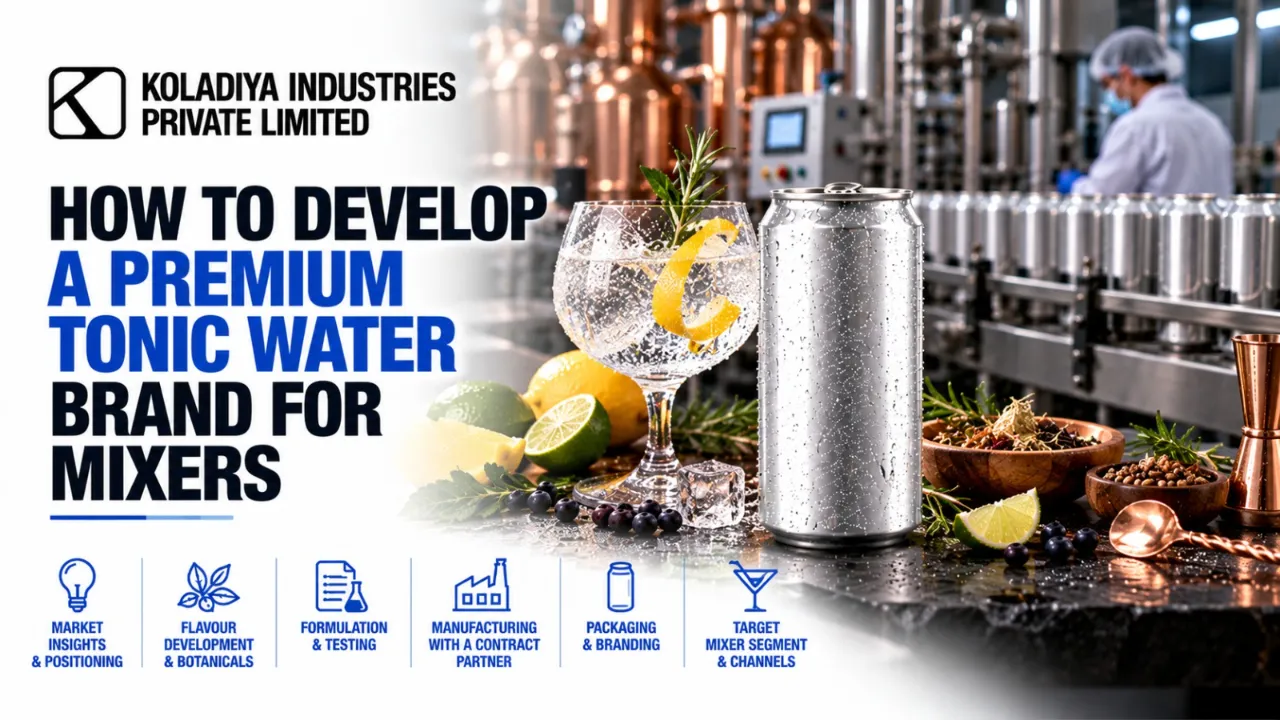
The premium beverage market offers exciting opportunities for entrepreneurs who want to introduce distinctive drinks for restaurants, bars, hotels, cafés, and retail consumers. Among these opportunities, tonic water stands out as a versatile mixer that pairs well with spirits, non-alcoholic botanical drinks, and creative beverage recipes. As consumers explore new flavours and premium drinking experiences, a well-developed tonic water product can help a beverage brand establish a unique market position. However, developing a Premium Tonic Water Brand requires more than combining carbonated water with flavoring ingredients. Businesses must understand their target audience, develop a balanced taste profile, select suitable ingredients, design attractive packaging, and establish a consistent manufacturing process.
Moreover, brands must consider product pricing, shelf life, quality control, and distribution before launching commercially. A structured development process helps businesses turn an initial concept into a commercially viable product. For businesses exploring beverage manufacturing opportunities, Koladiya Industries can be a relevant partner to discuss product development requirements and contract manufacturing possibilities. The right manufacturing approach can help a brand plan its product specifications and prepare for commercial production.
Why Develop a Premium Tonic Water Brand?
Premium tonic water offers brands an opportunity to compete through taste, quality, presentation, and product positioning rather than price alone. Unlike standard mixers, premium products often focus on distinctive flavour combinations, refined carbonation, carefully selected ingredients, and sophisticated packaging.
First, consumers and hospitality businesses may look for mixers that complement different beverage styles. For example, a crisp citrus tonic water can suit refreshing summer drinks, while a botanical profile can appeal to consumers who enjoy complex flavours.
Furthermore, premium tonic water gives brands flexibility across several sales channels. Businesses can target bars, restaurants, hotels, speciality retailers, online marketplaces, and consumers who prepare drinks at home.
Nevertheless, a premium position must offer genuine value. Therefore, brands should develop a product with a clear flavour identity, dependable quality, and packaging that supports the intended price point.
1. Define Your Premium Tonic Water Brand Concept
Before developing a formula, determine what your brand should represent. A clear concept guides product development, packaging, marketing, and distribution decisions.
Identify Your Target Audience
Start by identifying the customers most likely to purchase your tonic water. Your audience could include:
- Bars and restaurants seeking premium beverage mixers.
- Hotels and hospitality groups looking for distinctive drink options.
- Retail consumers who enjoy experimenting with drink recipes.
- Health-conscious consumers who prefer particular sugar or calorie profiles.
- Premium beverage retailers seeking differentiated products.
Each audience has different priorities. For instance, hospitality businesses may prioritise consistent taste, dependable supply, and serving performance. Meanwhile, retail consumers may focus on flavour, ingredients, price, convenience, and brand identity.
Consequently, your target audience should influence every major development decision.
Establish a Unique Selling Proposition
Next, define the qualities that distinguish your product from competing tonic waters. Your unique selling proposition might centre on a citrus-forward flavour, a botanical-inspired profile, a lower-sugar formulation, or premium packaging.
However, avoid adding features simply because they sound attractive. Instead, identify a meaningful consumer need and build your product around it.
2. Develop the Right Flavour Profile for a Premium Tonic Water Brand
Flavour development plays a central role in creating a successful tonic water. Customers expect a refreshing drink with balanced bitterness, acidity, sweetness, and carbonation.
Balance Bitterness, Sweetness, and Acidity
Traditional tonic water commonly uses quinine to create its characteristic bitterness. Sweeteners, acids, and flavoring ingredients help balance that bitterness and produce a refreshing finish.
Therefore, your formulation team should evaluate several combinations until the product achieves the intended taste profile. Excessive bitterness may overwhelm other flavours, while excessive sweetness can make the drink feel heavy. Similarly, insufficient acidity may leave the flavour flat.
During development, assess the following characteristics:
- Bitterness: Determine the intensity and finish that suit the target audience.
- Sweetness: Select an appropriate sugar or sweetener system for the product concept.
- Acidity: Create a refreshing taste that complements the other ingredients.
- Aroma: Explore citrus, botanical, or other flavour notes that support the brand identity.
- Carbonation: Choose a level that delivers the desired mouthfeel and drinking experience.
Explore Distinctive Flavour Variations
A premium tonic water brand can begin with one signature product and introduce additional varieties after validating the original concept.
Potential flavour directions include classic citrus, lime-forward tonic, floral botanicals, herbal blends, and subtle spice notes. However, every variation should preserve tonic water’s essential character and work well as a mixer.
Furthermore, conduct structured sensory testing with people from your intended customer group. Collect feedback on bitterness, aroma, sweetness, aftertaste, and overall preference. Use these findings to refine the formulation rather than relying entirely on internal opinions.
3. Select High-Quality Ingredients for a Premium Tonic Water Brand
Ingredient selection directly influences flavour, consistency, production requirements, and product cost. Consequently, brands should evaluate ingredient suitability before moving towards commercial manufacturing.
Choose Ingredients Carefully
Depending on the formulation, a tonic water may include treated water, carbonation, sweeteners, acidity regulators, flavourings, and quinine where applicable.
Choose ingredients based on their quality, functional role, compatibility, and suitability for the intended product. In addition, assess supplier reliability and request the technical documentation needed for product development and quality assurance.
Ingredient selection also requires careful regulatory review. For example, brands operating in India should verify current FSSAI requirements and other applicable rules for ingredients, permitted limits, product classification, and labelling before commercial production.
Consider Sugar and Calorie Positioning
Your brand may target consumers who prefer a traditional sweetened tonic or those who seek a reduced-sugar alternative. Either direction can work, provided the formulation delivers a satisfying taste.
However, reducing sugar can change mouthfeel, flavour balance, and the perception of bitterness. Therefore, evaluate alternative sweetener systems through formulation trials and sensory testing. Make nutritional claims only when the finished product meets the applicable requirements.
4. Plan Product Testing and Quality Control
A premium tonic water brand must deliver the same experience across batches. Even a strong concept can struggle if customers notice inconsistent flavour, carbonation, appearance, or packaging quality.
Conduct Essential Product Tests
Before commercial production, develop a suitable testing plan with qualified technical and quality professionals. Depending on the formulation and packaging, the plan may cover:
- Sensory evaluation and flavour consistency.
- pH and other relevant product specifications.
- Carbonation performance.
- Microbiological safety and hygiene controls.
- Packaging compatibility and closure integrity.
- Shelf-life stability under appropriate storage conditions.
Moreover, use documented specifications for ingredients, finished-product quality, and production checks. These specifications help the manufacturing team identify deviations and take corrective action.
Establish a Shelf-Life Testing Plan
Shelf life affects distribution, inventory management, and customer satisfaction. Therefore, test how the drink performs under appropriate storage conditions throughout its intended shelf life.
Evaluate relevant changes in flavour, aroma, carbonation, appearance, packaging integrity, and safety. Do not assign a commercial shelf life based only on assumptions or limited early observations.
5. Choose the Right Packaging for Your Premium Tonic Water Brand
Packaging communicates product quality before customers take their first sip. It also protects the product and supports storage, transport, and serving convenience.
Compare Cans and Glass Bottles
Aluminium cans offer portability, efficient storage, and a modern appearance. They may suit retail multipacks, events, and brands that want a contemporary visual identity.
Glass bottles, on the other hand, can create a premium presentation for restaurants, bars, hotels, and speciality retailers. However, businesses should also consider bottle weight, breakage risk, transport costs, and storage requirements.
Your decision should reflect your target market, filling process, distribution model, budget, and desired customer experience.
Create a Distinctive Packaging Design
Use a clear visual identity that customers can recognise quickly. Colour, typography, logo placement, and product information should work together to communicate the brand’s positioning.
Additionally, ensure that the label accurately presents the product name, ingredient information, nutritional details, manufacturer information, declarations, and other required particulars. Review the final packaging against applicable labelling and advertising rules before production.
6. Calculate Manufacturing Costs and Set Your Price
A premium tonic water brand needs a practical financial plan. Without clear cost estimates, a product may attract interest but struggle to generate sustainable margins.
Identify the Main Cost Components
Build a cost model that accounts for:
- Ingredients and water treatment.
- Packaging materials and labels.
- Manufacturing and filling charges.
- Product testing and quality assurance.
- Storage, transportation, and distribution.
- Marketing, sales, and trade promotions.
Furthermore, confirm minimum order quantities, production scheduling, packaging availability, and expected lead times with your manufacturing partner. These factors can affect the initial investment and working capital requirements.
Set a Suitable Selling Price
Your pricing strategy should reflect product costs, competitor positioning, distributor margins, retailer margins, and customer expectations.
However, avoid pricing solely according to competitor products. Instead, calculate your minimum sustainable selling price and assess whether your target audience recognises enough value to pay the proposed price.
Before committing to a large production run, consider a controlled launch to evaluate customer demand, sales performance, and feedback.
7. Select a Suitable Beverage Manufacturing Partner
Manufacturing plays a major role in moving a tonic water concept from formulation to market. Therefore, choose a partner whose technical capabilities, production processes, packaging options, and quality systems match your product requirements.
Ask potential partners about their experience with carbonated beverages, formulation trials, production capacity, filling formats, testing procedures, quality documentation, and minimum order quantities.
In addition, clarify responsibilities for ingredient sourcing, packaging procurement, product specifications, regulatory documentation, and batch approvals. Clear communication reduces misunderstandings and supports a smoother launch.
Koladiya Industries is relevant to businesses exploring beverage manufacturing and contract manufacturing opportunities. Brands can discuss their proposed tonic water concept, target packaging, expected volumes, and technical requirements to understand the possible production approach.
Nevertheless, confirm the partner’s current capabilities, available packaging formats, applicable minimum order quantities, and project scope before finalising any manufacturing arrangement.
8. Build a Strong Market Launch Strategy
Once your formula, packaging, and production plan are ready, establish a launch strategy that reaches the right customers.
Introduce the Product to Relevant Buyers
For a mixer-focused brand, begin with channels that align with the product positioning. These may include cocktail bars, restaurants, hotels, premium grocery stores, speciality retailers, and selected distributors.
Prepare product samples, clear specifications, pricing information, and serving suggestions. For hospitality customers, demonstrate how the tonic water performs in relevant drink recipes.
Create a Consistent Brand Story
Your marketing should explain what makes your tonic water different. Highlight genuine strengths, such as its flavour profile, packaging, or intended serving occasions.
Moreover, collect feedback from early customers and review repeat purchases, sales velocity, and channel performance. These insights can help you improve your positioning and determine when to expand distribution or introduce additional flavours.
9. Common Mistakes to Avoid When Developing a Premium Tonic Water Brand
Several avoidable mistakes can increase development costs and delay a product launch.
First, do not finalise the formula without testing it with your intended audience. Second, avoid choosing packaging before reviewing manufacturing compatibility and distribution needs. Third, do not estimate manufacturing costs without considering packaging, logistics, and channel margins.
Furthermore, avoid making unsupported health, nutritional, or product-quality claims. Ensure that ingredient choices, labels, and marketing materials meet the applicable requirements.
Finally, resist the temptation to launch too many flavours at once. A well-developed signature product can help establish the brand before you invest in a broader product portfolio.
Conclusion
Developing a Premium Tonic Water Brand requires a clear concept, thoughtful flavour development, suitable ingredients, reliable manufacturing, attractive packaging, and a practical commercial strategy. Each decision influences the final product’s customer appeal, production costs, and ability to compete in the premium mixer category. By validating your flavour profile, testing product stability, understanding your target market, and planning manufacturing requirements early, you can reduce avoidable risks and build a stronger foundation for launch. For beverage entrepreneurs, collaboration with an experienced manufacturing partner can also simplify production planning and support the transition from concept to commercial batches.
Start Your Premium Tonic Water Brand with Koladiya Industries
Are you planning to launch a premium tonic water brand for bars, restaurants, retail stores, or other beverage channels? Connect with Koladiya Industries to discuss your beverage concept, formulation requirements, packaging preferences, and contract manufacturing needs. Begin planning a product that reflects your brand vision and prepares you for the next stage of your beverage business. Add a practical launch timeline Strengthen Koladiya’s manufacturing capabilities
FAQ’s
What ingredients are required to manufacture premium tonic water?
Premium tonic water typically uses treated water, carbon dioxide, sweeteners, acidity regulators, flavourings, and quinine where permitted and appropriate. The final ingredient selection depends on the desired flavour, product specifications, and applicable food regulations.
How much does it cost to manufacture premium tonic water?
The cost of manufacturing premium tonic water depends on the formulation, ingredient quality, packaging format, production volume, testing requirements, and logistics. Request a customised quotation based on your product specifications and expected order quantity.
Can startups use contract manufacturing for tonic water?
Yes. Contract manufacturing allows startups to work with an established beverage manufacturer instead of investing immediately in their own production facility. Businesses should evaluate formulation support, production capabilities, quality systems, packaging options, and minimum order quantities.
What packaging options are best for premium tonic water?
Aluminium cans and glass bottles are popular options for premium tonic water. Cans offer convenient handling and efficient storage, while glass bottles can create an upscale presentation for bars, restaurants, hotels, and speciality retailers. The best choice depends on your target customers and distribution strategy.
How can I develop a unique flavour for my premium tonic water brand?
Start by defining your target audience and desired taste profile. Experiment with bitterness, sweetness, acidity, carbonation, and citrus or botanical flavour notes. Conduct sensory testing with potential customers and refine the formulation before commercial production.
Can Koladiya Industries help with premium tonic water manufacturing?
Koladiya Industries can be approached to discuss beverage manufacturing and contract manufacturing requirements for your tonic water concept. Contact the company to review your formulation needs, packaging preferences, production volumes, and project requirements, and confirm the available manufacturing capabilities.