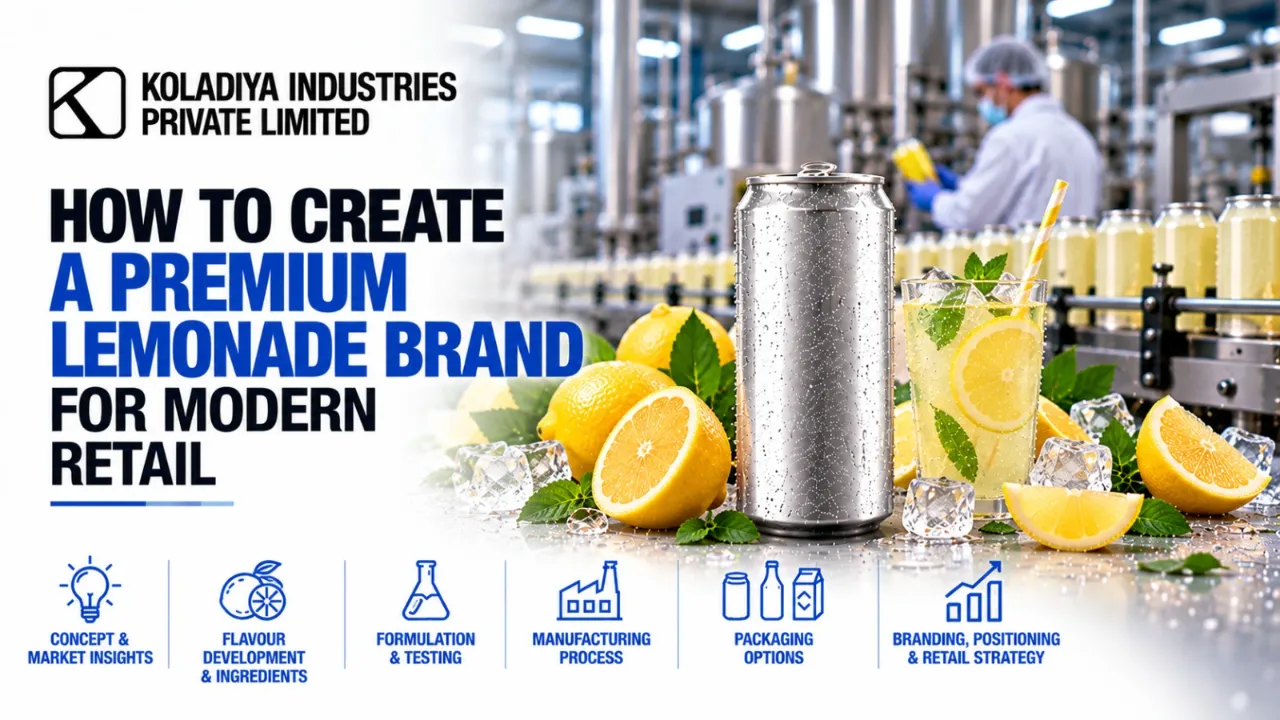
Lemonade has evolved beyond a simple lemon-flavoured refreshment. Today, beverage consumers look for distinctive flavours, attractive packaging, convenient formats, and refreshing experiences that fit their lifestyles. As a result, launching a Premium Lemonade Brand can create opportunities for entrepreneurs who want to enter the competitive beverage market. However, developing a successful lemonade product requires more than combining lemon juice, water, and sugar. Brands need a clear market position, a consistent formulation, suitable packaging, reliable manufacturing, and a practical retail strategy. Moreover, every product decision must support the brand’s quality standards and commercial goals.
For startups and established businesses, working with an experienced beverage manufacturing partner such as Koladiya Industries can help simplify product development and commercial production planning. With the right approach, businesses can transform a lemonade concept into a retail-ready beverage that attracts attention and encourages repeat purchases.
1. Define Your Premium Lemonade Brand Positioning
Before developing the product, determine what makes your lemonade different from competing beverages. A clear positioning strategy helps customers understand why they should choose your product.
First, identify your target audience. Your brand might appeal to young professionals, health-conscious shoppers, families, premium beverage consumers, or customers who prefer natural-tasting refreshments. Each audience has different expectations regarding taste, price, ingredients, and packaging.
Next, define your brand’s unique selling proposition (USP). For example, your Premium Lemonade Brand could focus on authentic lemon flavour, sophisticated taste combinations, a reduced-sugar recipe, convenient packaging, or a distinctive premium identity.
Consider the following positioning options:
- Premium everyday refreshment: A well-balanced lemonade designed for regular consumption.
- Modern lifestyle beverage: A stylish drink aimed at urban consumers and younger audiences.
- Fruit-forward lemonade: A product that highlights lemon flavour alongside complementary fruit ingredients.
- Reduced-sugar lemonade: A formulation developed for consumers seeking less sweetness, where the recipe and applicable labelling requirements support the claim.
- Premium sparkling lemonade: A carbonated option that delivers a crisp, refreshing drinking experience.
Ultimately, select a position that aligns with your target market, production capabilities, and pricing strategy. A focused identity also makes packaging design, advertising, and retail communication more consistent.
2. Research the Market Before Launching a Premium Lemonade Brand
Market research helps you identify customer preferences and reduce avoidable product development risks. Therefore, study the beverage category before committing to a final recipe or packaging format.
Start by analyzing competing lemonades, sparkling drinks, flavoured waters, and other citrus beverages. Evaluate their flavours, bottle or can sizes, price points, packaging designs, and retail placements. In addition, review customer feedback to understand what buyers appreciate and where existing products may fall short.
Identify Your Premium Lemonade Brand’s Target Customers
Create a practical customer profile based on factors such as age group, purchasing habits, preferred flavours, consumption occasions, and expected price range.
For instance, consumers buying a lemonade for everyday refreshment may prioritise value and convenience. By contrast, shoppers choosing a premium beverage for cafés, restaurants, or social occasions may pay greater attention to flavour complexity, packaging, and brand presentation.
You should also investigate potential sales channels, including supermarkets, convenience stores, cafés, restaurants, hotels, and online grocery platforms. Each channel has different product, pricing, and distribution requirements.
Consequently, market research can help you develop a lemonade that meets real customer expectations rather than relying solely on personal preferences.
3. Develop a Distinctive Lemonade Formulation
Flavour development plays a central role in the success of a Premium Lemonade Brand. Customers expect a refreshing citrus profile with an appropriate balance of sweetness, acidity, and aroma.
A formulation should deliver a consistent taste experience from the first sip to the last. Therefore, product development needs a structured process involving ingredient selection, recipe trials, sensory evaluation, and quality checks.
Choose the Right Ingredients for Your Premium Lemonade Brand
The ingredient selection depends on your product concept, target price, desired taste, and manufacturing process. Common formulation considerations include:
- Lemon ingredients: Lemon juice, juice concentrates, or suitable lemon flavour components can help establish the desired citrus profile.
- Sweetening system: Sugar or suitable alternative sweeteners can help achieve the intended sweetness, depending on the product concept.
- Water quality: Consistent water quality supports flavour consistency and overall product quality.
- Supporting flavours: Mint, ginger, berries, or other fruit notes can create distinctive variations.
- Acidity management: The formulation should balance tartness, sweetness, and flavour stability.
However, simply adding more lemon does not necessarily create a better product. Excessive acidity can make the drink harsh, while too much sweetness can overpower the citrus character.
Test and Refine the Formula
Develop several pilot formulations and evaluate them against defined criteria. These may include aroma, sweetness, acidity, mouthfeel, colour, aftertaste, and overall customer appeal.
Where practical, use structured taste tests with people from your target audience. Their feedback can help you identify the most appealing formulation and determine which adjustments offer meaningful improvements.
In addition, assess how ingredients perform during processing and storage. The finished beverage should retain its intended flavour and meet relevant quality and food safety requirements throughout its stated shelf life.
4. Choose Packaging That Communicates Premium Quality
Packaging influences how shoppers perceive your product before they taste it. In modern retail environments, a Premium Lemonade Brand needs packaging that looks distinctive, communicates the product’s value, and provides practical convenience.
Select the Best Packaging for Your Premium Lemonade Brand
Different formats offer different advantages. Choose according to your product formulation, distribution model, budget, and target customer.
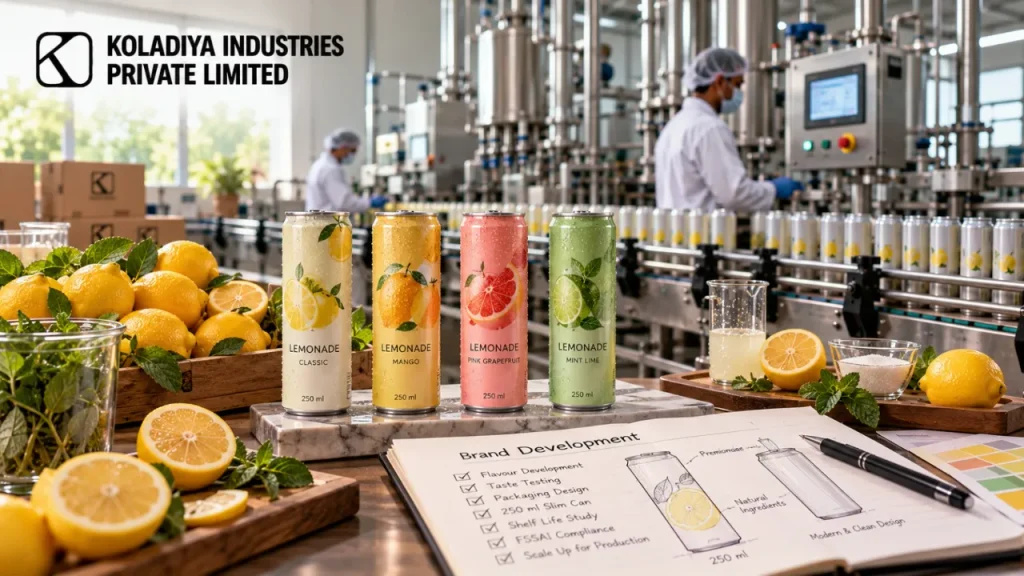
Aluminium cans can create a modern appearance and suit single-serve beverages. They also offer convenience for transport and on-the-go consumption.
PET bottles allow shoppers to see the beverage where the product is clear, and they provide flexible options for different serving sizes. However, the packaging must suit the beverage’s processing, storage, and shelf-life requirements.
Glass bottles can support an upscale presentation, particularly for premium hospitality channels, restaurants, and selected retail environments. Nevertheless, weight, handling, transport, and breakage risks require consideration.
Alongside the container, pay attention to label design, typography, colour, and product information. A clean design, well-organised label, and recognisable brand identity can help your beverage stand out on crowded shelves.
At the same time, make sure all packaging and label claims accurately reflect the product and comply with applicable requirements. Premium presentation should complement product quality rather than replace it.
5. Plan Manufacturing and Quality Control
Once the formulation and packaging concept take shape, establish a manufacturing plan. Production decisions influence product consistency, unit economics, lead times, and your ability to meet retail demand.
Work With a Suitable Beverage Manufacturing Partner
Setting up an independent beverage production facility can require substantial investment in equipment, infrastructure, people, and quality systems. For this reason, some startups explore contract manufacturing to access suitable production capabilities without building an entire facility themselves.
When evaluating a manufacturing partner, consider its experience with your beverage category, available production formats, quality procedures, ingredient sourcing process, packaging compatibility, minimum order quantity (MOQ), and commercial terms.
Koladiya Industries is relevant to businesses exploring beverage development and manufacturing support. Before starting a project, discuss your product concept, expected volume, formulation requirements, packaging preferences, budget, and launch timeline with the team to determine the right production approach.
Establish Quality and Food Safety Checks
A premium product needs consistent quality across batches. Therefore, create a quality plan that covers raw materials, production conditions, packaging integrity, finished-product specifications, and batch documentation.
Depending on the formulation and processing method, your manufacturing plan may also need appropriate microbial testing, shelf-life studies, and stability assessments. These activities help determine whether the beverage maintains its intended quality during storage.
Furthermore, confirm that the selected manufacturing process supports the product’s safety and shelf-life requirements. A formulation that performs well in a small trial may require additional adjustments before commercial production.
6. Calculate Costs and Set a Profitable Retail Price
A premium brand needs a realistic pricing strategy. If the retail price is too high, shoppers may hesitate to try the product. Conversely, a price that is too low can weaken margins and make premium positioning harder to maintain.
Start by estimating the major cost components:
- Ingredients and flavour systems
- Packaging materials and labels
- Manufacturing and quality testing
- Product development and trial batches
- Storage, transportation, and distribution
- Marketing, promotions, and retail-related costs
Next, calculate the expected cost per unit and compare it with the intended selling price. Remember that the retail price does not equal the amount your brand receives. Distributor margins, retailer margins, discounts, taxes, and other channel costs can affect your final revenue.
Match Your Premium Lemonade Brand to the Right Price Point
Compare your product with beverages that target similar customers and occupy a similar retail position. Then evaluate whether your formulation, packaging, serving size, and brand identity justify the planned price.
It is also sensible to model multiple sales scenarios. A conservative estimate can help you understand the production volume required to cover fixed costs, support ongoing operations, and maintain a sustainable margin.
7. Prepare Your Premium Lemonade Brand for Modern Retail
A well-developed product still needs a route to market. Modern retail success depends on product availability, shelf visibility, clear communication, and repeat demand.
Begin with a manageable launch plan. You might test the beverage through selected retailers, cafés, local stores, or online channels before expanding distribution. This approach can help you gather early feedback and understand which flavours and pack sizes perform best.
Build Retail-Ready Branding and Product Information
Prepare clear product descriptions, professional product images, accurate ingredient and nutrition information, and compliant labels. Retail buyers may also expect information about pack sizes, case quantities, supply capacity, pricing, and replenishment.
Additionally, plan promotional activities that encourage trial without relying entirely on discounts. Sampling, launch offers, store-level promotions, and engaging digital content can introduce the product to new customers.
Monitor sales data and customer feedback after launch. Track repeat purchases, retailer feedback, stock movement, and demand by flavour or pack size. Consequently, you can make more informed decisions about distribution, promotional spending, and future product variants.
8. Scale Your Premium Lemonade Brand Strategically
As customer demand grows, production and distribution plans must evolve with it. However, increasing volume too quickly can create inventory pressure, cash-flow challenges, or inconsistent product quality.
Use early sales data to estimate future demand and plan production accordingly. Coordinate ingredient purchasing, packaging availability, manufacturing schedules, and logistics well in advance.
You should also confirm that your product specifications remain consistent as volumes increase. Any changes to ingredients, suppliers, processing parameters, or packaging should undergo suitable evaluation before implementation.
Once your original lemonade establishes a clear market position, you can consider new flavours, additional pack sizes, or related citrus beverages. Nevertheless, introduce new products only when they support your brand strategy and available resources.
How Koladiya Industries Can Support Your Lemonade Brand Journey
Creating a Premium Lemonade Brand involves several connected decisions, from the initial concept and formulation to packaging, production, and retail preparation. Each stage influences the final customer experience and the product’s commercial potential.
Koladiya Industries can be a starting point for businesses exploring beverage manufacturing solutions. By discussing your target market, formulation goals, packaging preferences, anticipated order quantities, and launch plans, you can assess the manufacturing approach that best suits your requirements.
Before committing to large-scale production, clarify project specifications, development needs, quality expectations, minimum order quantities, costs, and lead times. This preparation helps align your product vision with a practical production plan.
Conclusion: Turn Your Premium Lemonade Brand Idea Into a Retail Opportunity
Building a successful Premium Lemonade Brand requires a balance of product quality, market understanding, appealing packaging, dependable manufacturing, and a focused retail strategy. Above all, the beverage must deliver a refreshing and consistent taste that gives customers a reason to buy it again.
Start with a clear target audience, research the competition, and develop a formulation that supports your brand promise. Then select suitable packaging, establish quality controls, calculate a commercially realistic price, and introduce the product through carefully chosen sales channels.
With thoughtful planning and the right manufacturing partner, beverage entrepreneurs can build a stronger foundation for entering the modern retail market.
Launch Your Premium Lemonade Brand With Koladiya Industries
Are you planning to launch a premium lemonade or develop a distinctive citrus beverage for modern retail? Connect with Koladiya Industries to discuss your beverage concept, formulation goals, packaging options, and manufacturing requirements. Take the next step toward turning your lemonade idea into a market-ready product with a clear plan for quality, production, and growth.
FAQ’s
What makes a lemonade brand premium?
High-quality ingredients, balanced flavour, distinctive packaging, consistent quality, and strong brand positioning create a premium experience.
Which flavours work well for premium lemonade?
Classic lemon, mint lemon, ginger lemon, berry lemonade, and sparkling citrus offer distinctive product options.
Which packaging is best for a premium lemonade brand?
Aluminium cans, PET bottles, and glass bottles suit different price points, customer preferences, and retail channels.
Can startups use contract lemonade manufacturing?
Yes. Contract manufacturing allows startups to access production facilities without investing in their own manufacturing plant.
How can I sell my lemonade in modern retail stores?
Focus on competitive pricing, appealing packaging, accurate labelling, consistent quality, and reliable product supply.
How can Koladiya Industries support my lemonade brand?
Contact Koladiya Industries to discuss your beverage concept, formulation needs, packaging options, and manufacturing requirements.