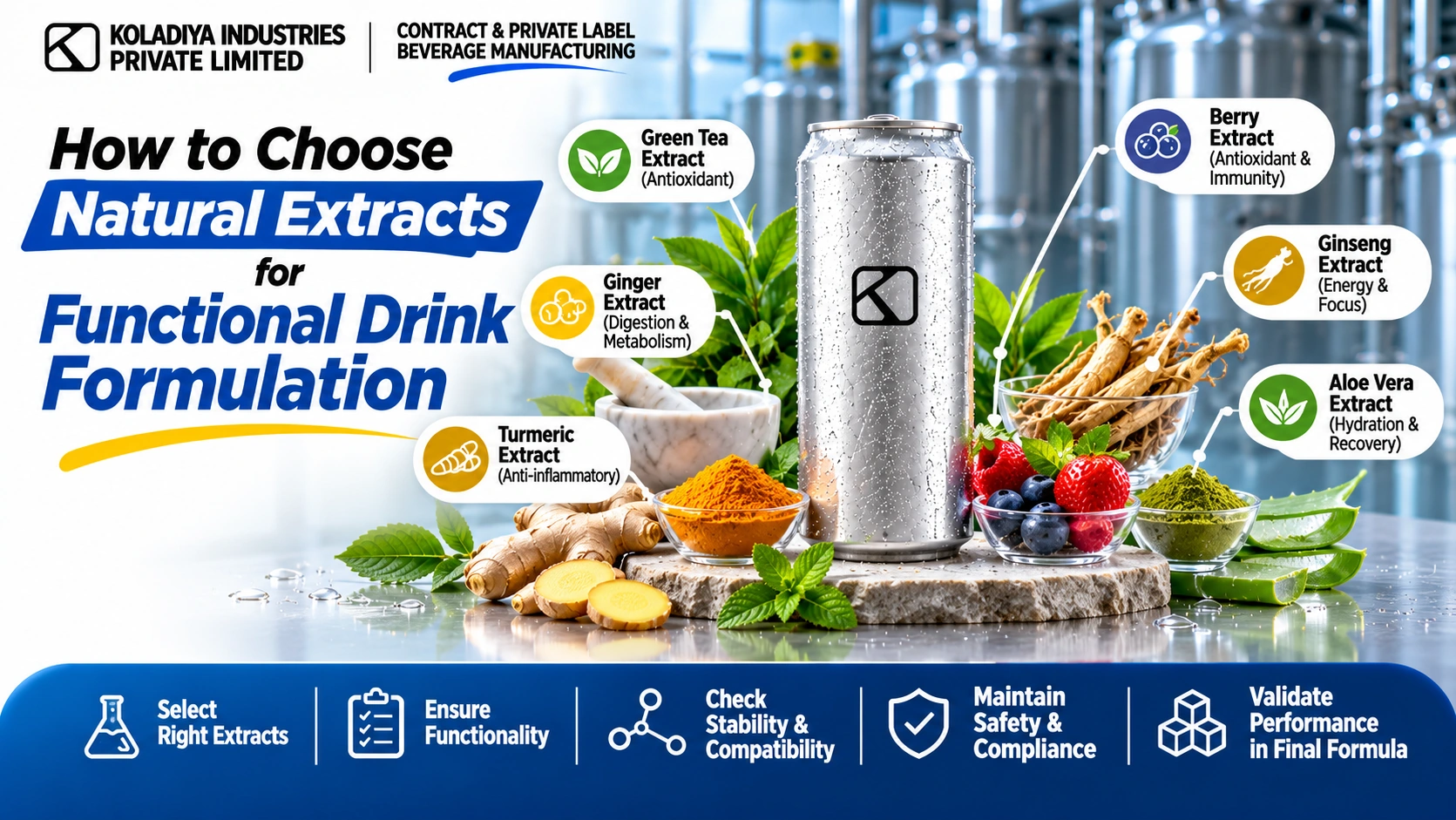
The functional beverage industry continues to evolve as consumers increasingly look for drinks that offer more than basic refreshment. Natural ingredients, botanical extracts, plant-based formulations, and innovative flavour combinations now create new opportunities for beverage brands. However, choosing the right natural extracts requires more than selecting ingredients based on their popularity. Manufacturers must evaluate ingredient quality, solubility, flavour compatibility, concentration, stability, processing requirements, and shelf-life performance before developing a commercial beverage. Functional Drink Formulation plays a crucial role in this process. It helps beverage brands combine suitable natural extracts with other ingredients to create products that deliver consistent flavour, appearance, quality, and intended functionality.
For startups and established beverage businesses, the right ingredient selection can also improve product differentiation and support a successful market launch. At Koladiya Industries, beverage formulation and R&D capabilities support brands in exploring customized beverage concepts, including functional drinks, energy drinks, carbonated beverages, and other ready-to-drink products.
1. Understand Your Product Concept Before Selecting Natural Extracts
Before choosing natural extracts, clearly define your beverage concept and target audience. Every functional drink requires a different ingredient strategy depending on its intended positioning, flavour profile, and formulation requirements. For example, a botanical hydration beverage needs a different ingredient combination from a natural energy drink or herbal wellness beverage.
Consider these potential ingredient applications:
| Beverage Category | Possible Natural Extracts |
|---|---|
| Botanical functional drinks | Ginger, hibiscus, turmeric |
| Natural energy drinks | Guarana, green tea, ginseng |
| Fruit-based functional drinks | Amla, pomegranate, acerola |
| Herbal beverages | Tulsi, mint, chamomile |
| Antioxidant-positioned drinks | Green tea, grape seed |
| Relaxation-positioned beverages | Chamomile, lemon balm |
Furthermore, consider your target consumers, preferred sweetness level, packaging format, and price positioning.
A clearly defined product concept makes ingredient selection more efficient and helps manufacturers avoid unnecessary formulation changes.
2. Evaluate Natural Extract Quality and Purity
Ingredient quality directly influences beverage consistency and manufacturing performance. Even when two suppliers offer the same botanical extract, their products may differ in concentration, purity, extraction methods, and active compound levels.
Therefore, evaluate supplier documentation before approving an ingredient for production.
Important quality parameters include:
- Botanical source and ingredient identification.
- Extraction method and processing details.
- Standardised active compound concentration.
- Microbiological quality.
- Heavy metal and contaminant testing.
- Residual solvent information, where applicable.
- Certificate of Analysis (COA).
- Batch-to-batch consistency.
Additionally, request technical specifications and relevant quality documents from ingredient suppliers.
For energy drink manufacturing, standardized botanical extracts become particularly important. For instance, green tea and guarana extracts may contribute caffeine to the formulation. Manufacturers should therefore verify their caffeine content and calculate the total contribution from all ingredients.
Ultimately, reliable ingredient specifications support consistent product quality and more predictable commercial production.
3. Check Solubility and Compatibility in Functional Drink Formulation
Solubility represents one of the most important technical considerations when selecting natural extracts.
Some botanical extracts dissolve easily in water, whereas others may cause sedimentation, cloudiness, floating particles, or separation. These issues can negatively affect beverage appearance and consumer experience.
Before finalising an ingredient, evaluate:
- Water solubility and dispersibility.
- Sedimentation potential.
- Cloud stability.
- Colour compatibility.
- Interaction with acids and sweeteners.
- Compatibility with preservatives.
- Performance in carbonated beverages.
Moreover, conduct laboratory trials using the actual beverage base rather than testing extracts individually.
An ingredient that performs well in plain water may behave differently when combined with fruit concentrates, acids, sweeteners, preservatives, and flavouring systems.
For example, certain herbal extracts can create undesirable interactions with acidic ingredients. Consequently, compatibility testing helps identify potential problems before commercial manufacturing.
4. Select Natural Extracts Based on Flavour Profiles
Flavour plays a major role in functional beverage development. Although consumers may initially explore a product because of its natural ingredients, repeat purchases often depend on taste, aroma, and the overall drinking experience.
Certain natural extracts contain strong, bitter, earthy, or astringent characteristics. Therefore, manufacturers must balance these flavour notes through suitable ingredient combinations.
Consider these possible combinations:
| Natural Extract | Complementary Flavour Profiles |
|---|---|
| Ginger | Lemon, honey, citrus |
| Hibiscus | Berry, pomegranate |
| Green tea | Lemon, peach |
| Turmeric | Ginger, citrus |
| Mint | Lime, cucumber |
| Amla | Apple, mixed fruit |
| Guarana | Tropical fruit, citrus |
For natural energy drinks, green tea and guarana may introduce bitter or herbal notes. Manufacturers can evaluate citrus, tropical fruit, and berry flavours to develop a more balanced sensory profile.
However, flavour masking should never compromise ingredient stability or the intended characteristics of the product.
Conduct multiple sensory trials to identify the right combination of sweetness, acidity, aroma, and flavour intensity.
5. Determine the Right Extract Dosage
Adding more natural extract does not automatically improve beverage quality or functionality. Excessive quantities may create bitterness, unwanted colour changes, sedimentation, and formulation instability.
Instead, establish suitable inclusion levels through technical evaluation and laboratory testing.
Consider these important factors:
Active compound concentration: Understand the standardised active constituents within the selected extract.
Supplier recommendations: Review technical specifications and recommended usage levels.
Flavour impact: Evaluate how different concentrations affect taste and aroma.
Ingredient interactions: Check how the extract performs alongside other formulation ingredients.
Safety and regulatory compliance: Verify permitted ingredients, applicable dosage limits, and labelling requirements.
For example, an energy drink containing green tea or guarana extract requires careful caffeine calculations. Manufacturers must account for caffeine from every ingredient to achieve the intended concentration and comply with applicable food regulations.
A structured dosage evaluation also helps control ingredient costs without sacrificing the desired product characteristics.
6. Evaluate Stability During Beverage Processing
Natural extracts can respond differently to heat, oxygen, light, and pH conditions. Some botanical compounds may lose stability during processing or storage, which can affect the beverage’s colour, flavour, and overall quality.
Therefore, manufacturers should evaluate processing stability before moving towards commercial production.
Important considerations include:
- Heat sensitivity.
- Oxidation resistance.
- Light exposure.
- pH compatibility.
- Processing temperature.
- Interaction with other ingredients.
- Recommended storage conditions.
For instance, certain fruit and botanical extracts may experience colour or flavour changes during thermal processing.
Similarly, heat-sensitive ingredients may require specific formulation and processing considerations to maintain their desired characteristics.
In energy drink production, manufacturers must assess extract stability alongside carbonation, acidity, flavour systems, and filling conditions.
Consequently, appropriate stability trials help beverage brands identify potential issues before launching their products.
7. Explore Natural Ingredients for Energy Drink Formulation
Energy drinks present an important opportunity for brands interested in natural and functional beverage innovation.
Traditional energy drink formulations commonly include caffeine, sweeteners, acids, vitamins, and flavouring systems. However, brands can also explore botanical ingredients to create differentiated product concepts.
Some potential ingredients include:
Guarana Extract: Guarana naturally contains caffeine and can support energy drink concepts. However, manufacturers must calculate its caffeine contribution carefully.
Green Tea Extract: This botanical ingredient offers formulation opportunities for tea-inspired energy beverages. Manufacturers should evaluate its caffeine content, bitterness, and solubility.
Ginseng Extract: Ginseng can contribute a distinctive botanical identity to functional energy drink concepts. Its flavour characteristics and ingredient specifications require careful evaluation.
Ginger Extract: Ginger offers a recognisable flavour profile that works well with citrus and tropical fruit combinations.
Amla Extract: Amla can support fruit-based functional beverage concepts and provides a distinctive tart flavour.
When combining these extracts, manufacturers should consider ingredient interactions, caffeine levels, taste balance, and regulatory requirements.
Moreover, natural positioning does not automatically make an energy drink healthier or guarantee specific performance benefits. Brands should support product claims with appropriate evidence and follow applicable regulations.
8. Conduct Pilot Trials Before Commercial Production
Laboratory formulation provides an initial understanding of ingredient behaviour. Nevertheless, commercial production introduces additional variables that small-scale testing may not fully predict.
Therefore, conduct pilot trials before finalising the formula.
A structured pilot evaluation should include:
- Prepare the initial beverage formulation.
- Test different extract concentrations.
- Evaluate flavour, aroma, colour, and mouthfeel.
- Check ingredient solubility and compatibility.
- Assess pH and other relevant quality parameters.
- Evaluate processing and filling performance.
- Conduct appropriate stability and shelf-life studies.
For canned functional drinks and energy beverages, manufacturers should also assess carbonation levels, filling compatibility, and packaging performance.
These trials help identify formulation weaknesses before large production runs. Additionally, they allow beverage brands to refine recipes while managing ingredient costs and manufacturing risks.
9. Consider Shelf Life and Packaging Compatibility
A successful functional beverage must maintain acceptable quality throughout its intended shelf life.
Natural extracts may interact with packaging materials, oxygen, light, and storage temperatures. Consequently, manufacturers should evaluate the complete beverage system rather than focusing only on individual ingredients.
Important evaluation areas include:
- Changes in flavour and aroma.
- Colour stability.
- Sedimentation or separation.
- Microbiological quality.
- pH consistency.
- Packaging compatibility.
- Closure and can-seam integrity, where applicable.
For aluminium canned energy drinks, packaging selection and filling quality also play important roles in product protection.
Furthermore, conduct appropriate shelf-life testing under defined storage conditions instead of estimating product stability based only on ingredient specifications.
10. Work With an Experienced Beverage Manufacturing Partner
Selecting the right natural extracts requires collaboration between formulation specialists, ingredient suppliers, and manufacturing teams.
A capable beverage manufacturing partner can help brands evaluate ingredient options, develop prototypes, conduct formulation trials, and prepare products for commercial production.
At this stage, discuss the following requirements with your manufacturing partner:
- Target beverage category and product concept.
- Preferred natural extracts.
- Desired flavour and sweetness profile.
- Ingredient specifications and documentation.
- Expected production quantity.
- Packaging preferences.
- Target shelf life and storage conditions.
- Applicable regulatory and labelling requirements.
Clear communication helps manufacturers understand your objectives and develop a formulation that aligns with your product positioning and business requirements.
How Koladiya Industries Supports Functional Drink Formulation
Developing a commercially successful functional beverage requires the right combination of ingredient knowledge, formulation expertise, flavour development, and manufacturing capabilities.
Koladiya Industries Private Limited supports beverage brands through beverage formulation, R&D, private-label manufacturing, and third-party beverage manufacturing solutions.
With an in-house formulation lab and customized formulation support, Koladiya Industries works with beverage concepts across categories such as:
- Energy drinks.
- Carbonated soft drinks.
- Functional beverages.
- Sparkling water.
- Tonic water.
- Other ready-to-drink beverage concepts.
From initial product development and flavour selection to commercial manufacturing, the objective is to help brands develop beverage products that align with their quality expectations and market requirements.
Whether you are developing a botanical energy drink, a fruit-based functional beverage, or a customized ready-to-drink product, choosing suitable ingredients and conducting proper formulation trials can establish a stronger foundation for your brand.
Conclusion
Choosing the right natural extracts requires a systematic approach to ingredient quality, solubility, flavour compatibility, dosage, processing stability, and shelf-life performance.
Furthermore, beverage brands must evaluate how individual extracts interact with the complete formulation before moving towards commercial manufacturing.
For energy drinks and other functional beverages, botanical ingredients such as guarana, green tea, ginger, ginseng, and amla offer opportunities to explore differentiated product concepts. However, proper testing, quality control, and regulatory compliance remain essential.
Ultimately, successful Functional Drink Formulation combines suitable natural ingredients with technical expertise and reliable manufacturing processes.
Develop Your Functional Beverage With Koladiya Industries
Planning to launch a natural functional drink or botanical energy beverage? Partner with Koladiya Industries Private Limited for customized beverage formulation, R&D, flavour development, private-label manufacturing, and third-party beverage production.
Turn your beverage concept into a commercially viable product with the right formulation and manufacturing support. Contact Koladiya Industries today to discuss your beverage concept and explore customized manufacturing solutions for your brand.