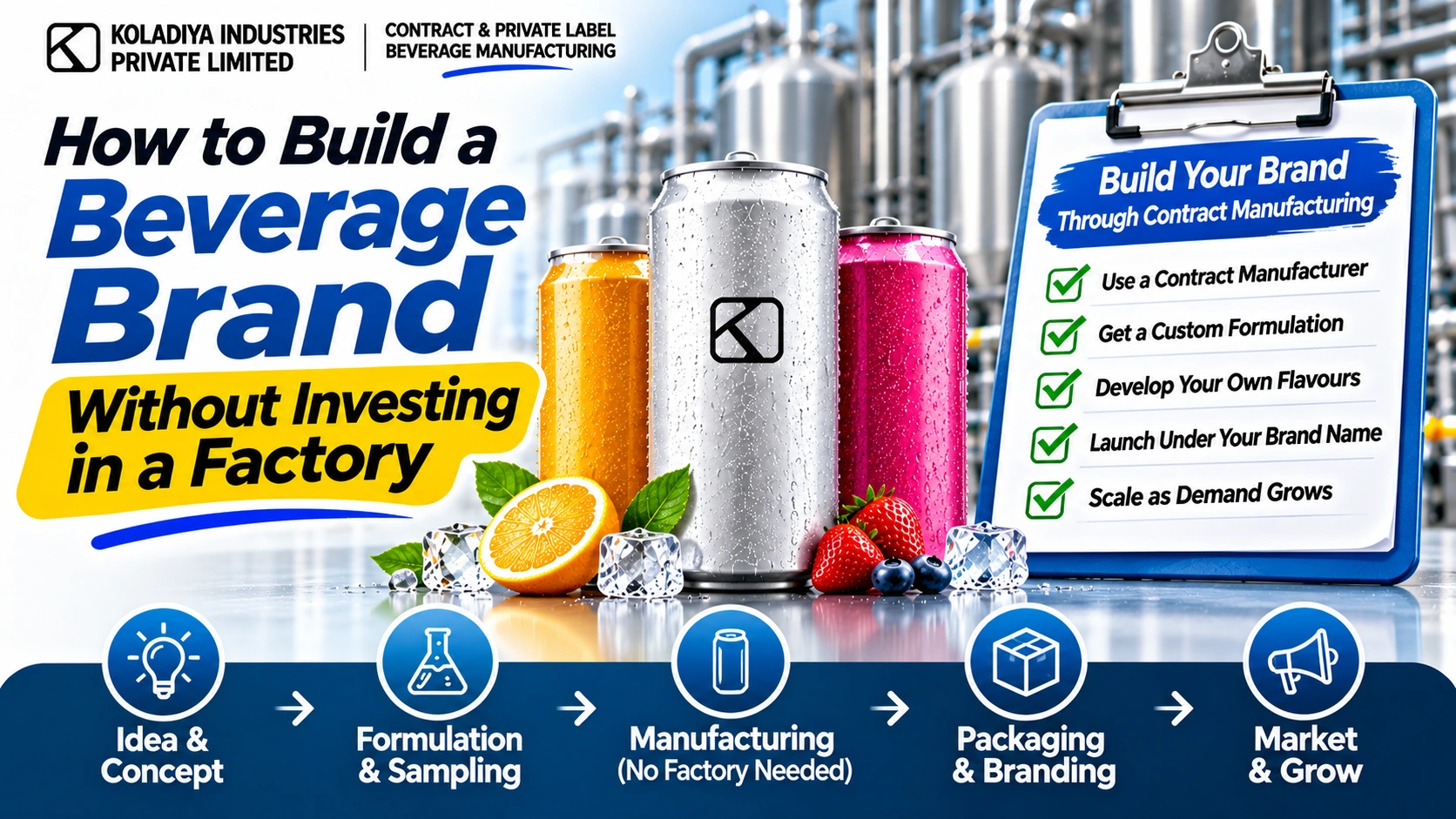
Starting a beverage business offers exciting opportunities for entrepreneurs, startups, and established businesses. However, building a beverage factory requires significant investment in land, machinery, production equipment, labour, infrastructure, quality control systems, and regulatory compliance. These expenses can make it difficult for new businesses to enter the competitive beverage industry. Fortunately, you do not need to own a factory to build a successful beverage brand. Through beverage contract manufacturing, private-label manufacturing, and third-party production, you can develop your own beverage products without managing an entire manufacturing facility.
This approach allows entrepreneurs to focus on brand development, product positioning, marketing, distribution, and customer acquisition while an experienced manufacturing partner manages production. For example, startups can develop energy drinks, carbonated soft drinks, sparkling water, tonic water, and other ready-to-drink beverages through specialised manufacturing partners. Koladiya Industries supports beverage businesses with product development, formulation, and commercial manufacturing solutions. Therefore, businesses can explore beverage opportunities without taking on the financial burden of building their own factory.
Why Start a Beverage Brand Without Investing in a Factory?
Building a manufacturing facility involves several financial and operational responsibilities. Entrepreneurs must purchase machinery, arrange production space, hire skilled employees, source ingredients, and establish quality control processes.
Instead, working with a contract manufacturer can reduce these responsibilities.
1. Reduce Initial Investment
Setting up a beverage factory requires substantial capital. Production lines, filling machines, canning equipment, water treatment systems, storage facilities, and packaging machinery can significantly increase startup costs.
However, contract manufacturing eliminates the need to purchase and maintain most production infrastructure.
As a result, entrepreneurs can allocate more capital towards branding, packaging design, product development, marketing, and distribution.
2. Access Professional Manufacturing Infrastructure
An established beverage manufacturer already operates production equipment and follows defined manufacturing procedures.
Consequently, startups can access professional production capabilities without establishing their own facility.
Depending on the manufacturer’s capabilities, these services may include:
- Beverage formulation and product development
- Ingredient sourcing and procurement
- Beverage blending and processing
- Carbonation and filling
- Aluminium can packaging
- Quality testing and production support
3. Focus on Branding and Business Growth
A beverage brand needs more than an attractive product. It also requires a strong identity, effective marketing, competitive pricing, and reliable distribution.
By outsourcing production, entrepreneurs can dedicate more time to building customer relationships, developing sales channels, and expanding market presence.
Beverage Brand Development: Choose the Right Business Model
Before approaching a manufacturer, determine which production model suits your business objectives.
1. Contract Beverage Manufacturing
Contract manufacturing allows a business to develop its own beverage brand while partnering with a specialised manufacturer for production.
The brand owner generally manages product requirements, branding, packaging decisions, and sales, while the manufacturer handles agreed production activities.
This model works well for startups that want greater control over their product specifications and brand identity.
2. Private-Label Beverage Manufacturing
Private-label manufacturing allows businesses to launch beverages under their own brand using a manufacturer’s production capabilities and available product development options.
Depending on the agreement, manufacturers may support formulation customisation, flavour selection, packaging, and production.
This approach can help entrepreneurs enter the beverage market without developing manufacturing infrastructure.
3. Third-Party Beverage Manufacturing
Third-party manufacturing allows businesses to outsource beverage production to an external manufacturing partner.
Instead of investing in machinery and production facilities, entrepreneurs collaborate with a manufacturer that handles the agreed manufacturing requirements.
This model offers a practical starting point for new beverage businesses seeking professional production support.
How to Build a Beverage Brand Without a Factory: Step-by-Step Process
Launching a beverage brand requires careful planning. Although you can outsource production, you must make important decisions about your product, customers, pricing, and market positioning.
Step 1: Identify Your Beverage Product Category
First, decide which beverage category offers the right business opportunity.
The Indian beverage market includes several product segments, such as:
- Energy drinks
- Carbonated soft drinks
- Sparkling water
- Tonic water
- Flavoured water
- Ready-to-drink tea
- Functional beverages
- Fruit-based beverages
- Zero-sugar drinks
For example, energy drinks attract consumers looking for convenient, stimulating beverage options. Similarly, sparkling water and zero-sugar beverages offer opportunities for brands targeting specific consumer preferences.
However, evaluate customer demand, competition, pricing, and distribution opportunities before selecting a category.
Step 2: Define Your Target Audience
A successful beverage brand needs a clearly defined target audience.
Consider the following questions:
- Who will purchase your beverage?
- What age group are you targeting?
- What price range suits your customers?
- Which flavours match their preferences?
- Which retail or online channels will reach them?
For instance, an energy drink brand targeting young adults may require distinctive flavours, convenient packaging, and strong visual branding.
Meanwhile, a premium sparkling water brand may focus on packaging aesthetics, product positioning, and premium retail distribution.
Therefore, understanding your audience helps you make better product development and marketing decisions.
Step 3: Develop Your Beverage Formulation
Product formulation plays a major role in beverage brand development.
Your beverage must deliver the expected taste, appearance, aroma, texture, and product performance.
For energy drinks, formulation may involve:
- Caffeine selection and concentration
- Taurine and other permitted functional ingredients
- Vitamin blends
- Sweetener selection
- Flavour development
- Acidity and pH management
- Carbonation levels
- Ingredient compatibility
For zero-sugar energy drinks, manufacturers must carefully select suitable sweetener systems to achieve the desired sweetness and flavour balance.
Similarly, carbonated soft drinks require appropriate carbonation, acidity, flavour stability, and processing considerations.
Working with an experienced beverage R&D team can help transform your product concept into a commercially viable formulation.
Step 4: Select the Right Beverage Manufacturing Partner
Choosing a manufacturing partner is one of the most important decisions when building a beverage brand without a factory.
Evaluate potential manufacturers based on their production capabilities, experience, quality systems, packaging options, and technical support.
Consider these factors:
- Manufacturing infrastructure: Check whether the facility supports your beverage category.
- R&D capabilities: Evaluate its ability to develop customised formulations.
- Production capacity: Confirm whether it can meet your initial and future requirements.
- Packaging options: Review available cans, bottles, and other formats.
- Quality control: Understand its testing and quality assurance processes.
- Commercial terms: Discuss MOQ, pricing, payment terms, and production timelines.
Additionally, request relevant documentation and clarify responsibilities before finalising an agreement.
Step 5: Finalise Packaging and Brand Identity
Packaging influences product visibility, customer perception, and retail appeal.
Therefore, choose packaging that supports your brand positioning and beverage category.
Popular options include:
- 250 ml aluminium slim cans
- Standard aluminium beverage cans
- PET bottles
- Glass bottles
For energy drinks, 250 ml aluminium slim cans can provide a distinctive appearance and convenient serving format.
Your packaging should also communicate essential product information, comply with applicable labelling requirements, and maintain consistency with your brand identity.
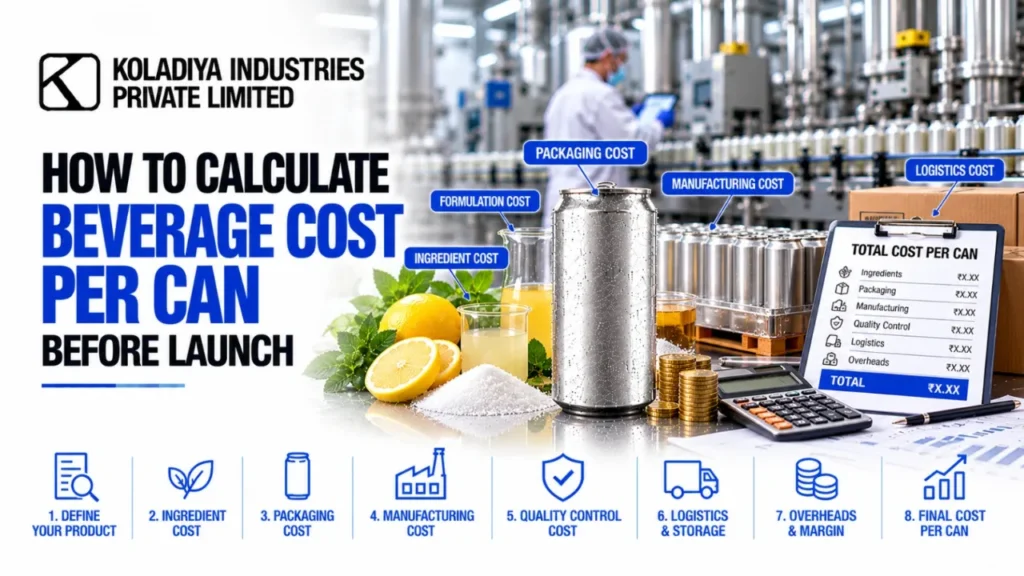
Step 6: Understand MOQ and Manufacturing Costs
Minimum Order Quantity (MOQ) directly affects your initial investment and inventory planning.
Manufacturers establish MOQ requirements based on production equipment, packaging materials, ingredient procurement, and operational efficiency.
Before confirming an order, request a detailed manufacturing quotation covering:
- Beverage formulation and development charges
- Ingredients and raw materials
- Packaging components
- Manufacturing costs
- Quality testing
- Transportation and logistics
- Applicable taxes
- Additional development or setup charges
Furthermore, calculate your expected cost per can or bottle, selling price, distribution expenses, and profit margins.
A clear cost structure helps you avoid unexpected expenses and manage your startup budget effectively.
Step 7: Conduct Product Testing and Quality Checks
Before launching your beverage commercially, evaluate the product against its quality and performance requirements.
Important testing considerations include:
- Taste and flavour consistency
- pH and acidity
- Carbonation levels
- Microbiological quality
- Ingredient compatibility
- Packaging integrity
- Shelf-life stability
For energy drinks, manufacturers should also verify ingredient concentrations, formulation consistency, and relevant regulatory requirements.
Additionally, confirm applicable FSSAI requirements, product approvals, and labelling obligations before commercial distribution.
Step 8: Launch and Expand Your Beverage Brand
Once your formulation, packaging, production, and compliance requirements are ready, you can prepare for market entry.
Start by identifying suitable distribution channels, such as:
- Retail stores
- Supermarkets
- Restaurants and cafés
- Gyms and fitness outlets
- E-commerce platforms
- Distributors and wholesalers
Initially, focus on building product awareness and collecting customer feedback.
Subsequently, analyse sales performance, repeat purchases, customer preferences, and inventory movement.
As demand increases, coordinate with your manufacturing partner to plan larger production volumes and maintain consistent product quality.
How Energy Drinks Create Opportunities for New Beverage Brands
Energy drinks represent an interesting product category for entrepreneurs exploring the beverage manufacturing industry.
However, launching an energy drink requires more than selecting a flavour and designing a can. Brands must consider formulation, ingredient compatibility, carbonation, sweetness, stability, and applicable regulatory standards.
New businesses can explore several energy drink concepts:
Zero-Sugar Energy Drinks
Zero-sugar energy drinks offer opportunities for brands targeting consumers who prefer sugar-free beverage options.
However, formulation teams must balance sweetness, acidity, and flavour performance without compromising the overall drinking experience.
Flavoured Energy Drinks
Distinctive flavour combinations can help new energy drink brands establish their market identity.
Fruit-inspired, citrus, tropical, and mixed-fruit profiles offer different product development opportunities.
Functional Energy Drinks
Brands can explore energy drink formulations containing permitted functional ingredients, vitamins, and other suitable components.
Nevertheless, every ingredient must meet applicable food safety and regulatory requirements.
Premium Canned Energy Drinks
Aluminium cans offer opportunities to develop visually distinctive beverage packaging.
For example, 250 ml slim cans can support premium positioning through customised graphics, colour combinations, and attractive brand presentation.
Therefore, working with a capable beverage manufacturing partner can help entrepreneurs develop and commercialise these product concepts.
Common Mistakes to Avoid When Building a Beverage Brand
Although contract manufacturing simplifies market entry, entrepreneurs must avoid several common mistakes.
1. Choosing a manufacturer without checking capabilities: Always evaluate production infrastructure, R&D support, and quality processes.
2. Ignoring formulation development: An attractive package cannot compensate for inconsistent taste or poor product performance.
3. Underestimating manufacturing costs: Consider MOQ, packaging, logistics, testing, and other commercial expenses.
4. Selecting unsuitable packaging: Choose packaging that matches your beverage category, target audience, and distribution requirements.
5. Ignoring regulatory compliance: Understand applicable FSSAI requirements, ingredient permissions, and labelling standards.
6. Planning production without market research: Estimate customer demand before committing to large production quantities.
7. Overlooking future scalability: Select a manufacturing partner that can support your expected production growth.
How Koladiya Industries Supports Beverage Brand Development
Building a beverage brand without investing in a factory becomes more practical when you collaborate with an experienced manufacturing partner.
Koladiya Industries Private Limited provides beverage manufacturing solutions for businesses looking to develop and launch their own beverage products.
The company supports beverage brands through product development, formulation, and commercial manufacturing capabilities.
Its service areas include:
- Beverage Formulation and R&D: Development of customised beverage formulations and flavour profiles.
- Private-Label Manufacturing: Production support for businesses launching beverages under their own brand.
- Third-Party Beverage Manufacturing: Manufacturing solutions for beverage startups and established businesses.
- Energy Drink Manufacturing: Development and production support for different energy drink concepts.
- Carbonated Soft Drinks: Manufacturing support for carbonated beverage products.
- Sparkling Water and Tonic Water: Production solutions for specialised beverage categories.
- Aluminium Can Packaging: Packaging expertise in formats such as 250 ml aluminium slim cans.
From initial product concepts to commercial production, Koladiya Industries helps businesses explore beverage manufacturing opportunities without establishing their own factory.
Whether you want to launch an energy drink, carbonated soft drink, sparkling water, or another beverage concept, choosing the right manufacturing partner can simplify your journey.
Conclusion
Building a beverage brand does not necessarily require owning a factory or investing in expensive manufacturing infrastructure. Through contract manufacturing, private-label production, and third-party manufacturing, entrepreneurs can enter the beverage industry with a more manageable investment approach. However, success depends on choosing the right product category, developing a competitive formulation, selecting suitable packaging, understanding manufacturing costs, and establishing reliable distribution channels.
Most importantly, partnering with an experienced beverage manufacturer can help transform your business idea into a commercially viable product. Ready to Build Your Own Beverage Brand? Connect with Koladiya Industries Private Limited to explore customized beverage formulation, private-label manufacturing, and third-party beverage production solutions.
Whether you are planning an energy drink, carbonated soft drink, sparkling water, or a new beverage concept, our team can help you take the next step towards commercial production. Contact Koladiya Industries today to discuss your beverage manufacturing requirements and start developing your own beverage brand without investing in a factory.