Getting an accurate quotation from a beverage manufacturer requires more than sharing a product idea and asking for a price per bottle or can. Beverage brands must provide clear information about product formulation, ingredients, packaging, production volume, quality standards, and commercial expectations. Without these details, manufacturers may provide incomplete quotations that lead to unexpected costs, production delays, and budget challenges. Whether you plan to launch an energy drink, carbonated soft drink, sparkling water, functional beverage, or ready-to-drink product, a well-prepared manufacturing brief helps you receive a more realistic quotation. Moreover, it allows you to evaluate manufacturing partners based on their technical capabilities, pricing structure, and production support.
For startups and established beverage brands, this step plays an important role in commercial planning. Understanding what information to share with a manufacturer can help you control costs, improve communication, and move towards production with greater confidence. We explain how to prepare an effective beverage manufacturing brief, which details manufacturers need, and how Koladiya Industries supports beverage brands throughout product development and commercial manufacturing.
1. Explain Your Product Concept to the Beverage Manufacturer
Start by explaining exactly what type of beverage you want to manufacture. Your product category determines the formulation approach, production process, ingredients, packaging requirements, and manufacturing costs. For instance, an energy drink requires a different manufacturing approach than sparkling water or a fruit-based beverage. Therefore, provide a clear description of your product before requesting a quotation.
Include the following information:
- Beverage category and product type.
- Target customer segment.
- Product positioning, such as premium, affordable, functional, or natural.
- Preferred taste and flavour profile.
- Carbonated or non-carbonated requirements.
- Intended retail market.
- Competitor products or reference samples, if available.
Beverage Manufacturer Requirements for Energy Drink Concepts
If you plan to develop an energy drink, explain its intended positioning and functional characteristics.
For example, specify whether you want a traditional energy drink, zero-sugar energy drink, vitamin-enriched energy beverage, or fruit-flavoured energy drink.
Also, mention your preferred caffeine content, sweetness level, flavour intensity, carbonation, and overall drinking experience. These details help the manufacturer understand your expectations and recommend a suitable product development approach.
2. Share Your Formulation and Ingredient Requirements
Formulation plays a significant role in determining beverage manufacturing costs. Different ingredients have different prices, sourcing requirements, processing considerations, and compatibility limitations.
Therefore, provide your existing formulation if you already have one. Alternatively, explain your desired product characteristics if you need formulation development support.
Your brief should include:
- Primary ingredients and functional components.
- Sweeteners, including sugar or alternative sweeteners.
- Natural or artificial flavour requirements.
- Colours, preservatives, and stabilising ingredients, where applicable.
- Vitamins, minerals, and other functional ingredients.
- Desired nutritional and product specifications.
- Special ingredient or sourcing preferences.
Beverage Manufacturer Formulation Details for Energy Drinks
Energy drink formulation requires particular attention because ingredient selection influences taste, stability, functionality, and production costs.
For example, caffeine, taurine, B vitamins, sweeteners, acids, and flavour systems may contribute to the overall formulation requirements. Zero-sugar energy drinks also need careful sweetener selection to achieve the desired taste without unwanted aftertastes.
Moreover, ingredient compatibility matters. Certain combinations can affect flavour stability, sweetness perception, and product shelf life.
If you do not have a final formulation, clearly communicate that you need research and development support. This allows the manufacturer to include formulation development and sample testing in the quotation where applicable.
3. Specify Your Packaging Requirements
Packaging directly affects manufacturing expenses, material procurement, filling operations, transportation, and product presentation. Consequently, you should explain your preferred packaging format before requesting a final quotation.
Consider the following details:
- Packaging type, such as aluminium cans, PET bottles, or glass bottles.
- Required container capacity.
- Can or bottle dimensions, where available.
- Closure and sealing requirements.
- Label or printed packaging preferences.
- Branding and artwork availability.
- Secondary packaging, such as cartons or shrink wrapping.
Beverage Manufacturer Packaging Specifications for Energy Drinks
Energy drink brands often prefer aluminium cans because they support convenient storage, transportation, and modern retail presentation.
For example, a brand planning to launch a 250 ml energy drink should mention the preferred can format, artwork requirements, and packaging design expectations.
Koladiya Industries works with 250 ml aluminium slim cans as part of its beverage packaging expertise. Therefore, brands considering this format should communicate their packaging preferences during the initial quotation discussion.
Additionally, clarify whether you already have packaging artwork or need support with packaging coordination. This distinction helps the manufacturer understand the full project scope.
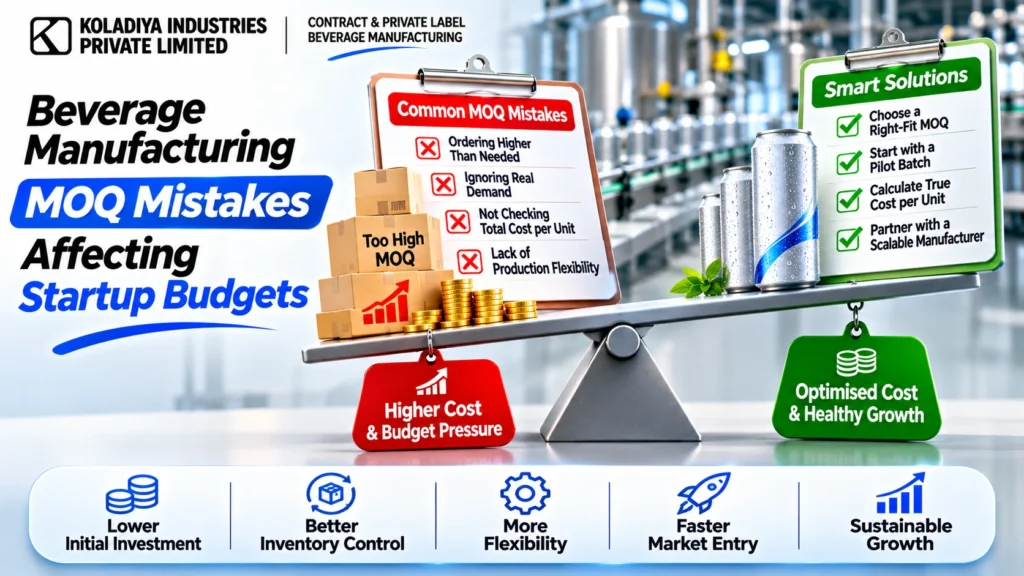
4. Mention Your Expected Production Volume and MOQ
Production quantity represents one of the most important factors in beverage manufacturing quotations. Manufacturers consider order volume when calculating ingredient requirements, packaging procurement, production planning, and operational costs.
Instead of requesting a quotation without quantity information, provide your expected initial order and future production estimates.
For example, mention whether you plan to manufacture:
- 8,000 cans for an initial market launch.
- 20,000 cans for regional distribution.
- 50,000 cans for broader commercial distribution.
- 100,000 cans or more for large-scale production.
These figures represent potential planning scenarios, not standard minimum order quantities.
Beverage Manufacturer MOQ and Production Planning
Minimum order quantities vary according to product category, packaging format, production setup, ingredient availability, and manufacturing requirements.
For example, a zero-sugar energy drink may require different ingredient procurement and production planning compared with a standard carbonated beverage.
Therefore, ask the manufacturer to clarify:
- Minimum order quantity for your product.
- Price differences across production volumes.
- Packaging procurement requirements.
- Availability of pilot or trial batches.
- Production scheduling and lead times.
- Possibilities for repeat orders and volume expansion.
Furthermore, discuss your expected monthly or quarterly demand. This information helps the manufacturer assess whether its production capabilities align with your business growth plans.
5. Communicate Your Quality and Shelf-Life Expectations
Quality requirements influence ingredient selection, processing methods, testing procedures, and product development expenses.
Consequently, explain your quality expectations before manufacturing begins.
Include the following requirements in your brief:
- Desired product shelf life.
- Microbiological quality expectations.
- Physicochemical testing requirements.
- pH and carbonation specifications, where applicable.
- Packaging integrity and sealing expectations.
- Applicable regulatory and food safety requirements.
- Storage and transportation conditions.
Beverage Manufacturer Quality Requirements for Energy Drinks
Energy drinks require careful quality management because their formulation may contain multiple functional ingredients, sweeteners, acids, and flavour components.
Manufacturers should consider product stability, carbonation retention, flavour consistency, and packaging integrity during development and production.
For example, an energy drink that contains caffeine and multiple vitamins requires appropriate ingredient specifications and quality checks. Similarly, zero-sugar formulations need particular attention to sweetness consistency and flavour stability.
Therefore, discuss shelf-life testing and relevant quality checks with your manufacturing partner. A clear understanding of these requirements helps both parties establish realistic product specifications.
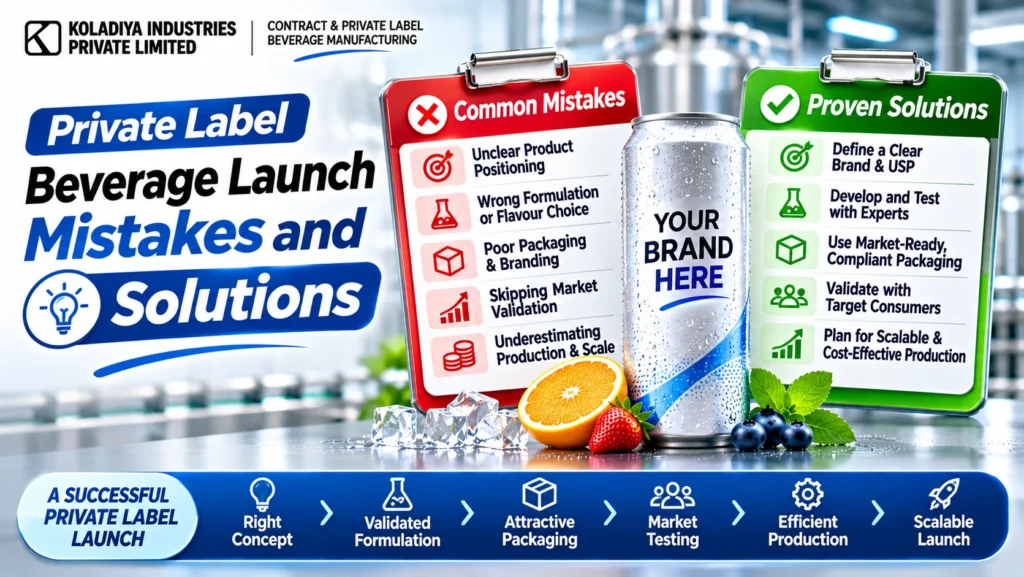
6. Clarify Branding and Private-Label Requirements
Your branding requirements also influence the quotation. Some beverage businesses already have a complete brand identity, while others need additional support before production.
Clearly explain your branding requirements, including:
- Brand name and logo availability.
- Packaging artwork and label design.
- Product positioning and market segment.
- Flavour names and product variants.
- Carton and secondary packaging design.
- Private-label or third-party manufacturing requirements.
Beverage Manufacturer Private-Label Requirements
Private-label manufacturing allows businesses to develop beverage products under their own brand identity while working with an external manufacturing partner.
For instance, an entrepreneur planning to launch three energy drink flavours should mention the number of variants, packaging preferences, and expected quantities for each flavour.
Furthermore, clarify whether you need a complete manufacturing solution or only specific production services.
This helps the manufacturer understand the project’s responsibilities and prepare a quotation that reflects your actual requirements.
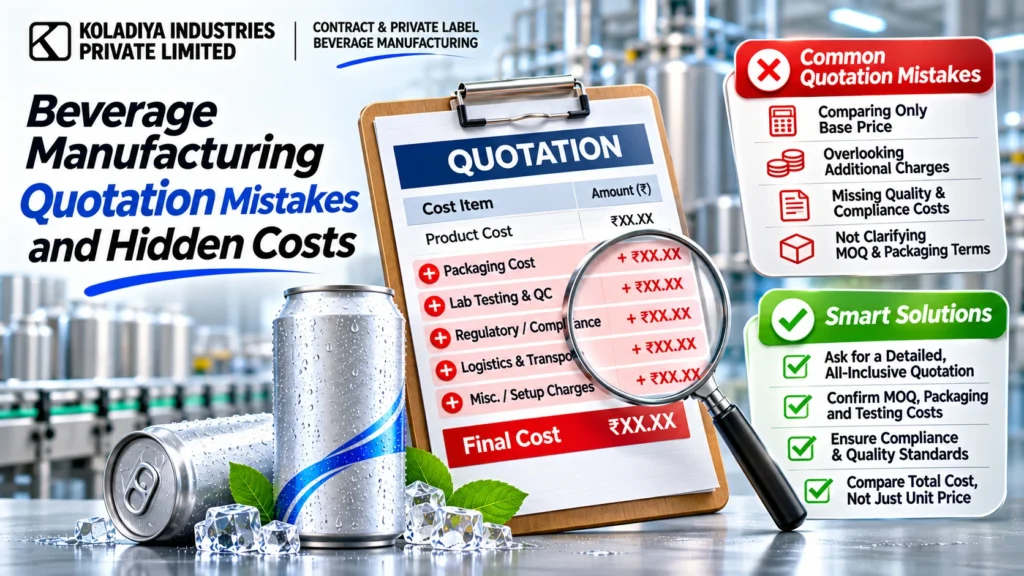
7. Request a Transparent Cost Breakdown
Once you share the necessary product information, request a detailed quotation instead of focusing exclusively on the final per-can price.
A transparent quotation helps you understand where your investment goes and identify possible additional expenses.
Ask the manufacturer to explain the following cost components:
| Cost Component | What to Clarify |
|---|---|
| Formulation and R&D | Development fees and sample requirements |
| Ingredients | Raw material costs and specifications |
| Packaging | Can, bottle, closure, and artwork costs |
| Manufacturing | Processing and production charges |
| Quality testing | Relevant testing and inspection costs |
| Secondary packaging | Cartons, shrink wrapping, and packing |
| Logistics | Transportation and delivery charges |
| Taxes | Applicable taxes and additional charges |
Beverage Manufacturer Quotation Questions to Ask
Before accepting a quotation, ask important commercial questions:
- Does the quotation include formulation development?
- What is the minimum order quantity?
- Are ingredient and packaging costs included?
- Does the price change with higher production volumes?
- Which quality checks does the manufacturer perform?
- What payment terms apply?
- What production timeline should you expect?
- Which additional charges could affect the final cost?
Moreover, confirm the quotation’s validity period because ingredient and packaging prices may change over time.
8. Share Your Target Budget and Project Timeline
Your budget and expected launch date help the manufacturer recommend a practical production approach.
However, avoid sharing only a broad budget without explaining your product requirements. Instead, provide an estimated investment range along with your packaging, formulation, and production expectations.
For example, an energy drink startup may plan an initial launch with a limited production volume before expanding into larger commercial orders.
In this situation, discuss potential cost-saving opportunities without compromising important product specifications.
Your timeline should also include:
- Product concept finalisation.
- Formulation development.
- Sample evaluation.
- Packaging approval.
- Production planning.
- Commercial manufacturing.
- Dispatch and delivery.
Furthermore, communicate any fixed launch dates or retail commitments in advance. This helps the manufacturer evaluate production feasibility and identify potential scheduling challenges.
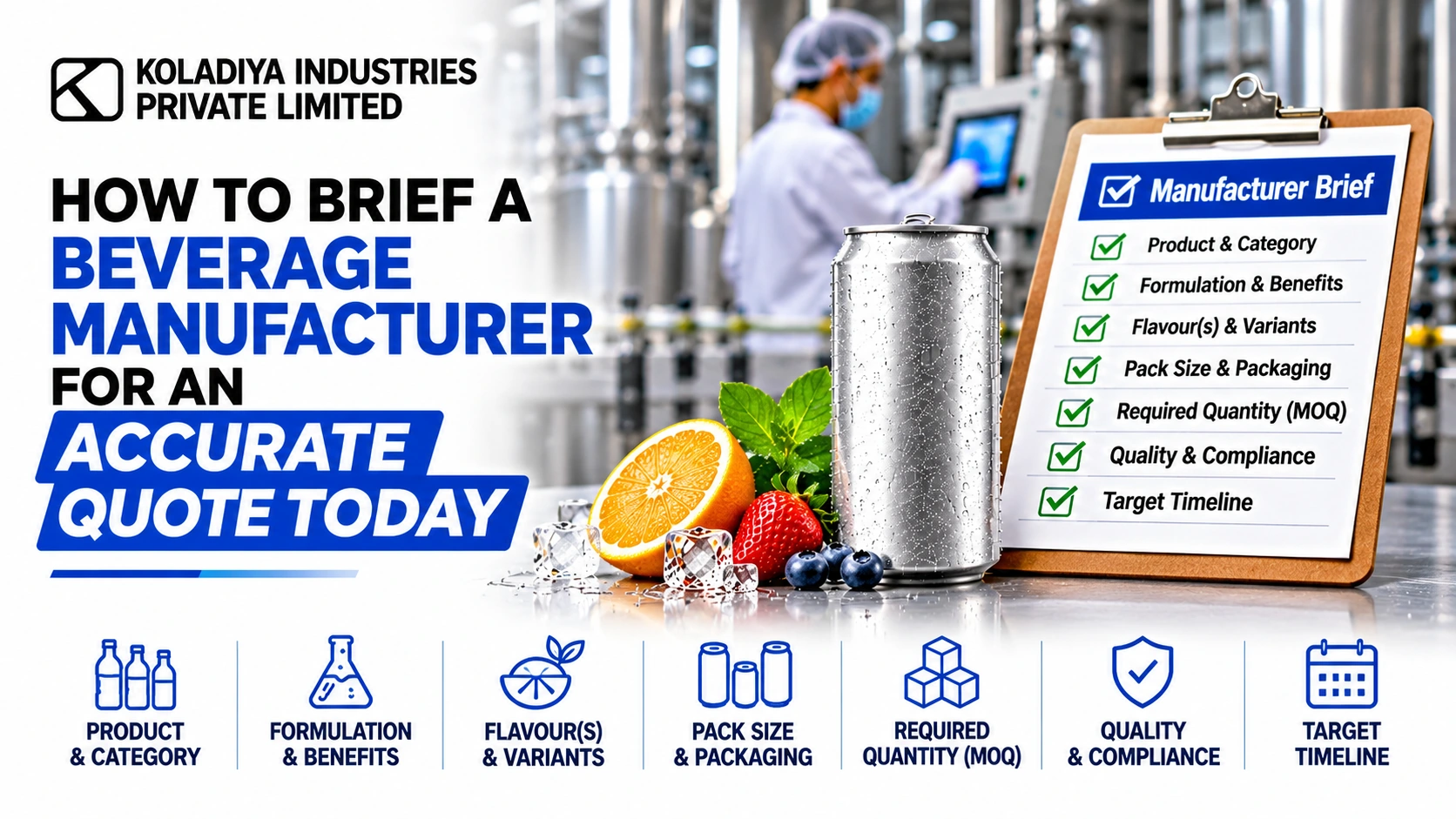
9. Prepare a Complete Beverage Manufacturing Brief Before Requesting a Quote
A structured project brief makes communication easier and helps manufacturers prepare more accurate quotations.
Use the following checklist before contacting potential manufacturing partners:
| Information | Details to Provide |
|---|---|
| Product category | Energy drink, soft drink, sparkling water, etc. |
| Formulation | Existing formula or R&D requirements |
| Ingredients | Preferred ingredients and specifications |
| Packaging | 250 ml cans, bottles, or other formats |
| Production volume | Expected initial order quantity |
| Flavours | Number of variants and taste preferences |
| Quality | Shelf life and testing expectations |
| Branding | Logo, artwork, and private-label requirements |
| Budget | Estimated project investment |
| Timeline | Expected sample and production dates |
| Delivery | Destination and logistics requirements |
Additionally, attach your product specifications, reference images, existing formulation, and packaging artwork wherever available.
A complete brief allows manufacturers to evaluate your requirements more effectively and reduces unnecessary discussions during the quotation process.
10. How Koladiya Industries Supports Your Beverage Manufacturing Requirements
Choosing the right manufacturing partner requires more than comparing quotations. You also need to evaluate technical capabilities, formulation expertise, packaging options, and commercial production support.
Koladiya Industries Private Limited works as a beverage manufacturing partner for businesses looking for private-label and third-party beverage manufacturing solutions.
The company supports beverage brands across product development and commercial manufacturing, helping businesses move from initial concepts towards production.
Its capabilities include:
Beverage Formulation and R&D: Koladiya Industries offers in-house formulation lab support for customised beverage formulations and flavour development. This helps brands explore product concepts and develop formulations according to their requirements.
Private-Label and Third-Party Manufacturing: Businesses can explore manufacturing support for launching beverages under their own brand identity.
Energy Drink Manufacturing: Brands planning traditional energy drinks, flavoured energy drinks, or zero-sugar product concepts can discuss their formulation, flavour, packaging, and production requirements.
Multiple Beverage Categories: Koladiya Industries supports beverage manufacturing requirements across energy drinks, carbonated soft drinks, sparkling water, and tonic water.
Packaging Expertise: The company has experience with 250 ml aluminium slim cans, making this format relevant for brands planning modern canned beverage products.
By sharing a detailed manufacturing brief, businesses can help Koladiya Industries understand their product expectations, evaluate project requirements, and discuss suitable manufacturing solutions.
Conclusion
Preparing a detailed brief is one of the most important steps when approaching a beverage manufacturer for an accurate quotation. From product formulation and ingredient specifications to packaging, MOQ, quality expectations, and production volume, every detail contributes to manufacturing cost calculations. Moreover, a well-structured brief reduces communication gaps, improves commercial planning, and helps you identify a manufacturing partner that matches your business requirements.
Whether you are developing an energy drink, zero-sugar beverage, carbonated soft drink, or sparkling water, provide complete project information before requesting a quotation. Consequently, you can make better manufacturing decisions and prepare your brand for a smoother commercial launch.
Get Your Beverage Manufacturing Quote from Koladiya Industries
Planning to launch your own energy drink, carbonated soft drink, sparkling water, or other beverage product? Connect with Koladiya Industries Private Limited to discuss your beverage concept, customized formulation, flavour development, private-label requirements, packaging preferences, and commercial production plans.
Share your product category, preferred packaging, expected quantity, and project specifications to discuss your manufacturing requirements and explore a suitable quotation. Contact Koladiya Industries today and take the next step towards developing and manufacturing your beverage brand.