Energy drink brands compete on more than caffeine content, packaging, and price. Consumers also expect a refreshing taste, balanced sweetness, a pleasant aroma, and a consistent flavour in every can. However, even a promising energy drink formula can face challenges during development, pilot production, and commercial manufacturing. Energy Drink Flavour Problems often arise from flavour selection, ingredient interactions, sweetener choices, acidity, processing conditions, or inadequate stability testing. These issues can affect consumer acceptance, repeat purchases, and a brand’s ability to scale production successfully.
For startups and established beverage companies, identifying flavour problems early can prevent unnecessary reformulation costs and production delays. With the right formulation strategy, brands can create energy drinks that deliver a distinctive taste while maintaining consistency and product quality. We explain the common energy drink flavour problems, their causes, and practical solutions. We also explore how Koladiya Industries can support beverage brands with formulation, flavour development, and contract manufacturing requirements.
What Are Energy Drink Flavour Problems?
Energy drink flavour problems occur when a beverage fails to deliver the intended taste, aroma, sweetness, or overall drinking experience. For example, an energy drink may taste too bitter, feel excessively sweet, develop an unpleasant aftertaste, or lose its original flavour during storage.
These issues can affect several product characteristics, including:
- Taste balance: The relationship between sweetness, acidity, bitterness, and flavour intensity.
- Aroma: The scent consumers experience when they open the can or take a sip.
- Mouthfeel: The perceived body, smoothness, and carbonation of the beverage.
- Flavour stability: The product’s ability to retain its intended taste throughout its shelf life.
- Batch consistency: The ability to reproduce the same sensory experience in every production batch.
Therefore, brands should evaluate flavour throughout product development rather than focusing only on the first laboratory sample.
Common Energy Drink Flavour Problems and Their Causes
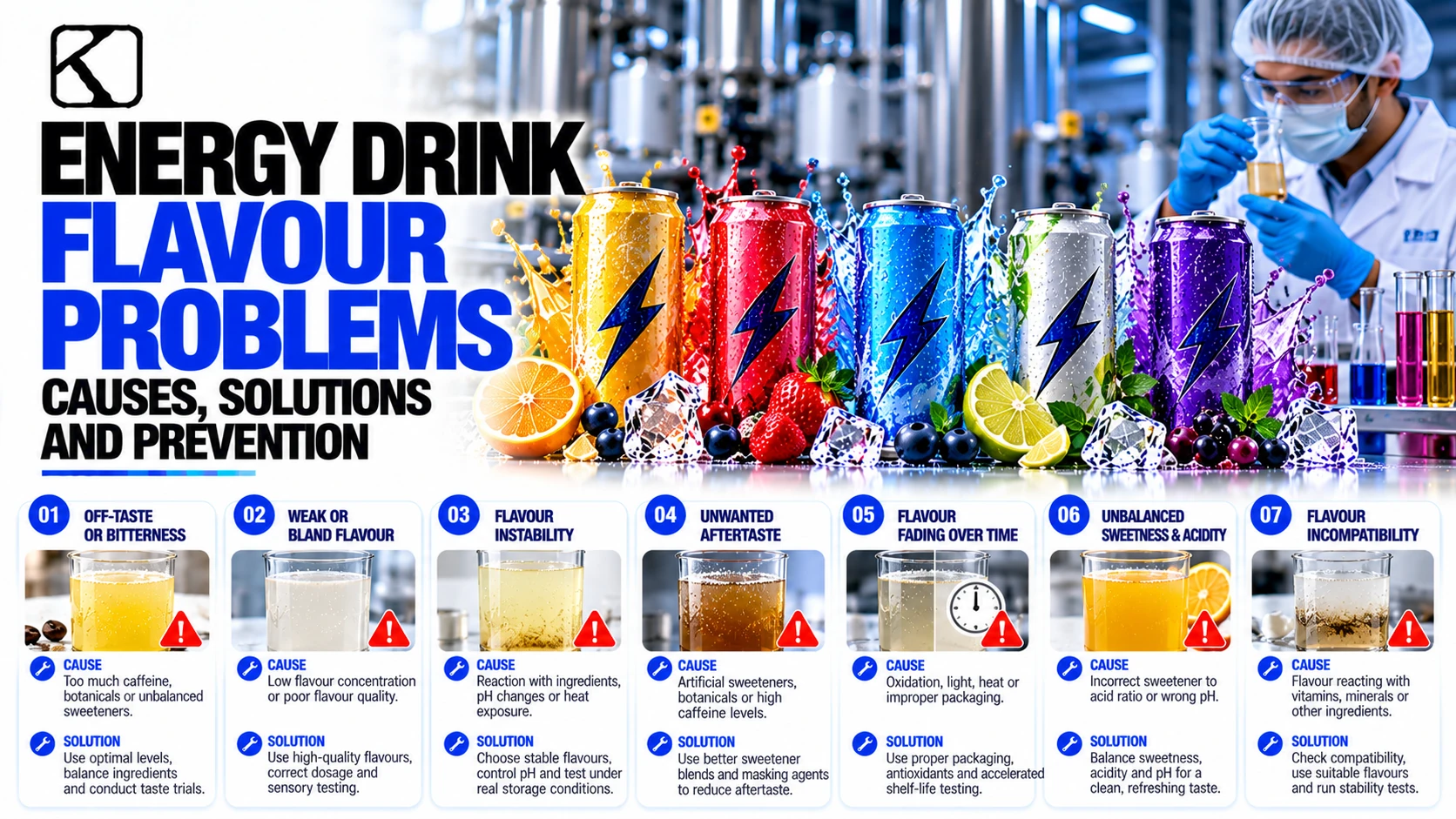
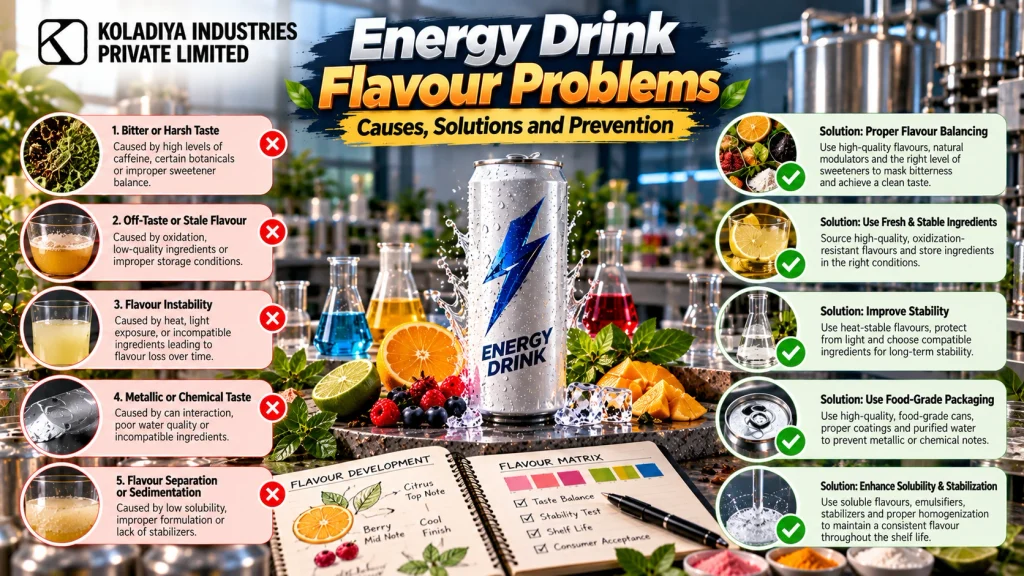
1. Energy Drink Flavour Problems Caused by Excessive Bitterness
Bitterness ranks among the most common challenges in energy drink formulation. Caffeine can contribute a bitter taste, while certain botanical extracts, vitamins, minerals, and other functional ingredients may intensify it.
Consequently, a formula that delivers the desired functional profile may still produce an unpleasant drinking experience.
Practical solutions:
First, evaluate the bitterness contributed by each ingredient. Next, adjust the flavour profile to complement the functional ingredients rather than simply increasing sweetness. Suitable citrus, berry, tropical, or other flavour directions may help balance bitterness, depending on the complete formulation.
Additionally, test different flavour concentrations and sweetener combinations. Sensory trials can help identify the right balance without making the beverage excessively sweet.
2. Excessive Sweetness or a Syrupy Taste
Sweetness plays an important role in energy drink flavour. Nevertheless, excessive sweetness can make a drink feel heavy and less refreshing, particularly when the formula also contains strong fruit flavours or high flavour concentrations.
Some brands increase sweetener levels to mask bitterness. However, this approach can create a different problem by making the final beverage overly sweet.
Practical solutions:
Evaluate the relationship between sweetness, acidity, and flavour intensity. Consider whether the formula needs less sweetener, more balanced acidity, or a different flavour profile. For zero-sugar energy drinks, assess the complete sweetener system because different sweeteners can deliver distinct sweetness intensity and aftertaste characteristics.
Ultimately, the goal is to create a clean, balanced finish that encourages repeat consumption.
3. Unpleasant Aftertaste in Energy Drinks
An energy drink may taste acceptable at first but leave an unpleasant sensation after swallowing. This aftertaste can come from certain sweeteners, caffeine, vitamins, botanical ingredients, flavour compounds, or interactions among ingredients.
Moreover, a flavour system that works in a small sample may not produce the same sensory result when the brand changes ingredient ratios or production conditions.
Practical solutions:
Evaluate the complete sensory experience, including the initial taste, middle notes, finish, and aftertaste. Test the beverage at different serving temperatures and carbonation levels where relevant. Then, adjust the sweetener system, flavour balance, or ingredient levels based on controlled trials.
For best results, assess several prototype versions before selecting the final formula.
4. Weak or Artificial Flavour Profile
Consumers expect a recognisable and appealing flavour, whether a brand chooses citrus, orange, mango, mixed berry, tropical fruit, or another profile. However, poorly balanced flavour compounds can produce a flat, synthetic, excessively candy-like, or unfamiliar taste.
In addition, the wrong flavour concentration can overpower the beverage or make the aroma inconsistent with the taste.
Practical solutions:
Start by defining the intended flavour experience and target consumer. Then, select a flavour system that complements the beverage’s acidity, sweetness, functional ingredients, and carbonation.
For example, a citrus energy drink may require a different balance of aroma and acidity than a mango or berry variant. Therefore, evaluate each flavour individually instead of applying the same flavour strategy to every product.
5. Energy Drink Flavour Problems in Zero-Sugar Formulations
Zero-sugar energy drinks can present additional formulation challenges. Without sugar, a beverage may lose some of the sweetness, body, and flavour balance that consumers associate with a conventional energy drink.
Furthermore, certain high-intensity sweeteners can create lingering sweetness or distinctive aftertastes.
Practical solutions:
Build the formulation around the selected sweetener system from the beginning. Evaluate sweetness onset, intensity, duration, flavour release, and aftertaste rather than checking sweetness alone.
In addition, assess mouthfeel and acidity so that the beverage feels balanced and refreshing. Conduct sensory testing with representative consumers before finalising the formula.
A successful zero-sugar energy drink should offer an enjoyable flavour experience without relying on excessive flavouring or acidity to compensate for missing sugar.
6. Flavour Changes During Processing and Storage
An energy drink can taste excellent immediately after formulation but develop noticeable changes during processing or storage. Certain flavour compounds may react with other ingredients or lose intensity under unsuitable processing and storage conditions.
Exposure to oxygen, light, temperature fluctuations, and incompatible packaging conditions can also contribute to flavour deterioration, depending on the product.
Practical solutions:
Evaluate the flavour profile after the intended manufacturing process, not just before production. Conduct suitable shelf-life testing under defined storage conditions and assess changes in taste, aroma, colour, and overall acceptability.
Moreover, review the packaging system, processing parameters, ingredient compatibility, and storage recommendations. The team should investigate any significant flavour change before approving the commercial formula.
7. Inconsistent Flavour Between Production Batches
Consumers expect every can of their preferred energy drink to deliver a consistent experience. However, differences in ingredient quality, weighing accuracy, mixing procedures, carbonation, processing conditions, or raw-material lots can affect the final taste.
As production volumes increase, small formulation or process variations can become more difficult to manage.
Practical solutions:
Establish clear formulation specifications and standard operating procedures. Control ingredient weighing, mixing sequences, processing parameters, and quality checks. Additionally, compare representative samples from different batches through sensory evaluation and relevant quality testing.
Consistent documentation also helps manufacturers identify the cause of a deviation and implement corrective action before the issue affects more products.
How to Prevent Energy Drink Flavour Problems During Product Development
Preventing flavour problems requires a structured development process. Instead of correcting every issue after manufacturing begins, beverage brands should identify risks during formulation and pilot testing.
1. Define the Target Flavour Before Formulation
First, determine the intended taste profile, target audience, sweetness level, acidity, carbonation, and preferred flavour direction. These decisions provide a clear reference for prototype development.
2. Assess Ingredient Compatibility
Next, review how caffeine, sweeteners, acids, vitamins, minerals, botanical ingredients, preservatives, and flavouring components interact within the formula. Ingredient compatibility depends on the specific formulation, so teams should test the complete beverage rather than evaluating each ingredient in isolation.
3. Conduct Sensory Evaluation
Prepare multiple prototypes and assess their aroma, taste, bitterness, sweetness, aftertaste, and overall acceptability. Structured feedback helps the development team identify which changes improve the product.
4. Validate the Formula Through Pilot Production
Laboratory samples do not always behave exactly like commercially manufactured beverages. Therefore, pilot batches help teams evaluate the formulation under more representative processing conditions before scaling production.
5. Test Flavour Stability and Shelf Life
Finally, monitor the beverage throughout an appropriate shelf-life study. Evaluate the product at defined intervals and under suitable storage conditions to determine whether the flavour remains acceptable.
Together, these steps help brands reduce avoidable reformulation, improve consistency, and prepare for a more reliable commercial launch.
How Koladiya Industries Helps Solve Energy Drink Flavour Problems
Developing a market-ready energy drink requires more than choosing an attractive flavour. Brands must align formulation, sensory quality, manufacturing requirements, packaging, and production planning.
Koladiya Industries supports beverage businesses seeking a manufacturing partner for energy drinks and other beverage categories. Its beverage development and manufacturing capabilities can help brands move from an initial product concept toward a commercial manufacturing plan.
Through formulation and research and development (R&D) support, brands can work toward a flavour profile that aligns with their product objectives. This development process may involve evaluating sweetness, acidity, flavour intensity, functional ingredient compatibility, and the overall sensory experience.
Furthermore, private-label and third-party beverage manufacturing can help businesses explore production options without establishing every manufacturing capability independently.
For brands developing conventional or zero-sugar energy drinks, a structured approach to flavour development, pilot evaluation, and quality control can help identify potential issues before larger production runs.
Each project requires individual assessment. Ingredient choices, processing requirements, packaging formats, product specifications, and testing needs will depend on the proposed formulation.
Conclusion: Resolve Energy Drink Flavour Problems Before Commercial Production
Energy drink flavour problems can affect product acceptance, manufacturing efficiency, and brand reputation. Excessive bitterness, lingering aftertaste, unbalanced sweetness, artificial flavour notes, storage-related changes, and inconsistent production batches can all reduce the quality of the final beverage.
Fortunately, brands can address many of these challenges through careful ingredient selection, balanced formulation, structured sensory evaluation, pilot production, and suitable shelf-life testing.
More importantly, early collaboration between product development and manufacturing teams helps identify formulation risks before commercial production begins.
For startups and established beverage businesses, the right development strategy can turn an initial flavour concept into a more consistent, market-ready product.
Develop Your Energy Drink with Koladiya Industries
Are you developing a new energy drink, improving an existing flavour, or planning to launch a zero-sugar energy drink brand? Koladiya Industries can help you explore beverage formulation, flavour development, and private-label or third-party manufacturing requirements based on your product goals.
Contact Koladiya Industries to discuss your energy drink concept, flavour challenges, and manufacturing requirements. Take the next step toward developing an energy drink that delivers the taste, consistency, and quality your brand expects.
Why do energy drinks taste bitter?
Energy drinks may taste bitter because of caffeine, botanical extracts, vitamins, minerals, or interactions between ingredients. Beverage developers can address this issue by adjusting the flavour profile, balancing sweetness and acidity, and conducting sensory evaluations.
How can manufacturers fix an unpleasant energy drink aftertaste?
Manufacturers should identify the ingredients contributing to the aftertaste and evaluate the complete formulation. Adjusting the sweetener system, flavour concentration, or ingredient balance may help create a cleaner finish. Sensory testing can confirm whether the revised formula improves taste.
How can brands improve the flavour of zero-sugar energy drinks?
Brands can improve zero-sugar energy drink flavour by selecting a suitable sweetener system, balancing acidity, and optimizing flavour intensity. They should also evaluate sweetness duration, mouthfeel, and aftertaste to create a refreshing and satisfying beverage.
Why does energy drink flavour change during storage?
Energy drink flavour may change because of oxidation, temperature fluctuations, light exposure, ingredient interactions, or unsuitable storage conditions. Appropriate packaging selection, processing controls, and shelf-life testing help manufacturers identify and reduce these risks.
How can manufacturers maintain consistent energy drink flavour across batches?
Manufacturers can maintain consistency by following standardized formulations, accurately measuring ingredients, controlling mixing and processing conditions, and conducting regular quality checks. Comparing samples from different batches also helps identify flavour variations before they affect more products.
Can Koladiya Industries help brands develop or improve energy drink flavours?
Koladiya Industries supports beverage businesses with formulation and R&D, flavour development, and private-label or third-party beverage manufacturing requirements. Brands developing a new energy drink or improving an existing formula can discuss their flavour goals, product specifications, and manufacturing needs with the team.