Carbonation is one of the most important factors in the taste, texture, and overall quality of energy drink carbonation problems. The right amount of carbon dioxide (CO₂) creates a refreshing fizz, improves the drinking experience, and helps establish a consistent product identity. However, even minor variations in carbonation can affect beverage quality, production efficiency, and customer satisfaction. For energy drink manufacturers, carbonation challenges can occur at different stages, including formulation, carbonation, filling, packaging, and storage. Some products may lose their fizz, while others may develop excessive foam, inconsistent bubbles, or unexpected changes in taste. Furthermore, these problems can increase production waste and create difficulties during commercial manufacturing.
Therefore, beverage brands must understand the causes of carbonation problems and implement effective solutions throughout the manufacturing process. We explain common Energy Drink Carbonation Problems, their causes, and practical ways to prevent them. We also explore how formulation, ingredient selection, packaging, and quality control contribute to consistent energy drink production.
What Is Carbonation in Energy Drinks?
Carbonation involves dissolving carbon dioxide into a beverage under controlled pressure. When someone opens an energy drink can or bottle, the pressure decreases and CO₂ escapes from the liquid, producing bubbles and the familiar fizzy sensation.
Carbonation contributes to several important product characteristics:
- Refreshing taste: Carbonation creates a crisp sensation that complements the flavour profile.
- Mouthfeel: Dissolved CO₂ produces the bubbly texture consumers expect from carbonated energy drinks.
- Flavour perception: Carbonation influences how consumers experience sweetness, acidity, and flavour intensity.
- Product consistency: Maintaining the correct carbonation level helps deliver a similar experience across production batches.
However, energy drinks often contain caffeine, sugar or alternative sweeteners, citric acid, vitamins, minerals, and specialised flavour ingredients. Therefore, manufacturers must evaluate carbonation alongside the complete beverage formulation.
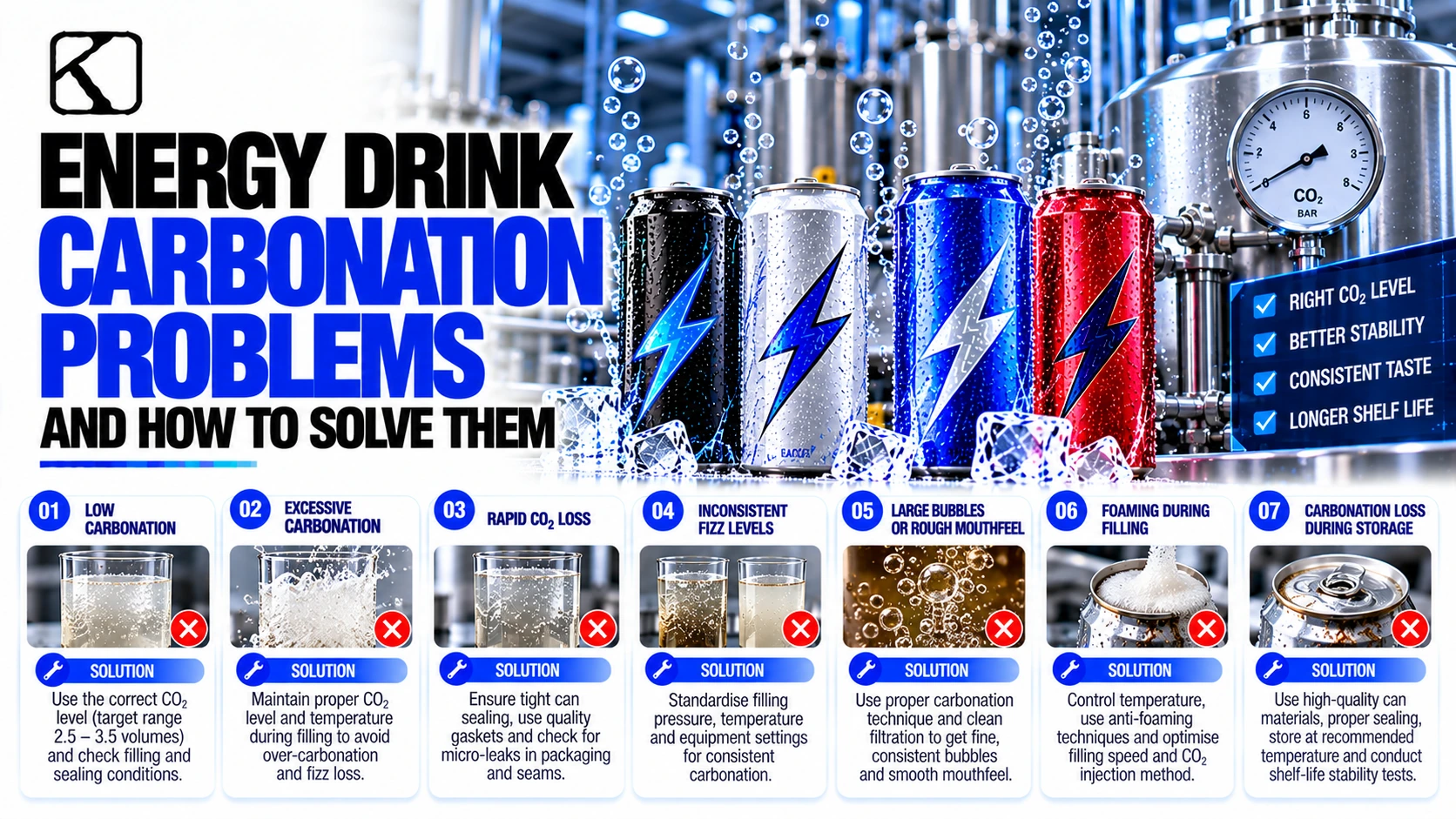
Energy Drink Carbonation Problems: 7 Common Causes and Solutions
Understanding common carbonation issues helps manufacturers identify production weaknesses and take corrective action before products reach the market.
1. Low Carbonation in Energy Drinks
Low carbonation occurs when an energy drink contains less dissolved CO₂ than its product specifications require. Consequently, consumers may experience a flat beverage with limited fizz and an unsatisfactory mouthfeel.
Common causes:
- Incorrect carbonation pressure.
- High beverage temperature.
- Insufficient CO₂ absorption.
- Gas leakage during product transfer.
- Poor control of carbonation equipment.
How to solve it:
First, monitor beverage temperature before the carbonation stage. Colder liquids generally retain more dissolved CO₂ than warmer liquids at the same pressure.
Next, inspect carbonation equipment, valves, and transfer lines to identify possible gas losses. Additionally, measure dissolved CO₂ with suitable testing equipment instead of judging carbonation through visual appearance alone.
Finally, establish product-specific carbonation targets and monitor every production batch.
2. Excessive Carbonation and Over-Foaming
Excessive carbonation can create uncontrolled foam during filling or when consumers open the finished product. As a result, manufacturers may experience filling delays, product loss, and inconsistent fill volumes.
Common causes:
- Excessively high CO₂ levels.
- Incorrect filling pressure.
- Unstable beverage temperature.
- Sudden pressure changes.
- Unsuitable filling speed.
How to solve it:
Manufacturers should establish suitable carbonation targets according to the energy drink’s formulation, packaging, and desired sensory characteristics.
Furthermore, maintain consistent beverage temperature and optimise filling pressure and line speed. Conduct production trials to determine suitable equipment settings and reduce unnecessary foam formation.
3. Carbonation Loss During Storage
An energy drink may maintain excellent carbonation immediately after manufacturing but lose its fizz during transportation or storage. This problem can affect product quality before consumers even open the package.
Common causes:
- Poor can seam quality.
- Inadequate bottle closures.
- Damaged packaging.
- Gas leakage through unsuitable packaging.
- Exposure to excessive temperatures.
How to solve it:
Start by inspecting packaging components and checking closures for defects. For aluminium cans, regularly evaluate double-seam quality and conduct suitable seam inspections.
Moreover, perform carbonation retention tests throughout the intended shelf-life period. These tests help determine whether the packaging maintains the required CO₂ level under expected storage conditions.
4. Inconsistent Carbonation Between Batches
Batch variation creates significant problems for energy drink brands. One production batch may deliver strong carbonation, while another may taste noticeably flatter.
Common causes:
- Variations in beverage temperature.
- Inconsistent carbonation pressure.
- Differences in ingredient measurements.
- Poor equipment calibration.
- Inconsistent production procedures.
How to solve it:
Develop standard operating procedures for formulation, mixing, cooling, carbonation, and filling. In addition, calibrate measuring instruments regularly and record important production parameters.
A documented quality control process allows teams to identify differences between batches. Consequently, manufacturers can maintain consistent carbonation, flavour, and product quality during commercial production.
5. Excessive Foaming After Opening
Some energy drinks produce excessive foam as soon as consumers open the can. Although carbonation naturally creates bubbles, uncontrolled foaming can make the product difficult to pour and consume.
Common causes:
- High dissolved CO₂ levels.
- Product agitation during transportation.
- Temperature fluctuations.
- Certain flavour or formulation ingredients.
- Suspended particles or undissolved ingredients.
How to solve it:
Evaluate carbonation alongside ingredient compatibility and formulation stability. Check whether suspended ingredients or particles contribute to excessive bubble formation.
Additionally, simulate transportation and handling conditions during product testing. This approach helps manufacturers understand how the beverage performs after distribution.
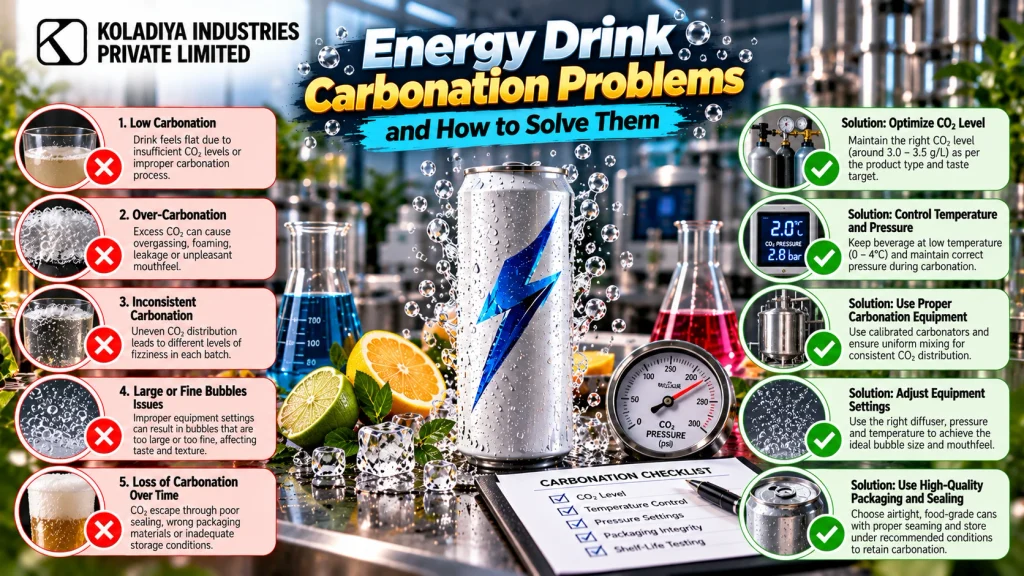
6. Uneven Bubble Formation
Uneven bubble formation can affect an energy drink’s appearance and drinking experience. Some products may release bubbles rapidly, while others produce inconsistent fizz throughout consumption.
Common causes:
- Inconsistent carbonation levels.
- Product temperature variations.
- Suspended particles.
- Differences in formulation.
- Uncontrolled filling conditions.
How to solve it:
Maintain consistent formulation and carbonation conditions. Check ingredient solubility, filtration requirements, and product clarity. Furthermore, evaluate samples from different production batches to identify unwanted variations.
7. Carbonation Changes in Zero-Sugar Energy Drinks
Zero-sugar energy drinks require particular attention because manufacturers often use different sweetener systems to achieve the desired taste. Changes in sweetness, acidity, and flavour balance can influence the overall perception of carbonation.
Common causes:
- Incorrect sweetener ratios.
- Unbalanced acidity.
- Incompatible flavour combinations.
- Inconsistent carbonation settings.
- Formulation adjustments without sufficient testing.
How to solve it:
Evaluate sweeteners, acids, flavours, and carbonation together during formulation development. Conduct sensory trials to achieve the right combination of sweetness, acidity, and fizz.
Most importantly, test the final formulation under realistic manufacturing and storage conditions before commercial production.
Energy Drink Carbonation Problems: How Ingredients Affect Beverage Quality
Ingredient selection plays an important role in energy drink development. Although individual ingredients do not necessarily cause carbonation loss, their concentration, solubility, and interaction can influence product stability and sensory performance.
1. Sugar and Artificial Sweeteners
Sugar, sucralose, stevia, and other sweeteners contribute to the beverage’s sweetness and mouthfeel. However, manufacturers must evaluate how different sweetener systems influence the finished product.
For zero-sugar energy drinks, focus on balancing sweetness, acidity, flavour intensity, and carbonation.
2. Acids and pH Balance
Citric acid and other suitable food acids help establish the desired acidity and flavour profile. However, excessive or insufficient acidity can affect the overall sensory balance.
Therefore, manufacturers should monitor pH, acidity, flavour, and carbonation together during product development.
3. Caffeine and Functional Ingredients
Caffeine, vitamins, minerals, and other functional ingredients contribute to the energy drink formulation. However, manufacturers must ensure that these ingredients dissolve properly and remain compatible with the complete beverage system.
Check for sediment, unwanted particles, and changes in flavour or appearance during formulation and stability testing.
4. Flavours and Natural Ingredients
Fruit flavours, citrus profiles, botanical extracts, and other flavour systems help create distinctive energy drink products. However, certain ingredients may influence foaming, clarity, and formulation stability.
Therefore, conduct compatibility trials before finalising the flavour system and carbonation requirements.
Energy Drink Carbonation Problems: Best Manufacturing Practices
A consistent manufacturing process helps prevent carbonation issues and improves product quality. Energy drink manufacturers should focus on the following practices.
1. Maintain proper beverage temperature
Control product temperature before carbonation and throughout filling. Colder beverages generally retain more dissolved CO₂ under comparable pressure conditions.
2. Optimise carbonation pressure
Establish suitable pressure settings according to the product formulation and carbonation target. Additionally, monitor equipment performance to identify unwanted fluctuations.
3. Measure dissolved CO₂
Use appropriate testing equipment to verify dissolved CO₂ levels. Establish acceptable product specifications and monitor samples throughout production.
4. Improve filling operations
Optimise filling pressure, filling speed, and temperature to minimise foam formation and unnecessary CO₂ loss.
5. Inspect aluminium can seams
Packaging integrity plays an important role in carbonation retention. Regularly inspect can seams and evaluate packaging performance to reduce the risk of gas leakage.
6. Conduct shelf-life testing
Monitor carbonation, flavour, pH, appearance, and packaging integrity throughout the intended shelf-life period. These tests help identify product quality changes before commercial distribution.
Energy Drink Carbonation Problems: Quality Control Checklist
Before releasing an energy drink batch, manufacturers should review the following quality parameters.
| Quality parameter | What to check |
|---|---|
| Carbonation level | Verify dissolved CO₂ against product specifications |
| Beverage temperature | Maintain consistent cooling conditions |
| Carbonation pressure | Monitor pressure during carbonation |
| pH and acidity | Maintain the desired formulation balance |
| Flavour profile | Check sweetness, acidity, and flavour consistency |
| Ingredient solubility | Identify sediment or unwanted particles |
| Filling performance | Monitor foam and filling consistency |
| Packaging integrity | Inspect can seams, closures, and seals |
| Shelf-life stability | Evaluate carbonation retention over time |
By implementing these quality checks, manufacturers can identify problems early, minimise production losses, and improve batch consistency.
How Koladiya Industries Supports Energy Drink Manufacturing
Developing a successful energy drink requires more than selecting ingredients and adding carbonation. Brands also need reliable formulation, suitable packaging, consistent production processes, and effective quality control.
Koladiya Industries supports beverage businesses through beverage formulation and R&D, private-label manufacturing, and third-party beverage manufacturing solutions.
Its beverage manufacturing focus includes energy drinks, carbonated soft drinks, sparkling water, and tonic water.
For startups and established brands planning to develop an energy drink, the product development process should consider:
- Beverage Formulation and R&D: Develop customised formulations with suitable flavours, sweeteners, acidity, caffeine, and functional ingredients.
- Carbonation Development: Evaluate carbonation requirements and product performance during formulation and pilot trials.
- Production Planning: Assess manufacturing requirements before moving from product development to commercial production.
- Packaging Solutions: Explore suitable packaging options, including 250 ml aluminium slim cans, according to product and market requirements.
- Quality Control: Monitor formulation consistency, carbonation, filling performance, and packaging integrity.
With the right development and manufacturing approach, beverage brands can address carbonation challenges more effectively and build products that deliver a consistent consumer experience.
Conclusion: Solve Energy Drink Carbonation Problems With the Right Manufacturing Process
Carbonation directly influences an energy drink’s taste, mouthfeel, appearance, and overall consumer experience. However, low carbonation, excessive foaming, gas leakage, uneven bubbles, and batch inconsistencies can create challenges throughout beverage production.
Fortunately, manufacturers can reduce these problems through proper temperature management, accurate carbonation settings, suitable ingredient selection, reliable filling operations, and effective packaging inspections.
Most importantly, brands should evaluate carbonation during formulation, pilot production, and commercial manufacturing rather than waiting until the finished product reaches the market.
Choosing an experienced beverage manufacturing partner can also help businesses manage product development, production planning, and quality requirements more effectively.
Planning to Launch Your Own Energy Drink Brand?
Partner with Koladiya Industries for beverage formulation, R&D, private-label manufacturing, and third-party beverage manufacturing support.
Whether you are developing a new energy drink flavour, exploring zero-sugar formulations, or planning commercial production in aluminium cans, connect with Koladiya Industries to discuss your product requirements.
Contact Koladiya Industries today and take the next step towards developing and manufacturing your energy drink brand.