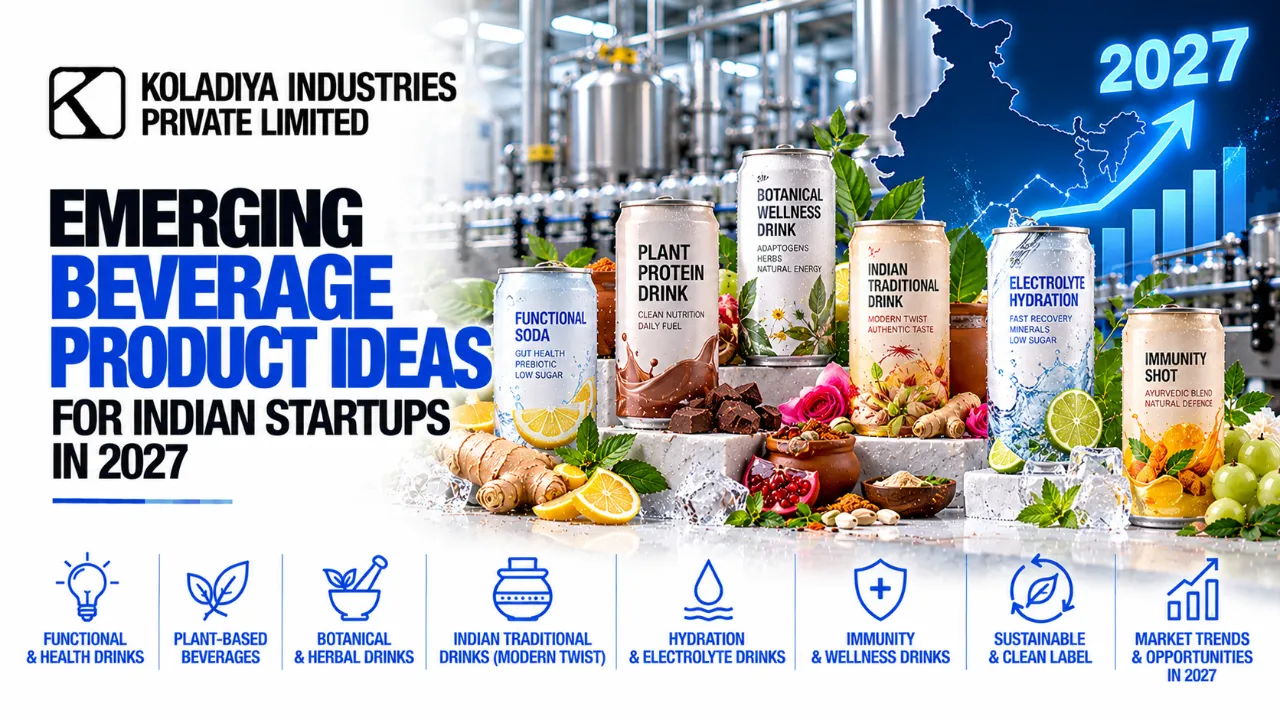
India’s beverage market offers exciting opportunities for startups that want to introduce innovative flavours, functional drinks, convenient packaging, and products for changing consumer preferences. As consumers explore new beverage experiences, entrepreneurs can build distinctive brands around energy, hydration, wellness, traditional ingredients, and refreshing everyday drinks. However, launching a successful beverage brand requires more than an attractive label or an interesting flavour. Entrepreneurs must identify their target audience, develop a market-relevant formula, select suitable packaging, manage production costs, and maintain consistent product quality. Therefore, exploring the right Beverage Product Ideas can help startups identify promising opportunities before investing in large-scale production. In 2027, founders can consider emerging beverage concepts while focusing on customer needs, product differentiation, affordability, and scalable manufacturing.
For startups planning to enter this competitive market, working with an experienced beverage manufacturing partner can also simplify product development and commercial production.
Why Beverage Product Ideas Matter for Indian Startups in 2027
Consumer preferences continue to evolve as people look for convenient, flavourful, and purpose-driven beverages. Consequently, startups can explore specialised product categories instead of competing only with conventional soft drinks.
For example, younger consumers may explore energy drinks, while fitness-conscious customers may prefer hydration beverages. Meanwhile, other audiences may look for low-sugar refreshments, fruit-based drinks, or modern versions of traditional Indian beverages.
Furthermore, e-commerce, quick-commerce platforms, modern retail, cafés, gyms, and convenience stores create different opportunities for beverage brands. Each channel serves a different audience, so founders should align their product concept with their intended sales strategy.
Before selecting a product, startups should evaluate four important factors:
- Target audience: Identify who will purchase the beverage and why.
- Product differentiation: Develop a clear reason for customers to choose your drink.
- Manufacturing feasibility: Assess ingredients, packaging, shelf life, and production requirements.
- Commercial potential: Estimate the selling price, production cost, distribution expenses, and expected demand.
With this foundation, entrepreneurs can select beverage concepts that match their business goals.
10 Emerging Beverage Product Ideas for Indian Startups
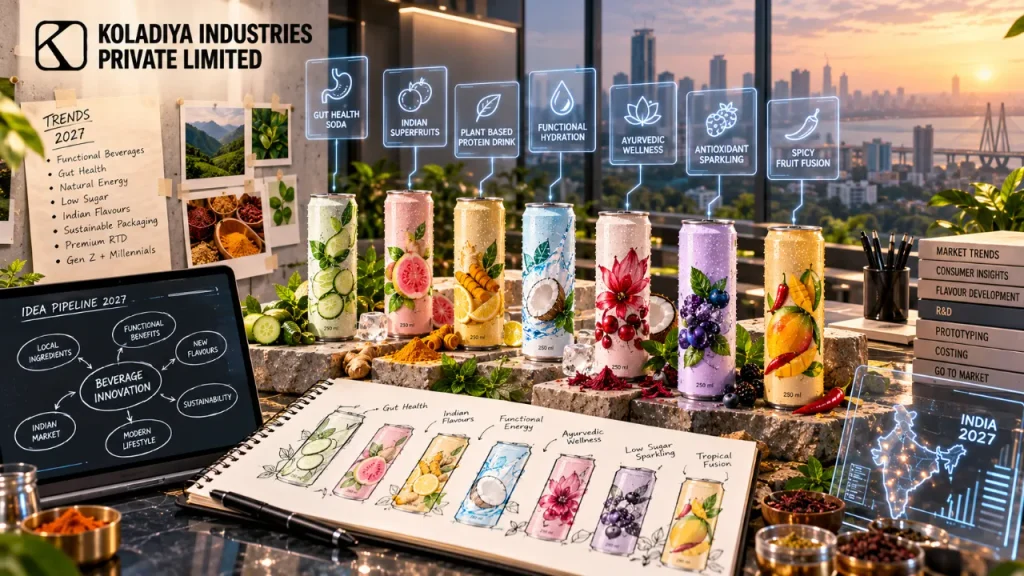
The following Beverage Product Ideas offer starting points for entrepreneurs who want to develop differentiated products for the Indian market.
1. Beverage Product Ideas for Zero-Sugar Energy Drinks
Energy drinks present an interesting opportunity for startups targeting adult consumers who want convenient beverages for busy schedules, travel, gaming, or active lifestyles.
A zero-sugar energy drink can appeal to consumers who prefer to limit sugar intake while still enjoying bold flavours and a refreshing drinking experience. Startups can explore citrus, berry, tropical fruit, and other distinctive flavour profiles.
However, a successful product requires careful formulation. Founders should evaluate sweetness, acidity, caffeine levels where applicable, ingredient compatibility, and overall taste. They must also consider applicable food safety requirements, permitted ingredients, labelling rules, and caffeine-related warnings.
Aluminium cans, particularly slim-can formats, can help establish a contemporary product identity. Nevertheless, the packaging must suit the formula, processing method, distribution conditions, and intended shelf life.
2. Functional Hydration and Electrolyte Drinks
Hydration beverages offer another product development opportunity for startups targeting adults with active routines. These drinks can focus on refreshing flavours and electrolyte formulations designed for specific hydration needs.
Possible concepts include lemon-based hydration drinks, tropical fruit blends, and lightly flavoured electrolyte beverages. Brands can differentiate their products through taste, ingredient choices, convenient packaging, and clearly communicated product benefits.
Nevertheless, founders should avoid unsupported health claims. They should select ingredients and communicate benefits in accordance with applicable regulations.
3. Botanical and Herbal Beverages
Botanical beverages combine distinctive flavour profiles with ingredients such as ginger, mint, basil, and other suitable botanicals.
Startups can experiment with refreshing botanical blends, sparkling herbal drinks, or contemporary beverages inspired by familiar Indian ingredients. These concepts can create a recognisable identity without relying exclusively on conventional fruit flavours.
However, botanical ingredients can influence bitterness, aroma, colour, and stability. Therefore, formulation trials and sensory testing should guide ingredient selection.
4. Low-Sugar Fruit-Based Sparkling Drinks
Fruit-based sparkling beverages provide an alternative for consumers who enjoy carbonated drinks but want different flavour experiences.
Founders can explore combinations such as lemon-mint, orange, mixed berries, or tropical fruits. They can also investigate lower-sugar formulations that balance sweetness, acidity, carbonation, and mouthfeel.
The main challenge involves maintaining a pleasant flavour while controlling sweetness and ensuring that the formulation remains stable throughout its intended shelf life.
5. Modern Indian Traditional Beverages
India’s diverse culinary heritage offers numerous concepts for beverage innovation. Startups can explore contemporary interpretations of aam panna, jaljeera-inspired drinks, kokum beverages, and other regional favourites.
These products can appeal to consumers seeking familiar flavours in convenient formats. Additionally, founders can develop modern packaging and consistent formulations to support retail distribution.
Nevertheless, traditional recipes may require adjustments for acidity, ingredient consistency, preservation, and commercial production. Pilot batches can help determine whether the concept performs well beyond small-scale preparation.
6. Ready-to-Drink Iced Tea and Tea-Based Beverages
Ready-to-drink tea provides opportunities for brands targeting consumers who want convenient refreshments throughout the day.
Potential concepts include lemon iced tea, peach tea, green tea blends, and lightly sweetened tea beverages. Startups can also explore flavour combinations that suit local preferences.
However, tea formulations may develop bitterness, sediment, colour changes, or flavour deterioration over time. Manufacturers should evaluate ingredient compatibility, processing requirements, packaging, and shelf-life performance before commercial launch.
7. Premium Tonic Water and Sparkling Mixers
Premium tonic water and sparkling mixers can serve customers who enjoy sophisticated non-alcoholic refreshments and cafés that need consistent beverage options.
Startups can explore citrus-led flavours, botanical profiles, and differentiated carbonation levels. Clear positioning, attractive packaging, and reliable flavour consistency can help establish a premium identity.
Before selecting this category, entrepreneurs should research their intended audience, retail pricing, distribution strategy, and production economics.
8. Ready-to-Drink Coffee and Cold Brew Beverages
Convenience-driven consumers create opportunities for packaged coffee beverages that suit workdays, travel, and on-the-go consumption.
Startups can consider black coffee, lightly sweetened coffee, and milk-based variants where manufacturing capabilities support the concept.
Coffee beverages require particular attention to formulation, ingredient interactions, processing, and microbial safety. Therefore, founders should establish appropriate manufacturing and shelf-life requirements before finalising the product.
9. Protein Water and Functional Beverage Concepts
Protein water and other functional beverages offer opportunities for brands targeting specialised consumer needs.
For example, startups can investigate clear protein beverages or other products designed around a specific nutritional concept. However, these formulations can present challenges involving solubility, taste, texture, stability, and ingredient compatibility.
Founders should validate the formula through structured trials and confirm that any nutritional claims meet applicable regulatory requirements.
10. Premium Lemonade and Flavoured Water
Premium lemonade and flavoured water provide accessible concepts for startups that want to focus on refreshment and flavour.
Potential variants include lemon-ginger, mint-lime, citrus blends, and lightly flavoured sparkling water. Brands can differentiate themselves through flavour balance, packaging, and a clear target audience.
Although these products may appear straightforward, commercial production still requires appropriate formulation, quality checks, packaging selection, and shelf-life validation.
How to Choose the Right Beverage Product Ideas for Your Brand
Not every emerging beverage trend will suit every startup. Therefore, founders should assess each concept against their resources, target customers, and long-term business objectives.
Evaluate Market Demand Before Investing
First, identify the customer problem or preference your product will address. Study competing products, retail pricing, flavour options, packaging formats, and customer feedback.
Next, define your unique selling proposition. A clear proposition might involve a distinctive flavour, a carefully formulated zero-sugar energy drink, a convenient hydration product, or a modern regional beverage.
Importantly, avoid choosing a product solely because competitors have launched something similar. Instead, establish why your target audience would purchase your version.
Calculate Beverage Manufacturing Costs
Product economics can determine whether a beverage business remains viable as sales grow.
Consider ingredient costs, packaging materials, manufacturing charges, quality testing, transportation, distribution margins, marketing expenses, and applicable taxes. Additionally, review minimum order quantities (MOQs) and working capital requirements.
Energy drinks, for example, may require specialised ingredients, carbonation control, suitable packaging, and product-specific processing. These factors can influence the final cost per can.
A realistic financial assessment helps founders set prices, select packaging, and plan production volumes more confidently.
Prioritise Formulation, Testing, and Shelf Life
Once you select a concept, develop the formulation through structured trials. Evaluate taste, aroma, sweetness, acidity, mouthfeel, and appearance.
Furthermore, conduct appropriate stability and shelf-life studies to assess how the product performs under defined storage conditions. Choose processing and packaging systems that suit the beverage rather than selecting them based on appearance alone.
For commercial products, also establish quality specifications, ingredient traceability, and applicable food safety and labelling requirements.
Start With Pilot Production
Pilot batches help startups assess the product before committing to larger manufacturing volumes.
During this stage, founders can review the formula, packaging compatibility, production feasibility, quality parameters, and customer feedback. They can then refine the product before scaling up.
This approach helps identify potential problems early and supports more informed production planning.
How Koladiya Industries Can Support Beverage Startups
Choosing the right manufacturing partner can help entrepreneurs move from an initial concept to a commercially viable beverage.
Koladiya Industries supports beverage businesses through beverage manufacturing, private-label and third-party manufacturing opportunities, and product development support. Its capabilities include beverage formulation and R&D, flavour development, and manufacturing for selected beverage categories.
For startups exploring energy drinks, carbonated soft drinks, sparkling water, and tonic water, the right manufacturing approach depends on the formulation, production requirements, packaging choice, and intended market.
For example, an entrepreneur developing a zero-sugar energy drink may need support with sweetness optimisation, flavour selection, ingredient compatibility, packaging decisions, and production planning. Similarly, a startup launching a sparkling fruit beverage may need to evaluate carbonation, acidity, product stability, and packaging suitability.
By discussing these requirements with a manufacturing partner early, founders can better understand the steps involved in developing and producing their beverage.
Koladiya Industries can help businesses explore suitable manufacturing options based on their product concept and commercial requirements. Startups should discuss specific capabilities, minimum order quantities, testing requirements, and production timelines directly with the team before finalising a launch plan.
Conclusion: Turn Your Beverage Product Ideas Into a Business Opportunity
The Indian beverage market offers startups opportunities across energy drinks, hydration beverages, botanical refreshments, fruit-based sparkling drinks, traditional Indian beverages, ready-to-drink tea, coffee, and other specialised categories.
However, the strongest opportunity does not always come from following the latest trend. Instead, successful founders combine customer research, product differentiation, careful formulation, realistic costing, and reliable manufacturing.
Therefore, evaluate your Beverage Product Ideas systematically before investing in large-scale production. Start with a clear target audience, validate the formula, test the product, and build a practical plan for manufacturing and distribution.
With the right preparation and manufacturing support, your beverage concept can take its first steps towards becoming a market-ready brand.
Planning to launch a new beverage brand in 2027?
Connect with Koladiya Industries to discuss your beverage concept, formulation and R&D requirements, private-label options, and third-party manufacturing needs. Whether you are developing an energy drink, sparkling beverage, tonic water, or another innovative drink, start the conversation today and explore the next steps towards commercial production.
Are energy drinks a good business opportunity for startups in India?
Energy drinks can offer opportunities for startups targeting adult consumers. Brands can explore zero-sugar formulations, distinctive flavours, and convenient aluminium cans while meeting applicable food safety, ingredient, caffeine, and labelling requirements.
How can I choose the right beverage product for my startup?
Research your target audience, evaluate competitors, identify market demand, calculate manufacturing costs, and test your product concept. Additionally, consider shelf life, packaging, pricing, and distribution before investing in commercial production.
What is the role of beverage formulation and R&D in product development?
Beverage formulation and R&D help startups develop suitable flavours, balance sweetness and acidity, assess ingredient compatibility, and evaluate product stability. These steps help prepare a beverage for commercial manufacturing.
How much does it cost to launch a beverage brand in India?
The cost depends on the beverage formulation, ingredients, packaging, minimum order quantity, manufacturing charges, testing, marketing, and distribution. Startups should prepare a detailed budget based on their product specifications and production requirements.
Can Koladiya Industries help startups develop and manufacture energy drinks?
Koladiya Industries offers beverage formulation and R&D support, flavour development, and beverage manufacturing solutions. Startups can discuss their energy drink concepts, packaging requirements, and third-party or private-label manufacturing needs with the team.
Why should startups work with a beverage contract manufacturer?
A beverage contract manufacturer can help startups access manufacturing capabilities, develop formulations, evaluate packaging options, and plan production without establishing their own manufacturing facility. The right partner can also help businesses prepare for commercial-scale production.