The beverage industry continues to evolve as consumers look for drinks that offer great taste, convenience, refreshing flavours, and functional benefits. From energy drinks and sparkling water to functional beverages and zero-sugar drinks, brands have many opportunities to introduce innovative products. However, turning a beverage idea into a successful product requires more than choosing ingredients and designing attractive packaging. It demands careful planning, scientific expertise, product testing, and reliable manufacturing support. Custom Beverage Formulation helps brands transform their concepts into market-ready beverages that meet specific requirements for taste, ingredients, quality, stability, and production. Whether a startup wants to launch its first energy drink or an established company plans to expand its product portfolio, a structured formulation process helps reduce development challenges and improve product consistency.
Koladiya Industries supports beverage brands through formulation, flavour development, research and development (R&D), and manufacturing solutions. With the right development strategy, businesses can turn creative beverage concepts into products that align with their target audience and commercial goals.
What Is Custom Beverage Formulation?
Custom Beverage Formulation is the process of developing a beverage recipe based on a brand’s unique product concept, target consumers, ingredient preferences, flavour profile, nutritional requirements, and manufacturing objectives.
Instead of selecting a standard ready-made formula, brands work with beverage development specialists to create a product that reflects their vision. This approach allows businesses to explore different ingredients, sweetness levels, carbonation profiles, functional components, and packaging options.
For example, a startup may want to launch a low-sugar energy drink with a distinctive citrus flavour. The formulation team evaluates suitable sweeteners, flavoring systems, acidity levels, functional ingredients, and processing requirements to develop a balanced beverage.
Similarly, a company planning a premium sparkling water brand may focus on mineral balance, subtle flavours, carbonation, and a clean taste profile.
Therefore, custom formulation gives brands greater control over product development while helping them prepare for commercial manufacturing.
Why Custom Beverage Formulation Matters for Beverage Brands
A successful beverage must deliver more than an attractive concept. It should satisfy consumer expectations, maintain consistent quality, and suit the intended production process.
1. Develop a Unique Product Identity
The beverage market offers many competing products. Consequently, brands need a clear reason for consumers to choose their drinks.
Custom Beverage Formulation helps businesses create distinctive flavour combinations, sweetness profiles, carbonation levels, and ingredient blends. These features allow brands to establish a recognizable product identity.
For instance, an energy drink brand might choose a tropical fruit profile, while another may prefer citrus, berry, or botanical flavours.
2. Match Consumer Preferences
Consumer preferences influence product development decisions. Some customers prefer refreshing, lightly sweetened drinks, whereas others seek bold flavours or functional beverage options.
Brands can use customer research and product testing to identify their target audience’s preferences. Formulation specialists can then refine the recipe to match those expectations.
Moreover, brands can explore sugar reduction, caffeine levels, and ingredient choices according to their product positioning and applicable regulations.
3. Improve Product Consistency
A beverage must deliver a consistent taste, appearance, and quality across production batches. Formulation specialists evaluate ingredient compatibility, acidity, processing conditions, and stability requirements to support repeatable results.
As a result, a well-developed formula provides a stronger foundation for scaling production and maintaining product standards.
4. Prepare for Commercial Manufacturing
A recipe that works in a laboratory may behave differently during large-scale production. Therefore, development teams must consider manufacturing equipment, processing conditions, packaging compatibility, and production efficiency from the beginning.
This approach helps brands identify potential problems before committing to full-scale production.
Custom Beverage Formulation for Energy Drinks
Energy drinks represent an important product category for beverage startups and established brands. Businesses can explore conventional energy drinks, zero-sugar alternatives, fruit-flavoured products, and other differentiated concepts.
However, energy drink development requires careful attention to ingredient selection, flavour balance, formulation stability, and regulatory compliance.
Key Ingredients in Energy Drink Formulation
The ingredient combination depends on the product concept and target market. Common formulation considerations include:
- Caffeine: Brands must establish an appropriate caffeine level based on the product concept, intended consumers, and applicable regulations.
- Sweeteners: Sugar, permitted non-nutritive sweeteners, or suitable combinations can help achieve the desired sweetness profile.
- Flavours: Citrus, tropical fruit, berry, and other flavour profiles can help differentiate the product.
- Acidity regulators: Suitable food-grade ingredients help control acidity and create a balanced taste.
- Functional ingredients: Depending on the concept, brands may evaluate ingredients such as taurine, B vitamins, or other permitted components, subject to compatibility and regulatory requirements.
- Carbonation: Carbon dioxide can contribute to the refreshing sensation and overall drinking experience of carbonated energy drinks.
Every ingredient serves a specific purpose. Therefore, developers must evaluate ingredient interactions rather than selecting components independently.
Developing Zero-Sugar Energy Drinks
Zero-sugar energy drinks appeal to brands seeking alternatives to traditional sugar-sweetened beverages. Nevertheless, removing sugar can affect taste, mouthfeel, and flavour perception.
Custom Beverage Formulation helps developers evaluate permitted sweetener systems, flavour combinations, acidity, and other formulation variables. The objective is to create a balanced product without compromising its intended taste experience.
Brands should also verify that nutritional claims, ingredient declarations, and product labels comply with the regulations that apply in their target markets.
Flavour Development for Energy Drinks
Flavour plays a major role in energy drink differentiation. A distinctive flavour can help a brand stand out in a competitive market.
Developers may test citrus blends, tropical fruit combinations, berry profiles, or other flavour directions. They assess sweetness, acidity, aftertaste, aroma, and overall consumer acceptance.
Furthermore, flavour testing helps identify whether the beverage delivers the intended experience at the proposed ingredient concentrations.
Stability and Quality Testing
Energy drink formulations require appropriate stability and quality evaluations before commercial production. Depending on the recipe and process, testing may assess pH, ingredient compatibility, microbial quality, flavour changes, carbonation retention, and packaging interaction.
Shelf-life studies also help establish suitable storage conditions and support a scientifically justified expiry period.
Consequently, testing plays an essential role in preparing an energy drink for consistent and reliable production.
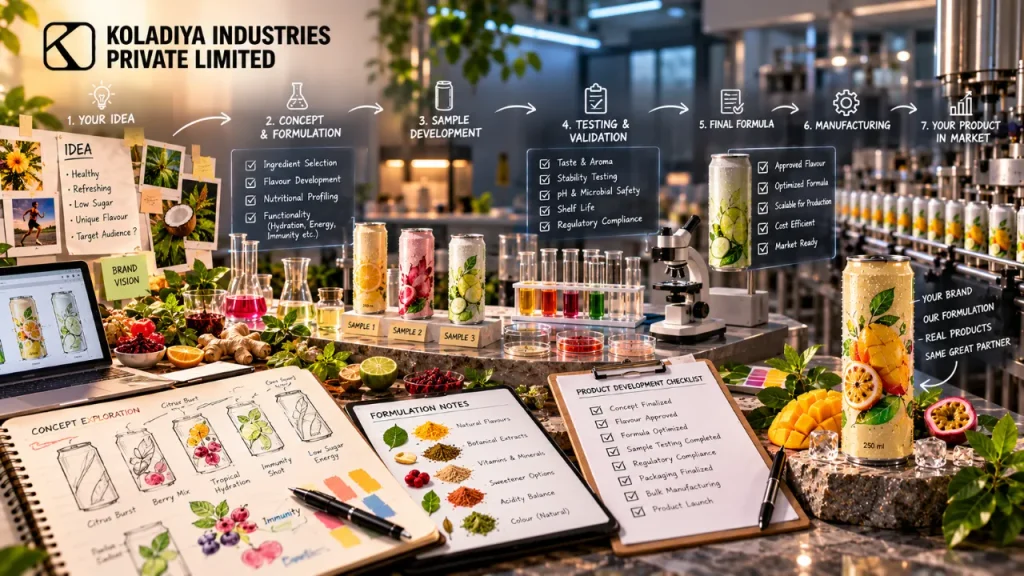
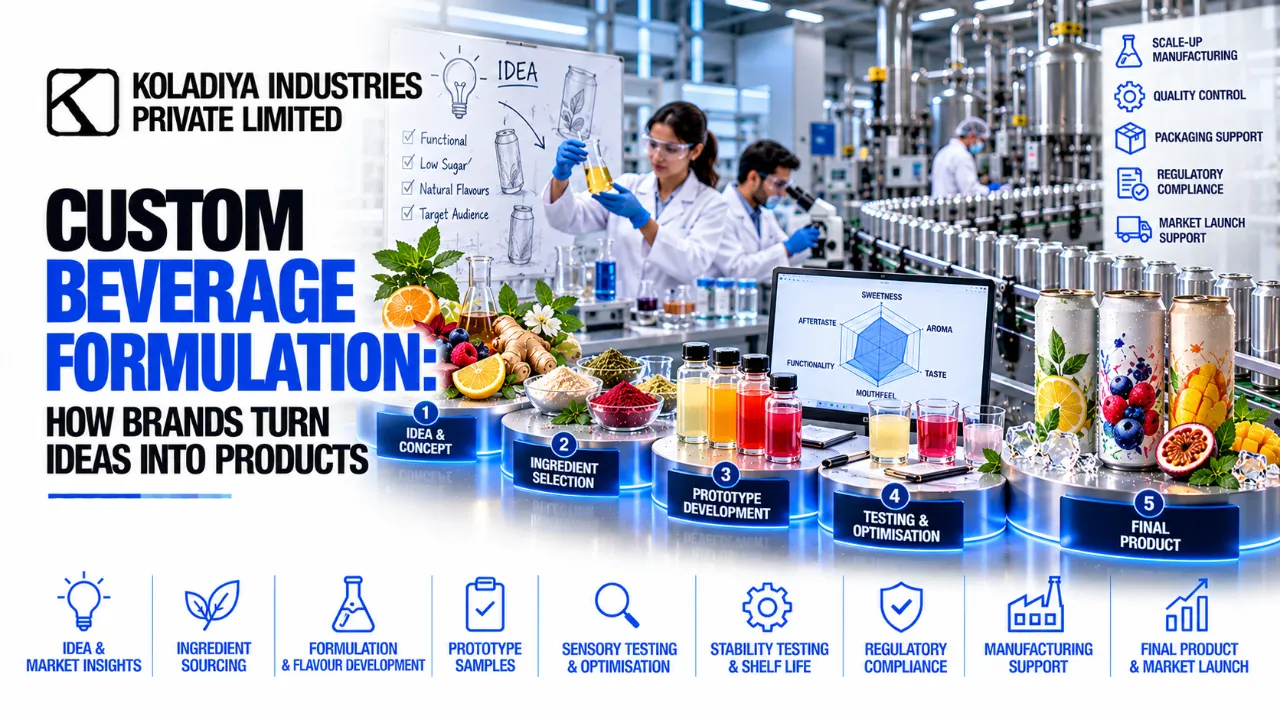
The Custom Beverage Formulation Process: From Idea to Product
A structured development process helps brands move from an initial concept to a commercially viable beverage.
Step 1: Define the Beverage Concept
First, the brand identifies its target audience, product category, intended price range, flavour direction, and key differentiators.
For example, a business may plan to introduce a premium carbonated energy drink in a 250 ml aluminium slim can.
A clear brief gives the development team a practical starting point.
Step 2: Select Ingredients and Develop the Formula
Next, formulation specialists evaluate suitable ingredients based on the product brief. They consider taste, sweetness, acidity, solubility, compatibility, cost, and regulatory requirements.
For an energy drink, the team may assess caffeine levels, permitted sweeteners, flavour systems, and carbonation requirements.
Step 3: Create and Evaluate Samples
The development team prepares initial samples and evaluates their sensory characteristics. It may compare multiple versions with different flavour intensities, sweetness levels, or ingredient combinations.
Feedback from the brand helps the team identify areas for improvement.
Step 4: Refine the Formula
After evaluating the first samples, the team adjusts the formulation to improve taste, aroma, mouthfeel, and overall product performance.
Several iterations may be necessary before the brand approves a final formula. The number of iterations depends on the product’s complexity and development requirements.
Step 5: Conduct Appropriate Testing
Before scaling production, the brand and its manufacturing partner evaluate relevant quality, stability, safety, and packaging requirements.
For example, an energy drink may require checks for pH, carbonation, ingredient compatibility, and microbiological quality. The exact testing programme depends on the formulation, processing method, packaging, and applicable standards.
Step 6: Validate the Manufacturing Process
The approved formula must work under the intended manufacturing conditions. Pilot batches, where appropriate, help the team assess processing parameters, filling performance, product consistency, and packaging compatibility.
This stage can reveal issues that small laboratory samples do not show.
Step 7: Prepare for Commercial Production
Finally, the brand coordinates ingredient sourcing, production planning, packaging, quality controls, labelling, and regulatory requirements.
A manufacturing partner can help connect product development with production planning, allowing the business to move towards launch with a clearer understanding of its operational needs.
Common Challenges in Custom Beverage Formulation
Although beverage development creates opportunities, brands may encounter several technical and commercial challenges.
Flavour imbalance: Excessive sweetness, acidity, bitterness, or an unpleasant aftertaste can reduce consumer acceptance. Developers address these issues through controlled formulation trials and sensory evaluation.
Ingredient incompatibility: Certain ingredients may interact or affect clarity, colour, flavour, or stability. Compatibility testing helps identify these concerns.
Shelf-life limitations: Changes in flavour, appearance, or product quality may occur during storage. Appropriate stability studies help determine suitable processing and storage conditions.
Manufacturing difficulties: A formula may require adjustments to work consistently at a larger scale. Pilot production and process validation help reduce this risk.
Cost management: Premium ingredients, packaging choices, processing requirements, and production volumes can affect unit economics. Brands should evaluate these factors early rather than waiting until the formula reaches its final stage.
By addressing these challenges systematically, businesses can improve product readiness and avoid unnecessary development delays.
How to Choose the Right Custom Beverage Formulation Partner
Selecting a suitable development partner is an important decision for any beverage brand. The right partner should understand both product development and the practical requirements of commercial manufacturing.
Before making a decision, consider the following factors:
- R&D capabilities: Look for expertise in formulation development, ingredient evaluation, and flavour refinement.
- Product category experience: Confirm that the partner understands your intended beverage category, including energy drinks, carbonated drinks, or functional beverages.
- Testing and quality processes: Ask about relevant product testing, stability assessment, and quality-control procedures.
- Manufacturing readiness: Evaluate whether the partner can help transition an approved formula towards commercial production.
- Packaging expertise: Discuss available packaging formats and their compatibility with the beverage.
- Communication and support: Choose a partner who clearly explains development stages, timelines, technical requirements, and commercial considerations.
These factors help brands evaluate potential partners according to their product requirements and long-term objectives.
How Koladiya Industries Supports Custom Beverage Formulation
Koladiya Industries helps beverage brands explore product development and manufacturing opportunities through R&D, formulation, flavour development, and beverage production support.
For startups, this support can provide a structured approach to developing a new beverage concept. For established businesses, it can help with product innovation, flavour variations, and expansion into additional beverage categories.
Brands developing energy drinks can explore formulation requirements involving flavour profiles, sweetness systems, carbonation, ingredient selection, and suitable packaging formats. The development approach should reflect the intended product, target market, and applicable food safety and labelling requirements.
Koladiya Industries also positions its beverage manufacturing capabilities around private-label, third-party, and contract manufacturing requirements. This creates an opportunity for brands to discuss how product development can connect with manufacturing planning.
Before starting a project, businesses should share their product concept, target audience, preferred ingredients, packaging preferences, and expected production volumes. This information helps establish a practical development brief and clarify the next steps.
Conclusion
Custom Beverage Formulation helps brands turn beverage ideas into distinctive products through structured research, ingredient selection, flavour development, testing, and manufacturing preparation.
From refreshing sparkling drinks to innovative energy drinks and zero-sugar beverages, a well-planned formulation process helps businesses address consumer preferences while considering product quality, stability, regulatory requirements, and commercial feasibility.
However, a promising idea alone does not guarantee a successful launch. Brands need a clear product brief, suitable technical expertise, appropriate testing, and a realistic manufacturing strategy.
By working with an experienced beverage development and manufacturing partner such as Koladiya Industries, businesses can explore their concepts, refine their formulations, and prepare for commercial production.
Ready to Develop Your Custom Beverage?
Do you have an idea for an energy drink, functional beverage, carbonated soft drink, sparkling water, or another innovative drink?
Connect with Koladiya Industries to discuss your beverage formulation, flavour development, R&D, private-label, and contract manufacturing requirements. Share your product concept and manufacturing goals to explore the next steps towards developing your market-ready beverage.
What types of beverages can brands develop through custom formulation?
Brands can develop energy drinks, carbonated soft drinks, sparkling water, functional beverages, iced tea, hydration drinks, and other ready-to-drink products.
How does the custom beverage formulation process work?
The process typically includes concept development, ingredient selection, recipe formulation, flavour testing, sample preparation, stability testing, and commercial production planning.
Can custom beverage formulation include energy drinks?
Yes. Brands can develop energy drinks with tailored flavours, caffeine levels, sweetness profiles, and functional ingredients, subject to applicable regulations and product requirements.
How long does it take to develop a custom beverage formula?
The timeline depends on ingredient availability, formulation complexity, flavour trials, stability testing, and regulatory requirements. Multiple development rounds may be necessary before finalising the formula.
Why is pilot batch testing important in beverage formulation?
Pilot batch testing helps brands evaluate taste, product consistency, processing performance, and packaging compatibility before moving to large-scale manufacturing.
How can Koladiya Industries help with custom beverage formulation?
Koladiya Industries supports beverage brands with formulation and R&D, flavour development, product testing, and private-label or contract manufacturing solutions to help turn beverage concepts into market-ready products.