Launching a beverage brand requires more than an attractive logo and a great product idea. You also need the right manufacturing partner, a suitable production model, reliable quality standards, and a clear business strategy. However, many startups and growing beverage brands face an important question: Contract Manufacturing vs White Label Beverages, which is the right choice for your business? Both manufacturing models help businesses enter the beverage market without investing in their own production facilities. However, they differ in product customization, development costs, packaging flexibility, and production control. Therefore, understanding these differences can help you select a manufacturing solution that matches your budget, product requirements, and long-term business goals.
In this guide, we explore Contract Manufacturing vs White Label Beverages, compare their key differences, and explain the benefits and limitations of each option. Whether you plan to launch energy drinks, protein water, flavored water, hydration drinks, or other non-alcoholic beverages, this comparison will help you choose the right manufacturing model and build a strong foundation for your beverage brand.
Contract Manufacturing vs White Label Beverages: Understanding the Difference
Contract manufacturing and white label manufacturing help businesses develop and sell beverages under their own brand names. However, each model follows a different approach to product development and customization.
What Is Beverage Contract Manufacturing?
Beverage contract manufacturing allows a brand to partner with a third-party manufacturer to develop and produce beverages according to its requirements. Depending on the manufacturer’s capabilities and the agreed scope, the brand can request a custom formulation, specific ingredients, unique flavors, packaging options, and production quantities.
For example, a startup might want to launch a protein water product with a particular nutritional profile, flavor, and can design. The company can work with a suitable contract beverage manufacturer to evaluate the formulation, production requirements, packaging, and commercial feasibility.
Moreover, contract manufacturing can support brands that want to establish a distinctive position in a competitive market.
Key features include:
- Custom beverage formulation and flavor development, subject to technical feasibility.
- Greater flexibility in ingredient specifications and product characteristics.
- Packaging and branding options based on available production capabilities.
- Production planning based on the brand’s specifications and commercial requirements.
- Opportunities to refine a product as the business grows.
However, custom development may require additional research, testing, technical approvals, and investment. Therefore, businesses should discuss development costs, minimum order quantities, production timelines, and formulation ownership before signing an agreement.
What Are White Label Beverages?
White label beverages allow a business to sell an existing beverage product under its own brand name. Instead of developing a completely new formulation, the business selects a product that the manufacturer already offers and applies its branding through an agreed packaging and labeling process.
For example, an entrepreneur may want to launch a flavored water brand. Rather than developing a new beverage from the beginning, the entrepreneur can select a suitable existing formulation and focus on the brand name, packaging appearance, pricing, and distribution strategy.
Consequently, white label manufacturing can simplify the product development process and help businesses test market demand.
Key features include:
- Access to existing beverage formulations.
- Potentially faster product launches when the manufacturer has available production capacity.
- Lower development requirements compared with some custom formulations.
- Branding opportunities through labels, cans, bottles, and other available packaging formats.
- Greater emphasis on marketing, sales, and distribution.
However, white label products generally offer less control over formulation and product differentiation. Manufacturers may also restrict customization to particular flavors, ingredients, package sizes, or label specifications.
Contract Manufacturing vs White Label Beverages: Key Differences
Both models can help businesses launch beverage products. Nevertheless, the following differences can influence your final decision.
| Comparison Factor | Contract Manufacturing | White Label Beverages |
|---|---|---|
| Product formulation | Can support custom formulations | Usually relies on existing formulations |
| Customization | Generally offers greater flexibility | Usually offers more limited options |
| Development process | May require research and product testing | Often follows a more streamlined process |
| Initial investment | Can increase with custom development | May reduce initial development expenses |
| Launch timeline | Depends on formulation, testing, and approvals | May be shorter when an existing product is ready |
| Brand differentiation | Supports unique product characteristics | Relies more heavily on branding and positioning |
| Product development control | Greater input, subject to the agreement | More limited input into the core product |
| Ideal business model | Brands seeking differentiated products | Brands seeking a quicker market entry |
Importantly, these differences do not apply equally to every manufacturer. Some white label manufacturers offer customization, while some contract manufacturers restrict options because of equipment, ingredients, or production constraints. Always compare the actual services and commercial terms rather than relying on the model’s name alone.
When Should You Choose Contract Beverage Manufacturing?
Contract beverage manufacturing may suit your business if you want to build a differentiated product instead of selling a standard beverage.
You Want a Unique Beverage Formula
If your business idea depends on a specific ingredient combination, nutritional profile, or flavor experience, contract manufacturing may offer the flexibility you need. For instance, a brand developing protein water, functional hydration drinks, or specialized energy drinks may benefit from discussing custom formulation options with a qualified manufacturer.
However, your manufacturer must evaluate whether the proposed formulation works with the intended processing method, packaging, shelf-life requirements, and applicable regulations.
You Want to Build a Distinctive Brand
Product differentiation matters when several brands compete for the same customers. A distinctive flavor, functional positioning, or carefully designed product range can help you communicate a clear reason to buy.
Furthermore, contract manufacturing may help you align product development with your target audience, pricing strategy, and brand identity.
You Plan to Expand Your Product Range
A custom manufacturing partnership can also support long-term product development. After launching your first beverage, you might introduce additional flavors, new packaging formats, or related product categories.
Nevertheless, discuss the manufacturer’s production capacity, minimum order quantities, and ability to accommodate future requirements before committing to a partnership.
When Should You Choose White Label Beverage Manufacturing?
White label manufacturing can make sense when speed, simplicity, and market testing matter more than extensive formulation control.
You Want to Launch Quickly
Developing a beverage from scratch takes planning, technical evaluation, and product testing. In contrast, selecting an existing formulation can reduce some of these steps.
Therefore, white label manufacturing may suit entrepreneurs who already understand their target market and want to validate their brand concept before investing in custom product development.
You Have a Limited Initial Budget
New businesses often need to manage spending across packaging, marketing, distribution, inventory, and customer acquisition. White label manufacturing may reduce formulation development expenses, depending on the manufacturer’s pricing and commercial terms.
However, do not assume that every white label arrangement costs less. Minimum order quantities, packaging choices, transportation, and inventory requirements can significantly affect the total investment.
You Want to Focus on Sales and Marketing
A beverage business needs more than a good product. It also needs effective distribution, retailer relationships, online visibility, and customer trust.
White label manufacturing can help you spend more time on those priorities because you may not need to oversee extensive custom formulation work. As a result, it can offer a practical starting point for businesses that want to concentrate on building their sales network.
Contract Manufacturing vs White Label Beverages: Cost, MOQ, and Timeline
Cost often influences a beverage startup’s final decision. However, the cheapest manufacturing option does not necessarily offer the best business value.
Understanding Manufacturing Costs
Contract manufacturing costs may include formulation development, ingredient procurement, laboratory testing, production setup, packaging, filling, and quality checks. The exact cost depends on the beverage category, ingredient specifications, production volume, and manufacturing requirements.
White label manufacturing may reduce development expenses because the manufacturer already has a product formulation. Still, you must consider branding, packaging, production charges, transportation, storage, and marketing.
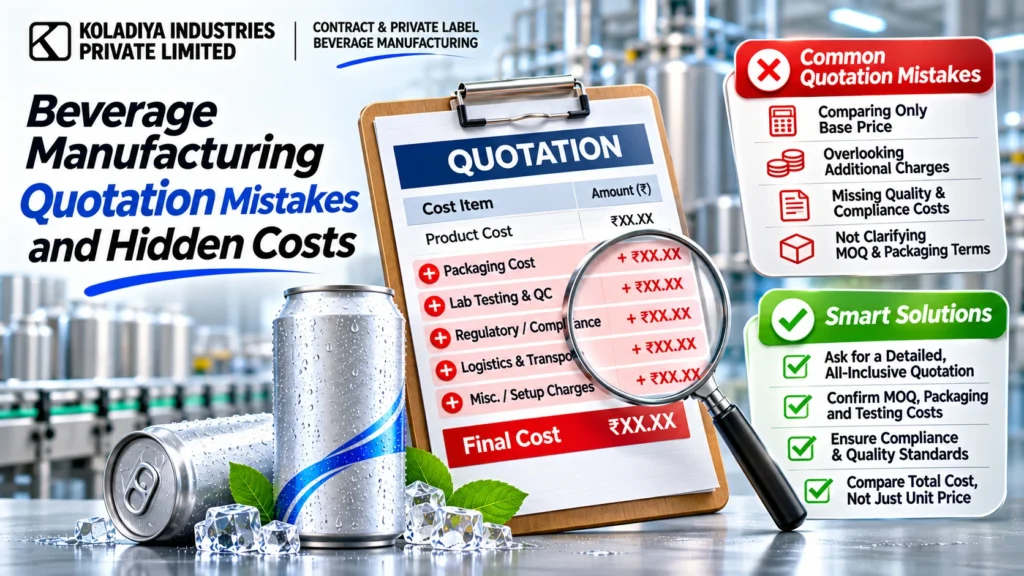
To compare quotes accurately, request a breakdown of the following:
- Product development or formulation charges.
- Minimum order quantity (MOQ).
- Cost per unit at different production volumes.
- Packaging and labeling expenses.
- Testing, compliance, and quality-control costs.
- Payment terms and expected production timelines.
What About Minimum Order Quantities?
Manufacturers set MOQs according to factors such as production equipment, ingredient procurement, packaging availability, and operational efficiency.
A white label product may offer a more accessible entry point in some cases. However, an existing product does not guarantee a low MOQ. Similarly, a contract manufacturer may accommodate different production volumes depending on its facilities and commercial policies.
Therefore, discuss your initial sales forecast and budget with potential manufacturing partners before selecting a product.
How Long Does Product Launch Take?
White label beverages may reach the market sooner when the manufacturer already has a suitable formulation, packaging specifications, and available production capacity.
On the other hand, custom contract manufacturing may require additional formulation development, sample evaluation, stability testing, and regulatory review.
In both cases, packaging approvals, ingredient availability, label compliance, and manufacturing schedules can affect launch dates. Ask your manufacturer for a realistic project timeline before planning marketing campaigns or retailer commitments.
How to Choose the Right Beverage Manufacturing Partner
The right partner should offer more than production facilities. You need a manufacturer that understands your product goals, communicates clearly, and supports consistent quality.
First, evaluate the manufacturer’s experience with your intended beverage category. Energy drinks, protein water, flavored water, and functional beverages may require different ingredients, processing methods, and quality-control procedures.
Next, discuss formulation options and packaging capabilities. Confirm whether the manufacturer can support your preferred can or bottle format, labeling requirements, and expected production volumes.
Additionally, review quality-management practices, applicable food safety requirements, ingredient documentation, testing procedures, and batch traceability. Verify relevant licenses and certifications rather than relying solely on marketing claims.
You should also clarify commercial responsibilities. For example, determine who owns a custom formulation, who sources ingredients, who approves the packaging artwork, and who handles product specifications. Put agreed responsibilities, payment terms, quality requirements, and delivery expectations in writing.
Finally, choose a partner that can support your current requirements while helping you evaluate future expansion opportunities.
Contract Manufacturing vs White Label Beverages: Which Is Right for Your Startup?
The right option depends on your business objectives, budget, product vision, and launch strategy.
Choose contract manufacturing when you want a customized beverage, greater involvement in formulation, and stronger product differentiation. This approach may suit businesses developing distinctive flavors, functional beverage concepts, or specialized product ranges.
Choose white label beverages when you want to use an existing formulation, simplify product development, and focus on branding and distribution. This model can suit entrepreneurs who want to test market demand before making a larger development commitment.
Alternatively, you can take a phased approach. Start with a suitable white label product, develop your distribution network, and assess customer feedback. Later, consider custom contract manufacturing when your sales data and market insights justify greater product investment.
Regardless of the model, calculate your total landed cost, confirm the manufacturer’s capabilities, and validate demand before committing to a large production order.
How Koladiya Industries Can Support Your Beverage Brand
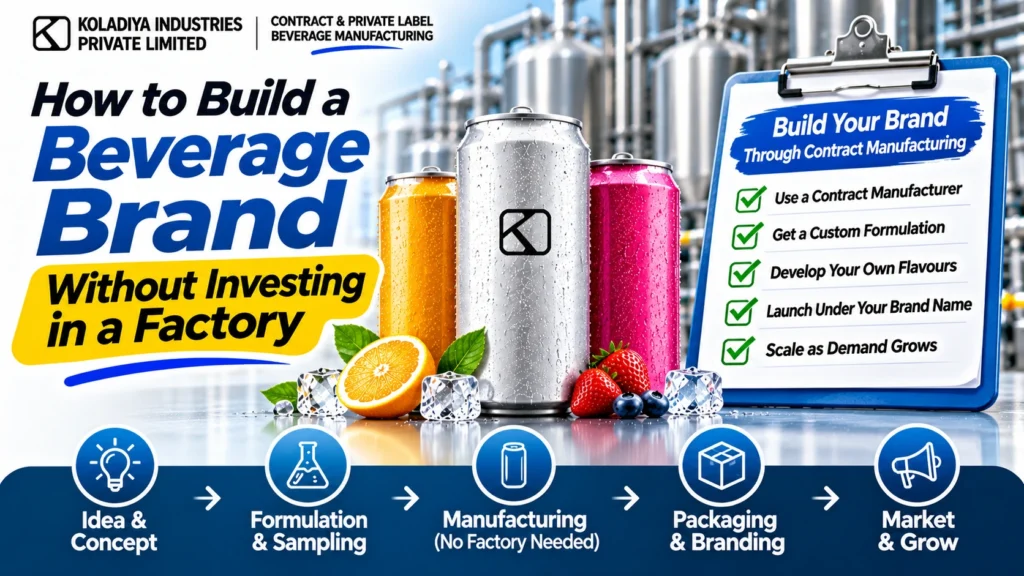
For businesses exploring beverage manufacturing opportunities in India, Koladiya Industries can be a starting point for discussing contract manufacturing and private label requirements. Before selecting a manufacturing model, define your beverage category, target market, preferred packaging, estimated order quantity, and customization needs.
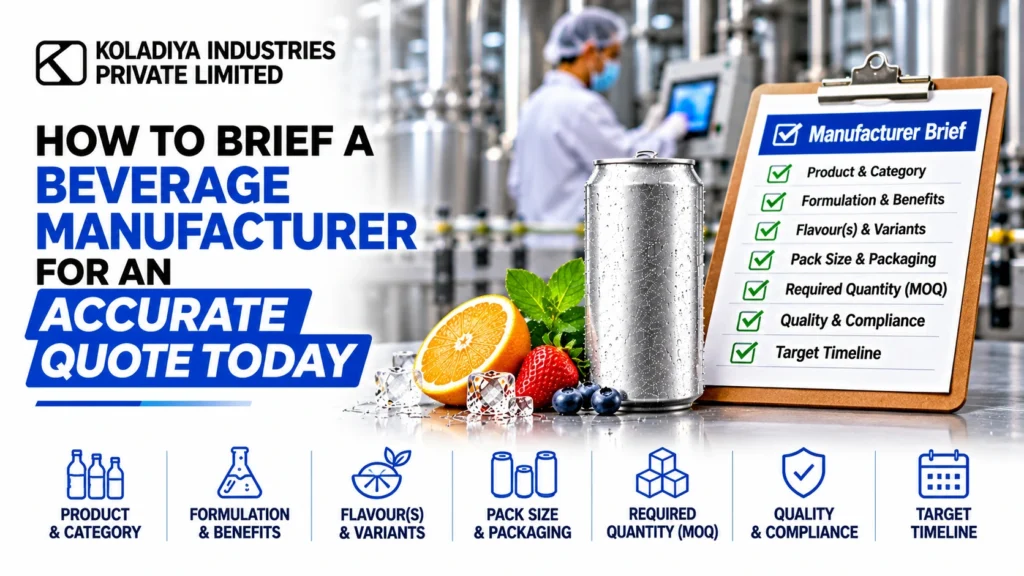
A clear brief helps a manufacturing team understand your expectations and assess the available options. It also makes it easier to compare proposals, production requirements, pricing, and timelines.
Whether you are planning an energy drink, protein water, hydration beverage, flavored water, or another non-alcoholic beverage concept, evaluate the available manufacturing options against your commercial goals.
Conclusion
Choosing between contract manufacturing and white label beverages comes down to how much customization your brand needs and how you want to enter the market. Contract manufacturing can help you create a differentiated beverage, while white label manufacturing may offer a simpler route to launching an existing product under your brand.
Before making a decision, compare total costs, minimum order quantities, production timelines, packaging options, and quality standards. Most importantly, choose a manufacturing partner that understands your business objectives and can meet your product requirements.
Ready to explore your beverage manufacturing options? Connect with Koladiya Industries to discuss your beverage concept, customization requirements, packaging preferences, and production goals. A clear discussion can help you identify a suitable manufacturing approach for launching and growing your beverage brand.
FAQ’s
Is White Label Beverage Manufacturing Cheaper?
White label manufacturing may reduce formulation development costs because the manufacturer already offers the product. However, the total cost depends on MOQ, packaging, production charges, logistics, and commercial terms.
Is Contract Manufacturing Suitable for Beverage Startups?
Yes. Contract manufacturing can help startups develop products without investing in their own production facilities. However, startups should evaluate development costs, production volumes, compliance requirements, and market demand before committing.
Which Beverage Manufacturing Model Offers More Customization?
Contract manufacturing generally offers greater customization because brands can request specific formulations, ingredients, flavors, and packaging options. The manufacturer's technical capabilities and the agreed scope determine the actual flexibility.
What Is the Minimum Order Quantity for Beverage Manufacturing?
The MOQ varies by manufacturer, beverage type, packaging format, ingredients, and production setup. Ask each potential partner for its minimum order quantity and compare pricing at different production volumes.
Can I Build My Own Beverage Brand Through White Label Manufacturing?
Yes. White label manufacturing allows businesses to market eligible products under their own brand names. You can develop your brand identity, packaging design, pricing strategy, and distribution network while using the manufacturer's existing formulation.
How Do I Choose a Beverage Contract Manufacturer in India?
Evaluate manufacturing experience, product development capabilities, quality controls, relevant licenses, packaging options, MOQs, pricing transparency, and production capacity. Also, clarify formulation ownership, timelines, and contractual responsibilities before starting production.