Quality plays a vital role in the beverage industry. Consumers expect every bottle, can, and carton to deliver consistent taste, freshness, safety, and product quality. Therefore, beverage manufacturers must maintain strict quality standards throughout production, from raw material selection to final packaging. However, manufacturers often face challenges that affect product consistency, shelf life, production efficiency, and customer satisfaction. Even a minor issue with water quality, ingredient measurement, processing temperature, or packaging integrity can lead to product defects and financial losses. Understanding the 10 common Quality Control Problems in Beverage Manufacturing helps businesses identify risks, improve production processes, and deliver reliable products to the market. With effective quality management, beverage companies can reduce waste, maintain regulatory compliance, and strengthen their brand reputation.
1. Quality Control Problems in Beverage Manufacturing
Taste consistency remains one of the biggest challenges in beverage production. Customers expect every batch of their favorite drink to offer the same flavor, aroma, sweetness, and overall experience. However, variations in raw materials, ingredient proportions, mixing conditions, and processing methods can change the final product.
How to Maintain Consistent Beverage Flavor
Manufacturers can control flavor variations by following standardized formulations and accurate ingredient measurements. They should also evaluate raw materials before production and conduct regular sensory testing.
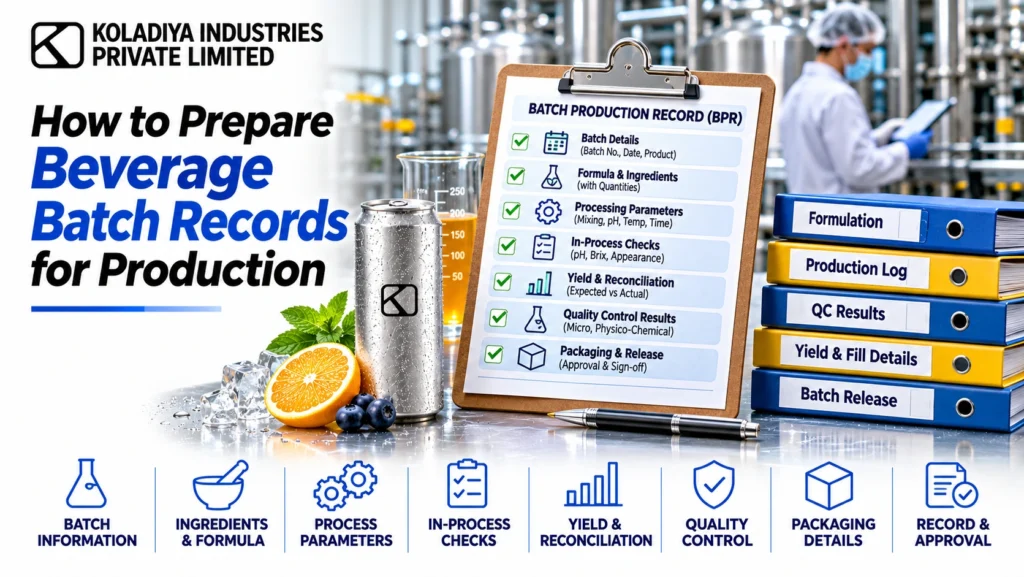
In addition, maintaining detailed batch records helps production teams identify the source of flavor differences. Consistent mixing procedures and trained quality control personnel further improve product uniformity.
2. Microbial Contamination and Beverage Safety Risks
Microbial contamination creates serious quality and safety concerns for beverage manufacturers. Bacteria, yeast, and mold can enter production through contaminated water, ingredients, equipment, packaging materials, or poor handling practices.
Consequently, contamination can cause spoilage, unpleasant odors, unexpected fermentation, packaging swelling, and potential consumer health risks.
How to Prevent Microbial Contamination
Manufacturers should implement strict hygiene practices and validated sanitation procedures. They must regularly clean processing equipment, storage tanks, pipelines, and filling systems.
Furthermore, appropriate microbiological testing, controlled processing conditions, and effective water treatment help reduce contamination risks. Manufacturers should also establish suitable environmental monitoring and product release procedures based on the beverage type.
3. Incorrect pH Levels and Acidity Control
pH directly influences beverage taste, stability, preservation, and processing requirements. When a beverage falls outside its specified pH range, it may develop an unexpected flavor, experience stability issues, or fail to meet its product specifications.
For acidic drinks, inconsistent acidity can also affect the balance between sweetness and sourness. In other formulations, incorrect pH can interfere with ingredient performance and preservation.
How to Quality Control Beverage pH
Quality teams should measure pH using calibrated instruments and follow approved formulation procedures. They should test water, ingredients, and finished products at appropriate production stages.
Moreover, operators must measure acidulants accurately and document results for every batch. Establishing product-specific pH limits helps manufacturers identify deviations before releasing finished beverages.
4. Inaccurate Ingredient Measurement and Formulation Errors
Beverage formulations require precise ingredient proportions. Even small measurement errors can affect sweetness, color, flavor, nutritional values, carbonation, and production costs.
For example, excess sweetener can make a drink unpleasantly sweet, while an incorrect flavor concentration can reduce product appeal. Similarly, inaccurate ingredient dosing can create inconsistencies between production batches.
How to Improve Ingredient Accuracy
Manufacturers should use calibrated weighing scales, reliable dosing equipment, and standardized batch sheets. Automated dispensing systems can further reduce manual measurement errors.
Additionally, production teams should verify ingredient quantities before mixing and maintain clear procedures for handling formulation changes. Accurate records also make it easier to investigate deviations and maintain repeatable product quality.
5. Water Quality and Treatment Issues
Water serves as a primary ingredient in many beverages. Its mineral content, taste, odor, and microbiological condition can directly affect the finished product.
Poor water quality may introduce unwanted flavors, mineral deposits, or contamination risks. Furthermore, variations in water composition can influence formulation accuracy and processing performance.
How to Maintain Beverage Water Quality Control
Manufacturers should establish water quality specifications based on the product and production process. Appropriate filtration, purification, and treatment systems help maintain consistent water characteristics.
Regular testing should cover relevant physical, chemical, and microbiological parameters. In addition, scheduled maintenance of water treatment equipment helps prevent unexpected quality variations and supports reliable production.
6. Carbonation and Dissolved Gas Inconsistency
Carbonation plays an essential role in carbonated soft drinks, sparkling water, and certain energy beverages. Incorrect carbonation levels can affect mouthfeel, taste perception, foam formation, and consumer satisfaction.
Insufficient carbonation may produce a flat drinking experience. Excessive carbonation, meanwhile, can create filling difficulties, excessive foaming, and pressure-related packaging concerns.
How to Control Beverage Carbonation
Manufacturers should monitor carbonation levels, product temperature, operating pressure, and filling conditions. Properly maintained carbonation systems help deliver consistent dissolved carbon dioxide levels.
Additionally, quality teams should test samples throughout production and verify that finished products meet their carbonation specifications. Regular equipment calibration can also reduce process variation.
7. Packaging Defects and Seal Integrity Problems
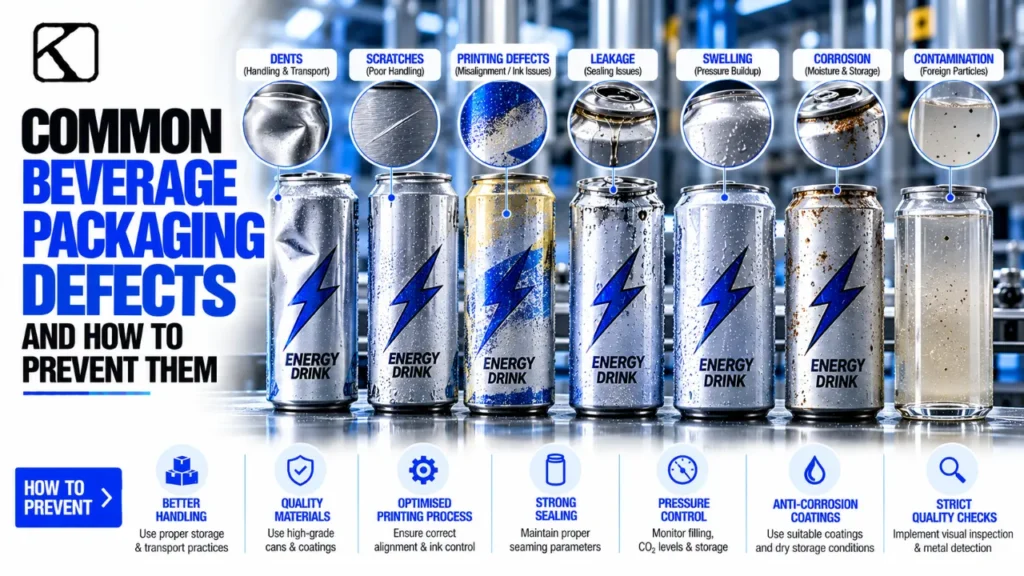
Packaging protects beverages from contamination, leakage, oxygen exposure, and external damage. However, defective bottles, cans, caps, closures, and seals can compromise product quality and shelf life.
For example, loose caps may cause leakage, while damaged seals can allow contaminants to enter the product. In carbonated beverages, inadequate closure integrity can also cause gas loss.
How to Improve Beverage Packaging Quality
Manufacturers should inspect packaging materials before use and monitor filling and sealing operations throughout production. They should check closure torque, seal integrity, fill levels, and container condition according to the packaging format.
Furthermore, routine leak testing and packaging line maintenance help identify defects early. These measures reduce product losses and improve the reliability of finished beverages.
8. Incorrect Filling Levels and Packaging Inconsistency
Accurate filling ensures that every container meets the required volume specifications. Underfilling can create customer complaints and compliance concerns, while overfilling increases product giveaway and manufacturing costs.
Filling inconsistencies can result from equipment calibration problems, temperature variations, foaming, or unstable production settings.
How to Maintain Accurate Beverage Filling
Manufacturers should calibrate filling equipment regularly and monitor container weights or volumes at defined intervals. Automated inspection systems can help identify underfilled and overfilled containers.
Moreover, operators should investigate repeated deviations instead of relying only on manual adjustments. Preventive maintenance and statistical process monitoring help maintain consistent filling performance across production runs.
9. Shelf-Life, Oxidation, and Product Stability Issues
Beverage quality must remain consistent throughout the intended shelf life. However, oxygen exposure, unsuitable storage conditions, light, ingredient interactions, and inadequate processing can cause deterioration.
These problems may change a beverage’s color, aroma, taste, texture, or nutritional characteristics. Some products may also develop sediment, separation, or other visible defects.
How to Improve Beverage Shelf Life
Manufacturers should conduct appropriate shelf-life and stability studies before commercial production. They should evaluate packaging compatibility, oxygen exposure, storage temperature, and product-specific processing requirements.
In addition, suitable barrier packaging, controlled storage, and validated preservation methods can help maintain quality. Real-time and, where appropriate, accelerated stability studies provide useful information about product performance over time.
10. Poor Documentation and Inadequate Quality Monitoring
A beverage manufacturing process requires accurate documentation and consistent monitoring. Without reliable records, quality teams may struggle to trace defects, identify recurring problems, or verify that production follows approved procedures.
Poor documentation can also complicate audits, corrective actions, and investigations involving customer complaints.
How to Strengthen Quality Control Systems
Manufacturers should maintain clear records of raw materials, batch formulations, processing parameters, sanitation activities, laboratory results, and packaging inspections.
Furthermore, standard operating procedures and employee training help ensure that every team follows consistent practices. Digital quality management systems can improve traceability, simplify reporting, and support faster decision-making.
Best Practices to Prevent Quality Control Problems in Beverage Manufacturing
Although each quality issue requires a specific solution, manufacturers can strengthen overall performance through a structured quality management approach.
Key practices include:
- Standardize production procedures: Use approved formulations and operating instructions for every product.
- Inspect raw materials: Verify ingredient quality before accepting materials for production.
- Calibrate equipment: Maintain accurate measurements across dosing, testing, filling, and packaging systems.
- Monitor critical parameters: Track pH, temperature, carbonation, filling volume, and other product-specific requirements.
- Maintain sanitation standards: Follow documented cleaning procedures and verify their effectiveness.
- Conduct regular testing: Perform suitable physical, chemical, sensory, and microbiological checks.
- Train production teams: Help employees recognize quality deviations and follow corrective procedures.
- Investigate root causes: Identify why a defect occurred and implement corrective and preventive actions.
- Maintain complete records: Improve batch traceability and support consistent quality decisions.
- Review performance regularly: Analyze defects, customer complaints, and production losses to identify improvement opportunities.
Together, these practices help manufacturers improve consistency, reduce waste, and establish a more reliable production process.
How Koladiya Industries Can Support Beverage Manufacturing Quality
Koladiya Industries can position its beverage manufacturing expertise around the importance of consistent product quality, dependable production processes, and effective quality management.
For beverage brands, selecting the right manufacturing partner involves more than production capacity. Businesses should also evaluate formulation control, ingredient handling, processing capabilities, packaging requirements, quality testing, and batch traceability.
A well-structured manufacturing approach helps beverage businesses identify potential problems early, improve production efficiency, and deliver products that meet defined specifications.
Whether a company plans to launch a new beverage or expand an existing product line, clear quality requirements and reliable manufacturing processes play an important role in long-term growth.
Conclusion
The 10 common Quality Control Problems in Beverage Manufacturing highlight the importance of controlling every stage of beverage production. Inconsistent flavor, microbial contamination, incorrect pH, formulation errors, poor water quality, carbonation variations, packaging defects, filling inaccuracies, shelf-life challenges, and inadequate documentation can all affect product performance. However, manufacturers can reduce these risks through standardized procedures, regular testing, equipment calibration, sanitation controls, and effective quality monitoring.
Ultimately, strong quality control protects consumers, reduces production losses, and helps beverage brands build lasting customer trust. By prioritizing quality from raw material inspection to final packaging, manufacturers can create a more consistent and efficient production process.
Partner with Koladiya Industries for Your Beverage Manufacturing Needs
Looking for a dependable partner for your beverage manufacturing requirements? Koladiya Industries can be part of your journey toward building a consistent, market-ready beverage brand.
Contact Koladiya Industries today to discuss your beverage manufacturing goals, production requirements, and quality expectations. Take the next step toward delivering reliable beverage products to your customers.
FAQ’s
Why is quality control important in beverage manufacturing?
Quality control helps beverage manufacturers maintain product safety, consistent taste, reliable shelf life, and packaging integrity. It also reduces production waste, prevents costly defects, supports regulatory compliance, and improves customer satisfaction.
How can beverage manufacturers prevent microbial contamination?
Manufacturers can prevent microbial contamination through proper sanitation, safe water treatment, hygienic ingredient handling, validated processing methods, and regular microbiological testing. Routine equipment cleaning and environmental monitoring also help maintain beverage safety.
How do manufacturers maintain consistent beverage taste and quality?
Manufacturers maintain consistent beverage quality by following standardized formulations, measuring ingredients accurately, testing raw materials, monitoring processing conditions, and conducting regular sensory evaluations. Batch records also help identify and correct variations.
What causes packaging defects in beverage manufacturing?
Packaging defects can result from damaged containers, faulty caps, poor sealing, incorrect filling settings, and inadequate equipment maintenance. Regular packaging inspections, leak testing, and closure integrity checks help minimize these problems.
How can beverage manufacturers improve product shelf life?
Manufacturers can improve shelf life by using suitable preservation methods, maintaining hygienic production conditions, controlling oxygen exposure, selecting appropriate packaging, and conducting product stability studies. Proper storage conditions also help preserve beverage quality.
How can Koladiya Industries help businesses with beverage manufacturing?
Koladiya Industries can support beverage brands by focusing on consistent production, appropriate manufacturing processes, packaging requirements, and quality management. Businesses should discuss their specific product, formulation, testing, and production needs to determine the most suitable manufacturing solutions.