Energy drink packaging plays a major role in product quality, shelf life, brand identity, and customer experience. Although brands often focus on flavour, ingredients, and marketing, packaging deserves equal attention. The right packaging protects the beverage, maintains carbonation, communicates product information, and helps a brand compete in a crowded market. However, many energy drink brands make packaging mistakes during product development and commercial production. These mistakes can increase manufacturing costs, create quality issues, damage brand reputation, and affect customer satisfaction. For example, an unsuitable can material may affect product stability, while poor sealing can lead to leakage or carbonation loss.
Therefore, beverage startups and established brands must evaluate packaging choices carefully before starting large-scale production. They should consider the beverage formulation, packaging material, filling process, storage conditions, transportation requirements, and target customers. We explore common energy drink packaging mistakes and practical ways to prevent them. We also explain how the right manufacturing partner can help brands develop reliable packaging solutions.
Why Energy Drink Packaging Matters
Energy drink packaging does much more than hold the beverage. It protects the product from external conditions, supports its shelf life, and creates the first impression among consumers.
Unlike some still beverages, carbonated energy drinks require packaging that can handle internal pressure. Furthermore, these products may contain caffeine, vitamins, minerals, sweeteners, acids, flavours, and other functional ingredients. Consequently, brands must select packaging that works well with the complete formulation.
Effective energy drink packaging offers several advantages:
- Product protection: Suitable packaging helps protect the beverage from light, oxygen, contamination, and other external factors.
- Carbonation retention: A reliable container and closure help maintain the intended carbonation level.
- Brand recognition: Attractive packaging helps customers identify the product and understand its positioning.
- Convenience: Portable formats, practical sizes, and easy-to-open closures improve the consumer experience.
- Distribution support: Durable packaging helps products withstand handling, storage, and transportation.
Moreover, a well-planned packaging strategy can support consistent production as an energy drink brand grows.
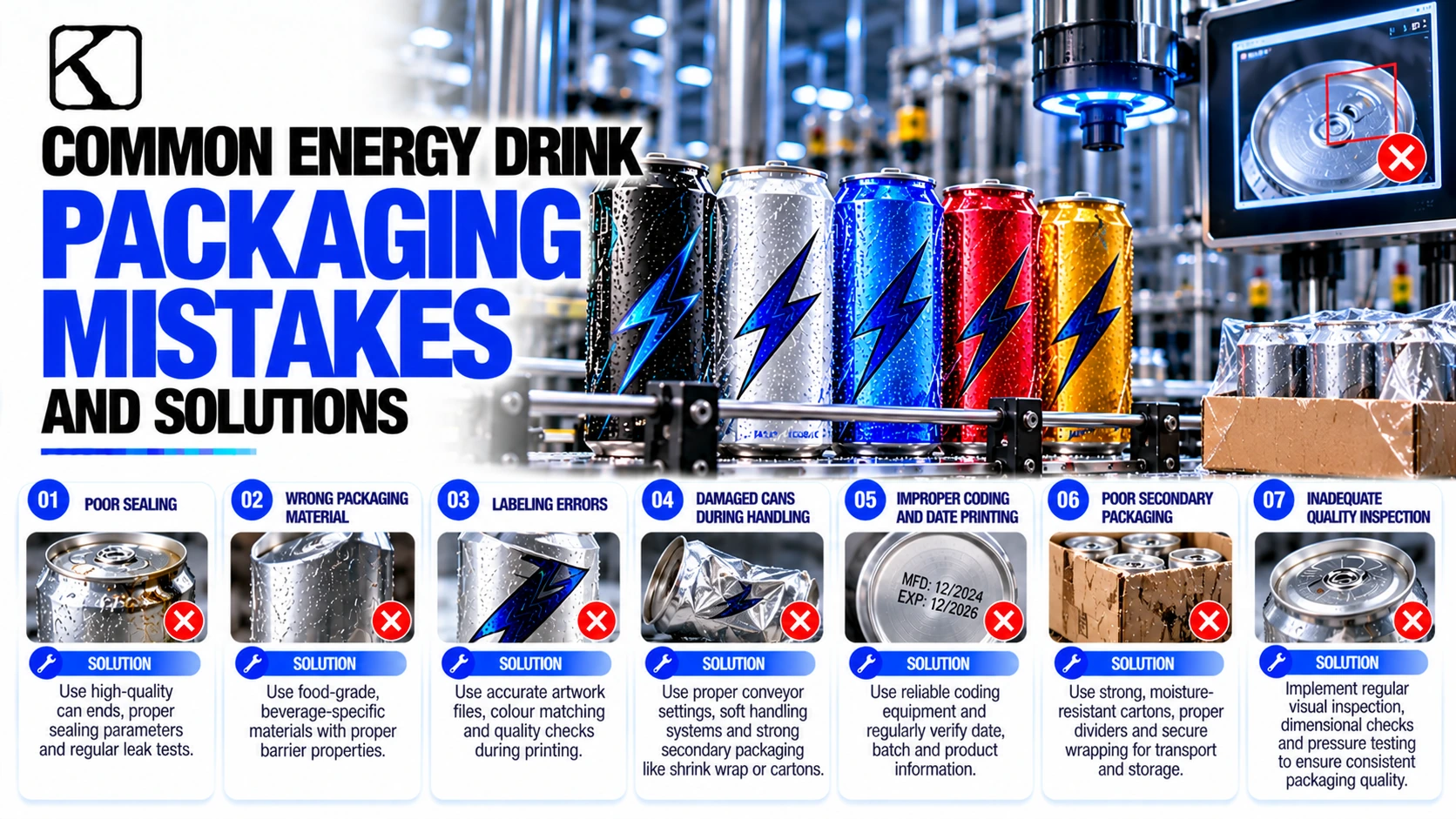
Common Energy Drink Packaging Mistakes and Solutions
1. Choosing the Wrong Packaging Material
One of the most common energy drink packaging mistakes involves selecting a container without considering the beverage formulation and production requirements.
Brands generally evaluate aluminium cans, PET bottles, and other packaging formats. However, each option offers different benefits and limitations. For example, aluminium cans provide a strong barrier against light and oxygen when the can and closure system remain intact. In contrast, PET bottles offer transparency and convenience, but their barrier performance depends on the material and bottle design.
Choosing unsuitable packaging can create product protection, compatibility, or distribution challenges.
Solution:
Evaluate packaging materials according to the beverage formulation, carbonation level, filling process, shelf-life expectations, and distribution plan. Additionally, conduct packaging compatibility and stability tests before approving the final container.
For many carbonated energy drink brands, aluminium cans offer a practical packaging option because they combine portability, light protection, and a convenient format.
2. Ignoring Can Seaming Quality
Can seaming is essential for maintaining a secure seal in canned energy drinks. The double seam connects the can body with its end and helps protect the product against leakage and external contamination.
However, incorrect seaming settings, unsuitable equipment adjustments, damaged can ends, or inconsistent inspections can create sealing problems. As a result, the product may lose carbonation or develop leakage issues.
Solution:
Maintain suitable seaming parameters and inspect seam quality throughout production. In addition, use appropriate equipment settings for the selected can and end specifications.
Regular seam inspections, equipment maintenance, and trained operators help identify problems before they affect large production batches. Therefore, brands should treat can seaming as a critical quality-control step.
3. Using Packaging That Cannot Handle Internal Pressure
Carbonated energy drinks contain dissolved carbon dioxide, which creates internal pressure inside the container. Therefore, packaging must suit the beverage’s carbonation level and expected storage conditions.
A container with unsuitable specifications may deform, leak, or fail to maintain product integrity. Moreover, temperature fluctuations during transportation and storage can influence internal pressure.
Solution:
Select packaging according to the required pressure specifications and carbonation level. Also, evaluate the container, closure, and filling process as one complete system.
Before commercial production, conduct suitable pressure, leakage, and package-integrity checks. These tests help brands identify potential weaknesses and improve packaging reliability.
4. Overlooking Formulation and Packaging Compatibility
Energy drinks may contain caffeine, taurine, vitamins, minerals, acids, sweeteners, colours, and different flavouring ingredients. Although these ingredients contribute to the beverage’s functional and sensory profile, they may also influence packaging requirements.
For instance, formulation acidity, ingredient interactions, and storage conditions can affect product stability. Brands that select packaging without considering these factors may experience unexpected quality changes.
Solution:
Review the complete formulation before finalising packaging. Conduct compatibility and shelf-life studies under appropriate storage conditions. Furthermore, evaluate how the beverage interacts with the selected container and closure over time.
Close coordination between the formulation team and packaging team helps brands make better product-development decisions.
5. Designing Packaging Without Understanding the Target Audience
Packaging design influences how customers recognise and evaluate an energy drink. Nevertheless, some brands focus heavily on attractive graphics without considering their target market.
For example, a sports-oriented energy drink, a zero-sugar energy drink, and a premium functional energy drink may require different design approaches. If the packaging does not communicate the product’s identity, customers may struggle to understand its positioning.
Solution:
Develop a packaging design that reflects the brand’s target audience and product identity. Use clear typography, appropriate colours, readable product descriptions, and consistent branding.
Additionally, consider the product’s flavour, intended positioning, and retail environment. Most importantly, ensure that customers can identify key product information quickly.
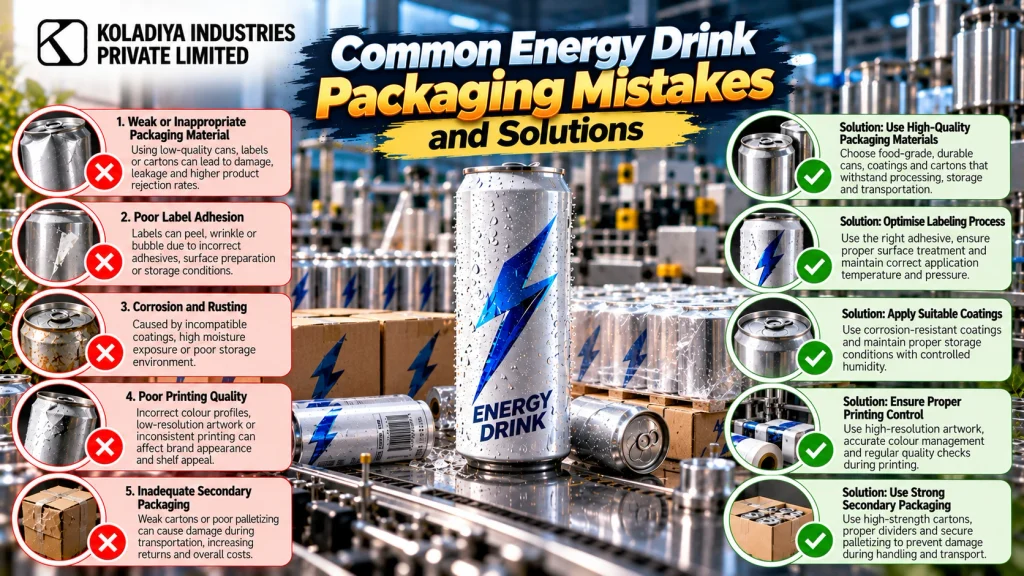
6. Ignoring Label Information and Regulatory Requirements
An attractive label cannot compensate for incomplete or inaccurate product information. Energy drink packaging must communicate essential details clearly and follow applicable food labelling and packaging requirements.
Depending on the market and product category, brands may need to display ingredient information, nutritional details, caffeine information, declarations, manufacturer details, batch information, and other required particulars.
Incorrect declarations or unclear product claims can create compliance and customer-trust problems.
Solution:
Review the label with the appropriate regulatory and quality teams before printing. Verify ingredient declarations, nutritional information, product claims, manufacturing details, and mandatory warnings wherever applicable.
Furthermore, avoid unsupported claims about energy, performance, health benefits, or nutritional advantages. Accurate labelling helps build consumer confidence and supports responsible brand communication.
7. Choosing the Wrong Can Size
Can size influences product positioning, production planning, pricing, and customer convenience. However, some brands select packaging sizes based only on appearance or competitor products.
For example, a 250 ml aluminium slim can may suit a premium energy drink concept, while another product may require a different serving size. The right choice depends on the formulation, target audience, pricing strategy, and distribution requirements.
Solution:
Compare different packaging formats before making a final decision. Consider serving size, production compatibility, material costs, transportation efficiency, and customer expectations.
Additionally, discuss available packaging options with the manufacturing partner. This step helps brands align product positioning with practical production requirements.
8. Neglecting Packaging Storage and Transportation
Even well-designed packaging can create problems when brands ignore storage and transportation conditions.
Excessive heat, rough handling, improper stacking, and unsuitable warehouse conditions can damage containers, labels, cartons, or finished products. Furthermore, poor transportation planning may increase product losses and distribution costs.
Solution:
Develop suitable storage and transportation procedures. Maintain appropriate warehouse conditions, use protective secondary packaging, and follow recommended stacking practices.
Additionally, evaluate packaging performance during transportation trials. This approach helps identify potential issues before products reach distributors and retailers.
9. Ignoring Packaging Sustainability
Modern consumers increasingly consider packaging materials and waste when evaluating brands. However, some beverage businesses focus only on appearance and cost without reviewing environmental considerations.
For instance, unnecessary packaging layers or excessive material use may increase waste and transportation requirements.
Solution:
Evaluate practical ways to reduce packaging material and improve recyclability. Aluminium beverage cans offer an established recycling pathway in many markets, although actual recycling outcomes depend on local collection and processing systems.
Brands should balance sustainability goals with product protection, packaging performance, availability, and total production costs.
10. Skipping Packaging Trials Before Mass Production
One of the most expensive mistakes involves moving directly from packaging selection to large-scale manufacturing without conducting suitable trials.
A packaging design may look excellent during development but perform differently on a commercial filling line. For example, brands may discover label adhesion problems, sealing inconsistencies, handling issues, or compatibility concerns only after production begins.
Solution:
Conduct packaging trials before approving full-scale manufacturing. Test the selected containers, closures, labels, filling process, and secondary packaging under representative production conditions.
Also, review trial results with the manufacturing and quality teams. This process helps businesses identify problems early, reduce avoidable waste, and improve production consistency.
How to Select the Right Energy Drink Packaging
Selecting suitable packaging requires more than comparing container designs. Instead, brands should evaluate the complete relationship between product formulation, manufacturing, distribution, and customer expectations.
Consider these important factors:
Product formulation: Review ingredients, acidity, carbonation, sweeteners, and other formulation characteristics.
Packaging material: Compare aluminium cans, PET bottles, and other suitable formats according to product requirements.
Production compatibility: Confirm that the chosen packaging works with the filling, sealing, labelling, and inspection equipment.
Shelf-life expectations: Evaluate product stability and packaging performance through appropriate testing.
Brand positioning: Select a container size, shape, and design that match the intended market segment.
Total packaging costs: Consider material expenses, printing, filling efficiency, secondary packaging, storage, and transportation.
Most importantly, involve the manufacturing partner early in the packaging selection process. This helps brands avoid unnecessary changes during commercial production.
How Koladiya Industries Supports Energy Drink Packaging and Manufacturing
For beverage startups and established brands, choosing the right manufacturing partner can simplify product development and packaging decisions.
Koladiya Industries supports beverage businesses through private-label, third-party, and contract beverage manufacturing solutions. Its capabilities include beverage formulation and R&D support, flavour development, and manufacturing assistance from product development to commercial production.
The company works with beverage categories such as energy drinks, carbonated soft drinks, sparkling water, and tonic water. It also supports aluminium can packaging requirements, including 250 ml aluminium slim cans.
By discussing product formulation, packaging format, and production requirements together, beverage brands can make more informed decisions before launching their products.
Whether a business plans to introduce a new energy drink, develop a zero-sugar variant, or expand an existing product range, early coordination between formulation and packaging teams can help reduce avoidable production challenges.
Final Thoughts on Energy Drink Packaging
Energy drink packaging directly influences product protection, carbonation retention, shelf-life performance, brand identity, and manufacturing efficiency. Therefore, brands should never treat packaging as a last-minute decision.
From selecting the right aluminium can to maintaining seaming quality, verifying label information, and conducting packaging trials, every step requires careful planning.
Moreover, beverage startups should evaluate their packaging requirements before committing to large production volumes. A structured approach helps reduce avoidable costs, maintain product consistency, and create a better experience for customers.
Partner with Koladiya Industries for Energy Drink Manufacturing
Planning to launch or expand your energy drink brand? Koladiya Industries can support your journey with beverage formulation, flavour development, private-label manufacturing, and third-party beverage production solutions. From product development to commercial manufacturing, the right guidance can help you make informed decisions about your energy drink formulation and packaging requirements. Contact Koladiya Industries today to discuss your energy drink manufacturing project and explore suitable packaging solutions for your brand.