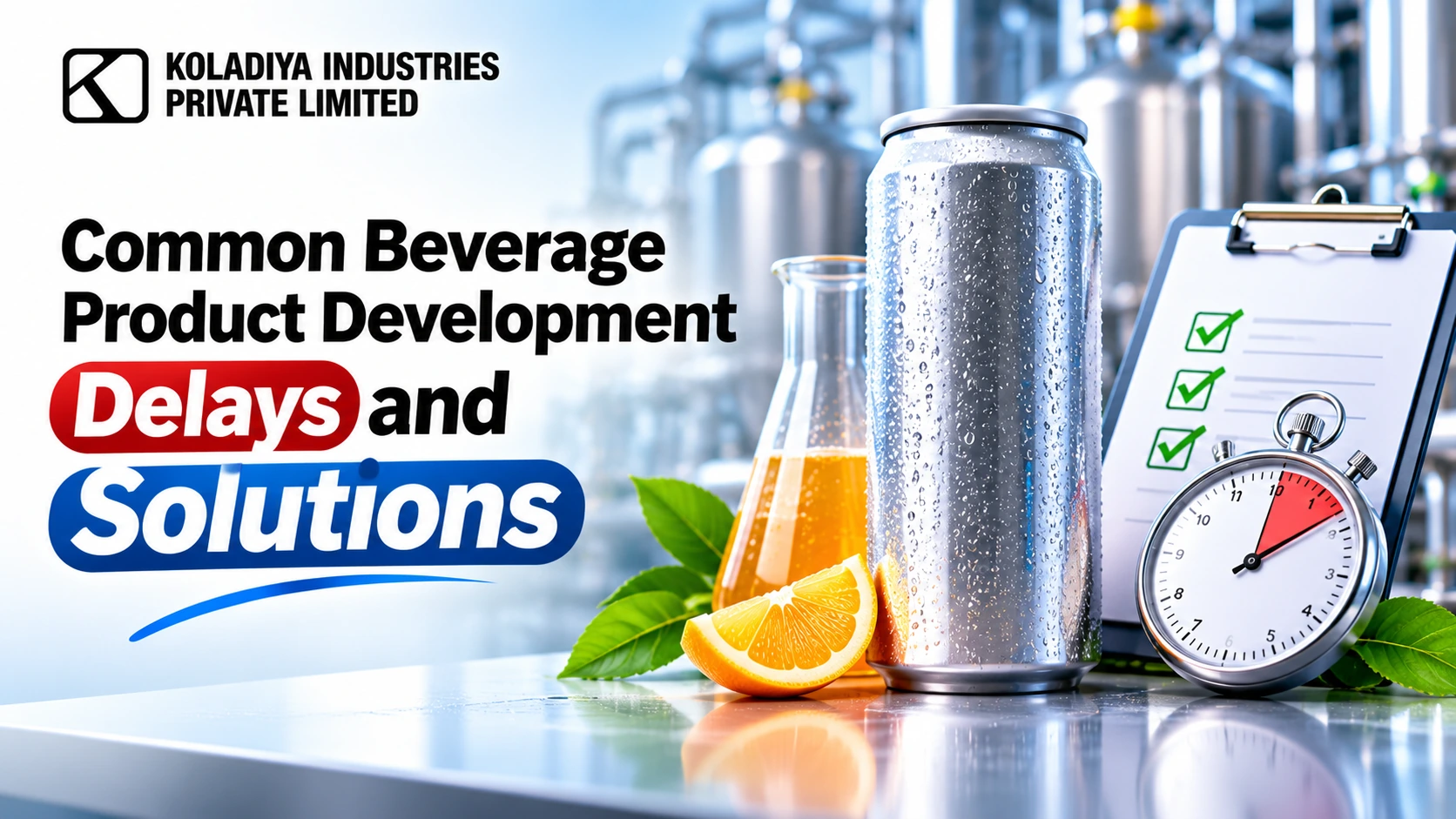
Launching a new beverage requires more than an innovative concept and attractive packaging. Brands must coordinate several important activities, including product formulation, ingredient selection, flavour development, laboratory testing, packaging decisions, quality control, and commercial manufacturing. Although every stage contributes to product success, even a minor mistake can delay the entire development process. For startups and established beverage businesses, these delays can increase development expenses, affect launch schedules, and create difficulties when entering competitive markets. Consequently, companies need a structured development strategy that identifies potential challenges early and provides practical solutions. Beverage Product Development becomes particularly challenging when businesses introduce energy drinks, carbonated soft drinks, zero-sugar beverages, functional drinks, or sparkling water. Each category requires careful ingredient selection, formulation expertise, stability evaluation, and production planning.
Therefore, choosing an experienced beverage manufacturing partner can help brands streamline development, improve product consistency, and prepare for commercial production. We explore the common beverage product development delays, their causes, and practical solutions that help businesses move from concept to market more efficiently.
1. Unclear Product Concepts and Development Requirements
Common reasons for development delays is an unclear product concept. Many startups begin with a general beverage idea but lack specific details about their target customers, flavour preferences, ingredients, nutritional positioning, and expected retail price. Consequently, manufacturers may need several discussions and formulation revisions before they understand the actual requirements.
For example, an energy drink brand might want a refreshing beverage with caffeine, functional ingredients, low sugar, and a distinctive fruit flavour. Without clear specifications, the development team may struggle to create a formulation that meets all these expectations.
How to avoid this delay:
- Define your target audience and beverage category.
- Establish the desired flavour, sweetness, and carbonation levels.
- Identify nutritional and functional requirements.
- Set an estimated cost per can and target retail price.
- Prepare a clear product development brief before formulation begins.
A well-defined concept helps manufacturers understand expectations and reduces unnecessary revisions.
2. Beverage Product Development Delays Due to Formulation Challenges
Formulation plays a critical role in beverage quality, taste, stability, and consumer acceptance. However, certain ingredients may interact unexpectedly, creating challenges during development.
For instance, energy drinks often combine caffeine, vitamins, sweeteners, acidity regulators, flavours, and other functional ingredients. If these ingredients do not work well together, they can affect taste, appearance, and overall product performance.
Similarly, zero-sugar beverages require careful sweetener selection to achieve the right sweetness without unwanted aftertastes.
How to avoid this delay:
- Work with experienced beverage formulation specialists.
- Evaluate ingredient compatibility before finalising the formula.
- Test different sweetener and flavour combinations.
- Maintain accurate formulation records.
- Conduct laboratory trials before moving towards larger batches.
A systematic formulation process helps brands identify problems early and minimise repeated development cycles.
3. Delays in Flavour Development and Sample Approval
Flavour development often requires multiple trials before a beverage achieves the desired taste profile. Customers may request a refreshing, fruity, citrus-based, tropical, or botanical flavour. However, the first formulation may not match their expectations.
Energy drinks present additional flavour challenges because caffeine, vitamins, and certain functional ingredients can contribute bitterness or unwanted aftertastes.
Moreover, brands must balance sweetness, acidity, aroma, and mouthfeel to create a consistent drinking experience.
How to avoid this delay:
- Communicate detailed flavour expectations.
- Evaluate multiple flavour variations during initial trials.
- Test the product at the intended serving temperature.
- Collect feedback from the target consumer group.
- Finalise the approved sample before commercial production planning.
Furthermore, maintaining clear records of sample revisions helps prevent confusion between development teams and brand owners.
4. Ingredient Sourcing and Availability Problems
Ingredient availability can significantly affect beverage development timelines. Some formulations require specialised flavours, sweeteners, vitamins, preservatives, extracts, or functional ingredients that may have longer procurement lead times.
Additionally, sudden supplier changes or inconsistent ingredient quality can force manufacturers to reconsider the formulation.
For example, a zero-sugar energy drink may depend on a particular sweetener combination. If one ingredient becomes unavailable, the development team may need to evaluate alternative ingredients and conduct additional taste and compatibility trials.
How to avoid this delay:
- Identify critical ingredients during the initial planning stage.
- Work with reliable ingredient suppliers.
- Check ingredient specifications and availability.
- Evaluate suitable alternative ingredients where appropriate.
- Maintain procurement plans for commercial production.
Early ingredient planning reduces supply-related interruptions and supports smoother manufacturing preparation.
5. Inadequate Pilot Batch Testing
Moving directly from laboratory samples to commercial manufacturing without sufficient pilot testing can create unexpected challenges.
A formulation that performs well in a small laboratory sample may behave differently during larger-scale processing. Changes in mixing, carbonation, temperature, processing conditions, and filling operations can affect the final product.
For energy drinks, pilot testing helps evaluate carbonation levels, flavour consistency, ingredient dispersion, and product performance during the intended manufacturing process.
How to avoid this delay:
- Conduct pilot batches before commercial production.
- Evaluate mixing and processing parameters.
- Check carbonation and filling performance.
- Compare pilot samples with the approved formulation.
- Document observations and make necessary adjustments.
Ultimately, pilot testing helps brands identify production-related issues before committing to larger manufacturing volumes.
6. Beverage Product Development Delays Due to Stability and Shelf-Life Issues
Shelf-life evaluation is another important stage that can extend beverage development timelines. A product may initially show excellent taste and appearance but develop quality problems during storage.
Common issues include flavour deterioration, colour changes, sediment formation, ingredient separation, and carbonation loss.
Energy drinks also require careful evaluation because their ingredient combinations, acidity, packaging, and storage conditions can influence product stability.
How to avoid this delay:
- Select ingredients with suitable stability characteristics.
- Evaluate the formulation under relevant storage conditions.
- Conduct appropriate microbiological and physicochemical testing.
- Monitor flavour, colour, appearance, and carbonation over time.
- Establish suitable storage and shelf-life recommendations based on test results.
Importantly, brands should avoid assigning shelf-life claims without appropriate supporting evidence.
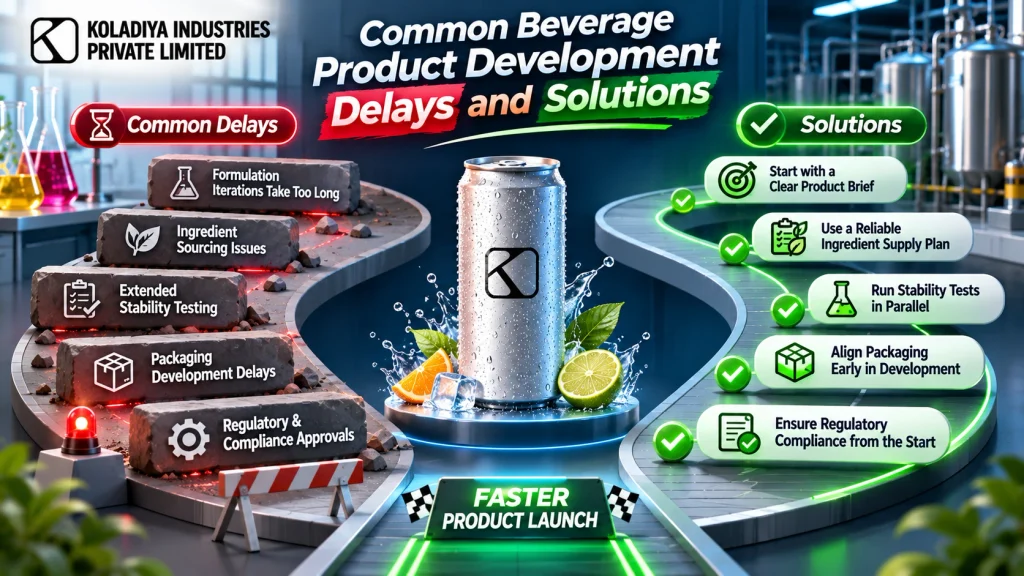
7. Packaging Selection and Compatibility Problems
Packaging decisions can also slow down beverage product development. Brands must consider product compatibility, packaging material, filling requirements, sealing performance, transportation, and visual presentation.
For example, aluminium cans offer a popular packaging option for energy drinks and carbonated beverages. However, manufacturers must evaluate can compatibility, internal coating requirements, filling conditions, and seam integrity.
Additionally, incorrect packaging dimensions or delayed artwork approvals can affect production planning.
How to avoid this delay:
- Select packaging according to the beverage category.
- Confirm container specifications early.
- Evaluate packaging compatibility with the formulation.
- Check filling and sealing requirements.
- Approve label artwork and packaging designs before production scheduling.
Early packaging decisions help brands prevent last-minute changes and unnecessary manufacturing interruptions.
8. Regulatory and Quality Compliance Delays
Regulatory requirements represent another important consideration in beverage development. Brands must evaluate applicable food safety regulations, ingredient permissions, nutritional labelling, claims, and packaging information before launching a product.
Energy drinks require particular attention to applicable requirements for caffeine, ingredient composition, nutritional information, and product labelling.
Incomplete documentation or incorrect label information can create additional approval work and delay commercial launch preparations.
How to avoid this delay:
- Review applicable food safety requirements during product planning.
- Verify ingredient permissions and specifications.
- Prepare accurate nutritional and ingredient information.
- Review packaging artwork before printing.
- Coordinate with qualified regulatory and quality professionals.
As a result, early compliance planning reduces avoidable revisions and supports a smoother product launch.
9. Poor Communication Between Brand Owners and Manufacturers
Effective communication connects every stage of beverage development. However, delays often occur when brand owners and manufacturing teams do not share clear specifications, sample feedback, timelines, or approval decisions.
For instance, repeated changes to sweetness, carbonation, packaging, or ingredient combinations can disrupt the development schedule.
How to avoid this delay:
- Assign clear responsibilities to both parties.
- Establish development milestones.
- Maintain written sample feedback and approvals.
- Communicate formulation changes immediately.
- Discuss production requirements before finalising the product.
Furthermore, regular communication helps businesses resolve technical questions quickly and maintain better project coordination.
10. Insufficient Commercial Production Planning
Even after successful formulation and testing, poor production planning can delay the final product launch. Brands sometimes overlook manufacturing capacity, packaging availability, ingredient procurement, production schedules, and expected order quantities.
For energy drink startups, aligning the approved formulation with commercial manufacturing requirements is especially important.
For example, a product may perform well during pilot production but require adjustments to processing parameters or packaging arrangements before larger manufacturing runs.
How to avoid this delay:
- Discuss production capacity at an early stage.
- Finalise the formulation before scheduling production.
- Confirm ingredient and packaging availability.
- Establish realistic manufacturing timelines.
- Coordinate quality checks and production requirements.
Consequently, early commercial planning creates a smoother transition from product development to market-ready manufacturing.
11. Beverage Product Development: A Practical Timeline Management Strategy
A structured development roadmap helps businesses manage responsibilities, monitor progress, and reduce unnecessary delays. Rather than treating every activity separately, brands should coordinate formulation, testing, packaging, and manufacturing preparation.
Beverage Product Development: Key Stages to Follow
Stage 1: Product Concept and Planning
Define the beverage category, target audience, flavour profile, nutritional requirements, and commercial objectives.
Stage 2: Formulation and Ingredient Selection
Develop the initial formula, assess ingredient compatibility, and evaluate suitable flavours and sweeteners.
Stage 3: Sample Development and Approval
Prepare samples, collect feedback, and refine the formulation until it meets the agreed product specifications.
Stage 4: Pilot Batch and Quality Testing
Evaluate processing performance, product consistency, carbonation, and relevant quality parameters.
Stage 5: Packaging and Compliance Evaluation
Finalise packaging specifications, review labelling information, and address applicable regulatory requirements.
Stage 6: Commercial Manufacturing Preparation
Coordinate procurement, manufacturing capacity, production scheduling, and final quality requirements.
Following these stages allows businesses to identify potential bottlenecks earlier and make better development decisions.
12. How Koladiya Industries Supports Beverage Product Development
Choosing the right manufacturing partner can make a significant difference in how efficiently a beverage moves from concept to commercial production.
Koladiya Industries Private Limited supports businesses looking for private-label and third-party beverage manufacturing solutions. With an in-house formulation and R&D lab, the company focuses on customized beverage formulations, flavour development, and product development support.
Its beverage categories include:
- Energy Drinks: Development support for brands exploring refreshing energy drink formulations and customized flavour profiles.
- Carbonated Soft Drinks: Beverage development for brands entering the carbonated soft drink segment.
- Sparkling Water: Product development support for sparkling water concepts.
- Tonic Water: Formulation and manufacturing support for tonic water products.
Additionally, Koladiya Industries offers packaging expertise in 250 ml aluminium slim cans, providing a suitable packaging format for several modern beverage categories.
By coordinating product development requirements with manufacturing preparation, Koladiya Industries helps brands move towards commercial production with a more organised approach.
Whether a startup wants to launch a zero-sugar energy drink, a new carbonated beverage, or a customised functional drink, selecting the right development and manufacturing partner can simplify important stages of the journey.
Conclusion
Beverage product development delays can affect product quality, development expenses, manufacturing schedules, and market-entry plans. However, businesses can reduce these challenges through clear product specifications, effective formulation, ingredient planning, flavour evaluation, pilot testing, packaging decisions, and early compliance preparation. Moreover, energy drink development requires particular attention to ingredient compatibility, sweetness, flavour balance, carbonation, and shelf-life performance.
Ultimately, a structured development process and the right manufacturing partner help beverage brands move from an initial concept towards successful commercial production. By addressing potential problems early, businesses can improve development efficiency and prepare products that meet market expectations.
Ready to Develop Your Next Beverage Product?
Planning to launch an energy drink, zero-sugar beverage, carbonated soft drink, sparkling water, or tonic water brand? Partner with Koladiya Industries Private Limited for customised beverage formulation, flavour development, private-label manufacturing, and third-party beverage manufacturing support. Take your beverage concept from formulation to commercial production with a manufacturing partner focused on your product requirements. Contact Koladiya Industries today to discuss your beverage product development requirements and explore the right manufacturing solution for your brand.