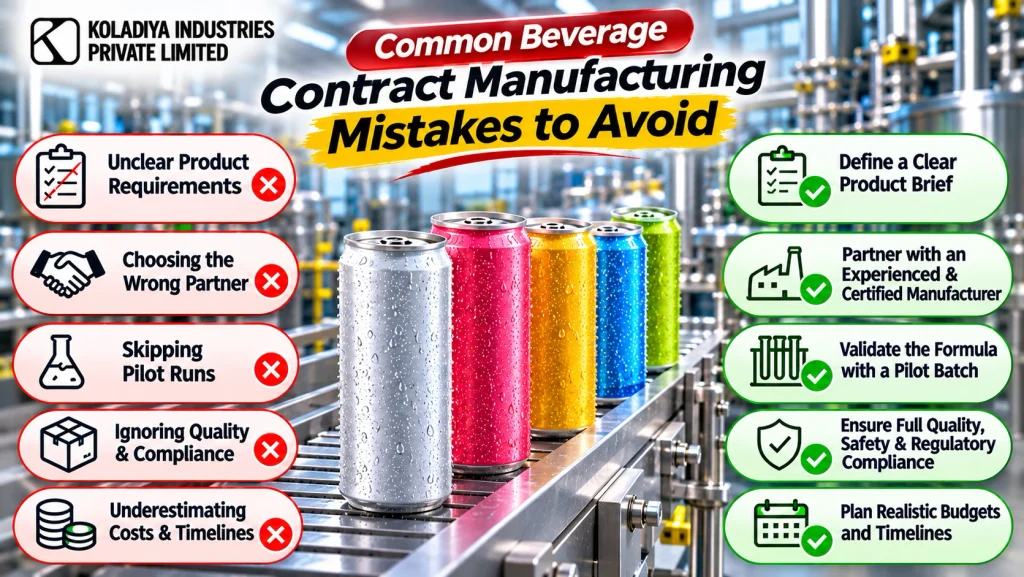
Launching a successful beverage brand requires more than an innovative product idea. Businesses must consider product formulation, ingredient sourcing, manufacturing costs, packaging, quality control, and production planning. Therefore, selecting the right manufacturing partner plays an important role in building a competitive and profitable beverage business. Beverage Contract Manufacturing allows startups, entrepreneurs, and established beverage companies to manufacture products without investing in their own production facilities. However, choosing an unsuitable manufacturing partner or overlooking important production requirements can create operational challenges, increase expenses, and delay product launches. Unclear manufacturing agreements, inconsistent formulations, packaging defects, and inadequate production planning can affect product quality and business profitability.
Energy drink brands face additional challenges because they must maintain consistent flavour, sweetness, carbonation, ingredient compatibility, and product stability throughout manufacturing. Consequently, businesses should understand common manufacturing mistakes before starting commercial production. In this article, we explore the major beverage contract manufacturing mistakes and practical strategies to avoid them.
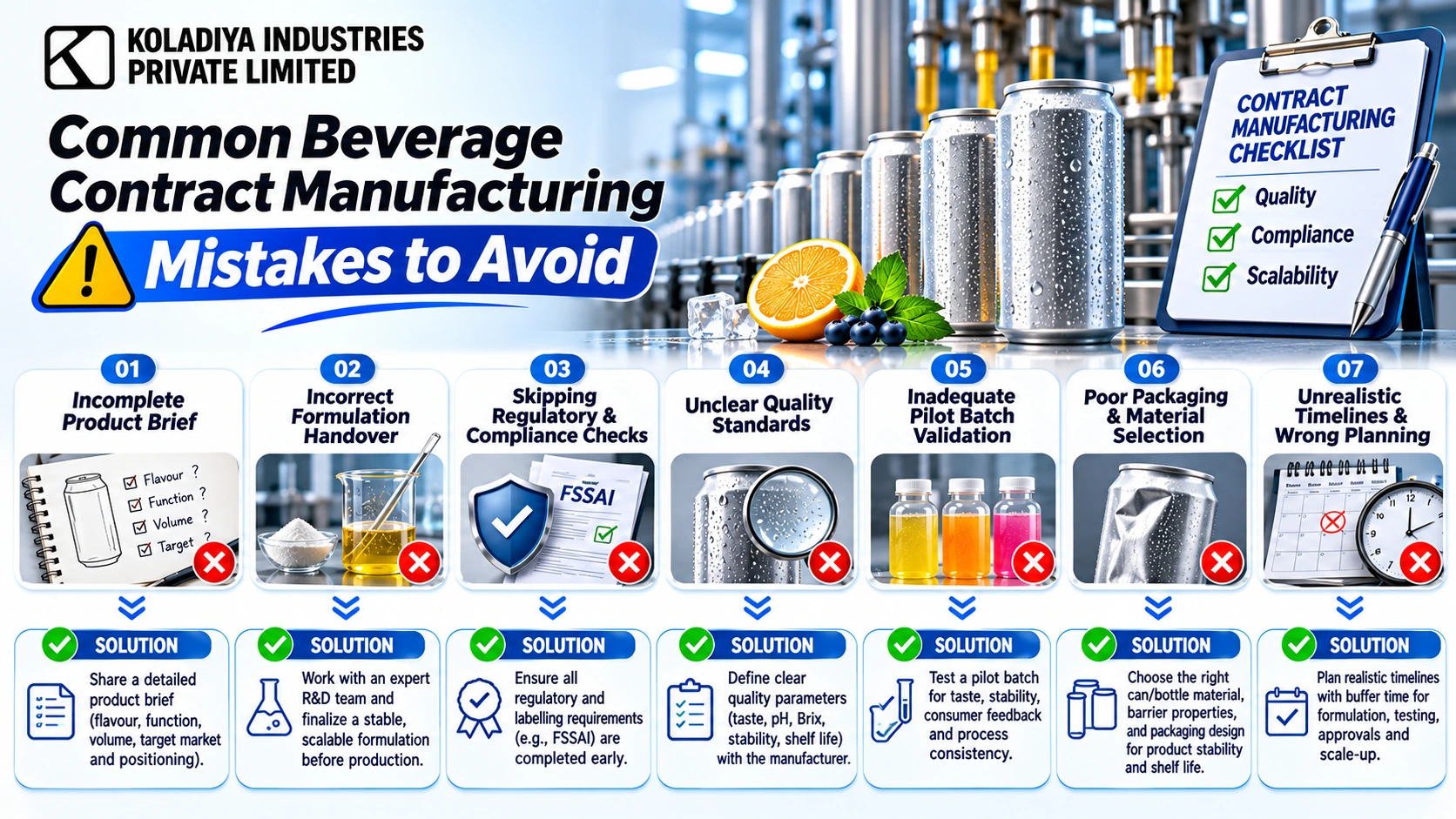
1. Choosing the Wrong Beverage Contract Manufacturing Partner
Selecting a manufacturing partner based exclusively on price can create long-term business problems. Although lower manufacturing costs may initially appear attractive, an unsuitable manufacturer might lack the equipment, technical expertise, or production capacity required for your beverage category.
Moreover, different beverages require different manufacturing capabilities. Energy drinks, carbonated soft drinks, sparkling water, and functional beverages involve specific formulation and processing requirements.
How to Avoid This Mistake
Before selecting a manufacturer, evaluate its:
- Beverage manufacturing experience and technical capabilities.
- Production capacity and available equipment.
- Research and development facilities.
- Packaging options and production flexibility.
- Quality management processes.
- Ability to support future production requirements.
Ultimately, select a partner that understands your product category and business objectives rather than focusing exclusively on the lowest quotation.
2. Ignoring Beverage Formulation and Product Development
An attractive beverage concept does not automatically become a commercially successful product. Poor formulation planning can create problems such as unpleasant taste, ingredient incompatibility, sedimentation, and stability issues.
For instance, energy drinks require careful consideration of caffeine, sweeteners, acidity regulators, flavours, and functional ingredients. Similarly, zero-sugar energy drinks need an appropriate sweetener combination to maintain sweetness without creating an unpleasant aftertaste.
How to Avoid This Mistake
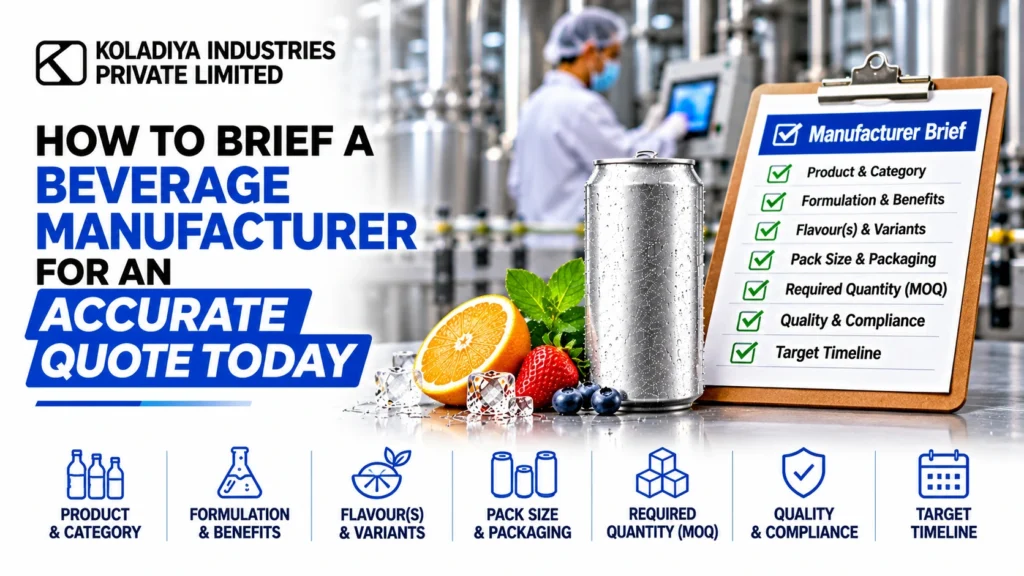
Collaborate with an experienced formulation and R&D team before starting commercial production. Develop a product formula that considers:
- Ingredient functionality and compatibility.
- Flavour balance and sweetness levels.
- Acidity and pH requirements.
- Carbonation requirements, where applicable.
- Product appearance and mouthfeel.
- Target shelf life and storage conditions.
Additionally, conduct multiple formulation trials to identify the most suitable product profile before approving the final formula.
3. Neglecting Ingredient Quality and Supplier Selection
Ingredient selection directly influences beverage taste, product consistency, stability, and overall quality. Nevertheless, some businesses prioritise ingredient prices without evaluating supplier reliability or material specifications.
For example, inconsistent flavour concentrates, sweeteners, caffeine sources, and functional ingredients can create noticeable differences between production batches.
Moreover, unreliable ingredient suppliers can interrupt manufacturing schedules and increase procurement expenses.
How to Avoid This Mistake
Establish clear ingredient specifications before beginning production. Evaluate suppliers according to material quality, documentation, consistency, and supply reliability.
For energy drink manufacturing, pay particular attention to caffeine sources, sweetener systems, flavour compounds, vitamins, and other functional ingredients.
Furthermore, maintain ingredient traceability and conduct incoming material checks to improve manufacturing consistency.
4. Overlooking Beverage Contract Manufacturing Agreements
A manufacturing partnership requires clear commercial and operational terms. Unfortunately, businesses sometimes begin production without fully understanding the manufacturing agreement.
This mistake can create disagreements about formulation ownership, ingredient procurement, packaging responsibilities, minimum order quantities, payment schedules, and delivery timelines.
How to Avoid This Mistake
Review the manufacturing agreement carefully and clarify:
- Minimum order quantity (MOQ).
- Manufacturing and packaging costs.
- Product formulation ownership.
- Intellectual property and confidentiality.
- Ingredient sourcing responsibilities.
- Production timelines and delivery terms.
- Quality specifications and rejection procedures.
- Payment schedules and additional charges.
Consequently, a transparent agreement helps both parties understand their responsibilities and reduces the possibility of future disputes.
5. Underestimating Beverage Manufacturing Costs
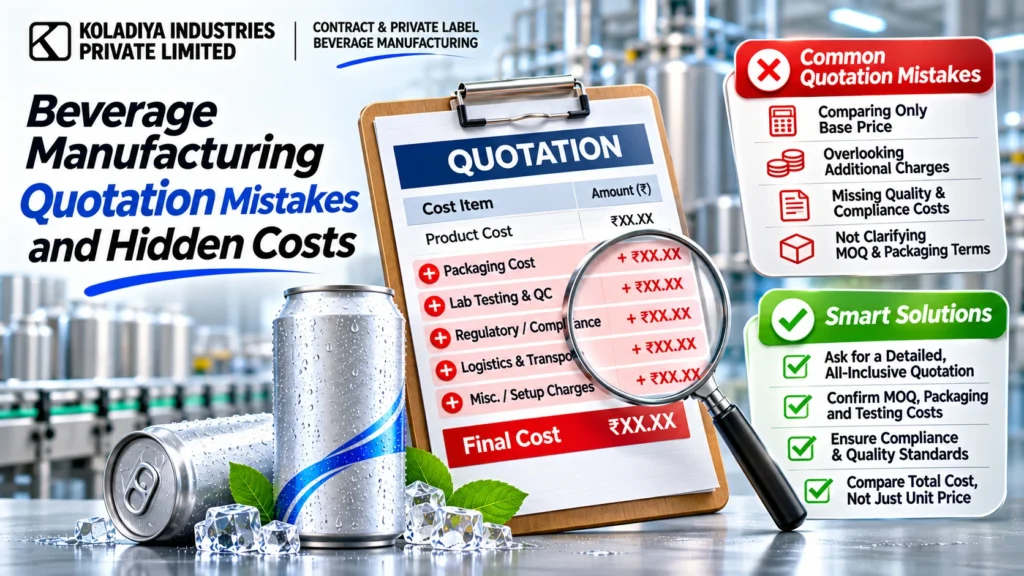
Manufacturing expenses involve much more than the price of a bottle or can. Businesses must also consider formulation development, ingredients, packaging materials, processing, quality testing, storage, and transportation.
For instance, an energy drink startup may calculate its budget using only ingredient and aluminium can prices. However, additional expenses can significantly increase the actual manufacturing cost per unit.
How to Avoid This Mistake
Prepare a detailed production budget before selecting your manufacturing partner.
Consider the following expenses:
- Raw materials and ingredients.
- Formulation and R&D expenses.
- Packaging materials and labelling.
- Manufacturing and processing.
- Quality control and product testing.
- Storage and logistics.
- Additional production requirements.
Additionally, request a detailed quotation and clarify whether the manufacturer includes development charges, packaging expenses, and other services in the quoted price.
6. Ignoring Quality Control and Product Testing
Quality control plays a critical role in beverage contract manufacturing. However, overlooking product testing can result in inconsistent flavour, carbonation variations, packaging problems, and stability concerns.
For example, energy drinks require particular attention to sweetness consistency, ingredient levels, acidity, carbonation, and flavour performance.
How to Avoid This Mistake
Establish a quality control process that covers raw materials, manufacturing stages, and finished products.
Important quality checks include:
- Raw material inspection.
- pH and acidity measurement.
- Flavour and sensory evaluation.
- Carbonation level verification.
- Microbiological testing.
- Packaging integrity checks.
- Shelf-life and stability evaluation.
Furthermore, define clear product specifications before commercial production. Consistent testing helps identify potential problems early and protects your beverage brand’s reputation.
7. Selecting Unsuitable Beverage Packaging
Packaging influences product presentation, storage, transportation, and consumer experience. Nevertheless, some businesses select packaging based entirely on appearance without considering product compatibility or manufacturing requirements.
For example, energy drinks commonly use aluminium cans, while other beverage categories may require different packaging formats depending on their formulation and distribution requirements.
Unsuitable packaging can create leakage, sealing defects, carbonation loss, and product quality concerns.
How to Avoid This Mistake
Evaluate packaging according to:
- Compatibility with the beverage formulation.
- Container material and product protection.
- Filling and sealing requirements.
- Storage and transportation conditions.
- Branding and labelling requirements.
- Packaging availability and cost.
For carbonated energy drinks, pay particular attention to can specifications, filling conditions, and seam integrity. Additionally, conduct appropriate packaging checks before approving large production quantities.
8. Failing to Plan Minimum Order Quantity and Production Volume
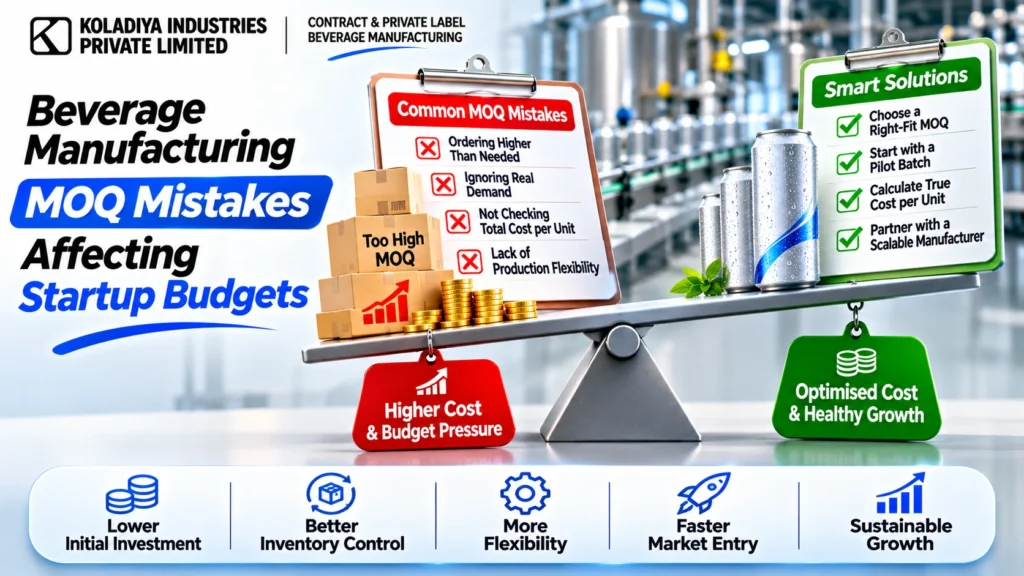
Minimum order quantity directly affects inventory investment, manufacturing expenses, and business cash flow. However, new beverage entrepreneurs sometimes select production quantities without evaluating market demand.
Ordering excessive quantities can increase storage expenses and create inventory management challenges. Conversely, ordering too little may increase per-unit costs and restrict product availability.
How to Avoid This Mistake
Discuss MOQ requirements with your manufacturing partner before finalising production.
Evaluate your expected sales volume, marketing strategy, distribution network, available budget, and inventory requirements.
For energy drink startups, a practical approach involves assessing market demand with an appropriate initial production quantity before expanding into larger commercial batches.
Consequently, production planning should support both immediate business requirements and long-term growth.
9. Skipping Pilot Batches Before Commercial Production
Moving directly from product development to large-scale manufacturing can expose businesses to unnecessary risks. A formulation that performs well during laboratory trials may behave differently during commercial production.
For example, energy drink carbonation, flavour distribution, sweetness, and filling performance may change when manufacturers increase batch sizes.
How to Avoid This Mistake
Conduct pilot batch development before approving full-scale manufacturing.
During pilot production, evaluate:
- Product taste and flavour consistency.
- Ingredient mixing performance.
- Carbonation and filling behaviour.
- Production equipment compatibility.
- Packaging performance.
- Initial product stability.
Furthermore, document the results and resolve formulation or processing concerns before expanding production.
10. Ignoring Production Scaling and Future Business Requirements
A manufacturer that supports small production quantities may not always have the capacity to meet future demand. Therefore, businesses should evaluate production scalability before entering a long-term manufacturing partnership.
Energy drink brands, in particular, may experience increasing demand after successful marketing campaigns, retail partnerships, or distribution expansion.
How to Avoid This Mistake
Discuss future production requirements during the initial manufacturing discussions.
Evaluate equipment capacity, production scheduling, raw material availability, packaging supply, and the manufacturer’s ability to maintain consistent quality at higher volumes.
Additionally, develop a realistic scaling strategy that connects production targets with sales forecasts and distribution plans.
11. Poor Communication and Inadequate Production Planning
Even an experienced manufacturing partner needs clear instructions and timely decisions from the beverage brand. Poor communication can create misunderstandings about product specifications, formulation changes, packaging designs, and production schedules.
For example, an energy drink brand might change its sweetness level or packaging design late in the manufacturing process. Such changes can affect ingredient procurement, production planning, and overall costs.
How to Avoid This Mistake
Maintain clear communication throughout product development and manufacturing.
Share accurate product specifications, approve final samples, confirm packaging artwork, and establish realistic production timelines.
Moreover, communicate formulation changes early and document important manufacturing decisions. This approach helps both parties coordinate their responsibilities and avoid unnecessary delays.
How Beverage Contract Manufacturing Supports Energy Drink Brand Growth
The energy drink category requires careful product development, reliable manufacturing, and consistent quality management. Consequently, businesses entering this market should select a manufacturing partner with relevant formulation and production capabilities.
A suitable beverage manufacturing partner can support energy drink brands through:
- Custom energy drink formulation.
- Flavour development and optimisation.
- Regular and zero-sugar formulation development.
- Ingredient compatibility evaluation.
- Carbonated beverage production.
- Aluminium can packaging solutions.
- Pilot batch development.
- Commercial production planning and scaling.
Furthermore, businesses should evaluate these requirements before launching their products. A well-planned manufacturing process helps brands reduce avoidable production challenges and build a consistent product identity.
How Koladiya Industries Supports Beverage Contract Manufacturing
Koladiya Industries Private Limited supports beverage businesses through private-label and third-party beverage manufacturing solutions. The company focuses on helping brands move from product development to commercial production through formulation, R&D, manufacturing, and packaging support.
With an in-house formulation and R&D lab, Koladiya Industries supports customised beverage formulations and flavour development to meet different product concepts and brand requirements.
Its beverage manufacturing capabilities cover several categories, including:
- Energy drinks.
- Carbonated soft drinks.
- Sparkling water.
- Tonic water.
Additionally, the company offers expertise in 250 ml aluminium slim can packaging, providing beverage brands with a packaging option suited to relevant product requirements.
For energy drink startups and established beverage businesses, selecting the right manufacturing partner can simplify product development, strengthen production planning, and support commercial growth.
By considering formulation requirements, ingredient compatibility, packaging preferences, and production scalability, businesses can make more informed manufacturing decisions.
Conclusion: Avoid Common Beverage Contract Manufacturing Mistakes
Successful beverage manufacturing requires careful planning, technical knowledge, and collaboration with the right manufacturing partner. From selecting a suitable manufacturer to managing formulations, ingredient sourcing, quality control, packaging, and production scaling, every decision influences product quality and business performance. Energy drink brands must pay particular attention to flavour consistency, sweetener selection, carbonation, ingredient compatibility, and product stability.
Therefore, businesses should evaluate manufacturing capabilities, clarify commercial agreements, conduct pilot batches, and establish clear quality requirements before starting large-scale production. The right Beverage Contract Manufacturing partner can help businesses minimize production challenges, improve operational efficiency, and build competitive beverage brands.
Partner with Koladiya Industries for Beverage Contract Manufacturing
Planning to launch an energy drink, carbonated soft drink, sparkling water, or another beverage product? Koladiya Industries Private Limited offers private-label and third-party beverage manufacturing support, including customized formulation, R&D, flavour development, and commercial production solutions.
Contact Koladiya Industries today to discuss your beverage concept, formulation requirements, packaging preferences, and manufacturing needs. Take the next step towards developing and launching your beverage brand with the right manufacturing partner.