Introduction: Why India is the Global Hub for Carbonated Drink Manufacturing
India has emerged as one of the world’s leading manufacturers of carbonated drinks and soft beverages. With advanced production facilities, cost-effective operations, and decades of industry expertise, Indian carbonated drink manufacturer serve domestic and international markets. Launching a branded beverage line, partnering with a contract manufacturer, and expanding your product portfolio require a clear understanding of India’s beverage manufacturing landscape. This comprehensive guide covers everything you need to know about carbonated drink manufacturer in India, from production costs and minimum order quantities to the complete manufacturing process.
What is Carbonated Drink Manufacturing?
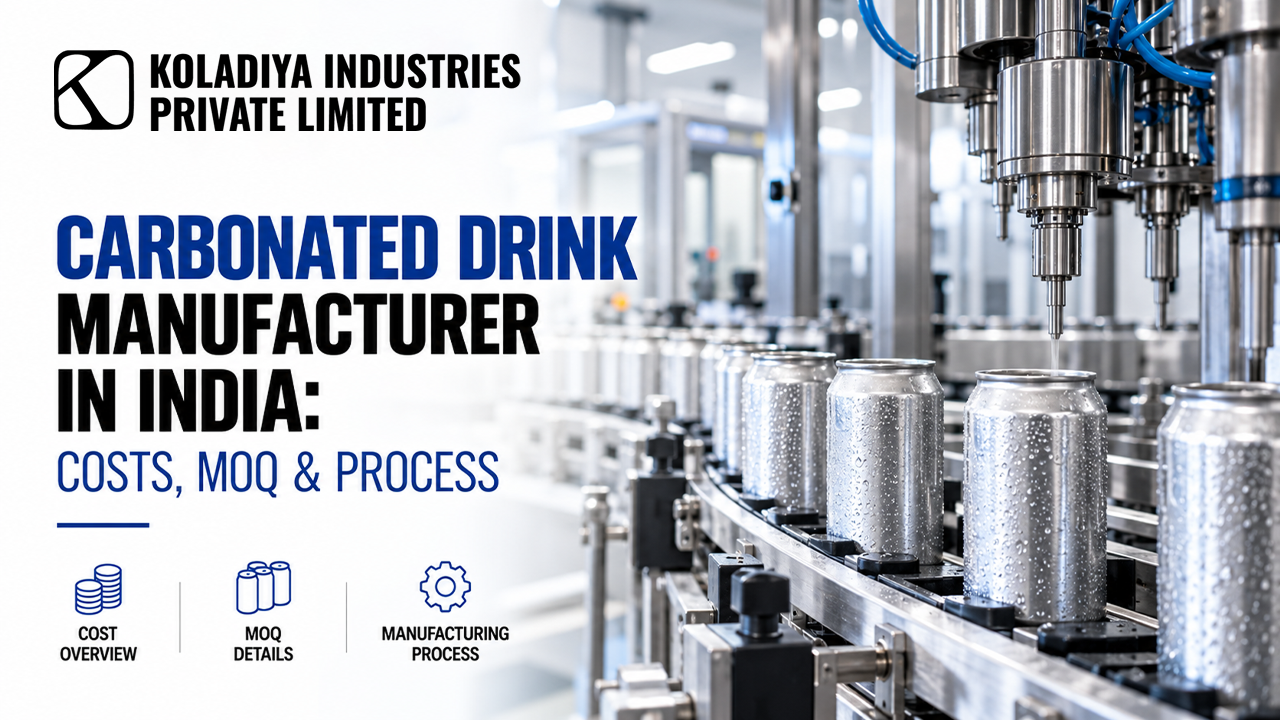
Carbonated Drink manufacturing is the process of producing fizzy drinks through automated equipment that combines raw materials (water, flavoring, sweeteners, preservatives) and injects CO₂ gas under pressure. Modern Indian manufacturers use state-of-the-art filling, capping, and labeling technology to produce beverages at scale.
Key manufacturing capabilities include:
- Water purification and treatment
- Ingredient mixing and formulation
- Carbonation injection systems
- Aseptic and hot-fill bottling lines
- Quality testing and compliance verification
Carbonated Drink Manufacturing Costs in India: What to Budget
Understanding the Cost Breakdown
Per-Unit Production Cost Range: ₹8-₹25 per liter (depending on specifications)
Costs vary based on:
- Bottle type and size (PET plastic vs. glass, 200ml to 2L)
- Carbonation level (different CO₂ concentrations)
- Ingredient quality (natural vs. synthetic flavoring)
- Packaging design (printing complexity, label materials)
- Production volume (economies of scale)
Detailed Cost Components
| Component | Estimated Cost (per liter) |
|---|---|
| Raw water & purification | ₹1-2 |
| Concentrate/flavoring | ₹2-5 |
| Sweetener (sugar/HFCS) | ₹1-3 |
| Bottles & caps | ₹2-6 |
| Labels & packaging | ₹1-3 |
| CO₂ carbonation | ₹0.5-1 |
| Production labor | ₹1-2 |
| Total Production Cost | ₹8.5-₹22 |
Additional Setup Costs
- Factory setup & equipment: ₹25-50 lakhs for mid-size operations
- License & regulatory compliance: ₹2-5 lakhs
- Quality testing infrastructure: ₹5-10 lakhs
- Working capital (first batch): ₹10-20 lakhs
Minimum Order Quantity (MOQ) for Carbonated Beverages in India
Standard MOQ Guidelines
Typical MOQ ranges by manufacturer type:
- Large-scale manufacturers: 50,000-100,000 liters per order
- Mid-size contract manufacturers: 10,000-50,000 liters
- Specialized/premium producers: 5,000-15,000 liters
- Custom/small batch runs: 1,000-5,000 liters (higher per-unit cost)
Factors Affecting Your MOQ
- Production line capacity – Larger equipment requires bigger batches for cost efficiency
- Flavor customization – Standard flavors have lower MOQs; custom formulations increase MOQ
- Packaging specifications – Unique bottles/labels require higher minimum orders
- Timeline requirements – Rush orders may require higher MOQs or premiums
- Existing production schedule – Fitting into production calendars affects flexibility
Negotiating MOQ for Startups
Many Indian manufacturers offer flexibility for:
- First-time orders: Reduced MOQ (5,000-10,000 liters) to build relationships
- Long-term contracts: Lower MOQ with guaranteed repeat orders
- Co-manufacturing opportunities: Sharing production runs with other brands
Carbonated Drink Manufacturing Process: Step-by-Step Overview
Phase 1: Raw Material Selection & Preparation
1: Water Purification
- Ground/municipal water undergoes multi-stage filtration
- Treatment includes carbon filtration, reverse osmosis, UV sterilization
- Microbial testing ensures safety standards (₹50,000-100,000 per testing cycle)
2: Concentrate Development
- Flavor concentrates are mixed with high fructose corn syrup (HFCS) or sugar
- Color additives (caramel, natural extracts) are incorporated
- Taste testing and quality approval at this stage
Phase 2: Formulation & Blending
3: Master Mix Preparation
- Precise ingredient ratios measured using automated systems
- Blending in large tanks (1,000-5,000 liter capacity)
- Consistency testing using refractometers and pH meters
4: Syrup Preparation
- Base syrup created by combining sweetener, water, and concentrate
- Heat treatment applied (60-80°C) for microbial control
- Cooled to a suitable temperature
Phase 3: Carbonation Process
5: CO₂ Injection & Carbonation
- Syrup mixed with carbonated water in specialized chambers
- Pressure maintained at 3.5-4 bar for standard carbonation levels
- Temperature control (4-8°C) for optimal CO₂ retention
- Holding time allows CO₂ absorption (15-30 minutes)
Phase 4: Filling & Packaging
6: Automated Filling
- Carbonated liquid filled into sanitized bottles at high speed (400-800 bottles/minute)
- Counter-pressure filling prevents CO₂ loss
- Precise volume measurement (±5ml tolerance)
7: Capping & Sealing
- Crown caps or screw caps applied instantly after filling
- Torque control ensures proper seal without over-tightening
- Integrity testing verifies cap security
8: Labeling
- Pre-printed or inline labels applied
- Barcode and product information verified
- UV marking for authenticity (optional)
Phase 5: Quality Control & Testing
9: Quality Assurance
- Carbonation level check: Burette method or bomb method analysis
- Microbial testing: Aerobic plate count, coliform testing
- Taste & appearance: Sensory evaluation for consistency
- Shelf-life testing: Accelerated stability tests
- Packaging integrity: Leak testing, drop tests
Phase 6: Storage & Dispatch
10: Warehousing
- Climate-controlled storage (15-25°C, <65% humidity)
- Shelf-life typically 12-18 months
- Expedited shipping options available (3-7 days delivery)
Regulatory Compliance & Certifications Required
Mandatory Certifications in India
- FSSAI License (Food Safety and Standards Authority of India)
- ISO 22000 (Food Safety Management System)
- BIS (Bureau of Indian Standards) certification
- State Health Department approval
- Pollution Control Board clearance (water & waste management)
Compliance Timeline: 2-4 weeks | Cost: ₹1-3 lakhs
International Certifications (for export)
- FSSC 22000 (for international markets)
- Halal certification (for Middle East markets)
- Kosher certification (optional)
- Organic certification (As Needed)
Choosing the Right Carbonated Drink Manufacturer in India
Key Selection Criteria
1. Production Capacity & Flexibility
- Can they handle your MOQ?
- Do they offer scalability as you grow?
- What’s their lead time for rush orders?
2. Quality Standards
- Do they have third-party testing labs?
- What’s their track record on consistency?
- Are they open to surprise audits?
3. Customization Options
- Flavor formulation expertise
- Unique bottle shapes & sizes
- Private label design capabilities
4. Cost Competitiveness
- Compare per-liter costs across manufacturers
- Check for hidden charges (setup, testing, shipping)
- Negotiate volume discounts for repeat orders
5. Technology & Equipment
- State-of-the-art filling lines (>500 bottles/min)
- Modern quality testing infrastructure
- Digital traceability systems
Cost Optimization Strategies for Carbonated Beverage Drink Manufacturers
1. Volume Leverage
- Order 50,000+ liters to reduce per-unit cost by 15-20%
- Lock in favorable rates with annual contracts
2. Ingredient Sourcing
- Work with manufacturers on ingredient procurement
- Bulk purchases of flavoring concentrates reduce costs
- HFCS sourcing directly from suppliers (vs. premixed syrups)
3. Standardized Packaging
- Stick with common bottle sizes (200ml, 500ml, 1L, 2L)
- Avoid custom shapes; increases costs by 20-30%
- White-label packaging reduces printing costs
4. Production Scheduling
- Off-peak seasons are ideal for production planning.
- Slot your order with similar production runs
- Avoid rush fees by planning 4-6 weeks ahead
5. Longer-Term Partnerships
- Commit to 2-3 year contracts for 10-15% discounts
- Reduce testing & setup costs through predictable orders
- Negotiate exclusive territory arrangements
Timeline: From Order to Delivery
| Stage | Duration | Details |
|---|---|---|
| Quotation & Negotiation | 1-3 days | Sample approval, price confirmation |
| Setup & Production Planning | 3-5 days | Equipment preparation, ingredient sourcing |
| Raw Material Procurement | 5-7 days | Concentrate, bottles, labels delivery |
| Production Run | 5-10 days | Actual manufacturing (depends on volume) |
| Quality Testing | 2-3 days | Lab testing & certifications |
| Labeling & Packaging | 2-3 days | Final packaging and case sealing |
| Dispatch | 1-2 days | Warehousing & logistics arrangement |
| Total Timeline | 19-33 days | Standard lead time: 3-4 weeks |
Why Partner With an Indian Carbonated Drink Manufacturer?
Cost Advantage: Indian manufacturers provide competitive production costs for beverage brands.
Expertise: Indian manufacturers have decades of experience in domestic and export markets.
Flexibility: Willingness to customize formulations and packaging for emerging brands
Quality: Modern facilities with ISO certifications and strict quality controls
Scalability: Easy transition from small batches to large-scale production
Start Your Carbonated Drink Brand With Koladiya Industries
Koladiya Industries, based in Surat, Gujarat, is a white-label and OEM/ODM beverage manufacturer that supports brands from concept to shelf, with clear costing, flexible MOQs, and hands-on guidance through formulation, packaging, and production.
Ready for your quote? Share your flavor idea, packaging preference, and expected monthly volume. Our team will send a detailed costing and a recommended launch plan.
👉 [Request a Free Quote] | [Talk to Our Beverage Experts]
FAQ’s
How much does it cost to manufacture carbonated drinks in India?
Cost depends on five main factors: formulation, packaging type (PET, glass, or can), pack size, order volume, and label or carton printing. PET bottles are generally the most economical, while glass and cans suit premium positioning. Ask your manufacturer for a line-item quotation so you can see exactly what you are paying for.
Can I launch my own soda brand with a small budget?
Yes. Start with one or two hero flavors, use stock bottles and standard caps, and choose shrink sleeves or labels instead of printed cans. Run a pilot batch before your first full order. This keeps your upfront investment and inventory risk low while you test the market.
What is the step-by-step process to get carbonated drinks manufactured?
The process follows these stages: share your product brief, develop and approve samples, finalize packaging, prepare compliant label artwork, receive the quotation and sign the agreement, approve a pilot batch, begin commercial production, complete quality testing, and dispatch. Repeat orders are faster because the formula and packaging are already approved.
How long does it take to launch a carbonated drink brand?
With a ready base formula and stock packaging, you can launch within a few weeks. A custom flavor with new label design usually takes about one to two months. Custom bottles, printed cans, or export compliance can take longer, and packaging lead time is the most common cause of delays.
What is the difference between white label and custom (OEM/ODM) formulation?
White label uses a ready, tested formula. It is faster, cheaper, and has a lower MOQ, so it suits quick market testing. Custom OEM/ODM formulation creates a unique recipe for your brand. It costs more upfront but gives stronger differentiation. Many brands start with white label and move to custom as sales grow.
What should I check before choosing a carbonated beverage contract manufacturer?
Verify the following:
- A valid FSSAI license
- Proper water treatment systems
- Batch-wise lab testing and traceability
- Clear MOQ and line-item pricing
- Written clarity on formula and artwork ownership
- Experience with export documentation, if you plan to sell overseas
Request a plant visit or virtual walkthrough before you sign.