Choosing the right sweetener plays an important role in beverage formulation and product development. It directly affects taste, texture, sweetness intensity, mouthfeel, product stability, shelf life, and manufacturing costs. Whether a company develops carbonated soft drinks, fruit-based beverages, functional drinks, or energy drinks, the sweetener must complement the product’s overall formulation. However, many beverage brands struggle to select the right sweetener. Some focus only on sweetness, while others overlook aftertaste, ingredient compatibility, heat stability, solubility, and consumer preferences. Consequently, these mistakes can create formulation challenges, increase production expenses, and delay commercial product launches.
Moreover, energy drink manufacturers face additional challenges because they must balance sweetness with caffeine, acidity, functional ingredients, flavours, and carbonation. Therefore, selecting the right sweetener requires a complete understanding of the beverage formulation and target market. We explore common Beverage Sweetener Selection Mistakes and Solutions, explain how to avoid formulation problems, and highlight important considerations for energy drink manufacturing.
Why Sweetener Selection Matters in Beverage Manufacturing
Sweeteners do more than provide sweetness. They help define a beverage’s flavour profile, mouthfeel, nutritional positioning, and overall consumer experience. For example, a regular carbonated soft drink may require a familiar sugar-based sweetness, whereas a zero-sugar energy drink may need a carefully balanced combination of high-intensity sweeteners. Furthermore, the correct sweetener can support product consistency during manufacturing and storage. However, an unsuitable choice may produce bitterness, lingering sweetness, unusual mouthfeel, or flavour imbalance.
Before selecting any sweetener, beverage manufacturers should evaluate:
- Desired sweetness intensity and flavour profile.
- Sugar content and nutritional positioning.
- Solubility and formulation compatibility.
- Acidity and processing conditions.
- Shelf-life and storage stability.
- Ingredient costs and commercial scalability.
- Target consumer preferences and applicable regulations.
Understanding these factors helps beverage brands develop products that deliver consistent quality.
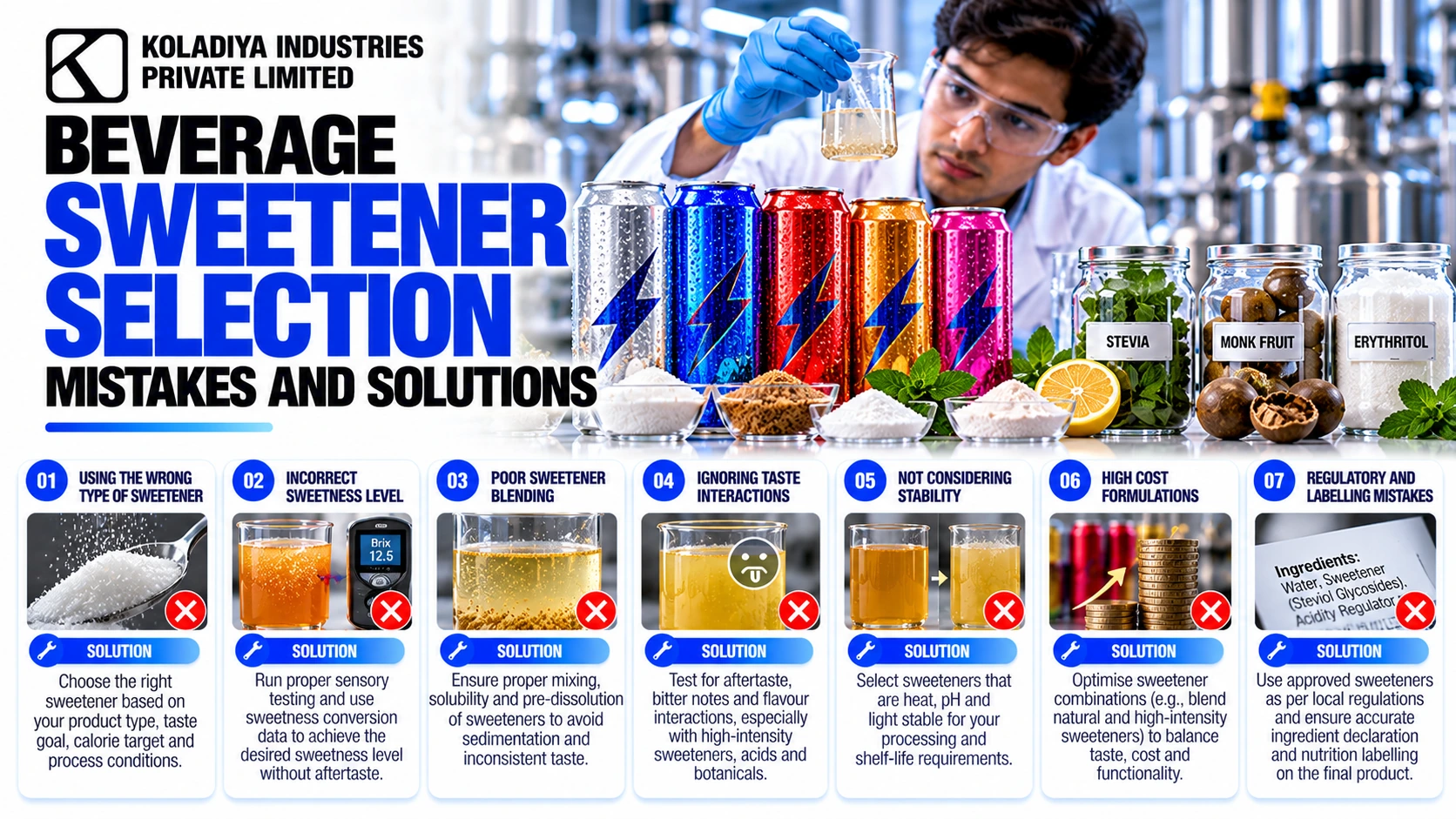
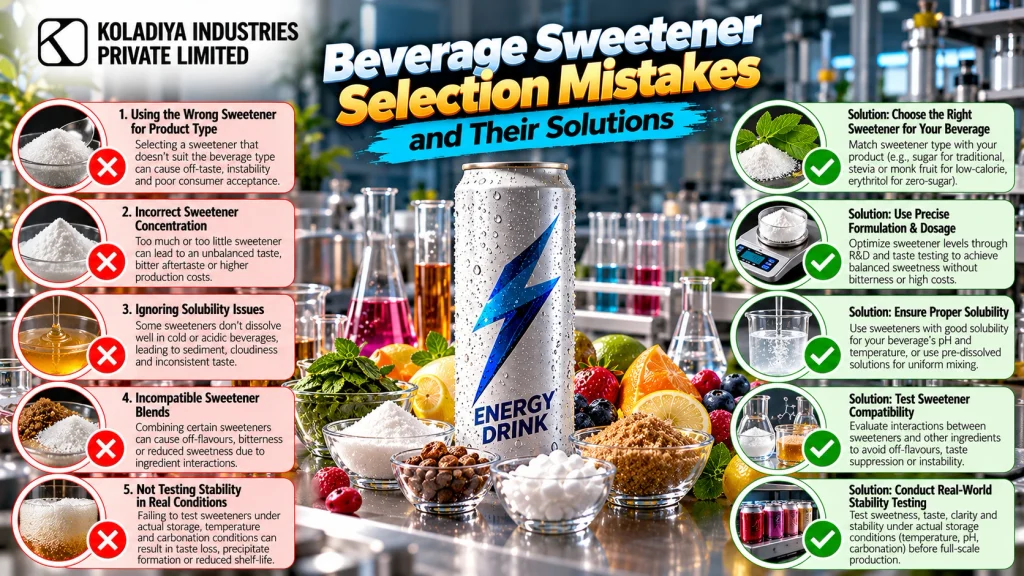
Common Beverage Sweetener Selection Mistakes and Solutions
1. Selecting Sweeteners Only Based on Cost
One of the most common Beverage Sweetener Selection Mistakes involves choosing ingredients primarily because they offer a lower purchase price.
Although cost plays an important role in commercial production, an inexpensive sweetener may not deliver the desired taste or formulation performance.
For instance, a sweetener may provide sufficient sweetness but create a bitter aftertaste or require additional flavour adjustments. As a result, manufacturers may spend more on correcting the formulation.
Solution:
Evaluate sweeteners based on their overall performance rather than purchase price alone. Compare sweetness intensity, dosage requirements, flavour impact, compatibility, and processing performance.
Additionally, conduct small-scale trials before selecting ingredients for commercial production. This approach helps identify the most suitable and cost-effective sweetener.
2. Ignoring Aftertaste and Sweetness Quality
Another major mistake involves focusing on sweetness intensity without evaluating how the sweetener tastes after consumption.
Certain high-intensity sweeteners can produce lingering sweetness, bitterness, or other noticeable flavour characteristics. These effects may become more prominent in energy drinks and strongly flavoured beverages.
For example, a zero-sugar energy drink may initially taste sweet but leave an unpleasant aftertaste. Consequently, consumers may avoid purchasing the product again.
Solution:
Conduct sensory evaluations to assess sweetness onset, intensity, duration, and aftertaste.
Moreover, consider blending compatible sweeteners to create a more balanced flavour profile. Flavour masking and formulation adjustments can also help improve the overall drinking experience.
3. Choosing the Wrong Sweetener for Energy Drinks
Energy drink formulation requires particular attention because manufacturers must balance sweetness with caffeine, acids, flavours, vitamins, and other functional ingredients.
A sweetener that performs well in a fruit beverage may not deliver the same results in an energy drink.
For example, caffeine can contribute bitterness, while certain acidic ingredients can change the overall flavour perception. Consequently, an unsuitable sweetener may fail to balance the beverage’s taste.
Solution:
Select sweeteners specifically for the intended energy drink formulation.
Evaluate how the sweetener interacts with caffeine, acidity regulators, flavour systems, and other functional ingredients. In addition, test different sweetness levels and compatible sweetener blends.
For zero-sugar energy drinks, manufacturers should pay particular attention to sweetness balance and aftertaste. Therefore, sensory testing becomes an essential step before commercial production.
4. Overlooking Sweetener Solubility
Solubility is another important consideration in beverage manufacturing. Some ingredients may dissolve differently depending on temperature, concentration, and the overall formulation.
Poor solubility can create undissolved particles, uneven sweetness, sedimentation, or processing difficulties.
These problems can affect product appearance and consistency, especially in beverages with multiple ingredients.
Solution:
Check the solubility of each sweetener under the intended manufacturing conditions. Evaluate dissolution temperature, mixing requirements, concentration, and processing sequence.
Furthermore, conduct laboratory trials to verify that the sweetener dissolves properly before moving towards larger production batches.
5. Failing to Consider Ingredient Compatibility
Sweeteners do not work independently. They interact with acids, flavours, preservatives, colours, caffeine, vitamins, and other beverage ingredients.
Ignoring these interactions can create unexpected changes in taste, colour, aroma, or product stability.
For instance, an energy drink containing caffeine, citric acid, vitamins, and fruit flavours may require a different sweetness system from a simple carbonated beverage.
Solution:
Evaluate the complete beverage formulation rather than testing sweeteners separately.
Conduct ingredient compatibility trials and assess the finished product under different storage conditions. Additionally, check for unwanted flavour changes, precipitation, and other physical or chemical stability issues.
6. Using the Wrong Sweetener Blend
Relying on a single sweetener does not always provide the ideal taste, particularly in reduced-sugar and zero-sugar beverages.
Different sweeteners offer different sweetness profiles, intensity levels, and functional characteristics. Therefore, a single ingredient may not reproduce the desired taste of traditional sugar.
Solution:
Explore suitable sweetener combinations based on the product category.
For example, stevia, sucralose, and acesulfame potassium may offer different formulation options, depending on the target product and applicable regulatory permissions.
However, manufacturers should not combine ingredients randomly. Instead, conduct controlled sensory trials to determine the appropriate combination and concentration.
7. Ignoring Heat and Processing Stability
Some beverage manufacturers focus on initial taste but overlook how processing conditions affect sweetener performance.
Heat treatment, mixing, storage temperature, and product acidity can influence the stability of certain sweeteners and the overall formulation.
Furthermore, processing-related changes may affect sweetness perception and flavour balance.
Solution:
Select sweeteners according to the beverage’s manufacturing process.
Evaluate ingredient performance during applicable heat-treatment, cooling, carbonation, and storage stages. Run stability trials under realistic processing and storage conditions to identify potential formulation problems before commercial production.
8. Overlooking Sweetener Regulations and Labelling Requirements
Sweetener selection also involves regulatory responsibilities. Manufacturers must ensure that every selected sweetener complies with the requirements applicable to the intended beverage category and market.
Using an unsuitable ingredient, exceeding permitted limits, or providing incorrect labelling information can create compliance challenges.
Solution:
Review applicable food safety regulations, permitted sweeteners, usage limits, ingredient declarations, and labelling requirements before finalising the formulation.
For beverage brands in India, manufacturers should check the relevant FSSAI requirements and obtain appropriate regulatory guidance.
How to Choose the Right Sweetener for Energy Drink Manufacturing
Energy drinks require a carefully designed sweetness profile because their formulations often combine several functional and flavour ingredients.
Furthermore, consumer expectations differ across traditional energy drinks, low-sugar beverages, and zero-sugar products.
Consider the following factors when selecting sweeteners for energy drink manufacturing:
1. Match the sweetness to the product concept: Decide whether the beverage will contain regular sugar, reduced sugar, or no added sugar. This decision influences the choice of sweetening ingredients.
2. Balance caffeine bitterness: Evaluate how the sweetener interacts with caffeine and other bitter-tasting ingredients. The finished beverage should provide a balanced flavour.
3. Maintain flavour consistency: Check sweetness compatibility with citrus, berry, tropical, and other energy drink flavour profiles.
4. Evaluate carbonation: For carbonated energy drinks, test the sweetness profile in the final carbonated formulation rather than relying only on still beverage samples.
5. Conduct shelf-life testing: Assess taste, sweetness, appearance, and overall formulation stability during the intended storage period.
6. Plan for commercial production: Ensure that the selected sweetener performs consistently at both pilot and commercial production scales.
Ultimately, a successful energy drink formulation requires a balance between taste, functionality, stability, regulatory compliance, and manufacturing costs.
Best Practices to Prevent Beverage Sweetener Selection Mistakes
Beverage manufacturers can reduce formulation problems by following a structured product development process.
Here are some important practices:
- Define the beverage’s sweetness requirements before ingredient selection.
- Understand the differences between natural, artificial, nutritive, and non-nutritive sweeteners.
- Conduct laboratory trials to compare different sweetener options.
- Evaluate sweetness intensity, aftertaste, and mouthfeel through sensory testing.
- Check compatibility with acids, flavours, preservatives, and functional ingredients.
- Test the finished beverage under realistic manufacturing conditions.
- Conduct shelf-life and stability assessments.
- Review ingredient costs, regulatory requirements, and commercial production feasibility.
Moreover, manufacturers should maintain proper formulation records. This makes it easier to reproduce successful batches and identify the reasons behind unexpected quality changes.
How Koladiya Industries Supports Beverage Formulation and Manufacturing
Selecting the right sweetener is only one part of successful beverage development. Beverage brands also need the right formulation expertise, ingredient evaluation, production planning, and manufacturing support to move from an initial concept to a commercially viable product. Koladiya Industries supports beverage brands through beverage formulation, in-house R&D capabilities, private-label manufacturing, and third-party beverage manufacturing solutions.
With a focus on product development and commercial production, Koladiya Industries works across beverage categories such as:
- Energy drinks.
- Carbonated soft drinks.
- Sparkling water.
- Tonic water.
- Other customised beverage concepts.
For energy drink startups and established beverage businesses, formulation development requires careful consideration of sweeteners, caffeine, acidity, flavour systems, carbonation, and product stability. Additionally, Koladiya Industries offers support in customized beverage formulation and flavour development. Its manufacturing capabilities also include aluminium slim can packaging, including 250 ml formats. By considering ingredient selection, product quality, and manufacturing requirements together, beverage brands can create a stronger foundation for commercial growth.
Conclusion
Selecting the right sweetener is essential for developing high-quality beverages with balanced taste, consistent sweetness, and reliable formulation performance. However, mistakes involving ingredient costs, aftertaste, solubility, compatibility, processing stability, and regulatory requirements can create unnecessary production challenges. Therefore, beverage manufacturers should evaluate sweeteners through proper formulation trials, sensory assessments, ingredient compatibility checks, and shelf-life testing.
For energy drink brands, these considerations become even more important because sweetness must complement caffeine, acidity, flavours, and other functional ingredients. With the right formulation strategy and manufacturing partner, beverage businesses can reduce development challenges and move towards successful commercial production.
Looking for Beverage Formulation and Manufacturing Support?
Are you planning to launch an energy drink, carbonated soft drink, sparkling water, or another customized beverage? Connect with Koladiya Industries for beverage formulation, R&D, flavour development, private-label manufacturing, and third-party beverage manufacturing support. Build your beverage concept with the right formulation approach and take the next step towards commercial production with Koladiya Industries.