The Indian beverage industry continues to create opportunities for startups, established brands, and entrepreneurs who want to introduce innovative drinks to the market. From energy drinks and functional beverages to sparkling water, iced tea, and low-sugar refreshments, consumers now have a wide range of options. Consequently, beverage brands need more than an attractive concept to succeed. They must develop the right formulation, select suitable ingredients, maintain consistent quality, and prepare for commercial production. This is where Beverage R&D Services play an important role. Beverage research and development helps businesses transform an initial product idea into a market-ready drink through formulation, flavour development, prototype testing, shelf-life evaluation, and manufacturing preparation.
In India, beverage R&D also helps startups understand production requirements before investing in large-scale manufacturing. With support from an experienced beverage manufacturing partner such as Koladiya Industries, brands can approach product development with a structured process, from the first concept to commercial production.
What Are Beverage R&D Services?
Beverage R&D Services involve the research, formulation, testing, and technical development required to create a new beverage or improve an existing product. The process combines ingredient knowledge, flavour science, product testing, processing requirements, and manufacturing considerations.
For example, a startup planning to launch a zero-sugar energy drink must consider more than taste. The team needs to evaluate sweetener selection, caffeine levels, acidity, flavour balance, ingredient compatibility, packaging requirements, and product stability.
Similarly, a business developing a fruit-based sparkling beverage must determine how fruit flavours, acidity, carbonation, and processing conditions work together.
Therefore, beverage R&D provides a practical foundation for product development. It helps brands identify potential formulation challenges early, refine product characteristics, and prepare for a smoother transition to commercial manufacturing.
Why Beverage R&D Services Matter for New Brands
Launching a beverage without sufficient development can lead to inconsistent taste, formulation issues, unexpected production costs, and shelf-life challenges. In contrast, a structured R&D process helps businesses make informed decisions before committing to larger production volumes.
Furthermore, product development allows brands to define their target audience, identify a unique selling proposition, compare ingredient options, and establish realistic manufacturing requirements. By addressing these factors early, businesses can reduce avoidable trial-and-error costs and build a stronger foundation for future growth.
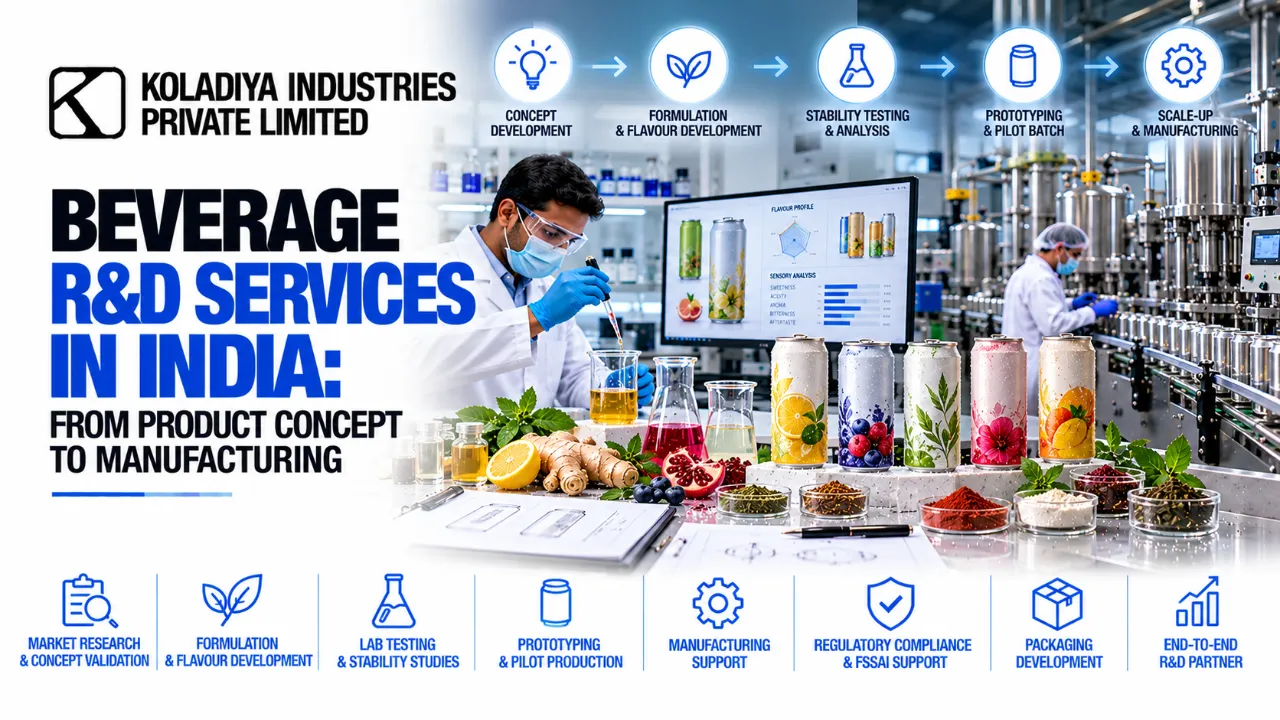
Key Stages of Beverage R&D Services in India
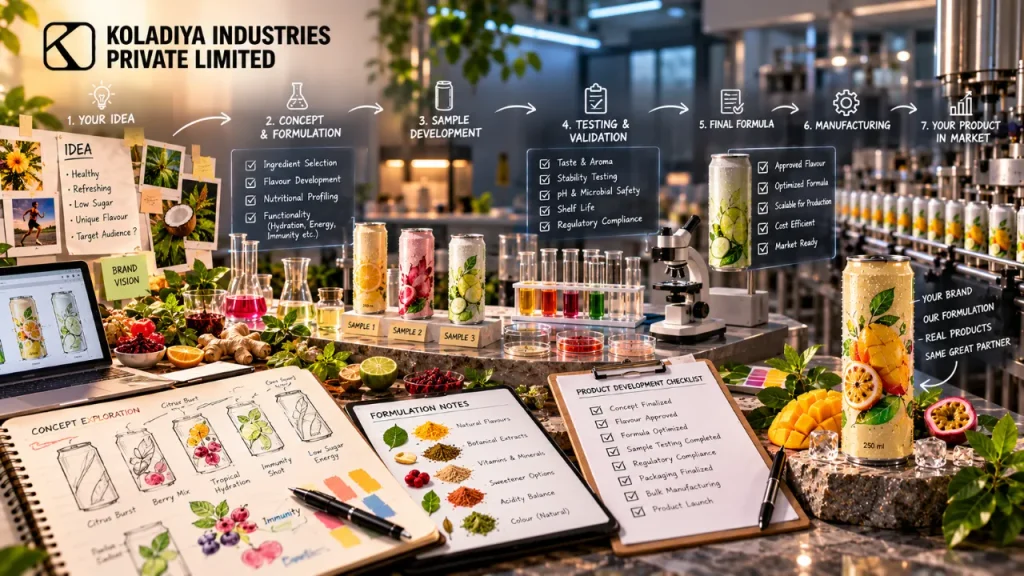
Professional Beverage R&D Services typically follow a series of interconnected stages. Although the exact process depends on the product, each stage helps move the concept closer to commercial production.
1. Product Concept Development
Every successful beverage starts with a clear concept. During this stage, the brand defines the product category, target audience, intended benefits, flavour profile, price positioning, and preferred packaging format.
For instance, one startup might plan to launch an affordable energy drink for everyday consumption, while another may target premium consumers with a zero-sugar energy beverage.
The development team then evaluates the concept against customer expectations, ingredient feasibility, production requirements, and commercial goals.
As a result, the brand receives a clearer product brief that guides the remaining development process.
2. Beverage Formulation and Ingredient Selection
Formulation establishes the beverage’s core characteristics, including taste, sweetness, acidity, colour, aroma, mouthfeel, and overall stability.
Depending on the product, the formulation may include water, fruit ingredients, flavours, sweeteners, functional ingredients, acids, preservatives, vitamins, minerals, or carbonation.
However, every ingredient must serve a suitable purpose. The R&D team considers compatibility, dosage, processing conditions, taste impact, and applicable food regulations before finalising the formula.
For example, a sugar-free beverage may require several rounds of sweetener trials to achieve a balanced taste without an undesirable aftertaste.
Consequently, careful ingredient selection helps brands develop a product that meets both consumer expectations and manufacturing requirements.
3. Flavour Development and Prototype Testing
Flavour strongly influences consumer acceptance. Therefore, R&D teams create and compare prototypes to refine the beverage’s sensory characteristics.
During this stage, developers may test different flavour combinations, sweetness levels, acidity, and ingredient proportions. They then evaluate aroma, flavour intensity, mouthfeel, aftertaste, and overall drinking experience.
For instance, an energy drink brand may explore citrus, tropical fruit, berry, or other flavour profiles. The team can compare these options to identify a suitable direction for the target market.
Moreover, prototype testing allows the brand to collect feedback and make adjustments before proceeding to a larger batch.
4. Stability and Shelf-Life Evaluation
A beverage must maintain its intended quality throughout its expected shelf life. However, ingredient interactions, temperature changes, light exposure, oxygen, and processing conditions may affect product stability.
Shelf-life evaluation helps identify changes in taste, colour, aroma, appearance, and other relevant quality characteristics. Depending on the formulation, the development team may assess pH, microbial quality, ingredient stability, carbonation retention, and packaging compatibility.
Brands should base shelf-life claims on appropriate testing and supporting evidence rather than assumptions.
In addition, developers must consider suitable storage conditions and packaging materials. Addressing these requirements early helps businesses prepare a more reliable product for distribution and retail.
5. Pilot Batch Development
After the team finalizes a promising prototype, it can move to pilot batch development. A pilot batch helps evaluate how the formulation performs beyond small laboratory trials.
During this stage, the team examines mixing procedures, ingredient handling, processing parameters, filling requirements, and quality consistency. It can also identify issues that may emerge when equipment, batch sizes, and production conditions change.
Therefore, pilot production provides valuable information before commercial manufacturing begins.
6. Commercial Manufacturing Preparation
The final development stage prepares the beverage for routine production. The team reviews the approved formula, ingredient specifications, quality checks, processing requirements, packaging format, and batch documentation.
Additionally, the manufacturer evaluates production capacity, equipment suitability, operational efficiency, and quality-control procedures.
This coordinated approach helps reduce the gap between product development and commercial manufacturing.
Beverage R&D Services for Energy Drinks
Energy drinks offer beverage startups an opportunity to develop products around flavour, convenience, lifestyle positioning, and functional ingredients. Nevertheless, the category requires careful formulation because ingredient levels, taste, acidity, and regulatory requirements can influence product quality and suitability. Beverage R&D Services help energy drink brands develop products that align with their target audience and manufacturing objectives.
Developing Energy Drink Formulations
An energy drink formulation may include caffeine, sweeteners, flavoring systems, acids, vitamins, and other permitted ingredients, depending on the product concept and applicable regulations.
The R&D team evaluates each ingredient for its intended function, compatibility, taste impact, and permitted use. It also considers the product’s overall composition rather than focusing on individual ingredients in isolation.
For example, a conventional energy drink may use a sweetness profile that differs from a zero-sugar version. Developers may need to adjust flavour intensity and acidity to maintain a balanced sensory experience.
Similarly, brands exploring functional energy beverages should define their intended product positioning and verify that the proposed formulation supports appropriate claims.
Zero-Sugar and Flavoured Energy Drink Development
Zero-sugar energy drinks require particular attention to taste balance. Removing sugar can change sweetness, body, flavour perception, and aftertaste. Therefore, the development team may compare different sweetener systems and flavour combinations to achieve the desired drinking experience.
Meanwhile, flavour variety can help brands establish a distinctive identity. Citrus, berry, tropical fruit, and other flavour directions can support different product concepts, provided that the final formulation performs well during testing and manufacturing.
Energy Drink Packaging and Production Readiness
Packaging also plays an important role in energy drink development. Aluminium cans, for example, offer a convenient format for single-serve beverages and can support a modern brand presentation.
However, the formulation, packaging material, can compatibility, filling process, and closure integrity must work together. The manufacturing team should assess these factors before launching commercial production.
By combining formulation development with manufacturing planning, brands can prepare energy drinks for more consistent production and distribution.
How to Choose a Beverage R&D Partner in India
Selecting the right development partner can influence the product’s quality, development timeline, and manufacturing readiness. Therefore, brands should assess more than the availability of formulation support.
Consider the following factors when evaluating a beverage R&D partner:
- Formulation expertise: Check whether the partner understands your intended beverage category and ingredient requirements.
- Flavour development: Look for a structured method to create, compare, and refine prototypes.
- Testing and quality procedures: Ask how the team evaluates product stability, quality, and shelf-life requirements.
- Manufacturing capabilities: Confirm that the partner can connect product development with suitable production processes.
- Packaging knowledge: Evaluate experience with relevant formats, including aluminium cans, bottles, and other suitable containers.
- Regulatory awareness: Ensure the development process considers applicable Indian food regulations, ingredient permissions, and labelling requirements.
- Commercial planning: Discuss production feasibility, anticipated costs, batch requirements, and the transition from pilot batches to commercial production.
Ultimately, a suitable partner should understand both the product concept and the practical requirements of manufacturing it consistently.
How Koladiya Industries Supports Beverage Product Development
Koladiya Industries supports beverage brands looking for a manufacturing partner for product development and commercial production. Its beverage-focused capabilities include formulation and R&D support, flavour development, private-label manufacturing, and third-party beverage manufacturing.
For startups and established businesses, this combination can help connect the initial product concept with practical manufacturing considerations.
Brands exploring energy drinks, carbonated soft drinks, sparkling water, or tonic water can discuss their product requirements, preferred flavours, packaging options, and intended market positioning during the development process.
Furthermore, early communication about the target price, ingredients, packaging format, and anticipated production volumes can help the team assess the project more effectively.
The exact development process, testing scope, production feasibility, and commercial requirements will depend on the beverage concept. Consequently, brands should discuss these factors with the R&D and manufacturing teams before finalising their product specifications.
Conclusion: Build Your Beverage Brand with the Right R&D Approach
Developing a successful beverage requires more than a promising idea. Brands must combine thoughtful formulation, flavour development, prototype testing, shelf-life evaluation, packaging assessment, and manufacturing planning to prepare a product for the market.
Beverage R&D Services help businesses move through these stages systematically. For energy drink startups, in particular, a structured development process can support flavour differentiation, zero-sugar product exploration, ingredient evaluation, and commercial production readiness.
By working with an experienced beverage manufacturing partner, brands can make better-informed development decisions and prepare for the next stage of growth.
Start Your Beverage Development Journey with Koladiya Industries
Planning to launch an energy drink, functional beverage, sparkling water, or another innovative drink in India? Connect with Koladiya Industries to discuss your beverage concept, formulation and R&D requirements, flavour development, packaging preferences, and manufacturing goals. Take the next step towards developing your beverage product and preparing it for commercial production.
FAQ’s:
Why are beverage R&D services important for startups in India?
Beverage R&D services help startups refine product concepts, improve flavour profiles, assess production feasibility, and prepare for commercial manufacturing.
What types of beverages can be developed through beverage R&D?
Beverage R&D can support energy drinks, carbonated soft drinks, sparkling water, tonic water, functional beverages, hydration drinks, iced tea, and other ready-to-drink products.
How does the beverage product development process work?
The process typically includes concept development, ingredient selection, formulation, prototype preparation, sensory evaluation, stability testing, and commercial production planning.
Can beverage R&D services help develop custom energy drinks?
Yes. Beverage R&D teams can help develop energy drink formulations with tailored flavour profiles, sweetness levels, carbonation, and ingredient combinations, subject to applicable regulatory requirements.
How long does beverage formulation and development take?
The timeline depends on formulation complexity, ingredient availability, testing requirements, and product stability. Simple projects may progress faster, while specialised beverages may require additional development and validation.
Does Koladiya Industries provide beverage R&D and contract manufacturing support?
Koladiya Industries supports beverage brands with product development, formulation, flavour development, and manufacturing solutions. Businesses can discuss their beverage concepts, target market, packaging preferences, and production requirements to explore suitable development options.