Launching a new beverage requires more than an interesting flavour or attractive packaging. Brands must also ensure that their product meets quality expectations, delivers a consistent taste, and performs well during manufacturing. Therefore, beverage pilot batch development plays an important role in turning a beverage concept into a product that a company can prepare for commercial production. A pilot batch allows beverage brands to test a small quantity of a drink before investing in large-scale manufacturing. During this stage, product developers can evaluate the formulation, adjust ingredients, review processing requirements, and identify potential production challenges. As a result, businesses can make informed decisions before they launch their products in the market.
For startups, established beverage companies, and businesses planning private-label or contract manufacturing, a well-planned pilot batch can help reduce uncertainty and improve product readiness. This guide explains the beverage pilot batch development process, its major benefits, essential steps, and important considerations for successful production.
What Is Beverage Pilot Batch Development?
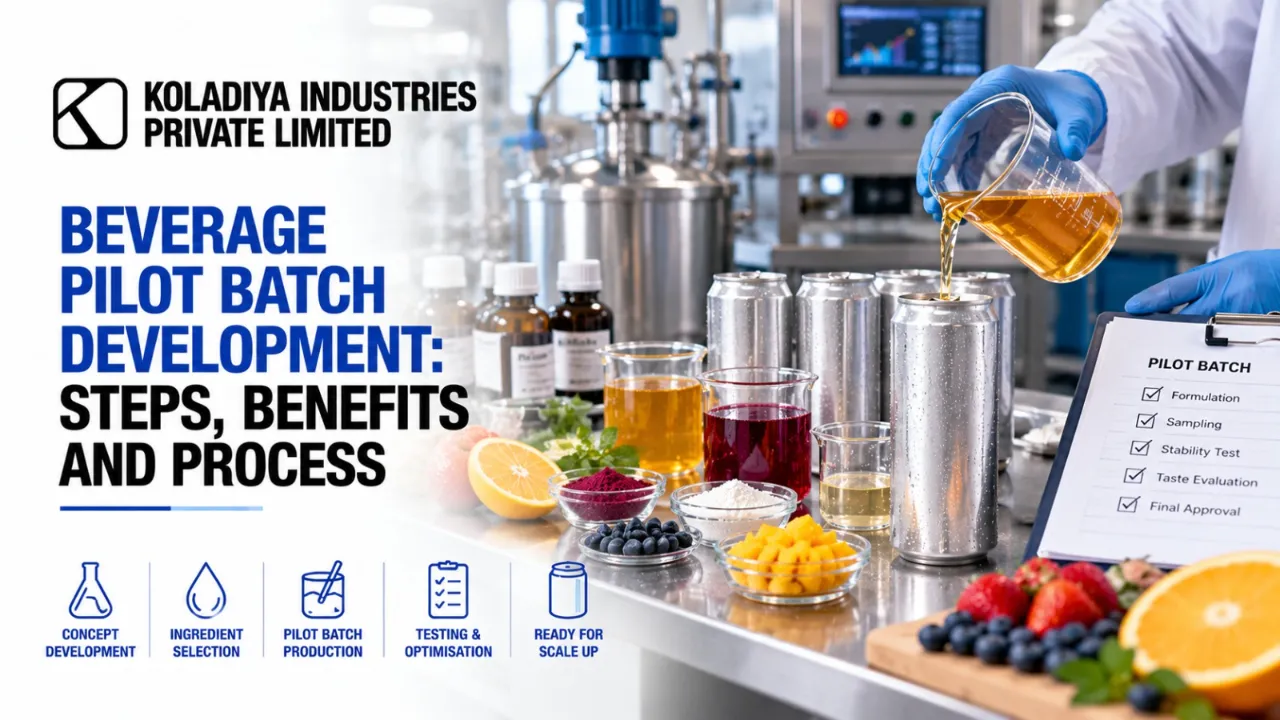
Beverage pilot batch development involves producing a small trial quantity of a drink to evaluate its formulation, taste, quality, and manufacturing requirements. It bridges the gap between initial product development and full-scale commercial production. During this process, the development team prepares a trial batch using selected ingredients, a defined recipe, and suitable processing methods. The team then evaluates the drink against the product’s intended specifications.
For example, a startup that wants to introduce flavoured water, an energy drink, a protein beverage, or a hydration drink can use a pilot batch to assess its concept before moving to a larger production run. Furthermore, pilot batch development helps brands understand how their beverage behaves during processing, filling, packaging, and storage. These insights allow businesses to refine their products and create a clearer plan for commercial manufacturing.
Why Is Pilot Batch Development Important?
A beverage formula may perform well during an initial kitchen or laboratory test. However, commercial production introduces additional factors, including mixing conditions, processing temperatures, filling equipment, ingredient compatibility, and packaging requirements.
A pilot batch helps businesses evaluate these factors before scaling up.
For instance, a drink may have the intended flavour during a small formulation test but develop an unexpected taste after processing. Similarly, certain ingredients may affect colour, clarity, texture, or stability over time. By identifying these issues early, brands can make adjustments before committing to larger production volumes.
Moreover, pilot development gives beverage manufacturers and brand owners a practical opportunity to review product specifications, estimate production requirements, and prepare for a smoother manufacturing transition.
Step-by-Step Beverage Pilot Batch Development Process
Step 1: Define the Beverage Concept
The first step involves defining the product idea and its intended market. A brand should identify the beverage category, target customers, preferred flavour profile, and main product requirements.
For example, a company planning a functional beverage may focus on taste, ingredient compatibility, and its intended nutritional profile. In contrast, a flavoured water brand may prioritise refreshment, flavour balance, clarity, and packaging convenience.
At this stage, businesses should also outline their expected price range, packaging format, and commercial goals. Consequently, the development team can use these details to guide formulation and production decisions.
Step 2: Select and Evaluate Ingredients
Next, the development team identifies the ingredients needed to create the desired beverage. Depending on the product, these ingredients may include water, fruit concentrates, flavours, sweeteners, acids, colours, functional ingredients, or other approved components.
Each ingredient can influence the drink’s flavour, appearance, texture, processing behaviour, and stability. Therefore, the team should evaluate ingredient compatibility before finalising the formulation.
In addition, businesses should review ingredient quality, supplier consistency, regulatory requirements, and any relevant allergen or labelling considerations. Careful ingredient selection creates a stronger foundation for product development.
Step 3: Develop the Initial Formulation
Once the team selects the ingredients, it prepares the initial beverage formulation. This recipe defines the ingredients, their proportions, and the key specifications that the finished drink should meet.
The team may prepare several small formulation trials to compare different flavour profiles, sweetness levels, acidity, or ingredient combinations. It can then evaluate which version aligns most closely with the product concept.
However, taste alone should not determine the final formula. The team should also consider ingredient cost, manufacturing feasibility, product consistency, and applicable food safety requirements.
As the formulation develops, the team records each adjustment. These records help maintain consistency and provide a useful reference for later trials.
Step 4: Produce the Pilot Batch
After refining the initial recipe, the team prepares a pilot batch under controlled conditions. The batch size and equipment depend on the beverage, the development objectives, and the manufacturer’s available facilities.
During production, the team follows the planned ingredient quantities, mixing sequence, and suitable processing parameters. It also monitors important variables to understand how the formula performs beyond the initial laboratory stage.
For example, mixing speed, temperature, ingredient addition order, and processing time may influence the final product. Therefore, accurate documentation helps the team identify the factors that contribute to a successful batch.
Step 5: Conduct Quality and Sensory Evaluation
After preparing the pilot batch, the team evaluates its key quality characteristics. These checks may include taste, aroma, colour, appearance, texture, pH, and other relevant product specifications.
The team also conducts sensory evaluations to determine whether the beverage meets the intended flavour profile. Depending on the product, additional testing may assess microbiological quality, physical stability, nutritional composition, or other safety and quality requirements.
Importantly, the team should define acceptance criteria before evaluating the results. This approach helps it compare trial batches objectively and decide whether the product needs further development.
Suitable testing depends on the beverage type, ingredients, processing method, packaging, and applicable regulations. A pilot batch should not replace the necessary safety assessments or product validation for commercial release.
Step 6: Refine the Formulation
The evaluation stage may reveal opportunities to improve the beverage. For instance, the team might need to adjust sweetness, balance acidity, improve flavour intensity, or address ingredient compatibility.
The team then updates the formulation and prepares another trial when necessary. This process continues until the beverage meets its defined development targets.
Although repeated trials may require additional time and resources, they help businesses identify problems before commercial production. Furthermore, clear records of each change make it easier to reproduce the preferred formulation.
Step 7: Evaluate Packaging Compatibility
Packaging plays an important role in the beverage’s quality, convenience, and market presentation. Therefore, brands should consider packaging requirements during pilot development rather than waiting until the final production stage.
Depending on the product, packaging options may include cans, PET bottles, glass bottles, or other suitable formats. The team should assess the compatibility of the beverage with the selected packaging and filling process.
For example, carbonation, acidity, light sensitivity, and processing requirements may influence packaging decisions. In addition, businesses should review filling performance, closure integrity, label information, and storage conditions.
The final packaging choice should support product safety, quality retention, regulatory compliance, and the intended brand positioning.
Step 8: Assess Stability and Prepare for Scale-Up
Before moving to commercial manufacturing, the development team should review the beverage’s stability and production readiness. Appropriate stability studies help determine how the product’s quality changes under defined storage conditions.
The team should select testing methods and study durations according to the beverage category, formulation, processing method, packaging, and applicable requirements. It should not assign a commercial shelf life based only on initial sensory results.
Next, the team reviews the pilot batch records, ingredient specifications, processing parameters, quality results, and packaging requirements. This information helps the manufacturer plan the transition to a larger production run.
Although a pilot batch provides valuable insights, commercial equipment can behave differently from pilot-scale equipment. Therefore, the team may need further validation or a larger trial before full-scale production.
Key Benefits of Beverage Pilot Batch Development
1. Reduces Development Risks
Pilot batches help brands identify formulation and production issues before committing to a large manufacturing run. Consequently, businesses can make adjustments earlier and avoid some costly errors.
2. Improves Product Quality
Testing and sensory evaluation help teams refine the beverage’s taste, appearance, and other important characteristics. As a result, the final product has a clearer set of quality targets.
3. Supports Better Cost Planning
A pilot batch gives businesses a more practical understanding of ingredient usage, processing needs, packaging choices, and potential production challenges. These findings can support more realistic cost estimates, although final manufacturing costs depend on commercial volumes and other project details.
4. Helps Validate Market Preferences
Brands can use suitable product samples for structured consumer feedback or internal evaluations. This feedback may reveal which flavour profile or product characteristics appeal most to the intended audience.
However, a small sample group does not guarantee wider market success. Businesses should interpret feedback carefully and combine it with broader market research.
5. Supports a Smoother Production Scale-Up
Detailed pilot batch records give manufacturers a starting point for commercial production planning. Moreover, these records help teams identify which process conditions require additional validation when production volumes increase.
6. Encourages Product Innovation
Pilot development allows businesses to explore new flavour combinations, beverage concepts, and formulation options. Therefore, brands can assess different ideas before selecting a product for a larger investment.
Common Challenges During Pilot Batch Development
Despite its advantages, pilot batch development can present several challenges. Ingredient interactions may affect taste or stability, while processing conditions can change the drink’s appearance or performance. In addition, a formulation that works at a small scale may require adjustments when the manufacturer uses larger equipment.
Packaging compatibility, ingredient availability, quality testing, and production costs can also influence the development timeline.
To manage these challenges, businesses should establish clear product specifications, document every formulation change, choose suitable testing methods, and communicate regularly with their manufacturing partner. Most importantly, they should allow enough time for necessary trials instead of rushing directly into commercial production.
How to Choose the Right Beverage Pilot Batch Development Partner
Choosing a suitable development or manufacturing partner can help streamline the product development process. Before making a decision, beverage brands should evaluate the partner’s experience with the relevant beverage category and its approach to quality control.
Businesses should also discuss formulation support, ingredient sourcing, pilot batch capacity, packaging options, testing requirements, minimum order quantities, and scale-up planning. In addition, they should clarify project costs, timelines, documentation requirements, and each party’s responsibilities.
A reliable partner should communicate clearly about what its facilities and services can support. It should also explain which tests, validations, or external services the project may require before commercial release.
For startups, transparent communication is particularly important because it helps them understand the development process and plan their investment more effectively.
Beverage Pilot Batch Development with Koladiya Industries
For beverage entrepreneurs and growing brands, pilot batch development can provide a structured path from product idea to manufacturing preparation. A clear formulation, documented trials, appropriate quality checks, and realistic scale-up planning all contribute to better decisions.
Koladiya Industries can be contacted to discuss beverage manufacturing requirements, product concepts, formulation goals, packaging preferences, and the next steps involved in preparing a beverage for production. Brands should share their proposed beverage category, target market, expected packaging format, and approximate volume requirements to help establish the scope of the project.
By defining these requirements early, businesses can evaluate the development process more effectively and determine the support their product needs.
Conclusion
Beverage pilot batch development is an important stage in preparing a new drink for commercial manufacturing. It allows brands to evaluate formulations, review product quality, assess packaging compatibility, and identify potential production challenges before scaling up.
From defining the beverage concept to refining the formula and reviewing stability, every step contributes useful information. Furthermore, careful documentation and communication help businesses make informed decisions throughout the process.
Whether a company plans to launch flavoured water, an energy drink, a hydration beverage, or another drink category, a structured pilot batch process can support better product development and production planning. With the right preparation and a suitable manufacturing partner, brands can move towards commercial production with clearer specifications and a more realistic understanding of their requirements.
Planning a new beverage product? Contact Koladiya Industries to discuss your beverage concept, development requirements, and manufacturing goals.
Frequently Asked Questions
What are the main steps in beverage pilot batch development?
The main steps include concept planning, ingredient selection, formulation development, pilot production, quality testing, recipe refinement, packaging evaluation, and scale-up preparation.
Why is pilot batch testing important for beverage startups?
Pilot batch testing helps startups identify formulation issues, evaluate product quality, estimate production requirements, and reduce potential risks before investing in large-scale manufacturing.
How long does beverage pilot batch development take?
The timeline depends on formulation complexity, ingredient availability, testing requirements, packaging selection, and the number of trials needed to achieve the desired product specifications.
What types of beverages can undergo pilot batch development?
Pilot batch development can support products such as energy drinks, flavoured water, hydration drinks, protein beverages, functional drinks, and other beverage categories.
How does pilot batch development help reduce manufacturing costs?
It helps identify ingredient, formulation, and processing issues early, allowing brands to make improvements before larger production runs. Actual cost savings depend on the project.
How can I start beverage pilot batch development with Koladiya Industries?
Start by sharing your beverage concept, preferred ingredients and flavours, packaging requirements, target market, and estimated production volume with Koladiya Industries to discuss your project requirements.