Choosing the right beverage manufacturing partner involves more than comparing the quoted price per bottle or can. A manufacturing quotation determines how much a beverage brand invests in product development, ingredients, packaging, production, quality testing, and commercial delivery. However, many startups and growing beverage businesses focus only on the final quoted amount. As a result, they overlook additional expenses that can significantly increase their launch budget. A detailed Beverage Manufacturing Quotation helps businesses understand production costs, identify potential financial risks, and plan their investment more effectively. This becomes particularly important for energy drinks, carbonated soft drinks, sparkling water, tonic water, and other ready-to-drink beverages.
Moreover, unclear pricing, incomplete specifications, unrealistic production estimates, and overlooked development charges can create unexpected expenses. Therefore, beverage brands should understand common quotation mistakes before finalizing a manufacturing agreement. This article explores the major beverage manufacturing quotation mistakes, hidden costs, and practical solutions while explaining how Koladiya Industries supports beverage brands through product development and commercial manufacturing.
Why a Detailed Beverage Manufacturing Quotation Matters
A beverage manufacturing quotation gives brands a financial overview of the complete production process. It helps business owners understand the estimated cost of transforming a product concept into a commercially manufactured beverage.
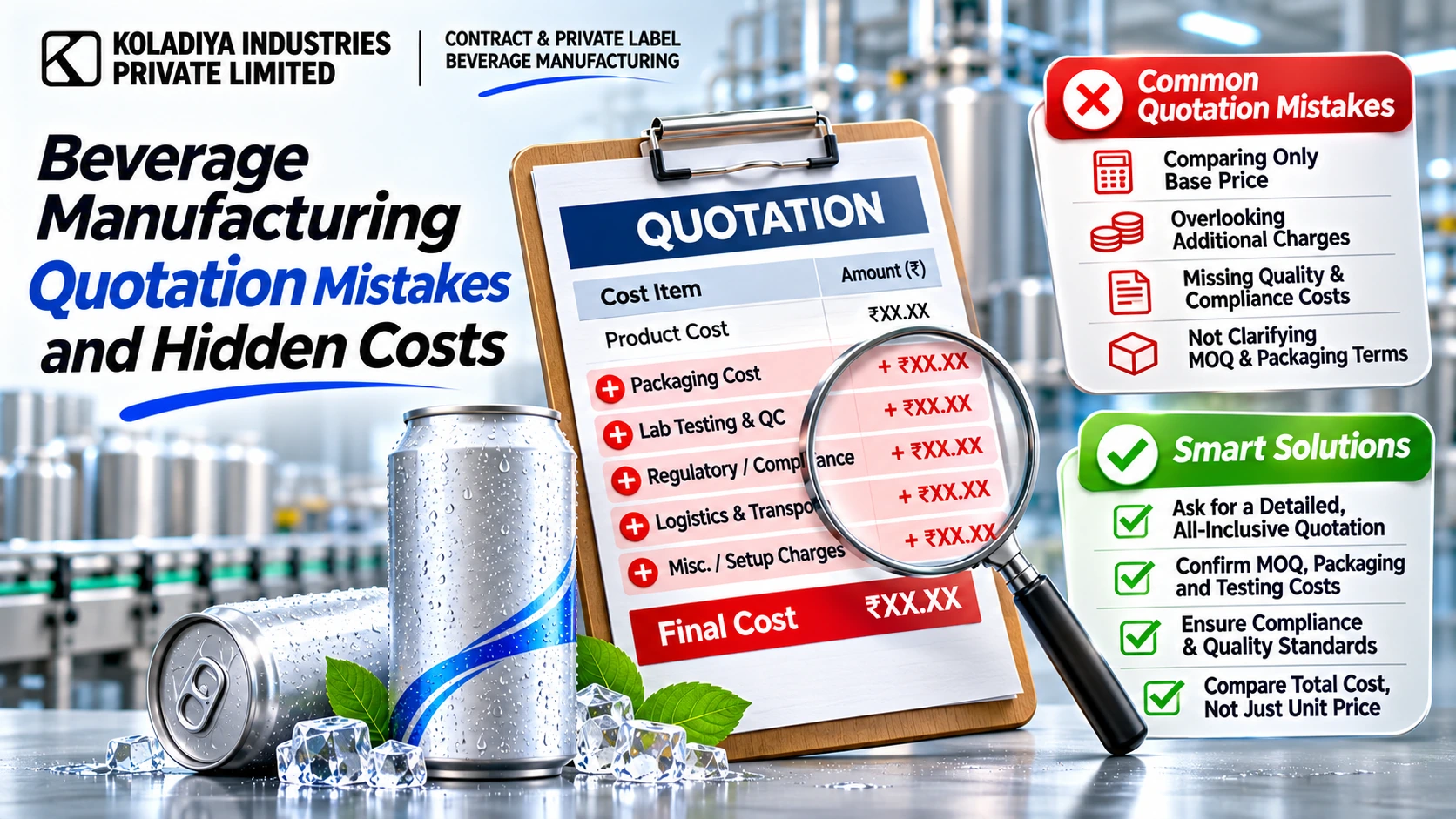
However, a quotation should cover more than the basic manufacturing charge. It should explain the major cost components, including:
- Raw materials and beverage ingredients
- Product formulation and development
- Flavour selection and optimisation
- Packaging materials and labelling
- Manufacturing and filling charges
- Quality control and product testing
- Minimum order quantity (MOQ)
- Storage and transportation, where applicable
For example, an energy drink brand may require caffeine, sweeteners, flavoring agents, functional ingredients, carbonation, and aluminum cans. Each component influences the final production cost.
Consequently, a clear quotation helps businesses evaluate the investment before committing to commercial production.
Common Beverage Manufacturing Quotation Mistakes and Their Solutions
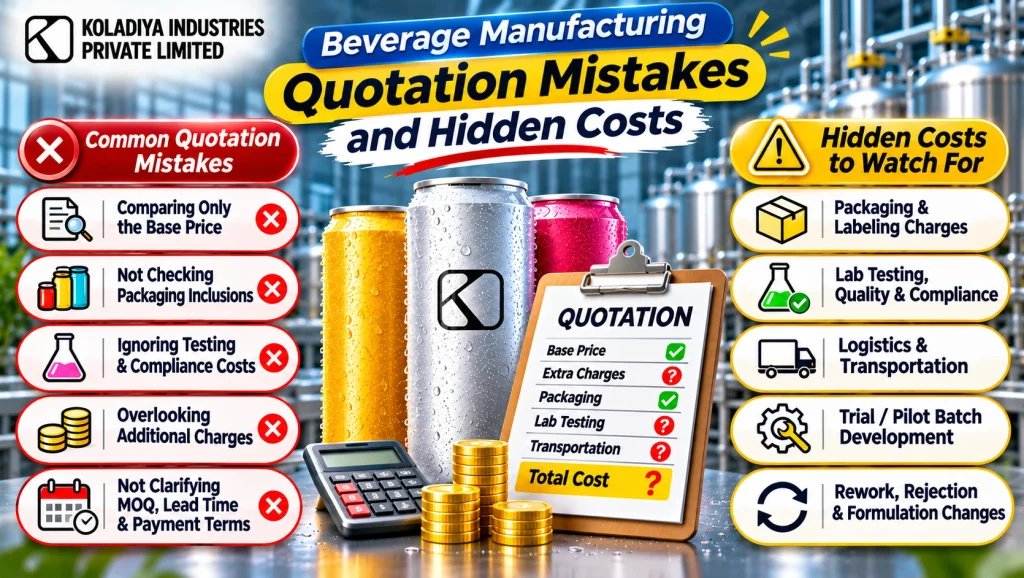
1. Comparing Only the Final Quoted Price
One of the most common mistakes involves choosing a manufacturer solely because they offer the lowest quotation. Although a lower price may appear attractive, it does not automatically represent better value.
Some manufacturers may exclude formulation charges, testing expenses, packaging components, or additional production services from their initial estimates.
For instance, one manufacturer may include ingredient procurement and filling charges, while another may quote only the basic manufacturing cost. Comparing these two quotations without checking their inclusions can lead to an incorrect decision.
Solution: Compare quotations according to individual cost components. Ask every manufacturer to provide a detailed breakdown of ingredients, packaging, processing, testing, and additional charges. This approach helps you evaluate the actual investment rather than relying on the headline price.
2. Ignoring Minimum Order Quantity Requirements
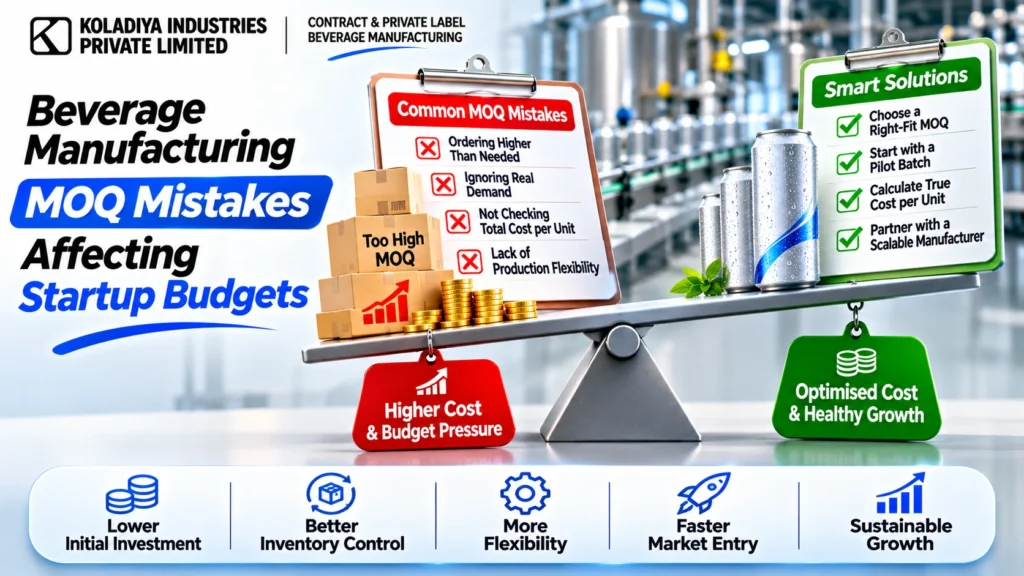
Minimum order quantity plays an important role in beverage manufacturing costs. Many startups underestimate how MOQ affects their initial investment and inventory planning.
A manufacturer may provide an attractive per-can price but require a larger production quantity than the brand can comfortably finance or sell.
For example, a new energy drink business may plan a small market launch. However, a high MOQ could increase packaging expenses, raw material commitments, storage requirements, and working capital needs.
Solution: Discuss MOQ requirements before approving the quotation. Evaluate your target market, expected demand, available budget, and distribution capacity. Additionally, ask the manufacturer whether the proposed production quantity suits your launch strategy.
3. Overlooking Beverage Formulation and R&D Charges
Product development involves several activities, including ingredient selection, flavour development, formulation adjustments, and product trials. Nevertheless, some brands assume that manufacturers include every development activity in their standard production quotation.
This assumption can create unexpected expenses when the project requires multiple formulation changes.
Energy drinks offer a good example. A brand developing a zero-sugar energy drink may need to evaluate different sweeteners, flavour combinations, acidity levels, and functional ingredients. Each development requirement can influence the overall project cost.
Solution: Request a clear explanation of formulation and R&D charges. Confirm what the manufacturer includes in the development package and whether additional trials or reformulation requests attract separate fees.
4. Underestimating Ingredient Costs
Ingredient selection directly affects beverage manufacturing expenses. However, brands sometimes overlook the cost differences between ingredient grades, suppliers, specifications, and functional requirements.
For energy drinks, ingredients such as caffeine, taurine, vitamins, sweeteners, flavouring agents, and acidity regulators contribute to formulation costs. Furthermore, natural ingredients or specialised functional components may change the overall material budget.
Solution: Finalise the ingredient specifications before requesting the quotation. Ask the manufacturer to identify the proposed ingredients and explain how formulation changes could affect the estimated cost.
5. Forgetting Packaging and Label Development Expenses
Packaging represents another important cost component. Brands often calculate their investment using only the product formulation and basic manufacturing charges.
However, beverage packaging involves several elements, including containers, ends, labels, printing, secondary packaging, and other applicable materials.
For example, an energy drink brand choosing 250 ml aluminum slim cans must consider the cost of cans, ends, artwork, printing or labelling, and packaging arrangements. Changes in material specifications or design may also affect the quotation.
Solution: Confirm the complete packaging specification before approving the estimate. Discuss container size, material, artwork requirements, labelling, printing, and secondary packaging with your manufacturing partner.
6. Overlooking Quality Testing and Shelf-Life Expenses
Beverage brands must consider product quality and stability before commercial launch. However, some businesses overlook the cost of testing and quality-related activities when calculating their manufacturing budget.
Depending on the beverage and project requirements, testing may involve microbiological evaluation, physicochemical analysis, carbonation checks, packaging compatibility, and shelf-life studies.
For example, an energy drink formulation may require stability evaluation to assess changes in flavour, colour, acidity, carbonation, and other product characteristics during storage.
Solution: Ask which quality checks the quotation includes. Discuss additional testing requirements, expected timelines, and charges before production begins.
7. Miscalculating Energy Drink Carbonation and Filling Costs
Carbonated energy drinks require specific processing and packaging considerations. Brands that ignore these requirements may underestimate their manufacturing expenses.
Carbonation targets, filling conditions, container compatibility, and production requirements can influence the overall cost. Similarly, changes in formulation or packaging specifications may require adjustments to the production process.
Solution: Share the complete energy drink formulation and packaging requirements with the manufacturer. Confirm carbonation specifications, filling arrangements, and any additional processing charges before finalising the quotation.
8. Ignoring Storage, Transportation, and Handling Costs
A manufacturing quotation may cover product development and production without including every expense associated with finished goods.
Storage, handling, loading, transportation, and delivery arrangements can increase the total project investment. These expenses become particularly important when brands manufacture large quantities or distribute products across multiple locations.
Solution: Clarify whether the quotation includes transportation and storage. Also, confirm the delivery location, applicable handling charges, and responsibilities of both parties.
9. Failing to Check Production Scaling Costs
A quotation that suits a small production batch may not reflect the economics of larger commercial orders.
As demand increases, beverage brands may need additional ingredients, packaging materials, production planning, and inventory management. Furthermore, changes in production volume can influence the per-unit cost.
For example, an energy drink startup may initially launch with one flavour before expanding into multiple variants. Each additional flavour may require separate ingredient planning and formulation consideration.
Solution: Discuss future production requirements during the initial quotation stage. Ask the manufacturer how changes in order quantity, flavours, or packaging specifications could affect pricing.
10. Not Reviewing the Quotation Before Approval
Finally, some businesses approve quotations without reviewing payment terms, inclusions, exclusions, production timelines, or changes in project specifications.
This can create disagreements when additional expenses arise during development or manufacturing.
Solution: Review every quotation carefully before signing an agreement. Confirm the final product specifications, approved formulation, estimated quantity, payment schedule, additional charges, and responsibilities of both parties. Request written clarification whenever an expense or service remains unclear.
How to Evaluate a Beverage Manufacturing Quotation Before Finalising a Partner
A structured quotation review helps brands avoid unnecessary financial pressure. Therefore, use the following checklist before selecting a beverage manufacturing partner:
| Cost component | What to verify |
|---|---|
| Product development | Formulation, flavour development, and trial charges |
| Ingredients | Specifications, quantities, and material costs |
| MOQ | Minimum production quantity and unit pricing |
| Packaging | Can or bottle, ends, labels, and secondary packaging |
| Manufacturing | Processing, filling, and production charges |
| Quality control | Included testing and additional evaluation costs |
| Logistics | Storage, handling, and transportation |
| Payment terms | Advance payments, milestones, and balance payments |
| Production timeline | Development, approval, and manufacturing schedule |
Moreover, request a revised quotation whenever you change your formulation, packaging, or production quantity. This prevents outdated estimates from affecting your budget.
How Koladiya Industries Helps Simplify Beverage Manufacturing
Selecting an experienced beverage manufacturing partner can help brands manage product development and production requirements more effectively. Koladiya Industries Private Limited supports businesses looking to develop and manufacture beverages through private-label and third-party manufacturing services.
With beverage formulation and R&D support, the company helps brands explore product concepts, customized formulations, and flavor development before moving towards commercial production.
Its beverage manufacturing focus includes:
- Energy Drinks: Support for brands developing energy drink products with customised flavour and formulation requirements.
- Carbonated Soft Drinks: Manufacturing support for businesses planning carbonated beverage products.
- Sparkling Water: Solutions for brands exploring sparkling water product development.
- Tonic Water: Manufacturing support for businesses entering the tonic water category.
- Private-Label Manufacturing: Support for businesses planning to launch beverages under their own brand names.
- 250 ml Aluminum Slim Cans: Packaging expertise for brands considering aluminum slim-can beverage formats.
Additionally, Koladiya Industries brings together product development and commercial manufacturing support. This helps businesses discuss formulation, flavour, packaging, and production requirements within a connected manufacturing process.
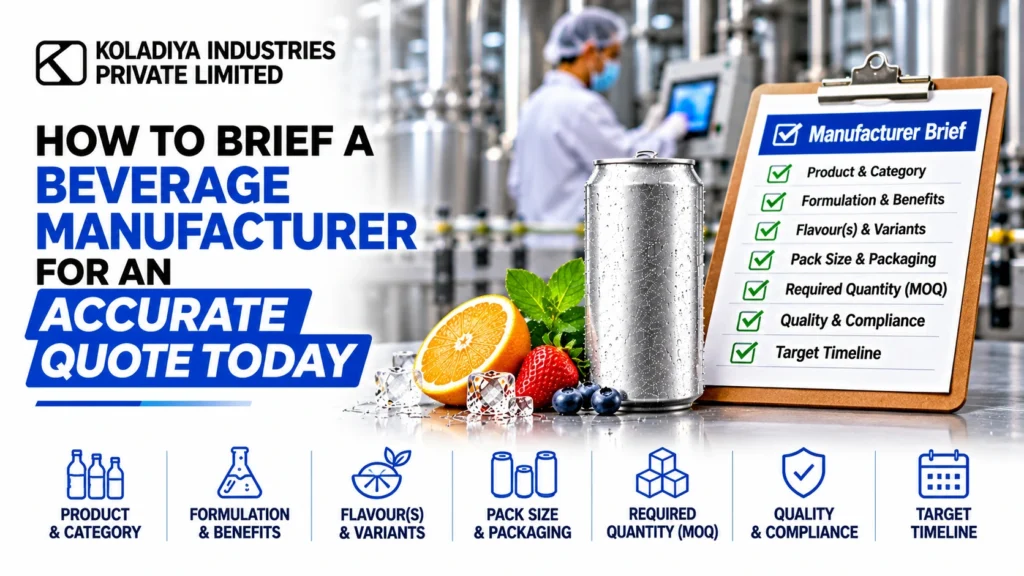
Before requesting a quotation, brands should share their product category, target formulation, packaging preferences, estimated order quantity, and launch requirements. This information helps establish a more relevant project estimate and reduces confusion during later development stages.
Conclusion: Avoid Beverage Manufacturing Quotation Mistakes Before Production
A beverage manufacturing quotation should provide a clear picture of the investment required to develop and manufacture a commercial beverage. However, focusing only on the final price can expose businesses to unexpected expenses, production delays, and budget challenges.
By reviewing formulation costs, ingredient specifications, MOQ, packaging, testing, carbonation, logistics, and production requirements, beverage brands can make more informed manufacturing decisions.
Furthermore, early communication with the manufacturing partner helps prevent misunderstandings and supports better financial planning. Whether you are developing a zero-sugar energy drink, a carbonated soft drink, sparkling water, or a premium tonic water, a detailed quotation creates a stronger foundation for your product launch.
Planning to launch your own beverage brand?
Partner with Koladiya Industries Private Limited for beverage formulation, R&D support, private-label manufacturing, and commercial production solutions. From energy drinks to carbonated beverages, our team can help you explore the manufacturing requirements for your product concept. Contact Koladiya Industries today to discuss your beverage idea, share your production requirements, and request a customized manufacturing quotation for your next beverage project.