Launching a beverage brand requires careful financial planning, product development, and the right manufacturing partnership. Although entrepreneurs often focus on product quality, branding, and marketing, one important factor can significantly influence their initial investment: Minimum Order Quantity (MOQ). Beverage Manufacturing MOQ refers to the minimum number of bottles or cans a manufacturer requires a business to order in a single production run. This requirement directly affects manufacturing expenses, packaging procurement, inventory management, and working capital.
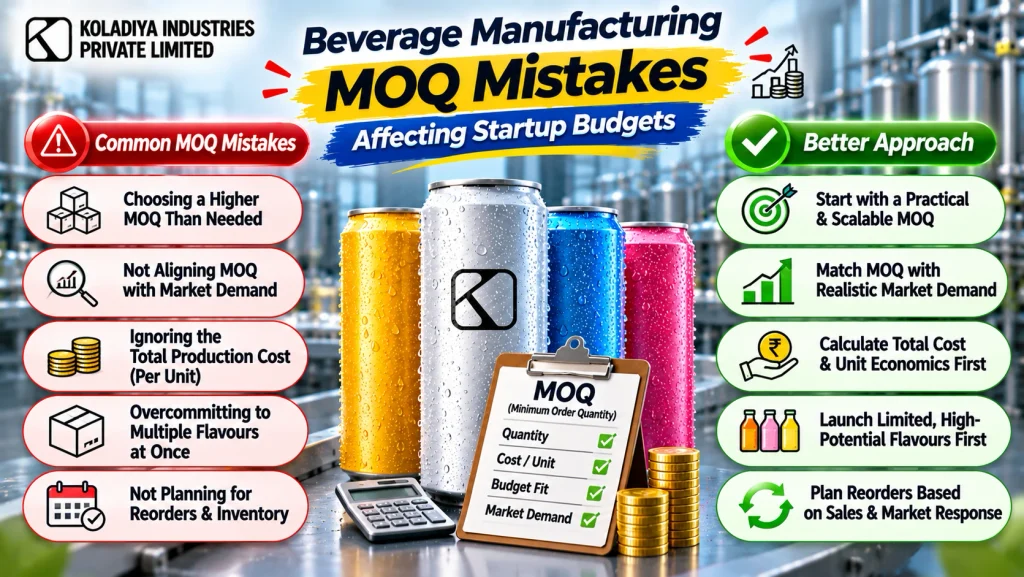
For startups, choosing the wrong MOQ can create unnecessary financial pressure. For example, an entrepreneur planning to launch a new energy drink may need only 8,000 cans to test market demand. However, selecting a manufacturer that requires 30,000 cans per production run could increase the initial investment and create inventory challenges. Different beverage categories, including energy drinks, carbonated soft drinks, sparkling water, and functional beverages, involve different formulation and packaging requirements.
Therefore, startups must understand MOQ requirements before finalizing their manufacturing decisions. This article explores the most common Beverage Manufacturing MOQ mistakes that affect startup budgets and explains practical ways to avoid them while building a commercially sustainable beverage brand.
What Is Beverage Manufacturing MOQ and Why Does It Matter?
Beverage Manufacturing MOQ represents the minimum production quantity a contract manufacturer accepts for a particular beverage product.
Manufacturers establish MOQ requirements according to several operational factors, such as:
- Production line capacity and setup requirements.
- Ingredient sourcing and procurement quantities.
- Packaging material availability.
- Formulation complexity.
- Filling and packaging equipment.
- Production scheduling and operational costs.
For instance, manufacturing a carbonated energy drink in 250 ml aluminium slim cans may involve different production and packaging requirements than manufacturing a juice-based beverage in PET bottles. Manufacturers may establish separate MOQs for different flavours, formulations, and packaging formats.
Consequently, startups should evaluate the complete production cost rather than selecting a manufacturer based only on its quoted MOQ.
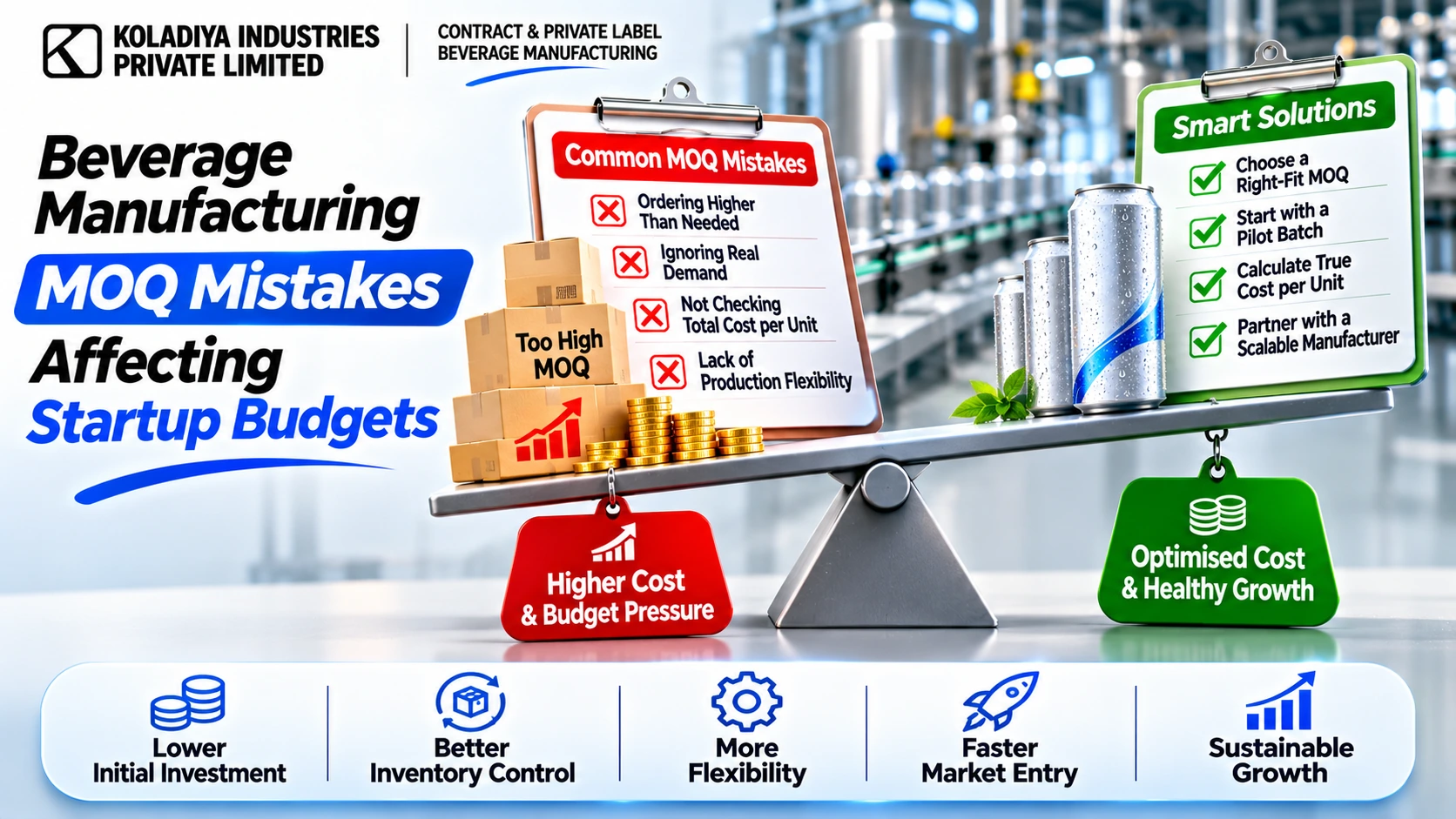
1. Choosing a Manufacturer With an Excessively High MOQ
One of the biggest Beverage Manufacturing MOQ mistakes involves selecting a manufacturer whose minimum production quantity exceeds the startup’s actual market requirements.
Although larger production quantities may reduce the manufacturing cost per unit, they also require higher upfront investment.
For example, a startup planning to introduce a new energy drink may initially need 8,000 cans. However, choosing a manufacturer with a 40,000-can MOQ could increase its financial commitment considerably.
How this affects startup budgets:
- Higher initial manufacturing expenses.
- Increased finished-product inventory.
- Additional warehouse requirements.
- Greater risk of unsold products.
- Reduced working capital.
Practical solution: Startups should compare manufacturers according to their production capabilities and commercial requirements. Discuss smaller production runs, pilot batches, or phased production wherever technically and commercially feasible.
2. Ignoring Packaging MOQ Requirements
Packaging plays an important role in beverage manufacturing expenses. However, many startups calculate their production budgets without considering the minimum procurement quantities for packaging materials.
For example, an energy drink brand may select 250 ml aluminium slim cans with customised artwork. However, the packaging supplier may require a minimum quantity for cans, lids, printed materials, labels, and cartons.
Consequently, the startup may need to purchase more packaging materials than its first production run requires.
How this affects startup budgets:
- Higher packaging procurement expenses.
- Excess packaging inventory.
- Additional storage costs.
- Increased financial commitments.
- Potential wastage when branding changes.
Practical solution: Discuss packaging MOQs before finalizing the manufacturing agreement. Additionally, consider standard can formats, practical artwork options, and packaging materials that offer greater flexibility during the initial launch.
3. Estimating MOQ Without Understanding Market Demand
Another major mistake involves selecting production quantities without conducting proper market research.
Many entrepreneurs estimate sales based on expected demand rather than confirmed customer interest. As a result, they may manufacture more beverages than their distribution network can sell.
For example, a startup introducing a new energy drink might expect to sell 20,000 cans during its first month. However, without confirmed distributors, retail partnerships, or marketing campaigns, achieving that sales target could become challenging.
How this affects startup budgets:
- Unsold finished products.
- Higher inventory holding expenses.
- Increased storage requirements.
- Potential shelf-life concerns.
- Restricted business cash flow.
Practical solution: Evaluate customer preferences, competitor positioning, distributor enquiries, and expected sales before confirming production quantities. Furthermore, begin with a realistic manufacturing plan and increase production as demand develops.
4. Overlooking Ingredient Procurement MOQs
Beverage formulations require several ingredients, including flavours, sweeteners, preservatives, acidity regulators, vitamins, minerals, and functional ingredients.
However, ingredient suppliers may establish their own minimum procurement quantities. These requirements can increase the startup’s initial investment, even when the finished-product MOQ appears affordable.
For example, developing a zero-sugar energy drink may require a specific sweetener blend, flavour compounds, caffeine, and other functional ingredients. If suppliers offer these ingredients only in larger quantities, the startup may need to invest in additional raw materials.
How this affects startup budgets:
- Higher ingredient procurement expenses.
- Excess raw material inventory.
- Additional storage requirements.
- Potential ingredient wastage.
- Increased formulation costs.
Practical solution: Request an ingredient-level cost breakdown during product development. Additionally, discuss alternative sourcing options and commercially practical ingredient quantities with the manufacturing partner.
5. Launching Too Many Beverage Flavours at Once
Many startups want to introduce multiple flavours to attract different customer groups. However, launching several variants simultaneously can increase manufacturing complexity and initial expenses.
For example, an energy drink startup may plan to introduce original, blueberry, citrus, and tropical flavours.
Each variant may require separate formulation development, flavour ingredients, testing, packaging arrangements, and production planning.
How this affects startup budgets:
- Higher formulation development costs.
- Multiple ingredient procurement requirements.
- Increased packaging expenses.
- More complicated inventory planning.
- Separate production scheduling.
Practical solution: Start with one or two promising flavours. Evaluate customer feedback and sales performance before introducing additional variants. This strategy helps businesses manage their initial investment while building a stronger product portfolio.
6. Focusing Only on Cost Per Can
A lower manufacturing cost per can does not automatically create higher profitability.
Some startups select larger MOQs because manufacturers offer lower unit prices at higher production volumes. However, they overlook the total investment required to complete the order.
Consider this illustrative example:
| Production quantity | Cost per can | Total production cost |
|---|---|---|
| 8,000 cans | ₹22 | ₹1,76,000 |
| 20,000 cans | ₹19 | ₹3,80,000 |
| 40,000 cans | ₹17 | ₹6,80,000 |
Illustrative figures only. Actual costs depend on formulation, ingredients, packaging, manufacturing requirements, and supplier quotations.
Although the 40,000-can option offers the lowest unit cost, it requires a significantly higher initial investment.
Practical solution: Compare the complete manufacturing expense, expected sales, inventory costs, and working capital requirements before selecting an MOQ. Prioritise overall financial sustainability instead of focusing exclusively on per-unit savings.
7. Ignoring Beverage Shelf Life and Storage Requirements
Shelf life directly influences production planning and inventory management.
Startups that manufacture excessive quantities without evaluating product stability may experience financial losses when products remain unsold for extended periods.
This concern becomes particularly important for energy drinks and functional beverages because their ingredient combinations, sweetness systems, flavours, and packaging formats require appropriate stability evaluation.
Additionally, unsuitable storage conditions can affect beverage quality.
How this affects startup budgets:
- Expired or unsellable inventory.
- Product wastage.
- Additional warehousing expenses.
- Potential product returns.
- Reduced profitability.
Practical solution: Conduct appropriate shelf-life and stability testing before commercial production. Furthermore, align production quantities with expected sales and validated storage requirements.
8. Skipping Pilot Batch Development
Moving directly into large-scale manufacturing without validating the product can create unnecessary expenses.
Pilot batches allow startups to evaluate taste, sweetness, carbonation, colour, mouthfeel, and overall product performance before committing to commercial quantities.
For example, an energy drink formulation may deliver the desired flavour during laboratory development but perform differently during commercial-scale manufacturing.
Without proper testing, startups may encounter reformulation expenses, production delays, and quality inconsistencies.
Practical solution: Conduct pilot batch development and evaluate the product before finalizing the commercial manufacturing quantity. Check ingredient compatibility, carbonation levels, filling performance, and packaging suitability.
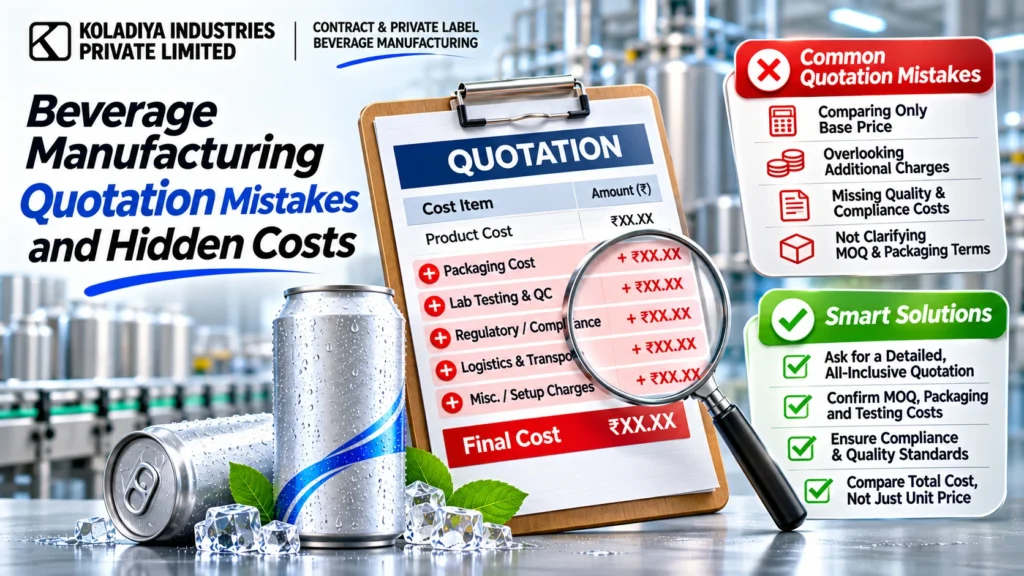
9. Overlooking Hidden Beverage Manufacturing Costs
Some startups compare manufacturers only through their quoted production prices. However, the complete manufacturing budget may involve several additional expenses.
These include:
- Product formulation and development.
- Raw material procurement.
- Packaging materials.
- Production setup charges.
- Quality testing.
- Packaging artwork and printing.
- Transportation and logistics.
- Warehousing and applicable taxes.
For energy drink manufacturing, businesses should also consider carbonation requirements, ingredient specifications, and aluminium can compatibility.
Practical solution: Request a detailed manufacturing quotation that explains the MOQ, product development charges, packaging expenses, testing requirements, payment terms, and additional costs.
This approach helps startups prepare a realistic budget and avoid unexpected financial commitments.
10. Selecting a Manufacturer Without Production Flexibility
A suitable manufacturing partner should support the startup’s current requirements as well as its future expansion plans.
Some manufacturers offer limited flexibility regarding production quantities, packaging formats, and flavour variations. Consequently, startups may encounter difficulties when increasing production or introducing new beverage categories.
Practical solution: Evaluate manufacturing partners according to their production capacity, formulation expertise, packaging capabilities, quality processes, and scalability.
Moreover, discuss future manufacturing requirements before finalizing the agreement. A flexible partnership can help startups manage initial production and plan future expansion more effectively.
How to Calculate the Right Beverage Manufacturing MOQ
Choosing the right Beverage Manufacturing MOQ requires a clear understanding of market demand, production expenses, and available working capital.
Startups can follow these five steps:
Step 1: Calculate Expected Market Demand
Estimate the number of cans or bottles required for the initial launch. Consider distributor requirements, retailer enquiries, and expected customer demand.
Step 2: Prepare a Complete Production Budget
Calculate formulation, ingredients, packaging, manufacturing, testing, transportation, and warehousing expenses.
Step 3: Compare Manufacturing Partners
Request quotations from multiple manufacturers. Compare their minimum production quantities, packaging requirements, commercial terms, and manufacturing capabilities.
Step 4: Evaluate Product Shelf Life
Check the product’s stability and storage requirements. Ensure that your manufacturing quantity aligns with a realistic sales timeline.
Step 5: Plan for Future Production
Select a manufacturer that can accommodate increased production volumes as your beverage brand grows.
Ultimately, the right MOQ should balance manufacturing efficiency, market demand, inventory management, and financial stability.
How Koladiya Industries Supports Beverage Manufacturing Startups
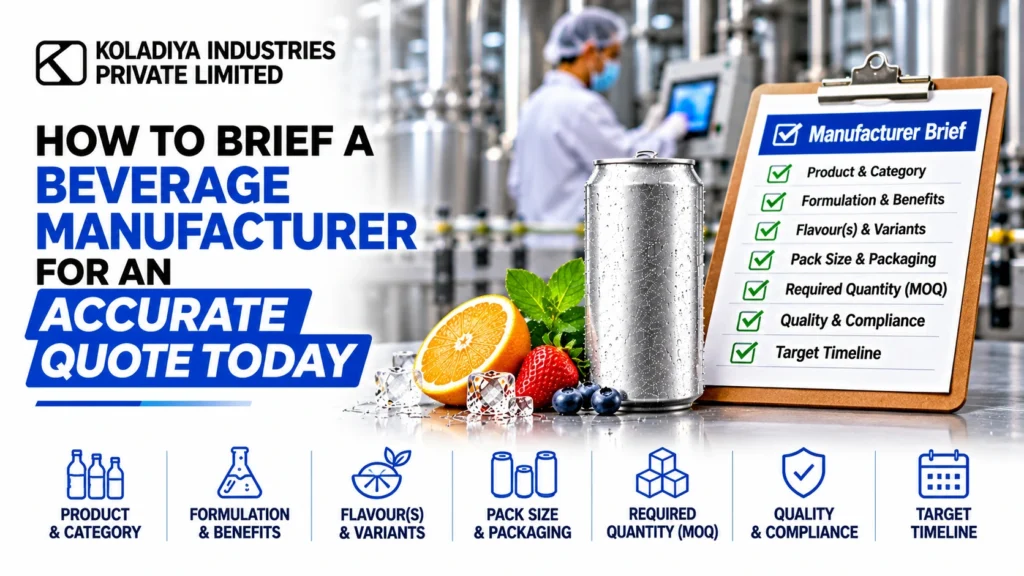
Selecting the right manufacturing partner can simplify product development and commercial production. Koladiya Industries Private Limited supports beverage businesses seeking private-label and third-party manufacturing solutions.
The company offers beverage-related capabilities that help businesses explore product development and manufacturing requirements.
Beverage Manufacturing MOQ Planning With Koladiya Industries
Startups should discuss production quantities, formulation requirements, ingredient specifications, and packaging preferences before finalizing their manufacturing plans.
Koladiya Industries can help businesses explore these requirements through its beverage development and manufacturing capabilities.
Beverage Formulation and R&D
Koladiya Industries has an in-house formulation laboratory that supports customised beverage formulations and flavour development. This capability helps businesses develop beverage concepts according to their product and market requirements.
Energy Drink Manufacturing
Entrepreneurs planning to launch energy drink brands can explore formulation requirements, flavour profiles, ingredient selection, and commercial manufacturing considerations.
Private-Label Beverage Manufacturing
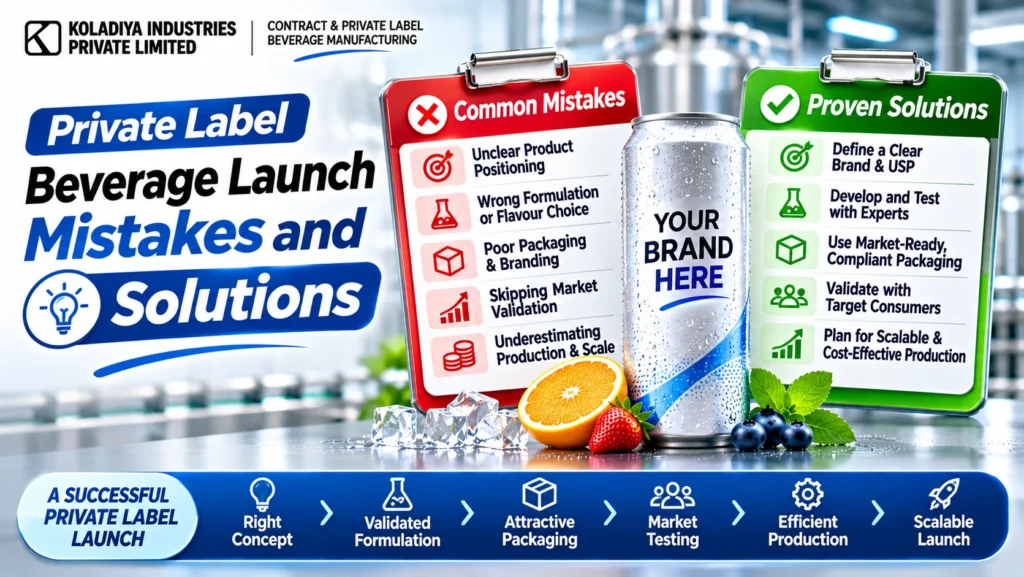
Businesses interested in launching their own beverage brands can explore private-label and third-party manufacturing solutions.
Multiple Beverage Categories
Koladiya Industries works with several beverage categories, including:
- Energy drinks.
- Carbonated soft drinks.
- Sparkling water.
- Tonic water.
Aluminium Can Packaging
Koladiya Industries has packaging expertise in 250 ml aluminium slim cans, offering a packaging option for beverage businesses developing modern energy drinks and other canned beverages.
By discussing formulation, production quantities, and packaging requirements at an early stage, startups can develop a more practical manufacturing strategy.
Conclusion: Make Smarter Beverage Manufacturing MOQ Decisions
Choosing the right Beverage Manufacturing MOQ plays an important role in controlling startup budgets and building a sustainable beverage business. Excessive production quantities, overlooked packaging requirements, ingredient procurement challenges, and unrealistic sales estimates can increase initial investment and create unnecessary financial pressure.
However, startups can minimize these challenges by understanding market demand, comparing manufacturer quotations, conducting pilot batches, and evaluating complete production expenses. Furthermore, energy drink entrepreneurs should carefully consider formulation development, ingredient compatibility, carbonation, shelf life, and aluminium can packaging before starting commercial manufacturing. Ultimately, the right manufacturing partner can help businesses move from product concepts to commercial production with a more structured approach.
Launch Your Beverage Brand With Koladiya Industries
Planning to introduce an energy drink, carbonated soft drink, sparkling water, or another beverage product? Koladiya Industries Private Limited offers beverage formulation, in-house R&D, private-label manufacturing, and commercial production capabilities to support businesses exploring beverage manufacturing opportunities. Connect with Koladiya Industries to discuss your beverage concept, manufacturing MOQ, formulation requirements, packaging preferences, and production plans. Take the next step towards launching your beverage brand with the right manufacturing partner.