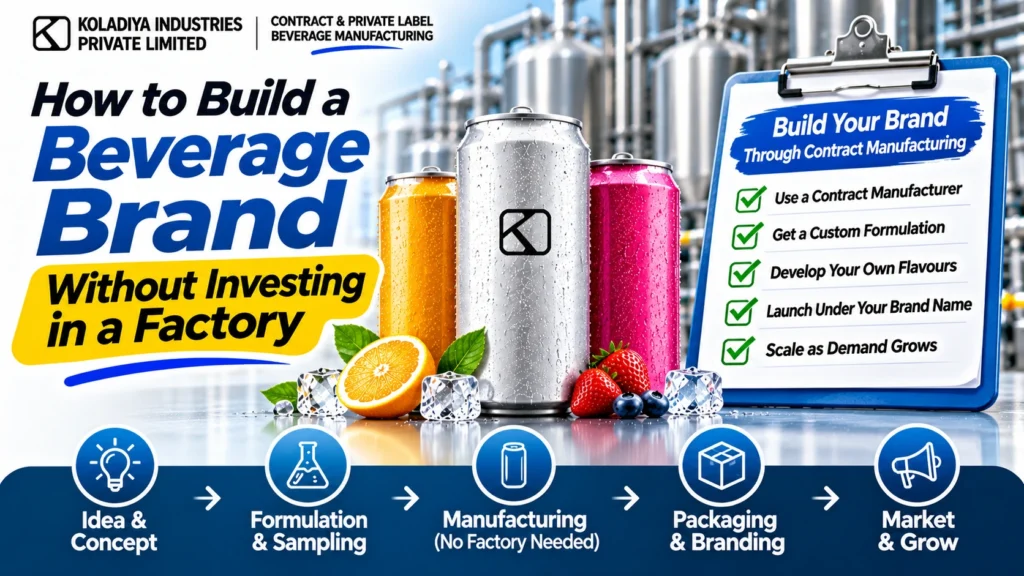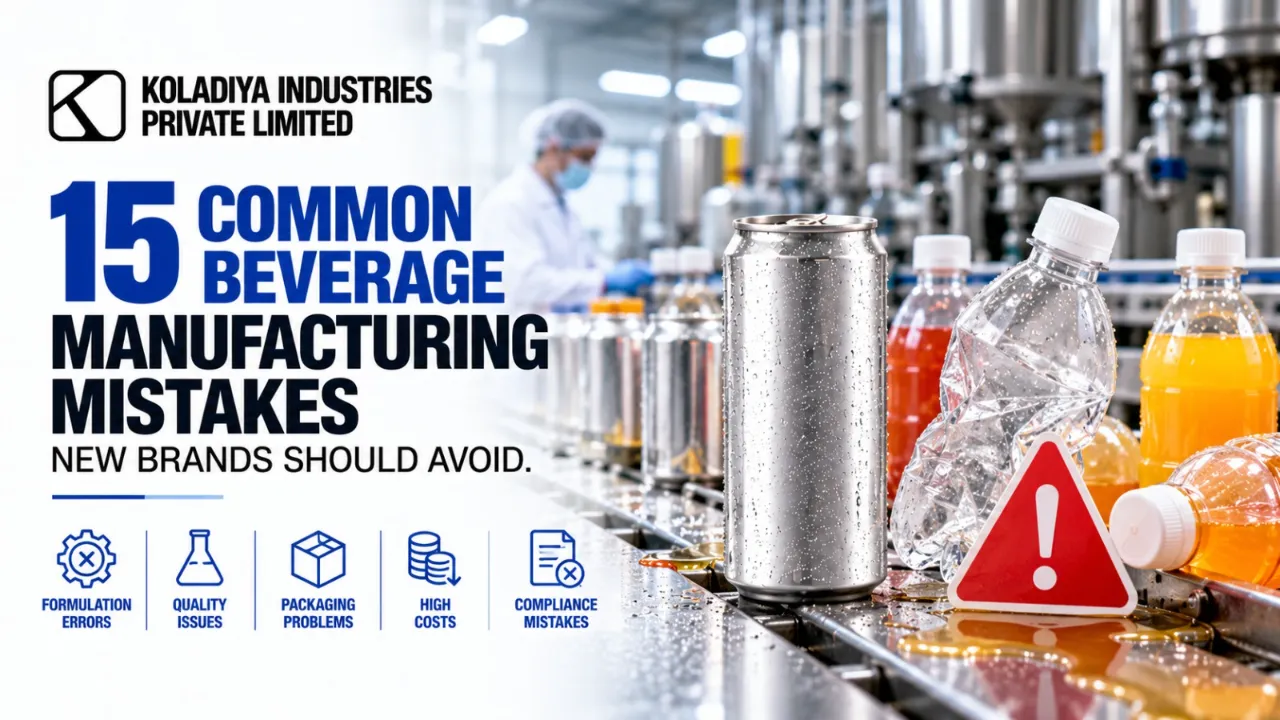
Launching a beverage brand offers exciting opportunities, but success requires more than an attractive label and a great-tasting drink. New brands must manage formulation, sourcing, packaging, costs, quality control, and regulatory compliance. Even a small mistake in these areas can delay a launch, increase expenses, or damage customer trust. Common Beverage Manufacturing Mistakes helps entrepreneurs make informed decisions before they invest in production. Whether you plan to launch an energy drink, protein water, flavored water, juice, hydration drink, or carbonated soft drink, a clear manufacturing strategy can make the process smoother.
We explore 15 common mistakes new beverage brands should avoid and explain how to prevent them. With the right planning and a reliable manufacturing partner, you can build a strong foundation for long-term business growth.
Why Beverage Manufacturing Mistakes Matter for New Brands
Beverage manufacturing involves several connected stages, from product development to packaging and distribution. A problem in one stage can affect the entire supply chain. For example, an unstable formulation may create quality issues, while unsuitable packaging can shorten shelf life or increase transportation costs. Therefore, new businesses should evaluate their product concept, budget, target audience, and manufacturing requirements before starting commercial production.
15 Common Beverage Manufacturing Mistakes to Avoid
1. Launching Without Market Research
The biggest beverage manufacturing mistakes involves developing a product without understanding customer demand. A drink may taste excellent, yet it might not appeal to the intended market. Before investing in production, research your target customers, competing products, preferred flavors, price points, and purchasing habits. Also, identify what makes your beverage different from existing options.
How to avoid it: Define your target audience and product positioning first. Use customer feedback and competitor research to validate your idea before committing to large production volumes.
2. Choosing the Wrong Beverage Manufacturing Formulation
Your formulation influences taste, texture, color, aroma, stability, and production cost. An unsuitable combination of ingredients can create separation, sedimentation, inconsistent flavor, or other quality problems. Moreover, some ingredients interact with one another during processing or storage. Therefore, a formulation that works in a small kitchen batch may not perform the same way during commercial production.
How to avoid it: Work with qualified formulation professionals to develop and test your recipe. Check ingredient compatibility, processing needs, and product stability to ensure a smooth transition to large-scale production.
3. Ignoring Shelf-Life Testing
Many new brands focus on taste but overlook shelf life. However, beverage quality can change over time because of microbial growth, oxidation, light exposure, temperature changes, or ingredient interactions. An unrealistic shelf-life assumption may lead to product returns, customer complaints, and financial losses.
How to avoid it: Establish an appropriate testing plan based on your beverage type, ingredients, packaging, and storage conditions. Use suitable laboratory testing and validated procedures to support your shelf-life claims.
4. Selecting Unsuitable Packaging
Packaging affects product protection, appearance, storage, transportation, and customer convenience. Aluminium cans and PET bottles, and other packaging formats offer different advantages and limitations. Choosing a package without considering product compatibility or processing needs can create avoidable complications. For instance, certain beverages require specific barrier properties or processing conditions.
How to avoid it: Compare packaging options according to formulation, carbonation, filling process, shelf-life requirements, branding, transportation, and total cost. Confirm compatibility with your manufacturing partner before finalizing the design.
5. Underestimating Minimum Order Quantities
Manufacturers set minimum order quantities (MOQs) for each production run. Startups should plan their budgets carefully to meet these requirements without overspending. Consequently, they may commit too much money to inventory before confirming demand.
How to avoid it: Discuss MOQs, trial batches, production capacity, and repeat-order requirements early. Match your first production run to realistic sales forecasts and available working capital.
6. Ignoring the Complete Manufacturing Cost
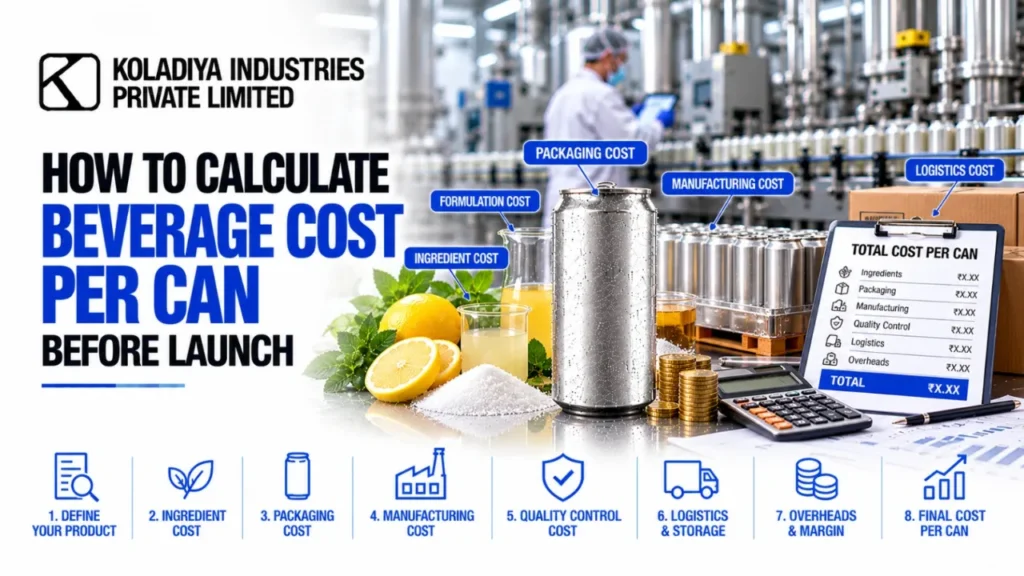
A low manufacturing quotation does not always mean a low total cost. Brands must consider ingredients, packaging, formulation, filling, quality testing, transportation, storage, and other applicable expenses. Additionally, unexpected formulation changes or packaging revisions can increase the final budget.
How to avoid it: Prepare a detailed cost estimate before production. Calculate the expected cost per unit and include wastage, logistics, marketing, distribution, and operating expenses when evaluating profitability.
7. Choosing a Manufacturer Based Only on Price
Selecting the cheapest manufacturer can become an expensive decision when the partner cannot meet your quality, production, or communication requirements. A suitable manufacturing partner should understand your product category, packaging preferences, expected volumes, quality requirements, and business timeline.
How to avoid it: Evaluate manufacturing capabilities, product development support, quality systems, communication, production flexibility, and commercial terms. Choose a manufacturer based on quality, reliability, services, and overall value, not just the lowest price.
8. Neglecting Quality Control
Maintaining consistent product quality helps retain customers. However, new brands must ensure every production batch meets the same quality standards. Variations in ingredients, processing conditions, filling operations, and storage can affect the final product.
How to avoid it: Establish clear product specifications and suitable quality checks. Work with your manufacturing partner to verify ingredients, monitor production processes, maintain batch records, track products, and check final quality.
9. Overlooking Regulatory Compliance
Beverage brands must understand the regulations applicable to their product, ingredients, manufacturing arrangements, labels, and sales channels. Incorrect label details or misleading product claims can cause regulatory issues for your beverage brand. Requirements can differ according to beverage category and intended market.
How to avoid it: Confirm applicable FSSAI requirements and other relevant Indian regulations before production. Review ingredient declarations, nutritional information, allergen disclosures, permitted claims, manufacturing details, and other mandatory label information with qualified compliance professionals.
10. Designing Packaging Without Production Considerations
Attractive packaging helps a beverage stand out. Nevertheless, a design that looks excellent on screen may create production difficulties if it does not fit the selected container, labeling process, or printing specifications. Last-minute artwork changes can also delay packaging procurement and launch schedules.
How to avoid it: Coordinate your design work with the manufacturing team. Confirm container dimensions, label specifications, artwork requirements, printing methods, and approval timelines before placing packaging orders.
11. Scaling Production Too Quickly
Strong early interest can encourage startups to increase production before they understand actual purchasing patterns. Unfortunately, excessive production may tie up working capital and create inventory pressure. On the other hand, insufficient production planning can cause stock shortages when demand rises.
How to avoid it: Start with a realistic production plan based on demand estimates, distribution commitments, available funds, and manufacturer capacity. Review sales and inventory data before increasing order quantities.
12. Failing to Plan Ingredient Procurement
Ingredient availability can affect production schedules, product costs, and consistency. Some ingredients require longer procurement periods or careful storage, while changing suppliers may introduce differences in quality. As a result, poor procurement planning can delay production or disrupt repeat orders.
How to avoid it: Identify critical ingredients early and confirm availability, lead times, specifications, and storage needs. Discuss backup sourcing options and supplier approval procedures with your manufacturing partner.
13. Ignoring Storage and Transportation Requirements
A beverage may leave the production facility in excellent condition, but unsuitable storage or transportation can compromise its quality. Temperature exposure, sunlight, rough handling, and improper warehouse practices can affect some products and packaging formats.
How to avoid it: Define appropriate storage and transportation conditions for your beverage. Communicate handling instructions to distributors, warehouse operators, and logistics partners, and select suitable packaging for your distribution route.
14. Underestimating the Product Launch Timeline
New brands often expect manufacturing to begin immediately after they approve a recipe. However, product development, stability testing, sourcing, packaging design, compliance reviews, production scheduling, and quality checks all require time. Delays in any of these areas can affect launch commitments.
How to avoid it: Plan a realistic timeline that includes every stage of the beverage manufacturing process. Identify approval deadlines, supplier lead times, testing requirements, and production milestones. Keep contingency time for unexpected revisions or procurement delays.
15. Failing to Build a Long-Term Manufacturing Strategy
Some entrepreneurs focus entirely on their first production run. However, a beverage business also needs a plan for repeat orders, new flavors, packaging improvements, cost management, and changing demand. Without this strategy, brands may struggle to maintain consistency as their business grows.
How to avoid it: Select a manufacturing partner that meets your current needs and supports your brand’s future growth. Document product specifications, review production performance, monitor customer feedback, and maintain clear communication with your manufacturing partner.
How to Avoid Beverage Manufacturing Mistakes Before Launch
A systematic approach helps new brands prevent common beverage manufacturing mistakes. Instead of rushing directly into production, evaluate each stage of your product journey.
Beverage Manufacturing Mistakes in Product Planning
Start by defining your target customers, product category, flavor profile, selling price, and key product benefits. Next, validate market demand and establish a practical budget. This process helps you identify commercial risks before investing in formulation and packaging.
Beverage Manufacturing Mistakes in Production and Quality
After finalizing your product concept, check the formulation, ingredient quality, production needs, and quality control measures. Test the product appropriately and confirm packaging compatibility before commercial manufacturing begins.
Additionally, discuss batch consistency, traceability, production capacity, and quality documentation with your chosen manufacturer.
Beverage Manufacturing Mistakes in Cost and Packaging Decisions
Compare packaging formats and calculate the complete cost per unit. Consider MOQ requirements, procurement lead times, storage, transportation, and future order volumes. These details help you select options that support your budget without compromising essential quality requirements.
Beverage Manufacturing Mistakes When Choosing a Partner
Check the manufacturer’s technical expertise, product development services, communication, and production capabilities. Also, clarify timelines, quality standards, packaging options, costs, and responsibilities before finalizing the partnership.
A well-informed decision can reduce misunderstandings and help your team manage the launch more effectively.
How Koladiya Industries Can Support Your Beverage Brand
Choosing the right manufacturing partner is an important step when turning a beverage concept into a commercial product. Koladiya Industries can be considered by businesses exploring beverage manufacturing and customized production solutions for new or growing brands.
Before launching your project, clarify your beverage type, formulation needs, packaging choices, production volume, budget, and target launch date. Clear communication helps both sides understand the project scope and evaluate suitable manufacturing options.
Whether you are developing a new beverage concept or planning to expand an existing product line, careful preparation can help you manage production decisions and build a more consistent launch process.
Connect with Koladiya Industries to explore your beverage manufacturing needs and plan the next steps for your product launch.
Conclusion
Avoiding common beverage manufacturing mistakes can help new brands control costs, maintain product quality, reduce delays, and prepare for sustainable growth. From formulation and shelf-life testing to packaging, compliance, and manufacturer selection, every stage requires careful planning. Most importantly, do not treat manufacturing as a single transaction. View it as a complete process that connects product development, quality assurance, supply chain management, and customer expectations. Research your market, test your formulation, manage your budget, and select the right manufacturer to build a successful beverage brand. Start with a clear plan, ask the right questions, and make informed manufacturing decisions before your first commercial batch.
FAQ’s
How can startups avoid beverage manufacturing mistakes?
Startups can avoid mistakes by researching the market, testing formulations, planning budgets, checking packaging compatibility, and choosing a reliable manufacturing partner.
Why is formulation important in beverage manufacturing?
Formulation affects taste, texture, stability, shelf life, and production costs. Proper testing helps ensure consistent product quality.
How can beverage brands maintain consistent product quality?
Brands should establish product specifications, test ingredients, monitor production processes, maintain batch records, and evaluate finished products.
What should new brands consider before choosing a beverage manufacturer?
Evaluate manufacturing capabilities, minimum order quantities, quality standards, packaging options, production costs, communication, and delivery timelines.
Why is shelf-life testing important for beverages?
Shelf-life testing helps determine how a beverage maintains its quality and safety under specified storage conditions. It also supports appropriate expiry or best-before dates.
How can Koladiya Industries help new beverage brands?
Koladiya Industries can discuss beverage manufacturing requirements, formulation needs, packaging preferences, and production goals to help brands explore suitable manufacturing solutions.