Developing a successful beverage requires more than selecting attractive flavours and high-quality ingredients. Every ingredient must work well with the others to deliver the right taste, colour, texture, carbonation, stability, and shelf life. Even a small formulation issue can affect the finished product, increase manufacturing costs, or delay a brand’s commercial launch. For beverage startups and established brands, ingredient compatibility becomes especially important when developing energy drinks, carbonated soft drinks, sparkling water, functional beverages, and ready-to-drink products. Ingredients such as acids, sweeteners, preservatives, flavours, caffeine, vitamins, minerals, and botanical extracts can interact in unexpected ways.
Beverage manufacturers must evaluate ingredient behaviour before moving into commercial production. A well-planned formulation process helps brands avoid unnecessary waste, maintain product consistency, and deliver a better consumer experience. This guide explains common Beverage Ingredient Compatibility Mistakes, their practical solutions, and the importance of professional formulation support when developing energy drinks and other beverage products.
Why Beverage Ingredient Compatibility Matters
Ingredient compatibility refers to how different components behave when manufacturers combine them in a beverage formulation. Each ingredient has specific properties, and those properties can influence the performance of other ingredients. For example, an acid regulator may change the behaviour of certain colours, flavours, or preservatives. Similarly, minerals can interact with proteins, stabilisers, and other functional ingredients. These reactions may create sediment, cloudiness, flavour changes, or unwanted texture.
Moreover, energy drinks require additional formulation attention because they often combine caffeine, sweeteners, acids, vitamins, minerals, flavour systems, and functional ingredients. Every component must work together without compromising taste, appearance, or product stability. Therefore, ingredient compatibility testing plays a critical role in product development, quality control, and commercial manufacturing.
Common Beverage Ingredient Compatibility Mistakes and Their Solutions
1. Combining Ingredients Without Compatibility Testing
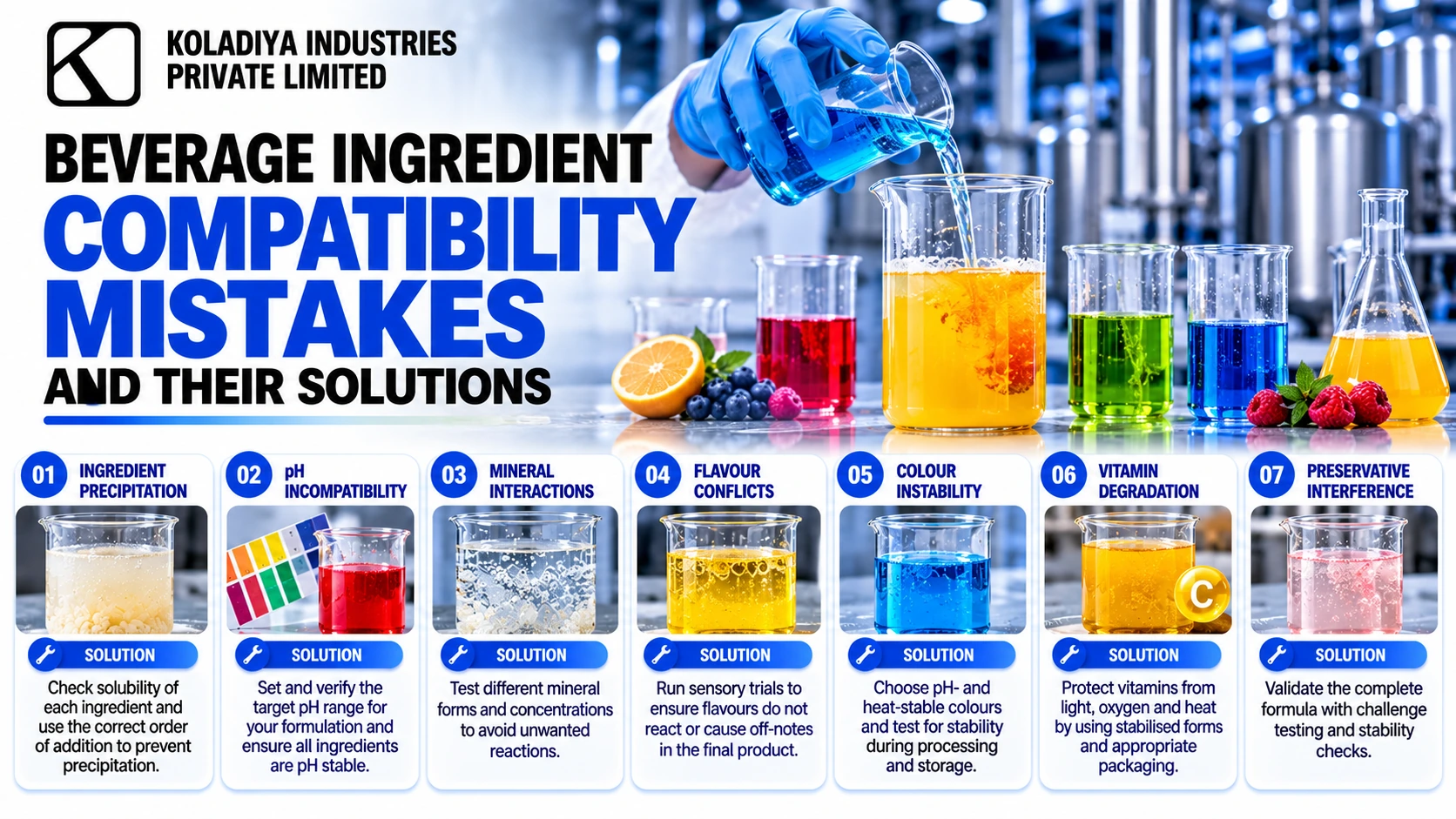
One of the most common Beverage Ingredient Compatibility Mistakes occurs when brands combine ingredients based only on their individual benefits. However, an ingredient that performs well independently may behave differently after mixing.
For instance, certain vitamins, minerals, botanical extracts, and protein ingredients may react with other formulation components. These interactions can cause precipitation, discolouration, flavour changes, or reduced product stability.
Solution: Conduct laboratory-level compatibility tests before finalising the formulation. Evaluate the ingredients individually and in combination under suitable processing and storage conditions. Additionally, record any visible changes, texture differences, and flavour variations. This approach helps identify problems before manufacturers begin large production batches.
2. Selecting Incompatible Acids and Sweeteners
Acids and sweeteners influence a beverage’s overall taste profile. However, an incorrect combination can create excessive sourness, lingering sweetness, or an unpleasant aftertaste.
Energy drinks commonly use acid systems to develop a crisp, refreshing taste. Nevertheless, the acid balance must complement the selected sweeteners. Some high-intensity sweeteners may also produce a noticeable aftertaste when the formulation lacks proper flavour balance.
Solution: Test different acid and sweetener combinations through controlled formulation trials. Evaluate sweetness intensity, acidity, mouthfeel, and aftertaste together. Furthermore, conduct sensory evaluations to understand how the complete beverage tastes rather than assessing each ingredient separately.
3. Ignoring Flavour Compatibility
Flavour selection can strongly influence consumer acceptance. However, combining multiple flavour compounds without proper testing may create an unbalanced or artificial taste.
For example, citrus flavours in energy drinks may work well with certain botanical or fruit notes. However, an unsuitable combination can produce bitter, medicinal, or overly sharp characteristics. Similarly, strong flavour ingredients may overpower delicate fruit profiles.
Solution: Develop a clear flavour direction before selecting the complete ingredient system. Test individual flavours, flavour blends, and finished formulations. In addition, consider sweetness, acidity, carbonation, and aroma during sensory evaluation. A balanced flavour system should deliver a consistent taste from the first sip to the last.
4. Using Ingredients That Affect Beverage Colour
Colour plays an important role in product appearance and brand identity. However, certain ingredients may change the colour of a beverage over time.
For example, pH variations, light exposure, processing conditions, and interactions between colour ingredients and other formulation components may affect the final appearance. Botanical extracts and natural colours may also require additional stability evaluation.
Solution: Evaluate colour stability during formulation development and shelf-life testing. Check the beverage at different stages, including immediately after mixing, after processing, and during storage. Also, assess the effect of light, temperature, and pH on the selected colour system.
5. Overlooking pH Compatibility
pH affects several important beverage characteristics, including taste, ingredient stability, preservative performance, and product quality. However, some brands focus mainly on flavour and overlook how the complete formulation influences pH.
In energy drinks and carbonated beverages, acids help create the desired taste profile. Nevertheless, an unsuitable pH can affect the performance of selected ingredients and may contribute to formulation instability.
Solution: Establish a suitable pH target based on the complete formulation and product requirements. Measure pH during product development and verify it after ingredient blending and processing. Additionally, check pH consistency across pilot and commercial batches.
6. Adding Vitamins and Minerals Without Stability Checks
Functional beverages and energy drinks often contain vitamins and minerals to support their product positioning. However, these ingredients may interact with other components or lose stability under certain storage conditions.
Some vitamins can show sensitivity to heat, oxygen, and light. Meanwhile, certain minerals may create unwanted reactions with acids, proteins, or other ingredients. As a result, the beverage may develop sediment, colour changes, or reduced ingredient levels.
Solution: Review the compatibility and stability requirements of each vitamin and mineral before adding it to the formulation. Select suitable ingredient forms, evaluate processing conditions, and conduct appropriate stability testing. Manufacturers should also verify relevant nutritional and quality parameters throughout product development.
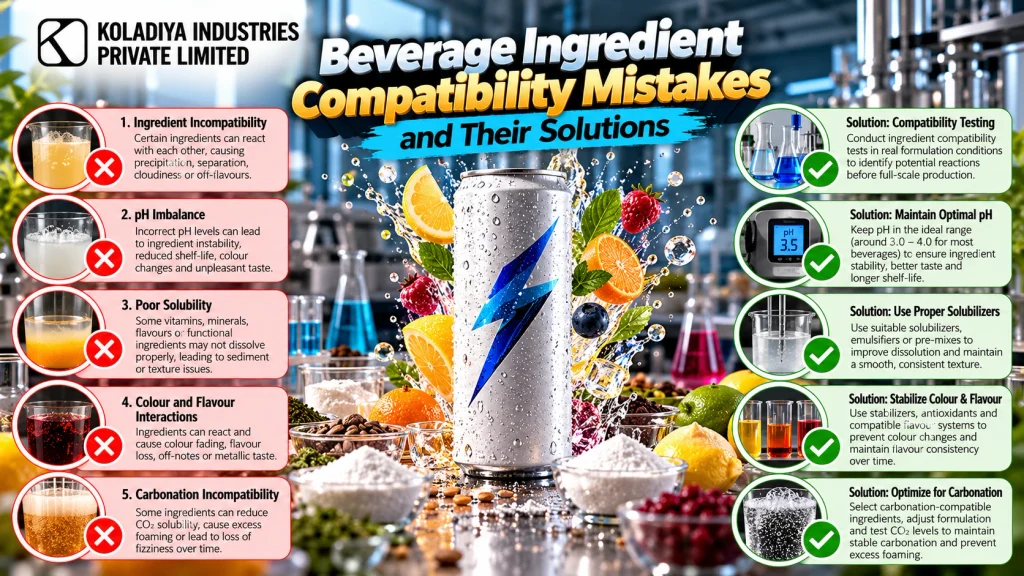
7. Ignoring Carbonation and Ingredient Interactions
Carbonation adds a refreshing mouthfeel to energy drinks and carbonated soft drinks. However, some formulations may show excessive foaming, poor carbonation retention, or an unbalanced sensory experience.
Sweeteners, acids, flavour systems, and processing conditions can influence the final carbonation experience. Therefore, manufacturers must evaluate carbonation alongside the complete ingredient profile.
Solution: Test carbonation levels during pilot production and assess how the beverage behaves during filling, packaging, and storage. Maintain suitable process controls and verify that the formulation delivers the intended taste and mouthfeel. In addition, evaluate the finished product in its actual packaging format.
8. Selecting Preservatives Without Checking Compatibility
Preservatives help protect certain beverages against microbial spoilage when manufacturers use them correctly. However, preservative performance depends on factors such as product pH, formulation composition, processing, and packaging.
A preservative that suits one beverage may not perform in the same way in another formulation. Incorrect selection or use may also affect flavour and product quality.
Solution: Select a preservation system based on the beverage’s formulation, target pH, processing method, packaging, and applicable food regulations. Conduct appropriate microbiological and shelf-life evaluations. Never assume that one preservative system suits every beverage category.
9. Skipping Pilot Batch and Shelf-Life Testing
Moving directly from laboratory formulation to commercial manufacturing creates unnecessary risk. A formulation that looks stable in a small sample may behave differently during large-scale mixing, processing, or filling.
For example, an energy drink may develop sediment, flavour changes, carbonation loss, or packaging-related issues after production. These problems can increase waste and disrupt the launch schedule.
Solution: Produce pilot batches before commercial manufacturing. Evaluate mixing performance, processing conditions, filling behaviour, packaging compatibility, and finished-product quality. Then conduct suitable shelf-life testing under defined storage conditions. Use the findings to refine the formulation before scaling production.
Beverage Ingredient Compatibility Mistakes in Energy Drink Manufacturing
Energy drinks require a carefully balanced formulation because manufacturers often combine several functional and sensory ingredients in one product.
A typical energy drink formulation may include caffeine, sweeteners, acids, flavour systems, vitamins, minerals, and other permitted functional ingredients. Each component must deliver its intended purpose without negatively affecting the remaining ingredients.
For example, excessive acidity may create a sharp taste, while an unsuitable sweetener blend may leave an unpleasant aftertaste. Certain vitamins may also require protection from processing or storage conditions. Moreover, carbonation can influence aroma release, mouthfeel, and the overall drinking experience.
Therefore, energy drink developers should focus on five important areas:
- Ingredient selection: Choose suitable ingredient forms and review their compatibility before blending.
- Flavour development: Balance sweetness, acidity, bitterness, aroma, and carbonation.
- Stability evaluation: Monitor colour, clarity, sediment, and flavour changes.
- Processing control: Check mixing, heating where applicable, carbonation, and filling conditions.
- Packaging compatibility: Evaluate the finished beverage in its intended can or bottle.
By addressing these factors early, brands can reduce formulation problems and create a more consistent energy drink.
How Beverage Manufacturers Can Prevent Ingredient Compatibility Problems
Preventing formulation problems requires a structured product development process. Instead of correcting issues after commercial production begins, manufacturers should identify potential interactions during the R&D stage.
First, define the product concept, target consumers, flavour profile, and required product characteristics. Next, select ingredients that support the intended formulation and review their technical specifications.
After that, conduct laboratory trials to evaluate taste, appearance, pH, and ingredient interactions. Once the formulation meets the initial requirements, develop a pilot batch and assess its performance under relevant processing conditions.
Finally, conduct suitable stability, shelf-life, quality, and packaging evaluations before approving commercial production.
Throughout this process, maintain clear formulation records and document every adjustment. This makes it easier to reproduce the product consistently across manufacturing batches.
How Koladiya Industries Supports Beverage Product Development
Koladiya Industries Private Limited supports beverage brands through private-label and third-party beverage manufacturing, with capabilities across product development and commercial production.
For businesses planning to launch or expand an energy drink brand, formulation development plays an important role in achieving the desired taste, quality, and product consistency. A structured R&D process can help identify ingredient compatibility challenges before they affect large-scale manufacturing.
Koladiya Industries provides support through its in-house formulation lab and flavour development capabilities. The company works with beverage categories such as energy drinks, carbonated soft drinks, sparkling water, and tonic water.
Its product development approach can help brands evaluate formulation requirements, refine flavour profiles, and prepare products for manufacturing. Koladiya Industries also offers packaging expertise, including 250 ml aluminium slim cans, for suitable beverage applications.
Whether a business plans to develop a new energy drink, refine an existing beverage, or introduce a private-label product, careful formulation and manufacturing planning can support a smoother journey from concept to commercial production.
Conclusion
Beverage ingredient compatibility directly affects product taste, appearance, stability, quality, and manufacturing efficiency. Therefore, brands should never treat ingredient selection as an isolated step. From flavour and sweetener interactions to pH balance, vitamin stability, carbonation, and preservative selection, every formulation component deserves careful evaluation. Furthermore, pilot batches and shelf-life testing help manufacturers identify potential issues before commercial production.
For energy drink brands, these checks become particularly important because multiple functional ingredients must work together in one formulation. With structured R&D, suitable testing, and the right manufacturing support, businesses can reduce avoidable formulation errors and develop beverages that meet consumer expectations.
Planning to develop an energy drink or launch a new beverage brand?
Connect with Koladiya Industries Private Limited to discuss beverage formulation, flavour development, private-label manufacturing, and third-party beverage production. Explore how the right product development and manufacturing approach can help turn your beverage concept into a market-ready product.