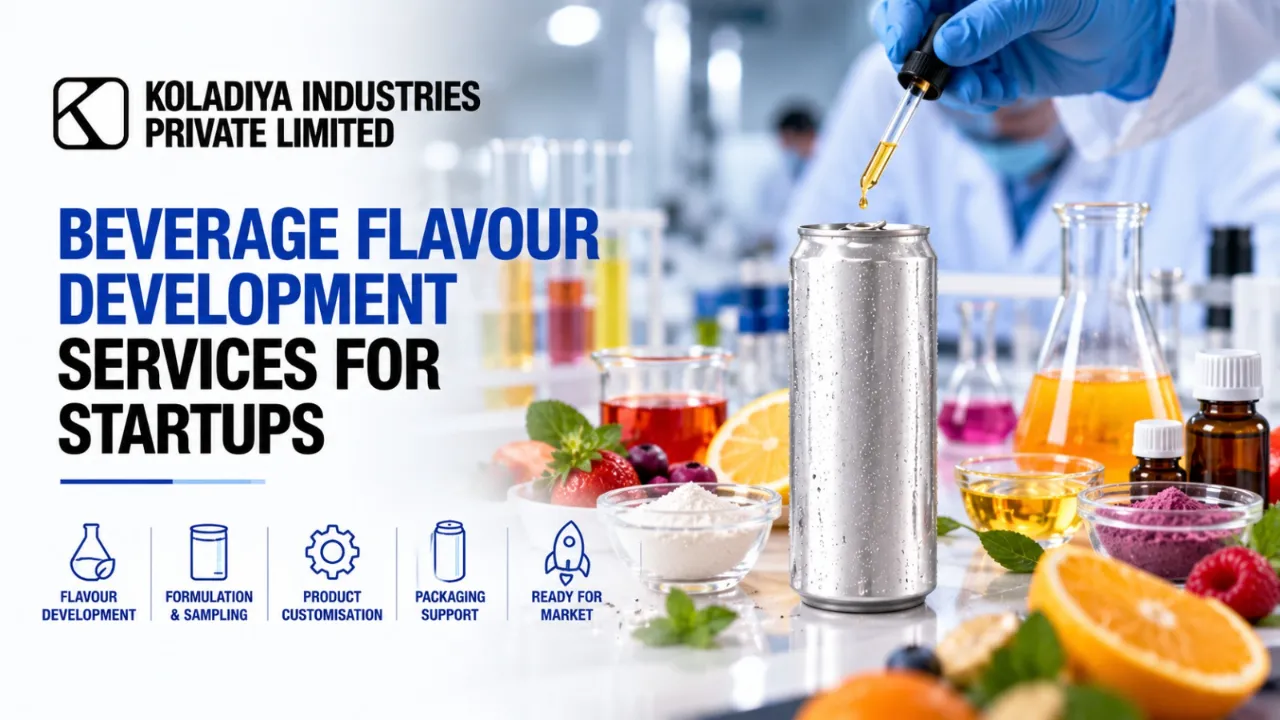
Launching a new beverage brand requires more than an attractive name, eye-catching packaging, and a strong marketing strategy. Most importantly, your drink must deliver a flavour that customers enjoy and want to purchase again. Whether you plan to launch energy drinks, flavoured water, protein water, hydration drinks, fruit beverages, or non-alcoholic drinks, the right flavour can help your brand stand out in a competitive market. This is where beverage flavour development services for startups become valuable. These services help new businesses turn an initial product idea into a beverage with a distinctive taste, suitable ingredients, consistent quality, and commercial potential.
However, developing a successful drink involves several important decisions. You must understand your target customers, select suitable ingredients, evaluate different flavour profiles, and test your formula before moving towards large-scale production. For startups working with beverage development and manufacturing partners such as Koladiya Industries, a structured approach can help simplify product development and prepare a beverage concept for commercial evaluation.
What Are Beverage Flavour Development Services?
Beverage flavour development involves creating, refining, and evaluating the taste profile of a drink. It focuses on balancing flavour, sweetness, acidity, aroma, mouthfeel, and other sensory characteristics to achieve the desired drinking experience. For example, an energy drink brand might want a refreshing citrus flavour with a balanced sweet-and-sour taste. Similarly, a flavoured water brand may prefer a subtle fruit profile that tastes light rather than intensely sweet. Flavour development helps startups explore these preferences and create a formula that matches their brand positioning.
Depending on the project, the process may involve:
- Selecting suitable flavour profiles and ingredient options.
- Developing initial beverage formulations.
- Adjusting sweetness, acidity, and flavour intensity.
- Evaluating colour, aroma, and mouthfeel.
- Conducting taste tests and collecting feedback.
- Assessing ingredient compatibility and product stability.
- Refining the formulation for manufacturing requirements.
Therefore, beverage flavour development provides a practical starting point for businesses that want to introduce a differentiated product to the market.
Why Do Startups Need Professional Beverage Flavour Development?
Many first-time founders begin with a simple idea, such as creating a new energy drink or launching a refreshing fruit beverage. However, turning that idea into a commercially viable product requires more than choosing a flavour from a list.
Professional development support can help startups address the following challenges.
1. Create a Distinctive Taste
The beverage market offers many similar products. Consequently, a distinctive flavour can help a new brand create a memorable customer experience.
Startups can explore familiar flavours, innovative combinations, or regionally inspired profiles according to their audience. For instance, a hydration drink might combine lemon and lime, while a fruit-based beverage could feature mango, berry, or tropical notes.
Nevertheless, novelty alone does not guarantee success. The flavour should suit the product concept and appeal to the intended customers.
2. Improve Product Consistency
Customers expect a beverage to taste consistent every time they purchase it. Therefore, startups should focus on repeatable formulations and controlled production processes from the beginning.
A structured development approach helps businesses evaluate ingredient specifications, mixing requirements, and other factors that influence the final taste. Moreover, it creates a better foundation for maintaining consistency during commercial production.
3. Match Your Target Audience
Different customer groups have different taste preferences. Some prefer intense sweetness, while others look for lighter, fruitier, tangier, or more refreshing beverages.
Understanding these preferences helps startups make better formulation decisions. In addition, early taste testing can reveal whether customers enjoy the flavour, find it too sweet, or expect a different drinking experience.
4. Prepare for Commercial Manufacturing
A beverage formula must work beyond a small sample. It should also suit the intended production process, packaging format, ingredient availability, and storage conditions.
For this reason, startups should evaluate manufacturing requirements alongside flavour development. This approach helps identify practical challenges before the business invests heavily in production and marketing.
Types of Beverages That Need Flavour Development
Beverage flavour development services can support several product categories. The exact process depends on the drink’s ingredients, formulation goals, and manufacturing requirements.
Energy Drinks
Energy drink startups often explore bold fruit flavours, citrus blends, tropical combinations, and distinctive sweet-and-sour profiles. However, the flavour must complement the intended formulation, including its sweetness level and other functional ingredients.
Founders should also consider the overall drinking experience, product positioning, and applicable food regulations before finalising the formula.
Flavoured Water and Hydration Drinks
Flavoured water brands generally focus on refreshing taste without overwhelming the natural drinking experience. Popular concepts may include lemon, orange, watermelon, berry, and other fruit-inspired profiles.
Meanwhile, hydration drinks may require additional attention to the taste of electrolytes or other functional ingredients. A carefully balanced formula can help maintain an enjoyable flavour.
Protein Water
Protein water development presents specific formulation challenges because protein ingredients can affect taste, texture, clarity, and stability. Startups should evaluate flavour compatibility alongside the selected protein source and processing requirements.
Consequently, product trials and appropriate stability assessments play an important role in developing a suitable beverage.
Fruit Beverages and Flavoured Soft Drinks
Fruit beverages and soft drinks offer opportunities to experiment with classic flavours, mixed-fruit profiles, and contemporary combinations. However, each option requires careful consideration of sweetness, acidity, aroma, colour, and ingredient compatibility.
Startups should choose a flavour direction that supports their brand identity rather than following trends without a clear strategy.
Non-Alcoholic Beverages
Non-alcoholic beverage concepts may include malt-inspired drinks, botanical blends, sparkling refreshments, and other alternatives. These products often need a flavour profile that creates a satisfying experience without relying on alcohol.
The development process should reflect the intended product category and its technical requirements.
The Beverage Flavour Development Process: Step by Step
A clear development process helps startups move from an initial idea towards a testable beverage concept.
Step 1: Define Your Product Concept
First, identify the type of beverage you want to launch. Decide whether your product will target fitness enthusiasts, young consumers, working professionals, or another customer group.
Next, define its main selling proposition. For example, your concept might focus on refreshing fruit flavour, convenience, a specific functional ingredient, or a premium drinking experience.
This clarity helps guide future formulation decisions.
Step 2: Research Customer Preferences
Before selecting a flavour, study the target market and competing products. Review customer feedback, common flavour preferences, price expectations, and product positioning.
You can also conduct surveys or organise informal taste tests with potential customers. As a result, you can make development decisions based on useful feedback rather than personal preference alone.
Step 3: Select Initial Flavour Profiles
Once you understand your audience, shortlist suitable flavour options. Consider familiar flavours for broader appeal or distinctive combinations for a more specialised brand identity.
At this stage, discuss ingredient compatibility, sweetness, acidity, aroma, and the intended sensory experience with your development partner.
Step 4: Develop and Refine the Formula
The next step involves preparing trial formulations and evaluating their taste. Development teams can adjust ingredient proportions and flavour intensity according to the product brief.
For instance, an initial citrus beverage might taste too sweet or lack a refreshing finish. Refining the formula can help bring its taste closer to the intended profile.
However, the final formula should also account for ingredient interactions, processing conditions, and applicable product requirements.
Step 5: Conduct Sensory Evaluation
Taste testing helps determine how people respond to the beverage. Evaluate aroma, sweetness, acidity, flavour balance, aftertaste, and overall acceptability.
Where practical, collect feedback from people who represent your target customers. Compare their responses and use the findings to guide further adjustments.
Step 6: Assess Stability and Manufacturing Compatibility
A beverage should retain acceptable quality throughout its intended shelf life. Therefore, evaluate relevant factors such as microbial safety, pH, ingredient compatibility, packaging interactions, and flavour stability.
The required tests depend on the product category and formulation. Qualified technical professionals should establish the appropriate testing plan before commercial release.
Step 7: Prepare for Commercial Production
Once the team approves the formulation, review production requirements, ingredient sourcing, packaging options, batch size, quality controls, and estimated costs.
In addition, confirm the applicable licences, labelling requirements, and food safety obligations. This preparation helps your startup approach commercial manufacturing with a clearer plan.
How to Choose the Right Beverage Flavour Development Partner
Choosing a suitable development partner can influence your product’s quality, timeline, and commercial readiness. Therefore, evaluate potential partners carefully before making a commitment.
Technical understanding: Ask about the team’s experience with your beverage category and its formulation requirements.
Customisation options: Confirm whether the partner can work towards your preferred flavour profile, sweetness level, ingredients, and product concept.
Testing and quality controls: Understand how the partner evaluates taste, stability, ingredient compatibility, and product safety.
Manufacturing capabilities: Discuss whether the development process can connect with your intended production format and packaging requirements.
Cost transparency: Request a clear breakdown of development charges, sample costs, ingredient expenses, testing fees, and production requirements wherever applicable.
Communication and support: Choose a partner that explains the process, documents important decisions, and communicates realistic expectations.
For startups considering Koladiya Industries, these questions can provide a useful starting point for discussing a beverage concept, flavour requirements, customisation options, and potential manufacturing needs.
Common Mistakes Startups Should Avoid
Although an exciting flavour can attract attention, several mistakes can create problems later.
First, avoid choosing a flavour solely because it follows a current trend. Instead, consider whether it matches your target audience and long-term brand strategy.
Second, do not skip taste testing. Feedback from potential customers can reveal issues that the founder may overlook.
Third, avoid focusing only on taste while ignoring ingredient compatibility, stability, packaging, and production costs. A flavour that works in a small sample may require further refinement before commercial manufacturing.
Finally, do not overlook regulatory requirements. Ensure that your ingredients, product claims, labelling, and manufacturing arrangements comply with the applicable Indian food safety rules.
By addressing these considerations early, startups can make more informed decisions and reduce avoidable development challenges.
How Much Do Beverage Flavour Development Services Cost?
The cost depends on the complexity of the beverage concept and the work required to develop the formula. A simple flavoured drink may require a different development budget from a functional beverage containing protein, electrolytes, botanical ingredients, or other specialised components.
Other cost factors include the number of flavour variations, sample rounds, ingredient sourcing, laboratory testing, packaging compatibility, and production scale.
Therefore, startups should request a project-specific quotation instead of relying on a single general price. Before proceeding, clarify which development activities the quotation includes and whether additional testing or formulation changes will incur extra charges.
Conclusion
Beverage flavour development services for startups help transform an initial idea into a beverage concept that customers can evaluate and businesses can prepare for commercial production. From choosing the right flavour profile to refining the formula and assessing stability, every stage contributes to the final product.
However, a successful launch requires more than good taste. Startups must also consider customer preferences, formulation feasibility, ingredient quality, manufacturing compatibility, packaging, cost, and regulatory compliance.
With a structured development plan and the right technical support, new brands can approach product development more confidently. Koladiya Industries can be a starting point for businesses looking to discuss their beverage concept, flavour objectives, customization requirements, and manufacturing plans.
Launch Your Beverage Brand with a Clear Development Plan
Planning to introduce an energy drink, flavoured water, hydration drink, protein water, or another beverage? Start by defining your product concept and identifying the flavour experience you want customers to remember.
Contact Koladiya Industries to discuss your beverage idea, flavour development requirements, and potential manufacturing options. A well-planned development process can help you take the next step towards building your own beverage brand.
FAQ’s
How can startups develop their own beverage flavour?
Startups can develop their own beverage flavour by defining their product concept, researching customer preferences, selecting suitable ingredients, preparing samples, and conducting taste tests.
How much do beverage flavour development services cost in India?
Costs depend on the beverage type, ingredient complexity, number of flavour trials, laboratory testing, and formulation requirements. Startups should request a customized quotation.
Which types of beverages require flavour development?
Energy drinks, flavoured water, hydration drinks, protein water, fruit beverages, soft drinks, and non-alcoholic beverages may require flavour development to achieve the desired taste and product profile.
How long does beverage flavour development take?
The timeline depends on formulation complexity, sample revisions, ingredient availability, testing requirements, and stability assessments. Simple concepts may require less development time than specialised functional beverages.
Can startups customize beverage flavours for their own brands?
Yes. Startups can explore customised flavour profiles, sweetness levels, acidity, aroma, and ingredient combinations to align their beverages with their brand identity and target customers.
How can Koladiya Industries help startups with beverage development?
Startups can contact Koladiya Industries to discuss their beverage concepts, flavour preferences, customisation requirements, and potential manufacturing options for developing their own beverage brands.