Beverage flavour development plays a crucial role in creating drinks that attract consumers, deliver a consistent taste, and stand out in a competitive market. Whether a brand plans to launch an energy drink, sparkling water, carbonated soft drink, iced tea, or functional beverage, the right flavour profile can influence customer satisfaction and repeat purchases.
However, developing a successful beverage involves much more than choosing a flavour. Brands must balance sweetness, acidity, aroma, mouthfeel, ingredient compatibility, and shelf life. Moreover, the final formula must support manufacturing requirements and deliver a consistent experience across production batches.
For beverage startups and established brands, a structured development process turns an initial product idea into a market-ready drink. Koladiya Industries supports beverage brands through product development, flavour formulation, and manufacturing-oriented solutions that help move concepts towards commercial production.
In this guide, we explain how beverage flavour development progresses from the first sample to the final formula, including important considerations for energy drinks and other emerging beverage categories.
What Is Beverage Flavour Development?
Beverage flavour development is the process of designing, testing, refining, and finalising the taste and aroma of a drink. It combines ingredient selection, formulation expertise, sensory evaluation, and technical testing to create a product that meets a brand’s objectives.
For example, a brand developing a citrus energy drink may want a refreshing orange and lemon profile with balanced sweetness, moderate acidity, and a clean finish. Meanwhile, a premium sparkling water brand may prefer subtle fruit notes that complement carbonation without overpowering the base.
Therefore, the development process must consider the complete drinking experience rather than focusing on flavour alone.
A well-developed beverage formula typically addresses:
- Taste: The balance of sweetness, sourness, bitterness, and other flavour characteristics.
- Aroma: The smell that contributes to the drink’s overall flavour perception.
- Mouthfeel: The sensation of the beverage on the palate, including body, smoothness, and carbonation.
- Aftertaste: The flavour that remains after consumption.
- Stability: The product’s ability to maintain its desired characteristics throughout its intended shelf life.
- Manufacturing compatibility: The formula’s suitability for the intended processing method and packaging format.
Together, these factors help brands develop beverages that satisfy consumer expectations and support long-term product consistency.
Why Beverage Flavour Development Matters for Beverage Brands
Consumers often form an initial impression of a beverage through its packaging and appearance. However, taste strongly influences whether they purchase the product again.
Consequently, flavour development deserves careful attention before a brand begins commercial production.
1. Beverage Flavour Development Creates Product Differentiation
The beverage market includes numerous products with similar ingredients, formats, and positioning. A distinctive flavour profile can help a brand establish its identity.
For instance, an energy drink brand might explore tropical fruit, citrus-mint, berry, or ginger-citrus combinations. Similarly, a sparkling beverage brand could develop a refreshing lemon-lime profile or a more distinctive botanical blend.
Nevertheless, uniqueness alone does not guarantee success. The flavour must also appeal to the intended audience and fit the product’s price point and positioning.
2. It Improves Consumer Acceptance
Even an innovative beverage concept can struggle if the drink tastes excessively sweet, leaves an unpleasant aftertaste, or lacks flavour balance.
Therefore, developers should evaluate how consumers experience the complete formula. Sample testing and sensory feedback help identify weaknesses before the brand commits to larger production volumes.
3. It Supports Consistent Product Quality
Once a brand finalises its flavour, the manufacturer must reproduce it consistently. Variations in ingredients, processing conditions, and formulation measurements can affect the finished drink.
A clearly documented formula, suitable ingredient specifications, and appropriate quality checks help maintain consistency between batches.
The Beverage Flavour Development Process: From Concept to Final Formula
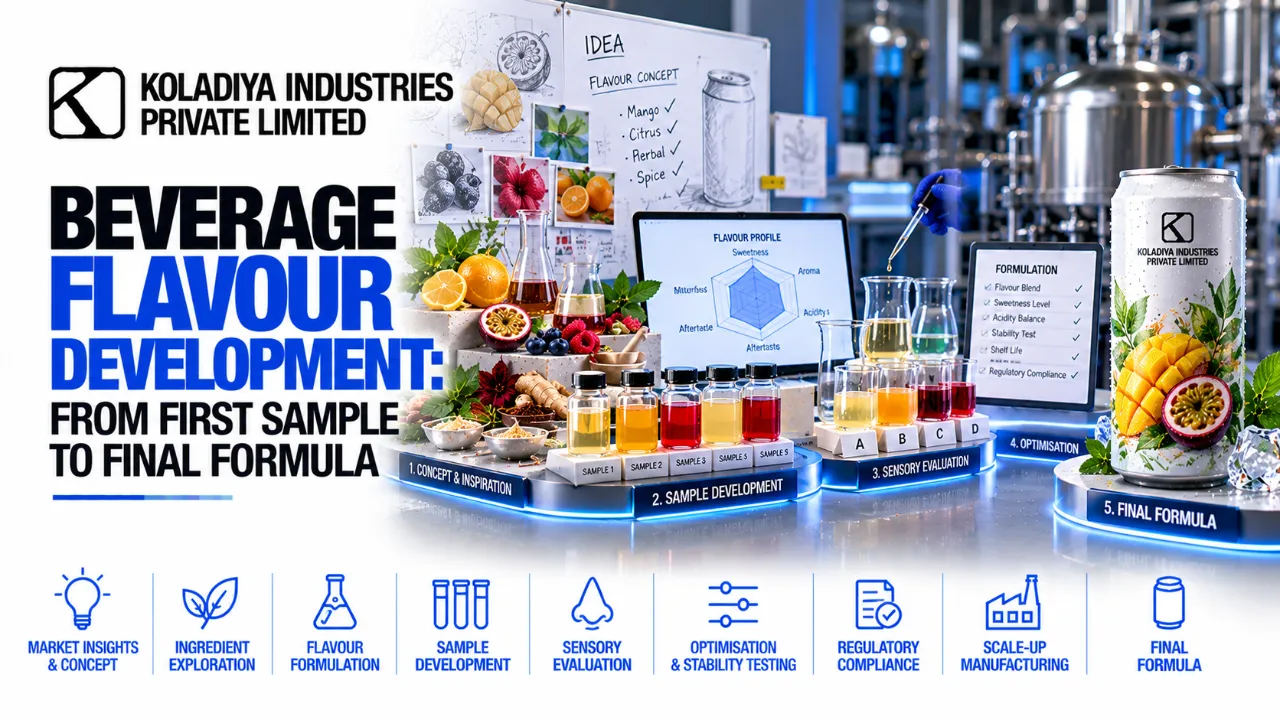
Successful beverage flavour development follows a structured process. Although timelines vary according to product complexity, ingredient availability, and testing requirements, most projects move through several key stages.
Step 1: Define the Beverage Concept and Target Audience
First, the brand must establish what it wants the beverage to achieve.
This stage involves identifying the product category, target consumers, desired taste, price positioning, packaging format, and intended sales channels.
For example, an energy drink for young working professionals may require a refreshing citrus profile and a crisp finish. In contrast, a premium botanical beverage may need more subtle flavours and a sophisticated taste experience.
At this stage, brands should also define their product requirements, including sugar level, carbonation, functional ingredients, and any specific ingredient preferences.
The clearer the brief, the easier it becomes to develop a formula that matches the brand’s objectives.
Step 2: Select Suitable Flavour Ingredients
Next, the development team evaluates flavour options that suit the beverage concept. Depending on the product, these may include natural flavours, nature-identical or artificial flavouring ingredients where permitted, fruit-derived ingredients, botanical extracts, and other suitable flavour components.
Each option has different characteristics. For instance, citrus flavours can introduce freshness, berry notes can contribute a fruity profile, and botanical ingredients can create a more distinctive taste.
However, developers must consider how each ingredient interacts with the complete formula. Acidity, sweeteners, preservatives, caffeine, vitamins, minerals, and carbonation may influence flavour perception or stability.
Consequently, ingredient selection should account for both sensory objectives and technical requirements.
Step 3: Prepare the First Beverage Sample
Once the team selects suitable ingredients, it develops an initial laboratory sample.
This first version establishes a starting point for flavour evaluation. The team may adjust sweetness, acidity, flavour intensity, aroma, and mouthfeel to achieve the desired profile.
For example, an initial lemon energy drink may taste too sharp or have an overpowering aroma. The formulation team can then adjust the flavour concentration and balance other ingredients to improve the drinking experience.
Importantly, the first sample does not need to be perfect. Instead, it provides a practical foundation for experimentation and improvement.
Step 4: Evaluate Taste and Refine the Formula
After preparing the first sample, the team evaluates its sensory characteristics. This assessment may include aroma, sweetness, acidity, flavour intensity, mouthfeel, and aftertaste.
The team then uses the feedback to make targeted adjustments.
For instance, if a berry beverage tastes too sweet, reducing the sweetness or adjusting acidity may improve its balance. Similarly, a citrus beverage with excessive bitterness may need a different flavour combination or a revised formulation.
Rather than changing several ingredients without a clear reason, developers should record each adjustment and compare the results. This disciplined method makes it easier to identify which changes improve the beverage.
Step 5: Conduct Technical and Stability Testing
Once the flavour profile approaches the desired result, developers assess the formula’s technical suitability.
Testing requirements depend on the beverage category, ingredients, processing method, and packaging. Relevant checks may include pH, ingredient compatibility, physical stability, microbiological safety, and shelf-life evaluation.
For carbonated beverages, teams must also consider how carbonation influences taste and mouthfeel. In addition, they should assess whether the selected flavour remains consistent under the intended manufacturing and storage conditions.
A sample that tastes excellent immediately after preparation may not maintain the same characteristics over time. Therefore, brands should confirm stability through suitable testing rather than relying solely on an initial tasting.
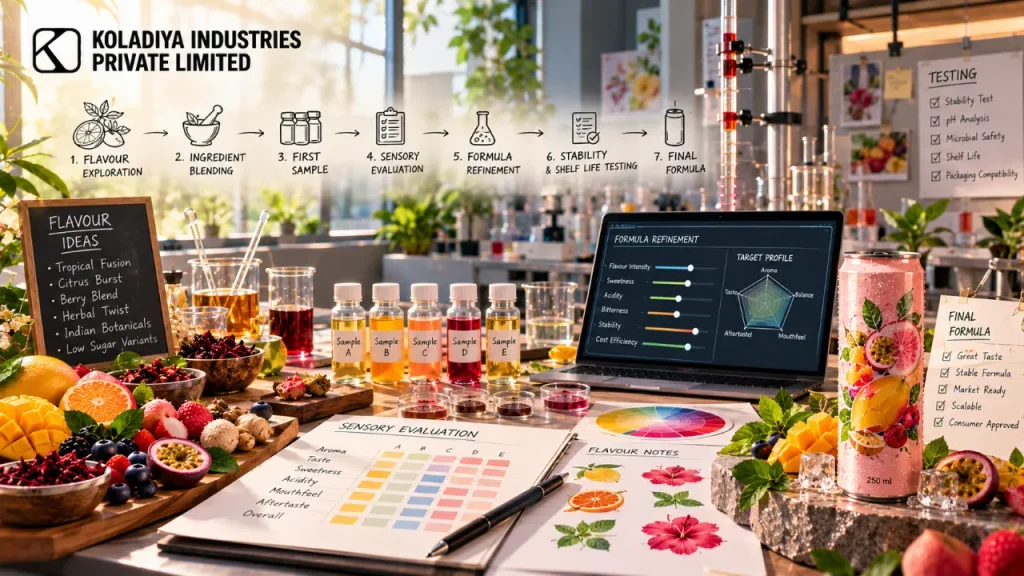
Step 6: Finalise the Formula for Commercial Production
After sensory and technical evaluations, the team documents the final formulation and defines the required ingredient specifications.
The next step involves assessing whether the formula can perform consistently at the intended production scale. Laboratory results provide a starting point, but commercial manufacturing may introduce different mixing conditions, processing variables, and equipment requirements.
Accordingly, a pilot batch or production trial can help identify adjustments before a full commercial launch.
The final formula should include clear preparation instructions, quality parameters, and suitable controls for ingredient measurement and batch consistency.
Beverage Flavour Development for Energy Drinks
Energy drinks require particularly careful flavour development because their ingredients can create distinctive taste challenges. Depending on the formula, caffeine, acids, sweeteners, vitamins, minerals, and other functional ingredients may influence bitterness, sourness, aroma, and aftertaste.
Therefore, an effective energy drink flavour must complement the functional formulation instead of simply masking undesirable notes.
Popular Flavour Directions for Energy Drinks
Brands can explore several flavour directions according to their target audience and positioning.
- Citrus energy drinks: Lemon, lime, orange, and mixed citrus profiles can deliver a sharp, refreshing taste.
- Tropical energy drinks: Mango, pineapple, and passion fruit combinations can create a fruit-forward profile.
- Berry energy drinks: Mixed berry, blueberry, and related fruit profiles can support a sweet-tart taste experience.
- Apple and green fruit blends: These can offer a lighter, crisp flavour direction.
- Ginger-citrus energy drinks: Ginger paired with citrus can introduce a distinctive, spicy note.
- Zero-sugar energy drinks: These require careful balancing of sweetness, flavour intensity, and aftertaste to create a satisfying product.
These flavour directions provide starting points rather than guaranteed consumer preferences. Brands should test their chosen concepts with the intended audience.
Managing Bitterness and Sweetness in Energy Drinks
One of the main challenges in energy drink development involves balancing the taste of functional ingredients.
For example, caffeine can contribute bitterness, while certain vitamins and minerals may introduce unwanted flavour notes. Sweeteners also behave differently depending on their type, concentration, and interaction with other ingredients.
Consequently, formulators should evaluate the complete beverage rather than testing each ingredient in isolation.
For zero-sugar products, the challenge becomes even more important. Developers must create an appropriate sweetness profile while managing lingering aftertaste and maintaining the intended flavour identity.
Ensuring Energy Drink Stability and Manufacturing Compatibility
Energy drink formulas must also meet relevant technical and manufacturing requirements. Developers should evaluate ingredient compatibility, pH, carbonation where applicable, processing conditions, and packaging suitability.
Furthermore, the team must consider applicable food safety requirements and regulations governing caffeine, sweeteners, additives, labelling, and any performance-related claims.
By addressing these requirements during development, brands can reduce avoidable reformulation and move towards commercial production with greater confidence.
Common Beverage Flavour Development Challenges
Even a promising beverage concept can encounter problems during formulation. Fortunately, a systematic development process helps teams identify and address them.
Unbalanced sweetness: Excessive sweetness can overwhelm other flavours. Developers should evaluate sweetness alongside acidity and flavour intensity.
Unpleasant aftertaste: Certain sweeteners, functional ingredients, or flavour combinations may leave lingering notes. Targeted formulation adjustments and sensory testing can help improve the finish.
Weak flavour intensity: A beverage may taste diluted or lack character. The solution could involve adjusting flavour concentration or revisiting the balance of the formula.
Ingredient incompatibility: Some ingredients may affect flavour, appearance, or stability when combined. Compatibility testing can reveal these issues before production.
Inconsistent batches: Uncontrolled ingredient variations or manufacturing conditions can change the final taste. Standardised specifications, accurate measurements, and quality checks help reduce variability.
Unexpected changes during storage: Flavour and appearance may change over time. Appropriate stability and shelf-life testing helps establish whether the beverage meets its intended quality requirements.
Ultimately, documenting each development stage helps the team understand problems, compare results, and make informed decisions.
How Koladiya Industries Supports Beverage Flavour Development
For beverage brands, the transition from an initial concept to a manufacturable formula requires coordination between product development and production planning.
Koladiya Industries works with beverage businesses seeking support with flavour development, formulation, and beverage manufacturing. Its product development approach helps brands consider taste objectives alongside practical requirements for commercial production.
Whether a business plans to introduce an energy drink, carbonated soft drink, sparkling water, or another beverage concept, early collaboration can help establish a clearer development pathway.
Key areas to consider include:
- Product concept development: Defining the beverage category, target audience, flavour direction, and product requirements.
- Flavour formulation: Exploring suitable flavour profiles and refining samples based on sensory feedback.
- Energy drink development: Considering flavour balance alongside caffeine, sweeteners, acidity, and other formulation requirements.
- Testing and refinement: Evaluating taste, ingredient compatibility, stability, and relevant quality parameters.
- Manufacturing planning: Assessing the transition from laboratory samples to pilot trials and commercial production.
- Packaging considerations: Evaluating the suitability of the chosen beverage formula for its intended packaging and processing requirements.
By considering these factors early, brands can build a more practical development plan and prepare for the next stages of product launch.
Conclusion: Turn Your Beverage Concept Into a Market-Ready Formula
Beverage flavour development connects creativity with formulation expertise, sensory evaluation, and manufacturing requirements. From the first sample to the final formula, every stage helps shape the beverage’s taste, consistency, stability, and market suitability.
For energy drinks, developers must pay particular attention to bitterness, sweetness, flavour intensity, and the interaction between functional ingredients. Meanwhile, other beverage categories may require different approaches to carbonation, acidity, aroma, and ingredient stability.
Most importantly, brands should refine their formulas through structured testing and document every important development decision. This approach helps reduce avoidable mistakes and creates a stronger foundation for commercial production.
Planning to launch an energy drink or develop a new beverage flavour? Contact Koladiya Industries to discuss your product concept, flavour development requirements, and beverage manufacturing needs. Take the next step towards transforming your idea into a well-formulated beverage ready for further testing and commercialisation.
How does the beverage flavour development process work?
The process typically includes concept planning, ingredient selection, initial sample preparation, sensory evaluation, formula adjustments, stability testing, and final formulation for commercial production.
How long does beverage flavour development take?
The timeline depends on the beverage category, ingredient availability, formulation complexity, testing requirements, and number of sample revisions. A straightforward concept may progress faster than a specialised functional beverage.
How does flavour development work for energy drinks?
Energy drink flavour development focuses on balancing sweetness, acidity, aroma, and aftertaste while considering caffeine, sweeteners, vitamins, and other functional ingredients. Popular flavour directions include citrus, tropical fruit, mixed berry, and ginger-citrus.
What are the common challenges in beverage flavour development?
Common challenges include excessive sweetness, bitterness, unpleasant aftertaste, weak flavour intensity, ingredient incompatibility, and changes during storage. Sensory evaluation and appropriate stability testing help address these issues.
Why is beverage shelf-life testing important after flavour development?
Shelf-life testing helps assess whether a beverage maintains its expected flavour, aroma, appearance, and safety under defined storage conditions. The testing plan should reflect the ingredients, processing method, packaging, and applicable requirements.
Can Koladiya Industries help develop a customized beverage flavour?
Koladiya Industries supports beverage brands exploring product formulation, flavour development, and manufacturing solutions. Startups and established businesses can discuss their beverage concepts, including energy drinks and carbonated beverages, to determine suitable development and production requirements.